

(UroToday.com) The 2025 ESMO annual meeting featured a biomarker-based personalization in metastatic prostate cancer session and a presentation by Dr. Ken Herrmann discussing optimization of patient selection for radioligand therapy in advanced stages. Dr. Herrmann started his talk by discussing two patient case studies.
The first patient had mCRPC comprising nodal, osseous, and hepatic metastases who had previously been treated with docetaxel, abiraterone, and enzalutamide. His initial PSA was 296 ng/mL and a PSMA PET/CT noted an SUVmean of 15.3. After 6 cycles of 177Lu-PSMA-617, his imaging had drastically improved: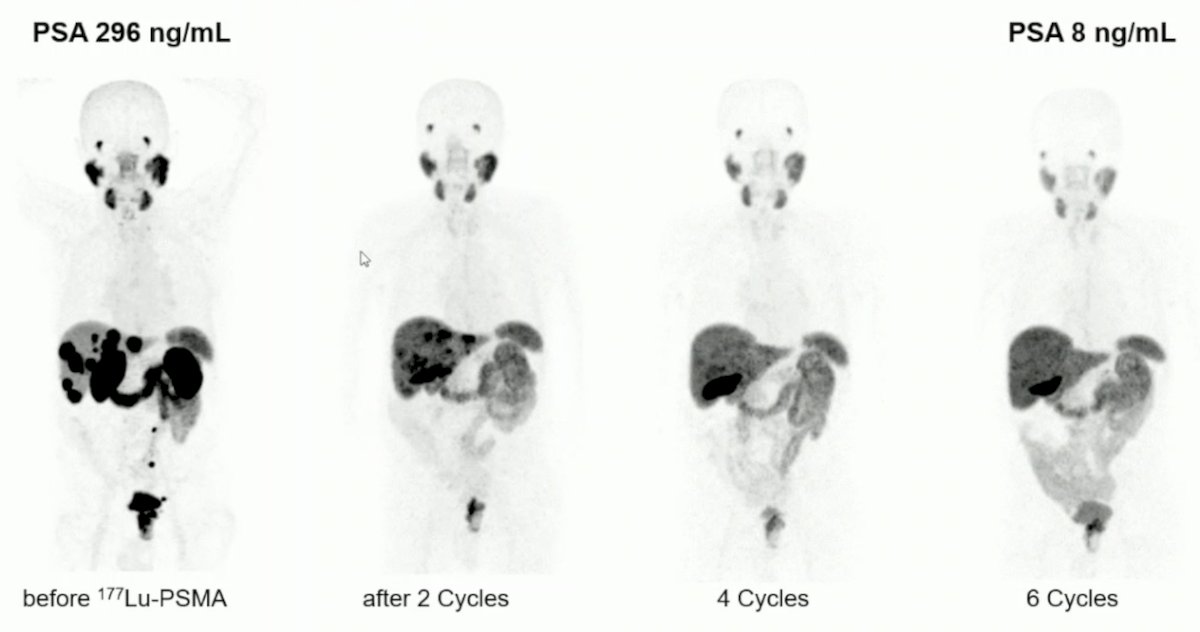
The second mCRPC patient had both PSMA and FDG-PET scans, with the PSMA PET/CT noting an SUVmean of 8.4, with no mismatching between the FDG and PSMA PET/CT, and an FDG tumor volume of 225 mL:

After 6 cycles of 177Lu-PSMA-617, his PSA was increasing, and he was also thrombocytopenic and neutropenic with the following worsening restaging imaging:
Dr. Herrmann then discussed his group’s PSMA nomogram of baseline characteristics for prediction of overall survival following 177Lu-PSMA-617, first published in Lancet Oncology in 2021.1 Among 270 patients, predictors included in the nomograms were time since initial diagnosis of prostate cancer, chemotherapy status, baseline hemoglobin, and 68Ga-PSMA-11 PET/CT parameters (molecular imaging TNM classification and tumour burden). The C-index of the overall survival model was 0.71 (95% CI 0.69-0.73):
Which was similar to the C-index of the PSA-progression-free survival model (0.70, 95% CI 0.68-0.72). Compared with high-risk patients, low-risk patients had significantly longer overall survival in the validation cohort (24.9 months versus 7.4 months; p < 0.0001):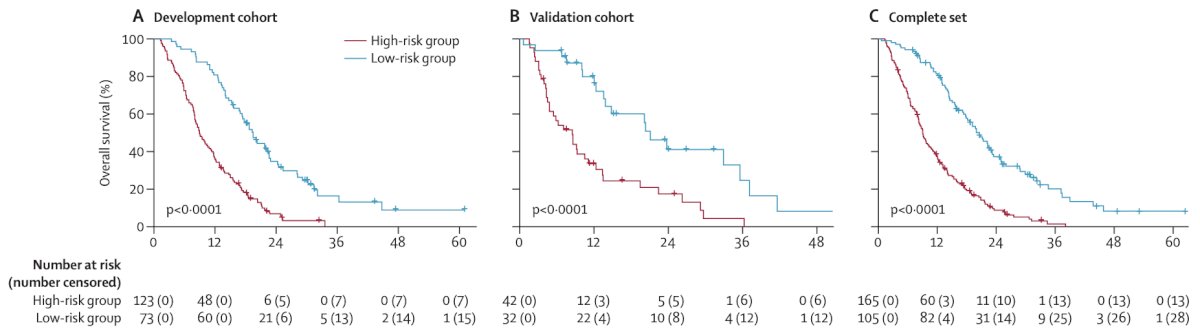
To explore the association between quantitative baseline 68Ga-PSMA-11 PET/CT parameters and treatment response and outcomes in the VISION trial, Kuo et al. found that whole-body tumor SUVmean was the best predictor of 177Lu-PSMA-617 efficacy, with a HR range of 0.86-1.43 for all outcomes (all p < .001).2 A 1-unit whole-body tumor SUVmean increase was associated with a 12% and 10% decrease in risk of a radiographic progression free survival event and death, respectively. Higher baseline PSMA-positive tumor volume and tumor load were associated with worse radiographic progression free survival (HR range, 1.44-1.53 [p < 0.05] and 1.02-1.03 [p < 0.001], respectively) and overall survival (HR range, 1.36-2.12 [p < 0.006] and 1.04 [p < 0.001], respectively).
In 2023, Seifert et al.3 published the second version of the prostate cancer molecular imaging standardized evaluation framework including response evaluation for clinical trials (PROMISE V2). PSMA expression assessed by the PSMA-expression score was used in several trials, and a low PSMA-expression score is a negative prognosticator of overall survival after 177Lu-PSMA-617 radioligand therapy. The proposed imaging parameters recorded for response assessment in clinical trials can be utilized to determine response according to PSMA-PET progression or RECIP frameworks, but also future response criteria:
When a patient’s data is incorporated into ePROMISE for assessing PSMA radioligand therapy eligibility, the output provides both a visual and quantitative nomogram: 
Dr. Herrmann notes that there are several red flags to discontinue or pause 177Lu-PSMA-617 radioligand therapy in the clinic, including:
- WBC < 2.0
- Platelets < 50
- eGFR < 30
- Hemoglobin: no limit under stable transfusion, otherwise < 8.0
Next, Dr. Herrmann discussed predictors of response to 177Lu-PSMA-617 versus cabazitaxel in the TheraP trial. Buteau et al. [4] previously showed that the hazard ratio for radiographic progression free survival for 177Lu-PSMA-617 versus cabazitaxel in men who had PSMA-PET SUVmean of at least 10 was 0.46 (95% CI 0.25–0.84), and was 0.85 (0.59–1.24) in men who had a PSMA-PET SUVmean of less than 10. The results were similar for PSA progression-free survival, with hazard ratios for PSA progression-free survival of 0.45 (95% CI 0.25–0.80) for PSMA-PET SUVmean of at least 10 and 0.77 (0.53–1.12) for PSMA-PET SUVmean of less than 10:
![Next, Dr. Herrmann discussed predictors of response to 177Lu-PSMA-617 versus cabazitaxel in the TheraP trial. Buteau et al. [4] previously showed that the hazard ratio for radiographic progression free survival for 177Lu-PSMA-617 versus cabazitaxel in men who had PSMA-PET SUVmean of at least 10 was 0.46 (95% CI 0.25–0.84), and was 0.85 (0.59–1.24) in men who had a PSMA-PET SUVmean of less than 10. The results were similar for PSA progression-free survival, with hazard ratios for PSA progression-free survival of 0.45 (95% CI 0.25–0.80) for PSMA-PET SUVmean of at least 10 and 0.77 (0.53–1.12) for PSMA-PET SUVmean of less than 10:](/images/com-doc-importer/232-esmo-2025/esmo-2025-optimizing-patient-selection-for-radioligand-therapy-in-advanced-stages/image-7.jpg)
Recently published work from Dr. Herrmann’s group5 assessed predictors of response to 177Lu-PSMA-617, noting that among 152 mCRPC patients, baseline 18F-FDG-derived total tumor volume was the only independent predictor of overall survival both in patients subsequently treated with 177Lu-PSMA-617 (HR 1.28, 95% CI 1.02-1.61; p = 0.03) or in those treated with other standard of care (HR 1.61, 95% CI 1.02-2.56; p = 0.04), respectively: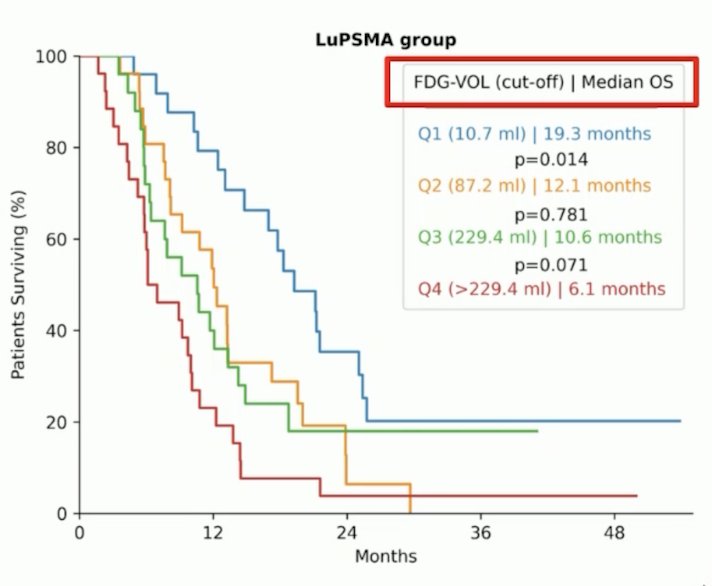
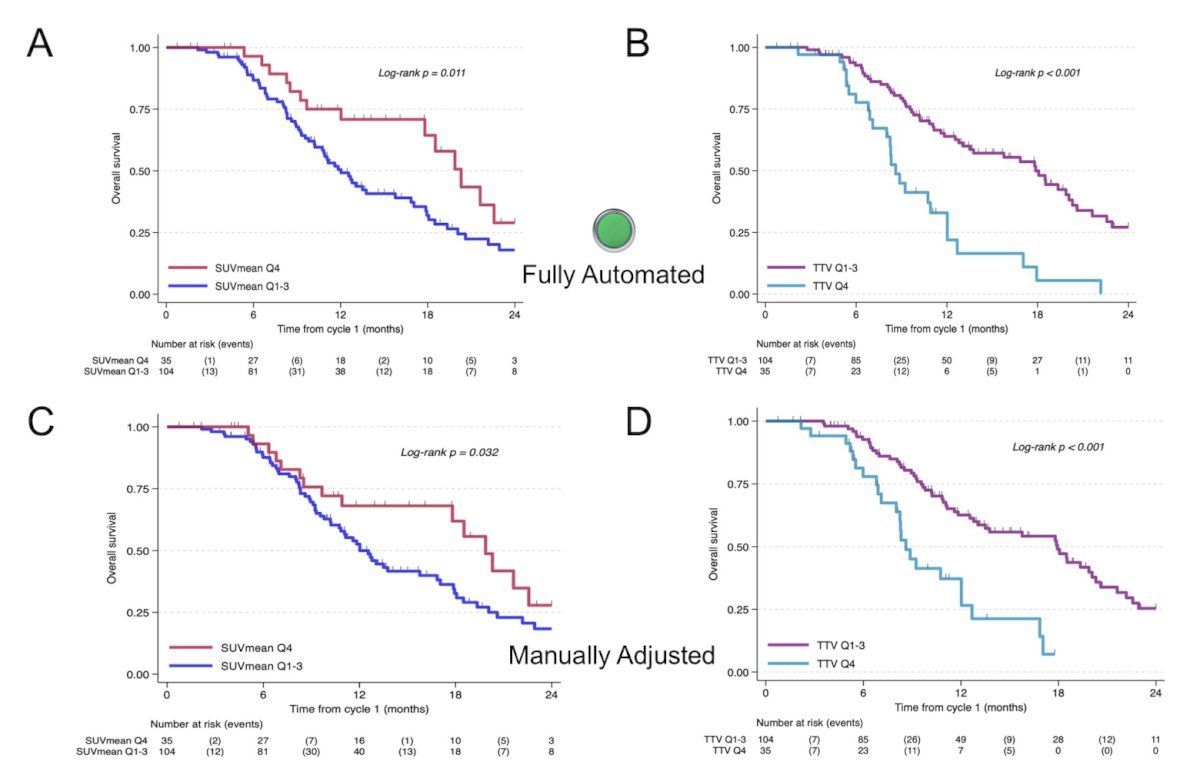
To close his presentation, Dr. Herrmann touched on several future solutions for optimizing patient selection. First, the ‘one button push’ fully automatic PSMA PET quantification data was initial presented at ASCO 2025 by Dr. Louise Emmett. In this analysis, screening 68Ga-PSMA-11 PET/CT of participants was quantified using MIM LesionID Pro to derive SUVmean and total tumor volume with a fully automated quantification process (Method A) and semi-automated quantification adjusted manually for error (Method B):
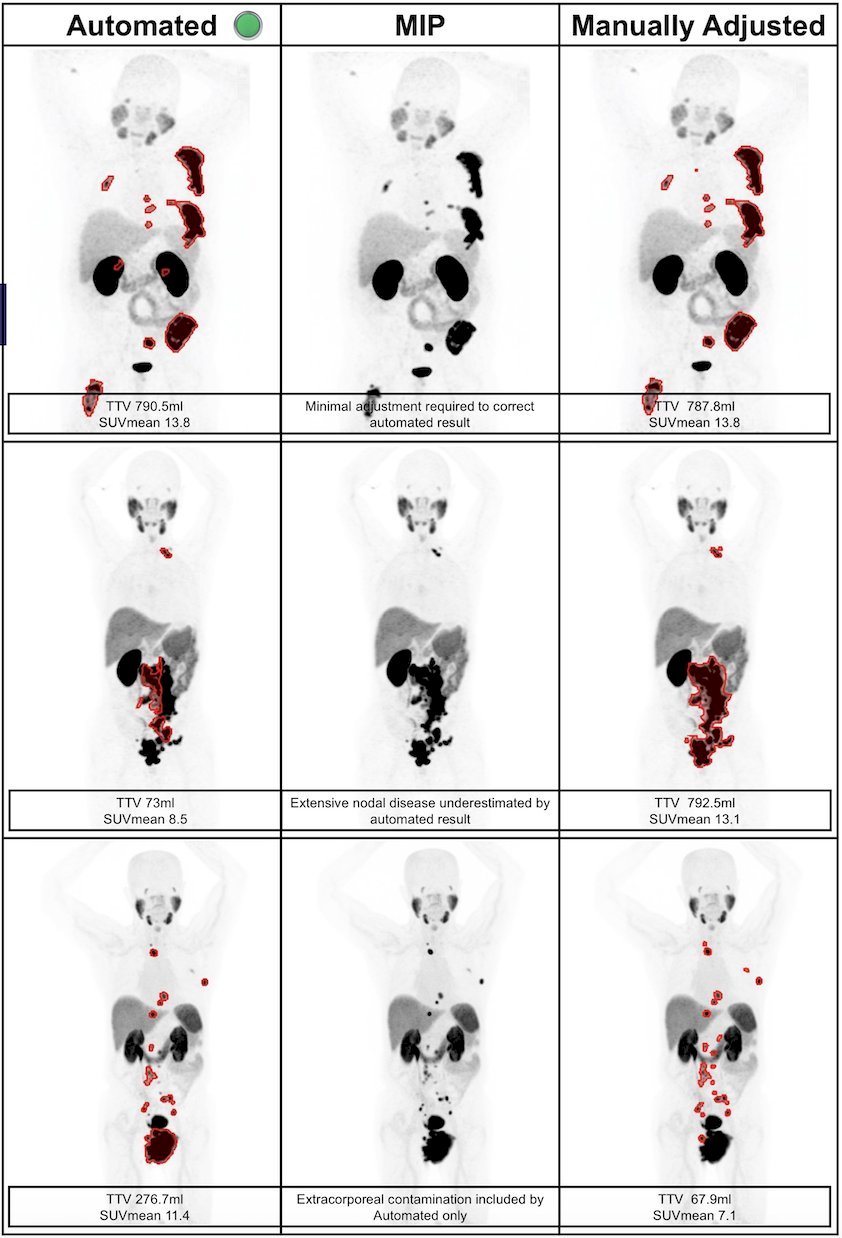
For total tumor volume Q4 versus Q1-3, median overall survival was 8.5 (95% CI 7 –12.0) versus 18 months (95% CI 13–20) (p < 0.001). With method B, median PSA progression-free survival for SUVmean Q1-3 was 4.5 (95% CI 3– 6) versus 7.5 months (95% CI 5–11) for SUVmean Q4 (p = 0.002). Median overall survival for SUVmean Q1-3 was 13 (95% CI 10–17) versus 20 months (95% CI 11 – NE) for SUVmean Q4 (p = 0.03). For total tumor volume Q4 versus Q1-3, median overall survival was 8.5 (95% CI 7–12) versus 18 months (95% CI 13 – 20) (p < 0.001).
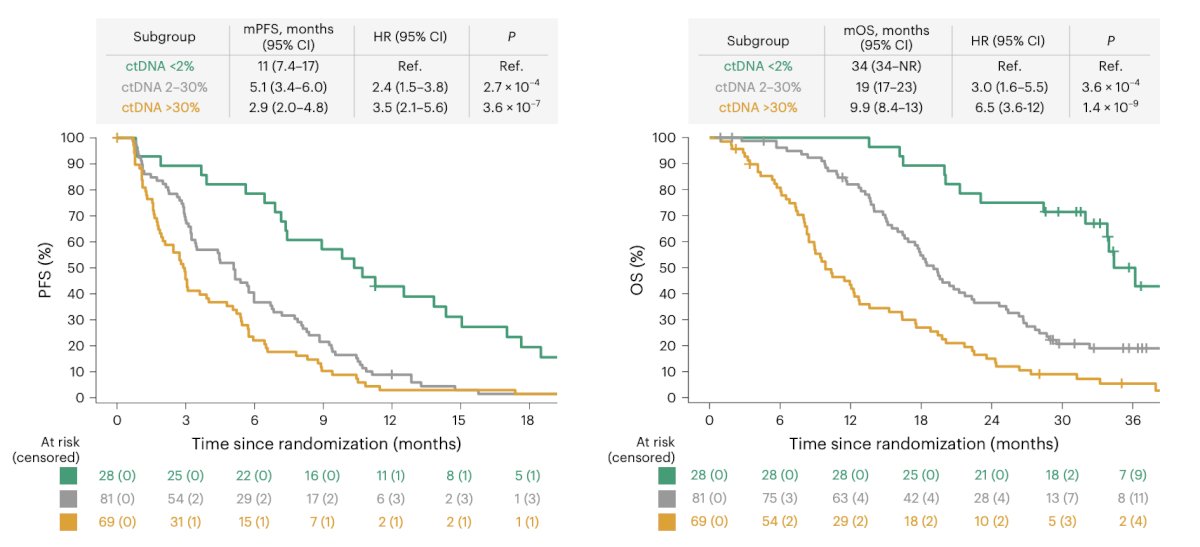
Recent work from the TheraP trial assessed prostate cancer driver genes across 290 serial plasma cell-free DNA samples from 180 molecular imaging-selected patients with mCRPC.6 A low (ctDNA <2%) pretreatment ctDNA fraction predicted a superior progression free survival and overall survival compared to higher (ctDNA 2-30% and >30%) pretreatment ctDNA fractions:
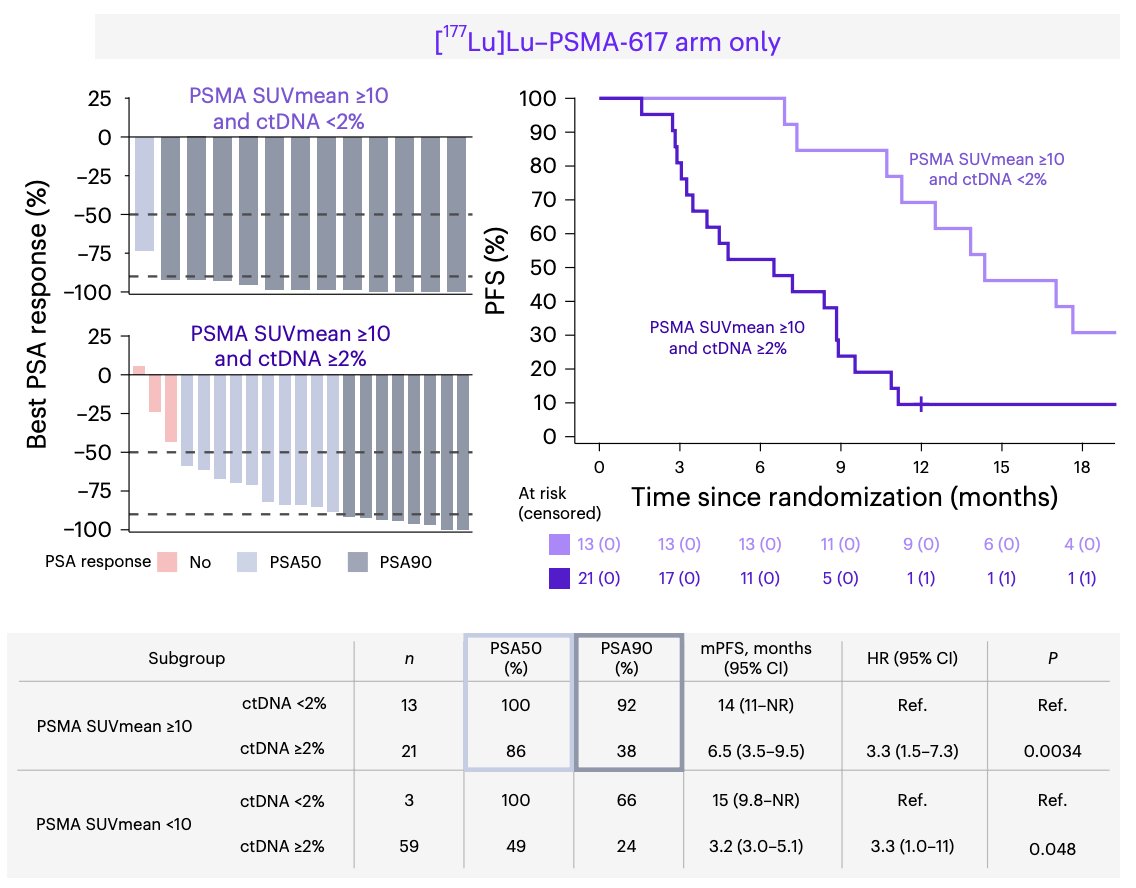
Consistent with PSMA-PET and ctDNA percentage each offering an independent predictive value, combining both parameters further stratified outcomes in patients with both high and low PSMA SUVmean receiving 177Lu-PSMA-617, with the caveat that these are relatively small subgroups:
Dr. Herrmann concluded his presentation discussing optimization of patient selection for radioligand therapy in advanced stages with the following take home points:
- Theranostics involving radionuclides is constantly growing
- A better understanding is needed as to who benefits (and who does not)
- PSMA PET includes a lot of information, and PSMA total tumor volume automatization is key
- Blood biomarkers are becoming increasingly important
- The combination of PET, blood, and clinical biomarkers will be the future of patient selection for radioligand therapy
Presented by: Ken Herrmann, MD, MBA, Professor and Chair of the Department of Nuclear Medicine, Universitatsklinikum Essen, Essen, Germany
Written by: Zachary Klaassen, MD, MSc – Urologic Oncologist, Associate Professor of Urology, Georgia Cancer Center, Wellstar MCG Health, @zklaassen_md on Twitter during the 2025 European Society of Medical Oncology (ESMO) Annual Meeting, Berlin, Germany, Fri, Oct 17 – Tues, Oct 21, 2025.
References:
- Gafita A, Calais J, Grogan TR, et al. Nomograms to predict outcomes after 177Lu-PSMA therapy in men with metastatic castration-resistant prostate cancer: An international, multi-centre, retrospective study. Lancet Oncol. 2021 Aug;22(8):1115-1125.
- Kuo PH, Morris MJ, Hesterman J, et al. Quantitative 68Ga-PSMA-11 PET and Clinical Outcomes in Metastatic Castration-resistant prostate cancer following 177Lu-PSMA-617 (VISION Trial). Radiology. 2024 Aug;312(2):e233460.
- Seifert R, Emmett L, Rowe SP, et al. Second version of the prostate cancer molecular imaging standardized evaluation framework including response evaluation for clinical trials (PROMISE V2). Eur Urol. 2023 May;83(5):405-412.
- Buteau JP, Martin AJ, Emmett L, et al. PSMA and FDG-PET as predictive and prognostic biomarkers in patients given [177Lu]Lu-PSMA-617 versus cabazitaxel for metastatic castration-resistant prostate cancer (TheraP): A biomarker analysis from a randomized, open-label, phase 2 trial. Lancet Oncol. 2022 Nov;23(11):1389-1397.
- Telli T, Lopes L, Karpinski M, et al. Prognostic value of [18F]FDG- and PSMA-PET in patients evaluated for [177Lu]Lu-PSMA therapy of mCRPC. Eur J Nucl Med Mol Imaging. 2025 Jul;52(9):3199-3210.
- Kwan EM, Ng SWS, Tolmeijer SH, et al. Lutetium-177-PSMA-617 or cabazitaxel in metastatic prostate cancer: circulating tumor DNA analysis of the randomized phase 2 TheraP trial. Nat Med. 2025 Aug;31(8):2722-2736.