

(UroToday.com) The 2026 American Society of Clinical Oncology (ASCO) Annual Meeting was host to a kidney and bladder cancers poster session. Dr. Aurea Diaz presented real-world evidence evaluating adjuvant nivolumab in high-risk, muscle-invasive urothelial carcinoma (MIUC) from the SOGUG-NIADY study of the Spanish Oncology Genitourinary Group (SOGUG).
Adjuvant nivolumab is associated with a disease-free survival (DFS) benefit in patients with high-risk MIUC following radical surgery in the phase III CheckMate-274 trial.1 Following the results of this trial, adjuvant nivolumab post-radical surgery for MIUC was approved for reimbursement in Spain beginning August 2023 for patients with high-risk, PD-L1-positive disease. The PrInCIS-NIADY study was designed to assess the effectiveness and safety of adjuvant nivolumab in routine clinical practice following national approval.
PrInCIS is a nationwide, multicenter, non-interventional epidemiologic study with retrospective patient inclusion and prospective follow-up. The NIADY cohort included patients with high-risk PD-L1-positive MIUC treated with adjuvant nivolumab in routine practice across 65 hospitals affiliated with the Spanish Oncology Genitourinary Group (SOGUG) spanning 16 Spanish regions. Baseline characteristics, treatment patterns, safety, and oncologic outcomes were analyzed and compared with outcomes reported in CheckMate-274.
A total of 395 evaluable patients were included:
- 95.7% were PD-L1 positive
- Median age was 69.5 years
- 74.9% were ≥65 years old
- 91.4% had bladder cancer
- 8.6% had upper tract urothelial carcinoma
- Predominant histology was pure urothelial carcinoma in 79.2% of patients
Neoadjuvant platinum-based chemotherapy was administered in 51.2% of patients:
- Cisplatin-based: 48.9%
- Carboplatin-based: 2.3%
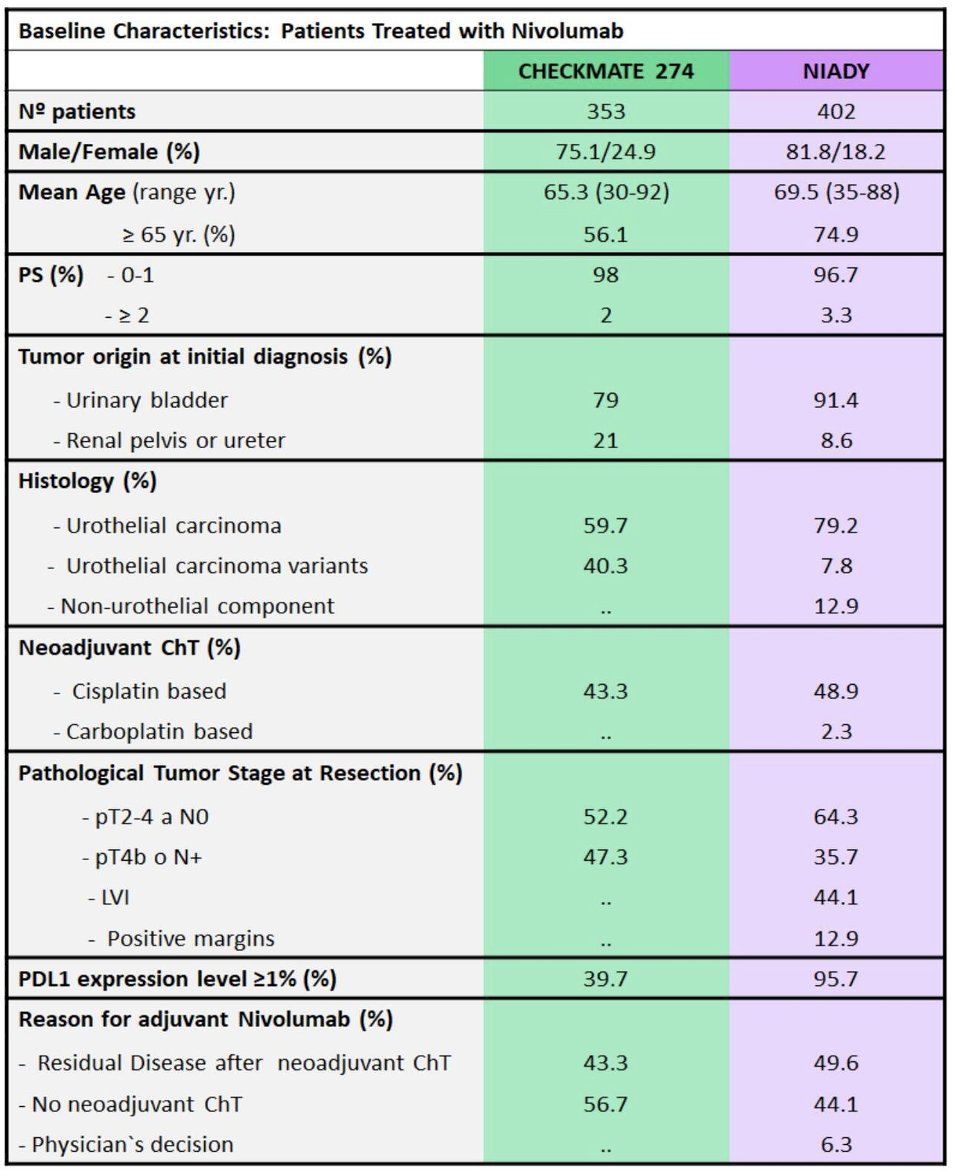
Compared with the CheckMate-274 population, the NIADY cohort represented an older real-world population:
- Mean/median age:
- CheckMate-274: 65.3 years
- NIADY: 69.5 years
- PD-L1 positivity:
- CheckMate-274: 39.7%
- NIADY: 95.7%
- Bladder primary tumors:
- CheckMate-274: 79%
- NIADY: 91.4%
Pathologic staging in the NIADY cohort included:
- pT2-4aN0 disease: 64.3%
- pT4b or node-positive disease: 35.7%
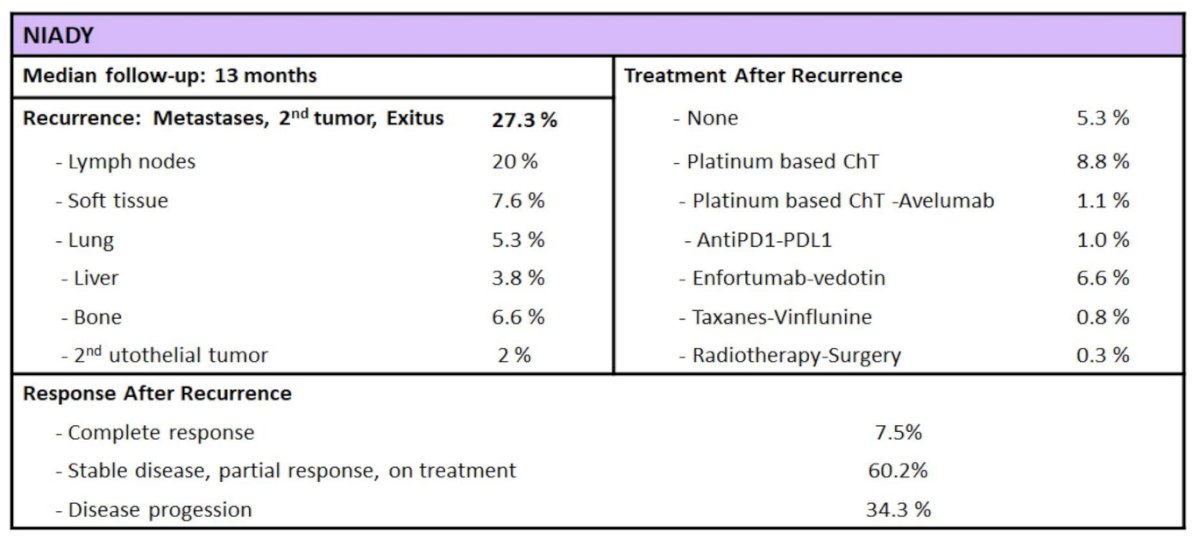
At a median follow-up of 13 months:
- 27.3% of patients experienced disease recurrence
- Post-recurrence treatment included:
- Platinum-based chemotherapy in 8.8%
- Enfortumab vedotin in 6.6%
Median DFS and overall survival (OS) were not reached at the time of analysis. Estimated survival outcomes at 18 months were:
- DFS probability: 65.6%
- OS probability: 78.3%
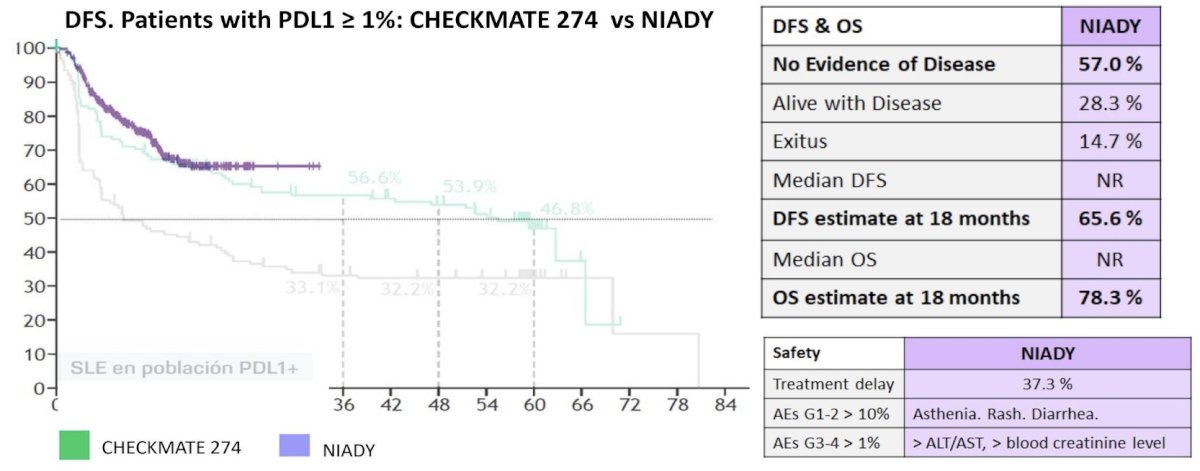
Adjuvant nivolumab demonstrated a manageable safety profile in routine practice. Treatment delays or dose reductions occurred in 37.3% of patients. The most common grade 1–2 immune-related adverse events occurring in >10% of patients included:
- Asthenia
- Rash
- Diarrhea
Grade 3–4 immune-related toxicities were infrequent, occurring in >1% of patients, and were primarily related to:
- Hepatic enzyme elevation
- Creatinine elevation
With a median follow-up of 13 months, recurrence, metastases, second urothelial tumors, or death were observed in 27.3% of patients. Lymph nodes represented the most common site of recurrence (20%), followed by soft tissue (7.6%), bone (6.6%), lung (5.3%), and liver (3.8%), while a second urothelial tumor was reported in 2% of patients. Following recurrence, 8.8% of patients received platinum-based chemotherapy, 6.6% received enfortumab vedotin, and 1.0% received anti–PD-1/PD-L1 therapy; 5.3% received no subsequent treatment.
At last follow-up after recurrence, complete response was observed in 7.5% of patients, 60.2% had stable disease, partial response, or remained on treatment, and 34.3% experienced disease progression.
The investigators concluded that outcomes observed in this large Spanish real-world cohort were consistent with results from CheckMate-274 despite the inclusion of an older and less selected patient population. Adjuvant nivolumab demonstrated maintained effectiveness with a manageable safety profile in routine clinical practice. Although follow-up remains relatively short, these findings provide external validation of the pivotal trial and further support the role of adjuvant nivolumab for patients with high-risk MIUC following radical surgery.
Presented by: Aurea Molina Diaz, MD, Medical Oncologist, Universidad Santiago de Compostela, Santiago, Spain
Written by: Rashid K. Sayyid, MD, MSc, Assistant Professor, Urologic Oncologist, Department of Urology at The University of Arizona and Banner University Medical Center, Tucson, AZ – @rksayyid on X during the American Society of Clinical Oncology Genitourinary (ASCO) Annual Meeting held in Chicago, IL between May 29th and June 1st, 2026
Related content: Real-World Adjuvant Nivolumab in PD-L1 Positive Muscle-Invasive Urothelial Carcinoma - Aurea Molina Diaz
- Bajorin DF, Witjes JA, Gschwend JE, et al. Adjuvant Nivolumab versus Placebo in Muscle-Invasive Urothelial Carcinoma. N Engl J Med. 2021;384:2102-2114.