

The findings are reassuring regarding safety and treatment response. No significant differences were observed in Objective Response Rates (44% vs. 52%) or Severe Adverse Events (36% vs. 32%) between elderly and younger patients. Furthermore, rates of TKI dose reductions and immunotherapy interruptions remained comparable across age groups, suggesting that age alone should not be a barrier to these potent therapeutic regimens.
However, the study highlights a significant survival gap: median overall survival was 30.1 months for the elderly versus 41.0 months for younger patients (p<0.001), dropping to 17.6 months in those aged ≥80 years. Key prognostic factors identified for the elderly population—such as prior nephrectomy, IMDC risk, and the presence of brain or lymph node metastases—should guide clinical decision-making.
These results emphasize the feasibility of IO combinations in fit elderly patients while underscoring the need for careful geriatric assessment to optimize outcomes in this vulnerable cohort.
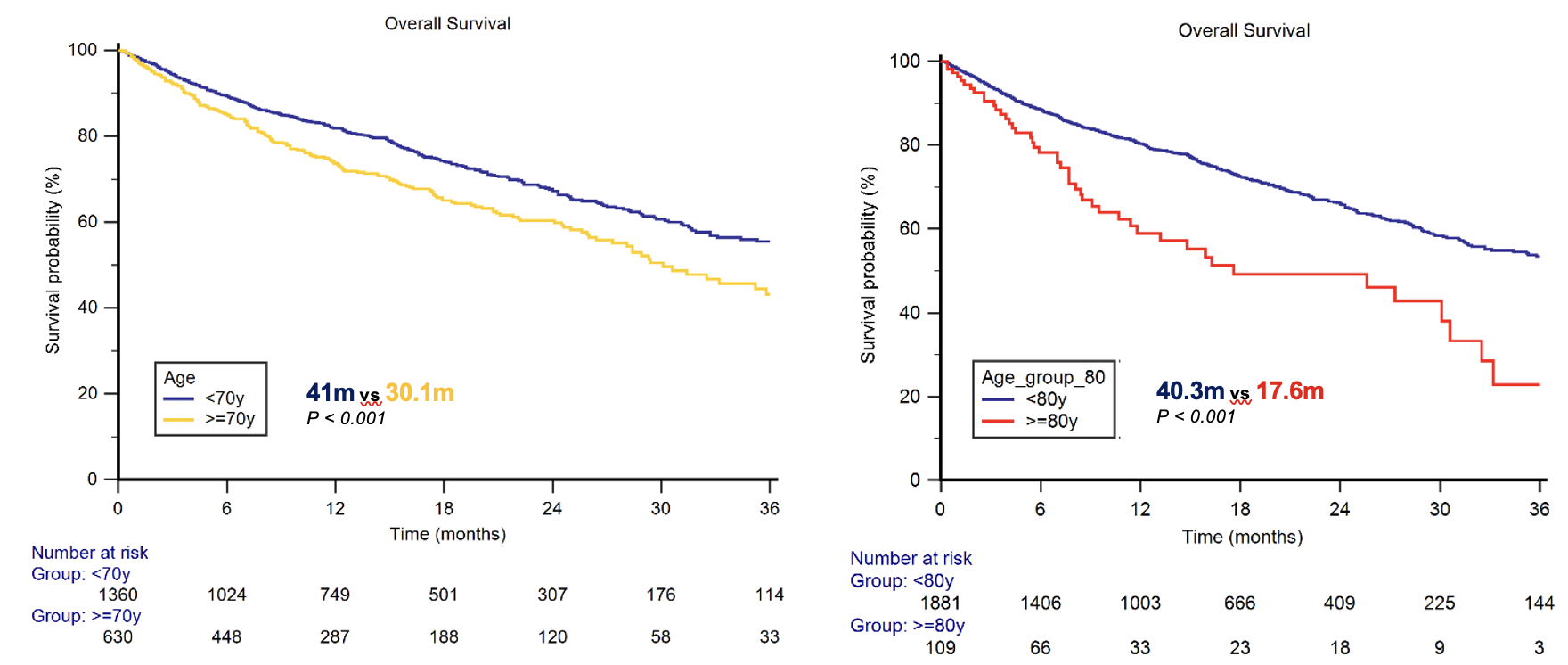
Figure - Overall Survival in patients aged ≥70y and ≥80y.
Written by: Fernando Sabino Marques Monteiro, MD, PhD. Hospital Sírio-Libanês, Brasília, Brazil. ARON Research Foundation ETS, Macerata, Italy. Latin American Oncology Group (LACOG) – Genito-Urinary Tumors Section, Porto Alegre, Brazil.
Read the Abstract