by John Wrenn, MD & Karen Michael, RN of Alliance Urology Specialists, Inc., Greensboro, NC
Dr. John Wrenn has more than 20 years of experience in Urology. As an investigator in over 30 clinical trials, he has studied various treatments for urologic issues such as overactive bladder, prostate and bladder cancer and interstitial cystitis. Dr. Wrenn participated in three clinical studies on the Urgent® PC Neuromodulation System.
Karen Michael, RN, began her medical career as an Intensive Care Nurse. Over the years, she held various nursing roles before moving into research. As the Clinical Research Coordinator for Alliance Urology Specialists, her work includes research studies in the treatment of prostate, bladder, kidney cancer, and interstitial cystitis as well as device and drug studies for overactive bladder.
Introduction
Percutaneous Tibial Nerve Stimulation (PTNS) is a uniquely effective therapy for Overactive Bladder (OAB) and the associated symptoms of frequency, urgency and urinary urge incontinence (UUI). PTNS is very useful in those patients who are refractory to conservative or pharmaceutical therapy, are unable to tolerate side effects of commonly prescribed anticholinergics or are not candidates for more invasive surgery. The purpose of this discussion is to review the history and clinical efficacy of PTNS and to provide a framework for establishing a successful in-office neuromodulation program for a difficult-to-treat patient population.
Background
OAB impacts 16-18% of the US adult population with a disproportionate impact on the elderly.1, 2 The expense to the healthcare delivery system is reported to be $12.2 billion annually,3 and incontinence is responsible for up to 6% of nursing home admissions for women and 10% for men adding an additional $6 billion.4 Untreated incontinence can lead to depression, social isolation, falls and fractures that both decrease the patient’s quality of life and increase the burden of this chronic condition on the healthcare delivery system.5
As with many chronic conditions, the therapeutic goal may differ for each patient. Therapy is focused on symptom control to the patient’s satisfaction. OAB symptoms can often be treated effectively with antimuscarinic therapy and behavioral modification as long as patients continue to take their prescribed drugs and follow instructions for dietary and fluid management, learn urge control techniques and perform pelvic floor muscle exercises. This combined regimen has been shown to improve voiding frequency but the addition of behavioral therapy does not improve urgency more than drug alone.6
A significant number of patients will either not respond sufficiently to meet their therapeutic goal or will be unable to tolerate the side effects of pharmacotherapy. Patients who do not respond to standard therapy, particularly the elderly with comorbidities, are often condemned to a life controlled by their bladder which markedly impacts their quality of life and social interactions.7
Description of PTNS
PTNS is a form of neuromodulation that is delivered retrograde to the sacral plexus via the posterior tibial nerve. Another type of neuromodulation, sacral nerve stimulation (SNS), has been commercially available to treat OAB and UUI for several years. However, SNS with the InterStim® device (Medtronic, Inc., Fridley, MN) requires surgical placement of an electrode adjacent to the S3 nerve root at the level of the sacral foramen. The electrode wire is tunneled beneath the skin and connected to a pulse generator that is implanted subcutaneously in the patient’s buttocks. Studies demonstrate clinical effectiveness for those implanted at 60-80%.8 However, only a small percentage of patients who could potentially benefit are offered an SNS implant because of the invasive nature of the procedure and the need for specialized training to implant and program the device. Additional hurdles include the high cost of the implant of over $22,000 for the first year of therapy9 and the potential risk of complications including infection at the surgical site, lead migration and failure to respond to therapy with up to 42% o recipients requiring surgical revision by 5 years post implantation.10 Additionally, not all patients pass test stimulation, a requirement for implantation.
PTNS delivered with Urgent® PC (Uroplasty, Inc., Minnetonka, MN) is minimally invasive neuromodulation intended for in-office use. PTNS is performed by placing a 34 ga. needle electrode just above and behind the medial malleolus in the ankle. The electrode is connected to a portable pulse generator and a surface electrode is placed distally on the foot. The current is adjusted while the provider assesses the patient response, which is usually a toe flex or fan or a patient report of a tingling in the heel or sole. The treatment is continued for 30 minutes and repeated weekly for 12 weeks. Patients may report changes after 4-6 treatments. For patients who have a good response after 12 weeks of therapy, occasional therapy may be necessary for sustained therapeutic effect with a treatment every 3-6 weeks.11
Clinical Background of PTNS
Tibial nerve stimulation for the treatment of UUI was first reported by McGuire in 1983,12 and percutaneous tibial nerve stimulation was first described by Stoller in 1999 when he reported on the 5 year outcomes of 80 patients with at least a 50% improvement in symptoms in 81% of patients.13 PTNS received FDA clearance in 2000 under a 510(k) with clinical data based upon a multi-center study by Govier et al.14
The OrBIT (Overactive Bladder Innovative Therapy) study of PTNS and tolterodine extended release confirmed that both therapies provided significant improvements in OAB symptoms from baseline.15 The SUmiT (Study of Urgent PC vs. sham Effectiveness in Treatment of Overactive Bladder Symptoms) Trial comparing PTNS to a validated sham procedure confirmed superiority to placebo with 55% of PTNS treated patients responding compared to 22% for the sham patients, using an intent to treat analysis. 16 This sham study is unique in medical device evaluation and is equivalent to a placebo controlled drug trial. These trials are especially meaningful as urologists now have an effective, minimally invasive option for patients who have failed antimuscarinic drug therapy.
With the additional data provided by these two studies, a unique CPT® Category I code, 64566, has been assigned to PTNS effective January 2011. Analysis has confirmed that PTNS remains cost effective when compared to a permanent implant even up to 6 years of therapy. 17
PTNS Reimbursement
Reimbursement policies for PTNS are not currently uniform across the country. For those payors who do cover PTNS therapy, there is commonly a requirement that patients have experienced symptoms for at least one year and have failed two anticholinergic medications and conservative therapy. Even with no or low reimbursement coverage, patients should still be given the opportunity to consider treatment. The alternatives to PTNS are limited and many patients are willing to pay out-of-pocket when fully informed of the benefits of the technology and minimal risks.
Our Clinical Experience
Our practice, Alliance Urology Specialists, Inc., located in Greensboro, NC, is an eleven physician urology group with a successful PTNS program. Our introduction to PTNS was through our clinical trials program in 2006. We have an active research division and participated in the OrBIT and SUmiT trials that confirmed the efficacy of PTNS. Even before the successful results of the studies were published, we were convinced that PTNS deserved a place in our algorithm of care for OAB patients and we have continued to offer PTNS with remarkable patient acceptance, even when third party reimbursement has been a challenge.
Establishing a successful PTNS program
Unlike many ancillary services, a PTNS program can be initiated with little financial risk to a practice. The reusable Urgent PC Stimulator (fig. 1) is very affordable, as are the disposable leads, which allows the treatment to be priced at a level that is manageable for those who pay out of pocket but still provides a reasonable return for the provider.
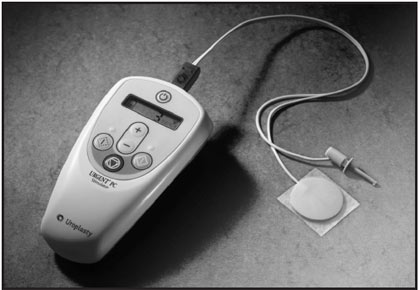
Once the decision to offer PTNS is made, there are several factors that are key to establishing a successful program. The most important factor is patient selection. PTNS is worthwhile for patients with OAB symptoms who are unable to tolerate anticholinergic medications, do not wish to take medications, are already taking multiple drugs or who are not candidates for surgery. PTNS can be used to treat the frequency, urgency and urge incontinence of patients, even those with chronic bladder pain and interstitial cystitis. PTNS is not indicated for pure stress incontinence. While the treatment is ideal for individuals refractory to or intolerant of medical therapy, PTNS can be offered as primary therapy for those who would prefer to avoid the potential side effects of medication.
OAB is a chronic condition with the goal of therapy to ameliorate symptoms to the patient’s satisfaction. As with drug therapy that must be continued to be effective, and with SNS which requires continuous stimulation to be effective, patients must also be informed that occassional PTNS therapy may be needed to keep their symptoms under control. Following the initial 12 week course of therapy, a schedule of future treatments should be devised in consultation with the patient and urologist. As with many self-management programs in chronic conditions, the patient must be part of the decision making process to determine the interval between treatments to manage their symptoms. In our clinical experience this can vary between once every 3 weeks to intervals of several months between treatments. A rigid protocol for treatment may not be adequate for some patients and provide more treatments than necessary for others.
A dedicated nursing staff member is essential to the success of the program. PTNS often takes 4-8 sessions to begin to impact symptoms. With the delayed initial response, patients will need coaching and reassurance to insure that they continue with the program long enough to experience results. A well-trained nurse will also be able to reinforce behavioral and dietary modifications which will boost the success of the patient’s treatment program. Voiding diaries and validated questionnaires can aid in monitoring progress and help patients better appreciate their results. We usually ask the patient to complete a voiding diary at the initial consultation, after treatment 6 and after treatment 12. These more objective results can be used to determine patient progress.
The equipment needs are limited. Other than the Urgent PC pulse generator and disposable leads, the only requirements are a quiet room and a comfortable chair with a foot rest or a medical grade recliner to provide the proper environment for the treatment (fig. 2). A single nurse can monitor two or more patients simultaneously, staggering start times to avoid clinic delays and better defray facility expense.

Conclusion
PTNS with Urgent PC is safe and now has Level 1 evidence as an effective therapeutic alternative for patients with OAB symptoms who are refractory to medical and behavioral therapy. PTNS can also be a primary therapy option for patients who would like to avoid medication and the potential side effects. PTNS can provide significant benefits for both patients and practices and is readily performed in the office setting. While third party reimbursement remains an issue in some areas, the out-of-pocket costs of PTNS are reasonable, and refractory patients whose options are otherwise quite limited will appreciate the opportunity, regardless of their insurance coverage, to consider this innovative therapy as an option.
Case Studies
R.K. is an 88 y.o. male with urodynamic findings of a small capacity unstable bladder with outlet obstruction. He was initially managed with transurethral incision of the prostate (TUIP) which relieved his obstruction but he had persistent postoperative urge incontinence with 10-12 voids daily and 2-3 voids nightly. He was treated with 2 anticholinergic medications without significant improvement and elected a trial of PTNS. The treatment was well-tolerated and by the 12th weekly treatment he had resolution of his incontinence and a reduction to 6-7 voids daily and 1-2 voids nightly. He has been able to sustain symptom relief with a treatment every 2 weeks. A further increase in treatment interval is anticipated.
J.K. is a 61 y.o. female with a history of urgency, frequency and UUI that had been confirmed by urodynamic studies as neurogenic in origin from her multiple prior back surgeries. She failed to respond to 5 different antimuscarinic drugs alone and in combination. She started on PTNS in May 2008. At the beginning of treatment she was experiencing 5 episodes of moderate UUI during the day and 3-4 episodes of nighttime voids with saturated pads at night. After an initial course of 12 weekly treatments, she had no daytime leakage or urgency, averaged 2 nighttime voids and used 0-1 pads daily. She is able to sustain these therapeutic effect with a treatment every 4 weeks.
L.H. is a 63 y.o. female who initially presented with frequency of 12-15 voids daily and 5 voids nightly, with no incontinence. She failed to tolerate two previous antimuscarinic drugs and elected to begin PTNS in December 2008. After initial therapy for 12 weeks, she now receives PTNS therapy every 4 weeks with a sustained reduction in her daytime frequency to 8-9 times and nighttime voids to 0-1 times.
M.S. is a 53 y.o. female with interstitial cystitis who had moderate urgency with frequency of 9-24 voids daily and 1-2 voids nightly. She also had occasional stress incontinence. She was being treated with intravesical instillation of lidocaine, bicarbonate and heparin every 7-10 days for 9 months prior to initiation of PTNS in August 2008. She has been able to completely discontinue instillations and receives PTNS treatments every 6 weeks with a sustained reduction in her urinary symptoms.
References
- Coyne KS, Payne C, Bhattacharyya SK, et al. (2004). The impact of urinary urgency and frequency on health-related quality of life in overactive bladder: results from a national community survey. Value Health, 7, 455.
- Tyagi S, Thomas CA, Hayashi Y, et al. (2006). The overactive bladder: epidemiology and morbidity. Urol Clin North Am, 33, 433.
- Hu TW, Wagner TH, Bentkover JD, et al. (2004). Costs of urinary incontinence and overactive bladder in the United States: a comparative study. Urol, 63, 461.
- Morrison A & Levy R (2006). Fraction of nursing ghome admissions attributable t urinary incontinence. Value Health, 9, 272.
- Telemann PM, Lidfeldt J, Nerbrand C, et al. (2004). Overactive bladder: prevalence, risk factors and relation to stress incontinence in middleaged women. BJOG,111, 600.
- Burgio KL, Kraus SR, Borello-France D, et al. (2010). The effects of drug and behavior therapy on urgency and voiding frequency. Int Urogynecol J Pelvic Floor Dysfunct, 21, 711.
- van Kerrebroeck PE, van Voskuilen AC, & Heesakkers JP (2007). Results of sacral neuromodulation therapy for urinary voiding dysfunction: outcomes of a prospective, worldwide clinical study. J Urol 178, 2029.
- Bosch JL & Groen J (2000). Sacral nerve neuromodulation in the treatment of patients with refractory motor urge incontinence: long-term results of a prospective longitudinal study. J Urol, 163, 1219.
- Watanabe JH, Campbell JD, Ravelo A, et al. (2010). Cost analysis of interventions for antimuscarinic refractory patients with overactive bladder. J Urol – E pub ahead of print.
- Siddiqui NY, Amundsen CL, Visco AG, et al. (2009). Cost-effectiveness of sacral neuromodulation versus intravesical botulinum A toxin for treatment of refractory urge incontinence. J Urol, 182, 2799.
- MacDiarmid SA, Peters KM, Shobeiri SA, et al. (2010). Long-term durability of percutaneous tibial nerve stimulation for the treatment of overactive bladder. J Urol, 183, 234.
- McGuire EJ, Zhang SC, Horwinski ER, & Lytton B (1983). Treatment of motor and sensory detrusor instability by electrical stimulation. J Urol, 129, 78.
- Stoller ML (1999). Afferent nerve stimulation for pelvic floor dysfunction. Eur Urol, 35, 16.
- Govier FE, Litwiller S, Nitti V, et al. (2001). Percutaneous afferent neuromodulation for the refractory overactive bladder: results of a multicenter study. J Urol, 165, 1193.
- Peters KM, MacDiarmid SA, Wooldridge LS, et al. (2009). Randomized trial of percutaneous tibial nerve stimulation versus extended-release tolterodine: results from the Overactive Bladder Innovative Therapy Trial. J Urol, 182,1055.
- Peters KM, Carrico DJ, Perez-Marrero RA, et al. (2010). Randomized trial of percutaneous tibial nerve stimulation versus sham efficacy in the treatment of overactive bladder syndrome: results from the SUmiT trial. J Urol, 183, 1438.
- MacDiarmid SA & Martinson M (2010). Long term cost effectiveness of percutaneous tibial nerve stimulation and sacral nerve stimulation for overactive bladder treatment. J Urol, 183, 136.
Provided as an educational resource by:
Uroplasty, Inc.
5420 Feltl Road
Minnetonka, MN 55343 USA
Toll free: 866 258 2182 (tel)
Toll free: 866 255 4522 (fax)
CAUTION: Federal law (USA) restricts this device to sale by or on the order of a physician. CPT is a registered trademark of the AMA. Urgent and Uroplasty are registered trademarks.
© 2010 Uroplasty, Inc. All rights reserved. 0520163A 12/10