

In our recent study, we reviewed 100 studies published between 2014 and 2025, gathered current evidence regarding SF outcomes following MUS surgery, and outlined management options for complications and treatment failure.3 Overall, most studies showed improvement or preservation of SF following MUS placement. However, the relationship between continence and SF is not linear and can be heavily influenced by factors such as parity, menopausal status, previous pelvic surgeries, and baseline sexual activity. Because these variables are not uniformly measured across studies, it is difficult to predict which patient populations are most likely to show improvements in SF following MUS surgery.
Complications related to MUS further complicate clinical care. Mesh exposure, chronic pelvic pain, or voiding dysfunction may negatively impact SF even with improvement in SUI. Therefore, the management of MUS complications or failure is highly individualized for each patient and involves balancing competing goals. While repeat MUS surgery often results in higher rates of continence, there is also associated surgical risk.4 Sling removal may relieve pain and improve SF, but increase the likelihood of recurrent SUI.
Given that management decisions after MUS complications are highly individualized, sexual priorities should be discussed at both initial surgical counseling and when considering revision options. For some patients, treating postoperative dyspareunia may be more important than achieving complete dryness, while others may prioritize continence above all else. Postoperative quality of life and satisfaction are determined by patient-specific priorities, not solely by quantitative measures alone. Therefore, discussions of MUS outcomes and complications should address SF in addition to continence-related symptoms.
Incorporating validated SF questionnaires into outcome reporting will provide a more comprehensive understanding of treatment success beyond continence alone. MUS continues to be an effective and well-established treatment for SUI. A broader evaluation of SF outcomes will offer higher-quality, patient-centered care and guide treatment options when managing MUS complications.
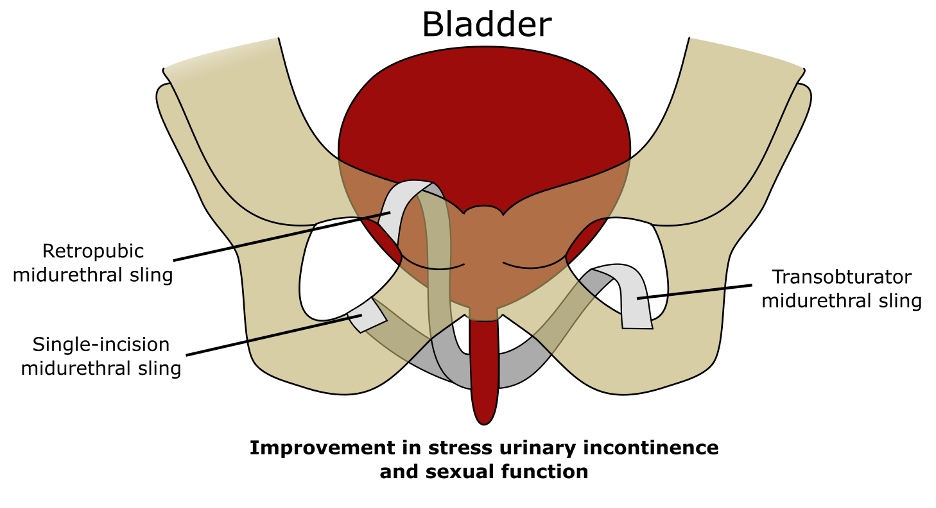
Figure 1. Visual representation of common sling placement approaches.
Written by: Minneh Song,1 Thomas R. Wong,2 Ilaha Isali, MD, MSc,3
- School of Medicine, Case Western Reserve University, Cleveland, OH, USA.
- School of Engineering, Case Western Reserve University, Cleveland, OH, USA.
- Department of Urology, New York-Presbyterian/Weill Cornell Medicine, New York, NY, USA
References:
- Chmaj-Wierzchowska K, Raba G, Dykczyński P, et al. Clinical outcomes of mid-urethral sling (mus) procedures for the treatment of female urinary incontinence: a multicenter study. J Clin Med. Nov 9 2022;11(22). doi:10.3390/jcm11226656
- Wu K, Huang E, Kobashi KC. Evolution of stress urinary incontinence (SUI) outcomes assessment: a narrative review. Gynecol Pelvic Med. Sept 30, 2024;7. doi:10.21037/gpm-24-21
- Song M, Wong TR, Isali I. Midurethral sling surgery: impacts on sexual function and approaches to complications. Int Urogynecol J. Published online January 22, 2026. doi:10.1007/s00192-025-06504-4
- Ruffolo AF, Melocchi T, Frigerio M, et al. Efficacy and safety of repeated synthetic mid-urethral sling for recurrent stress urinary incontinence: a systematic review and metanalysis. Eur J Obstet Gynecol Reprod Biol. 2025;308:34–46. doi:10.1016/j.ejogrb.2025.02.034