

Laser enucleation of the prostate (LEP) has established clinical superiority over transurethral resection for the surgical management of benign prostatic obstruction, offering durable outcomes and low complication rates across a wide range of prostate sizes.
Despite this evidence base, LEP remains underutilized in many centers. The limiting factor is not the technology — it is the learning curve. LEP demands a combination of anatomical orientation from within the prostatic urethra, identification and development of the adenoma-capsule dissection plane, controlled lobe mobilization, and safe morcellation. These skills require repeated, structured exposure before a trainee can perform them safely and independently.
Simulation-based training has already demonstrated its value across transurethral procedures, including resection of the prostate and bladder tumors. Multiple validated simulators are now integrated into formal training pathways, contributing to skill acquisition and shortening learning curves. For LEP, however, the simulation landscape has remained limited. Available models are few, and most lack standardized validation frameworks — a prerequisite for meaningful integration into surgical curricula. Our study was designed to address this gap directly.
The Simulator: Design Principles and Educational Rationale
The bench-top simulator evaluated in this study was developed through a dedicated collaboration between the Max Planck Institute for Medical Research (Heidelberg, Germany) and the ESU Lower Urinary Tract Endoscopy Working Group. The design philosophy was deliberate: rather than attempting to replicate every aspect of live surgery, the model was built to reproduce the anatomical landmarks and procedural sequence that are most critical for early skill acquisition in enucleation.
The replaceable prostate modules are manufactured from biomimetic hydrogel materials engineered to match the mechanical properties of both normal and BPH tissue, providing tactile feedback comparable to human prostatic tissue. Each module reproduces a central urethral lumen with a defined verumontanum, two lateral lobes, a median lobe, and a distinct outer capsule layer — the essential landmarks a trainee must learn to navigate. The modular design allows repeated practice and easy replacement between training sessions, ensuring reproducibility across trainees and centers. Integrated irrigation permits a fully fluid-filled environment compatible with standard laser resectoscopes.
Critically, the capsular plane is the educational core of this model. In LEP, most early difficulties arise from failure to identify the correct dissection plane — either remaining too superficial and leaving adenomatous tissue, or entering too deeply and risking capsular perforation. A simulator that allows trainees to repeatedly practice plane identification in a standardized, low-stakes setting addresses one of the most consequential barriers to learning the procedure.
Validation Findings: What the Data Show — and How to Interpret Them
The study was conducted during EUREP 2025 in Prague and involved 14 expert endourologists selected by the EAU based on substantial clinical and teaching experience in BPH surgery and laser enucleation. All had performed more than 100 BPH procedures, with a median annual LEP case volume of 52.5 (range 10–130). Their assessments therefore reflected the perspective of surgeons with both high procedural volume and active involvement in endourological education.
Face validity results were consistently strong. Mean Likert scores ranged from 3.57 to 3.86 on a 4-point scale, with agreement rates exceeding 90% for all domains and reaching 100% for anatomical realism, tissue handling, enucleation plane representation, ergonomics, procedural sequence, and overall training suitability. These findings confirm that the model provides a realistic and educationally coherent simulation environment in the judgment of highly experienced users.
Content validity requires a more nuanced interpretation. The overall S-CVI/Ave of 0.85 fell below the 0.90 threshold for excellent scale-level content validity, but this result was substantially influenced by one item: bleeding management, which received an I-CVI of 0.14 because the model does not simulate hemorrhage. This is an honest limitation and should be acknowledged transparently. However, a bench-top hydrogel simulator is not — and should not be — expected to reproduce the full complexity of intraoperative hemorrhage management. When the analysis was restricted to the model's core educational purpose (procedural steps and educational/global domains), the S-CVI/Ave rose to 0.91, meeting the threshold for excellent content validity. Domain-specific scores further support this: procedural steps achieved 0.89, and educational/global items achieved 0.95 — the highest of all domains, and a direct endorsement from expert educators that the model covers what matters most for early LEP training.
The ESU Curriculum Vision: Where This Model Fits
This validation study was conducted within the formal framework of the European School of Urology, and its implications extend well beyond a single simulator evaluation. The ESU Lower Urinary Tract Endoscopy Working Group is actively developing a structured, competency-based training curriculum for transurethral procedures — a progressive pathway that moves trainees from foundational skills through to advanced endoscopic interventions in a standardized and reproducible manner.
Within this curriculum, the bench-top LEP simulator is positioned as an entry-level platform — the first rung of a structured ladder. A trainee begins with the simulator to develop anatomical orientation, procedural sequencing, and capsular plane awareness before progressing to more complex training modalities such as ex-vivo or cadaveric models, video-based coaching with expert feedback, and ultimately supervised clinical practice. This progression is deliberate: each step builds the cognitive and technical foundations required for the next.
The standardized design of the simulator is particularly valuable for curriculum implementation across multiple centers. One of the enduring challenges in surgical education is variability — trainees in different institutions encounter different cases, different supervisors, and different learning environments. A validated, reproducible training tool can help establish common benchmarks, common assessment metrics, and comparable learning experiences across European and international centers. This aligns directly with the ESU's commitment to standardized, evidence-based surgical education.
Importantly, the groundwork for the next phase of curriculum development is already in place. The Cognitive Task Analysis, Delphi consensus process, and performance metrics for the simulator-based training pathway have been completed and will be reported separately. These elements form the methodological foundation for a dedicated construct validity study — the critical next step that will determine whether the simulator can differentiate between novice, intermediate, and expert performance, and whether training on this model translates into measurable skill improvement in the operating room.
Future Directions and Curriculum Integration
Laser enucleation of the prostate is a procedure with a recognized learning curve that requires structured, deliberate training — not one that can be adequately addressed through supervised operative exposure alone. The simulator evaluated in this study provides a validated, reproducible, and ethically sustainable platform for the early phases of that training. It does not replicate every aspect of live surgery, nor is it intended to. Its strength lies in providing a standardized environment for the repeated practice of the anatomical recognition and procedural steps that underpin the entire operation.
As the ESU curriculum for transurethral endoscopy continues to develop, validated simulation tools will be essential components — not optional supplements. This study contributes the first standardized face and content validation data for a LEP bench-top simulator within the ESU framework, and lays the groundwork for construct and predictive validation studies that will define its role in clinical training. The field of urological surgical education is moving toward competency-based, structured progression. Validated simulators for technically demanding procedures such as LEP are not a future aspiration — they are a present necessity.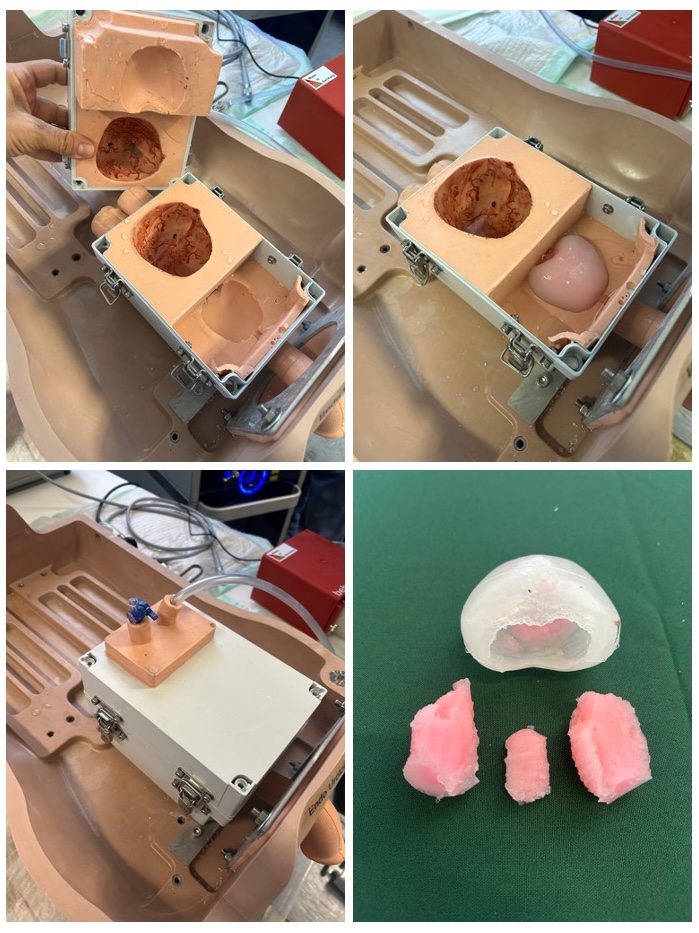
Figure 1. Max Planck Institute enucleation trainer with synthetic prostate module (from Sener et al., WJU 2026, Figure 1).
Written by: Tarik Emre Sener, MD, FEBU, Chair, ESU Lower Urinary Tract Endoscopy Working Group, Associate Professor of Urology, School of Medicine, Marmara University, Istanbul, Türkiye;
On behalf of the EAU European School of Urology Lower Urinary Tract Endoscopy Working Group
Read the Abstract