

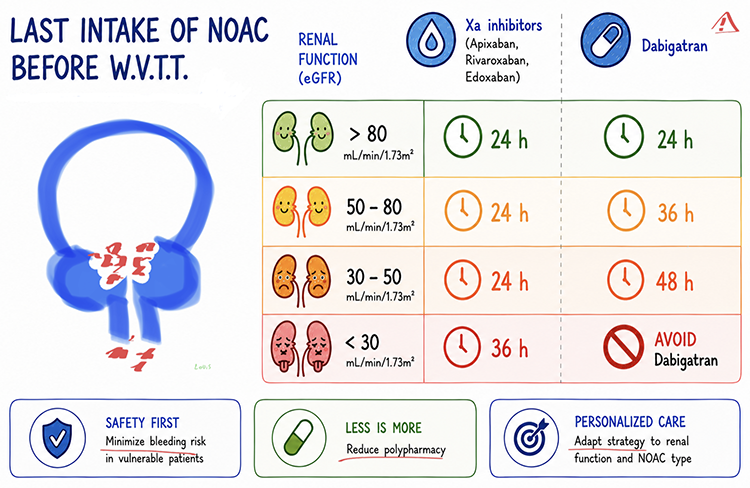
In this opinion article, we bring together expert perspectives on personalized treatment strategies for BPO, drawing on current evidence and clinical experience. Particular attention is devoted to the perioperative management of direct oral anticoagulants (NOACs), a highly relevant issue that frequently influences treatment selection and perioperative planning in this vulnerable patient population.
Beyond the preservation of ejaculatory function, minimally invasive surgical therapies (MISTs) should be evaluated within a broader framework that prioritizes procedural safety and risk reduction. The value of a MIST lies not only in its ability to provide effective symptom relief, but also in its capacity to minimize perioperative morbidity and facilitate treatment in patients who may not be ideal candidates for more invasive interventions. In certain clinical scenarios, these safety considerations may outweigh concerns regarding long-term durability.
Furthermore, the use of anticoagulants should be considered within the wider context of polypharmacy management. Reducing medication burden has emerged as an important therapeutic objective, particularly in frail and polymedicated patients. In this regard, MISTs may contribute not only to procedural safety but also to a broader strategy of therapeutic simplification.
Overall, this article aims to contribute to the ongoing discussion on safe, individualized, and minimally invasive treatment strategies for BPO, with a particular focus on the management of frail patients and those receiving chronic anticoagulant therapy.
Written by: Mathieu Coscarella, MD, FEBU, Urology Department, Hôpitaux Iris Sud, Hôpital Universitaire de Bruxelles, Brussels, Belgium
Read the Abstract