|
|
|
|
|
PEER-TO-PEER CLINICAL CONVERSATIONS |
|
|
|
|
|
|
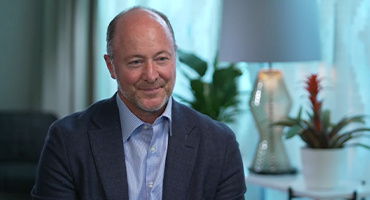
Working Group 4 Introduces Updated Terminology for Advanced Prostate Cancer
|
Andrew Armstrong, MD, MSc
Neeraj Agarwal speaks with Andrew Armstrong about the Prostate Cancer Working Group 4 consensus criteria and updated disease nomenclature. Dr. Armstrong explains that the terms castration-sensitive and castration-resistant have been replaced by androgen pathway modulator naive, sensitive, and resistant, applicable to any treatment, not just ADT.
|
|
|
|
|
|
|
|
|
|
|
|
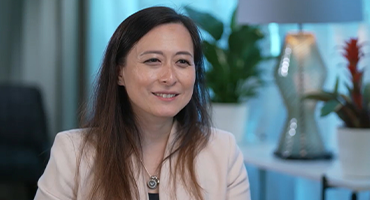
Considerations for Managing Patients as They Progress to Castration-Resistant Prostate Cancer
|
Tian Zhang, MD, MHS
Tian Zhang outlines management strategies for patients progressing from metastatic hormone-sensitive to castration-resistant prostate cancer with upfront expectation-setting discussions.
|
|
|
|
|
|
|
|
|

|
|
|
Balancing Treatment Intensification and Quality of Life in Elderly Prostate Cancer Patients
|
|
Rana McKay, MD
|
| Rana McKay discusses treating older patients with high-risk and locally advanced prostate cancer. She notes that 60% of prostate cancer diagnoses occur in men over 65 and 80% of projected deaths fall in men over 70.
|
|
|
|
|
|
|
|
|
|
|
|
| Treatment Utilization Among Patients with mHSPC in Real-World US Settings: A Prostate Cancer Disease Observation (PRECISION) Data Platform Analysis
|
| Daniel George, MD
|
| Daniel George presents this real-world US analysis which found that although use of ADT + androgen receptor pathway inhibitor doublet therapy increased from 2020 to 2025, nearly 40% of men with mHSPC still received ADT alone before progressing to mCRPC, death, or last follow-up. Triplet therapy use rose only modestly, with much higher uptake in oncology centers than in community urology practices, showing that guideline-recommended intensification is still underused.
|
|
|
|
|
|
|

|
|
|
|
| Estimating Median Overall Survival to Inform the ESMO-MCBS Scores in nmCRPC Using ARAMIS Study
|
| Martin Boegemann, MD
|
| Martin Boegemann presented a modeling analysis from ARAMIS evaluating predicted median overall survival and potential ESMO-MCBS scoring for darolutamide plus ADT in nmCRPC. The analysis suggested substantial clinical benefit and provides additional context for interpreting long-term outcomes in this treatment setting.
|
|
|
|
|
|
| Prespecified Third Interim Analysis of the Darolutamide Observational (DAROL) Study in Patients with nmCRPC: North American Subgroup Analysis
|
| Christopher Pieczonka, MD
|
| The North American subgroup of the real-world DAROL study showed that darolutamide was well tolerated in nmCRPC, with mostly low-grade adverse events and no new safety signals. Effectiveness outcomes were similar to the overall study population, with 24-month survival and PSA response results broadly consistent with the phase 3 ARAMIS trial.
|
|
|
|
|
|
| Real-World Assessment of New-Onset Central Nervous System Conditions in Patients with nmCRPC Cancer Treated with Apalutamide, Darolutamide, or Enzalutamide
|
| Charmi Patel, MD
|
| Charmi Patel presented a real-world analysis of nmCRPC patients treated with apalutamide, darolutamide, or enzalutamide, focusing on new-onset CNS-related conditions. The analysis reported variation in CNS event incidence and timing across therapies, highlighting the importance of considering patient-specific tolerability factors when selecting treatment.
|
|
|
|
|
|