|
|
 |
|
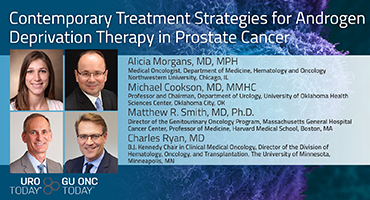
Androgen deprivation therapy (ADT) is commonly used to decrease the risk of prostate cancer progression and prolong survival in men with most stages of prostate cancer. Patients on ADT can experience a wide range adverse events effects including sexual dysfunction, loss of bone density, cardiovascular disease, metabolic complications, cognitive changes, and diminished quality-of-life. ADT remains the leading systemic therapy for locally advanced and metastatic disease. In this web-based program we are including the first two presentations by Matthew Smith and Charles J Ryan, the adverse effects of ADT are explored, as is the data that impacted the understanding of leuprolide acetate on the cardiovascular health of men with prostate cancer.
|
|
|
|
|
|
EXPERT-LED EDUCATIONAL PROGRAM |
|
|
|

|
|
Hormone Therapy with GnRH Agonists in Men with Prostate Cancer and CV Risk – “The American Heart Association" Guidance"
|
|
Matthew R. Smith, MD, Ph.D.
|
|
|
|
|
|
|
|
|
|
|
|

|
|
Complications of Androgen Deprivation Therapy for Prostate Cancer
|
|
Charles Ryan, MD
|
|
|
|
|
|
|
|
|
|
|
|
|
|
Cardiovascular Health of Men Treated with ADT for Prostate Cancer Discussion
|
|
Alicia Morgans, MD, MPH; Michael Cookson, MD, MMHC; Matthew Smith, MD, Ph.D.; and Charles Ryan, MD
|
|
|
|
|
|
|
|
|
|
|
| Management of Fatigue, Cognition, Dementia
|
| Charles Ryan, MD
|
| Charles Ryan discussed the management of fatigue and cognitive changes induced by androgen deprivation therapy (ADT). Fatigue in patients treated with ADT is common, occurring in more than 40% of them. The addition of potent androgen receptor (AR) targeting agents may worsen this. Long term ADT may be associated with cognitive changes and dementia development. Fatigue might represent something more extensive than just fatigue and maybe a sign of cognitive decline and depression.
|
|
|
|
|
|
| Management of Metabolic Changes
|
| Neal Shore, MD, FACS
|
| At the Advanced Prostate Cancer Consensus Conference, Neal Shore presented on the metabolic complications of androgen deprivation therapy (ADT) and how to manage them. ADT has many complications, including skeletal events, cardiovascular disease, diabetes, neurocognitive disease, and others. ADT also confers significant quality of life complications including hot flashes, loss of libido, erectile dysfunction, fatigue, and others.
|
|
|
|
|
|
| Cardiovascular Risk with GnRH Agonists and Antagonists: Real-world Data from UK Primary Care
|
| Patrick Davey, MD
|
| At the 2020 American Urological Association virtual Annual Meeting, Patrick Davey presented on cardiovascular risks associated with androgen deprivation therapy (ADT). ADT in prostate cancer is an effective treatment for a certain period of time and does improve prognosis. However, there is concern over long term side effects, including cardiovascular events.
|
|
|
|
|
|
|
|
|
|
|