

(UroToday.com) The 2025 Western Section AUA annual meeting featured a prostate cancer session and a presentation by Dr. Mouneeb Choudry discussing the impact of PSA doubling time and absolute PSA on PSMA PET positivity in post-prostatectomy biochemical recurrence.
Over the last several years, the utility of PSMA PET/CT imaging during the work-up of biochemical recurrence has become standard of care for management of these patients. The objective of this study, presented at the 2025 Western Section AUA annual meeting, was to investigate the association between PSA doubling time, absolute PSA levels, and PSMA PET/CT scan positivity in patients with biochemical recurrence after radical prostatectomy.
This study retrospectively identified 405 patients from the Mayo Clinic Advanced Prostate Cancer Database (2016–2024) who underwent PSMA PET/CT for biochemical recurrence following radical prostatectomy. Inclusion required radical prostatectomy as initial treatment, at least three postoperative PSA values, and PSMA PET obtained before any salvage therapy. PSA doubling time was calculated using at least three PSA values over at least 3 months and categorized as <= 6, 6-12, or >12 months. Patients receiving adjuvant therapy prior to imaging or lacking PSA data were excluded.
Among the 405 patients, the baseline demographics of patients undergoing PSMA PET/CT imaging at biochemical recurrence are highlighted in the following table:
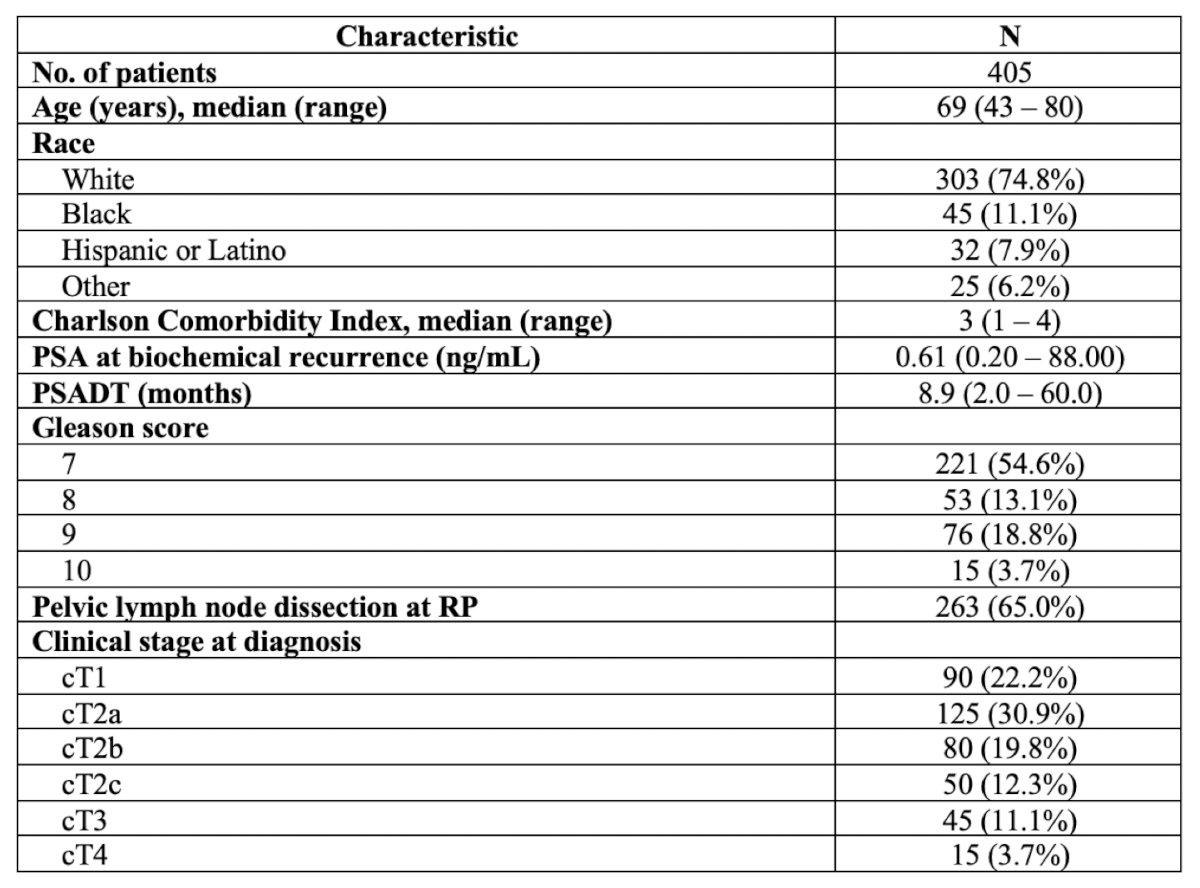
The median PSA at the time of imaging was 0.61 ng/mL, and PSMA PET positivity increased with higher PSA levels: 57.8% at 0.2–0.5 ng/mL, 72.6% at >0.5–1 ng/mL, and 95.0% at >1 ng/mL. The following figure highlights PSMA PET/CT positivity by PSA level and PSA doubling time category:
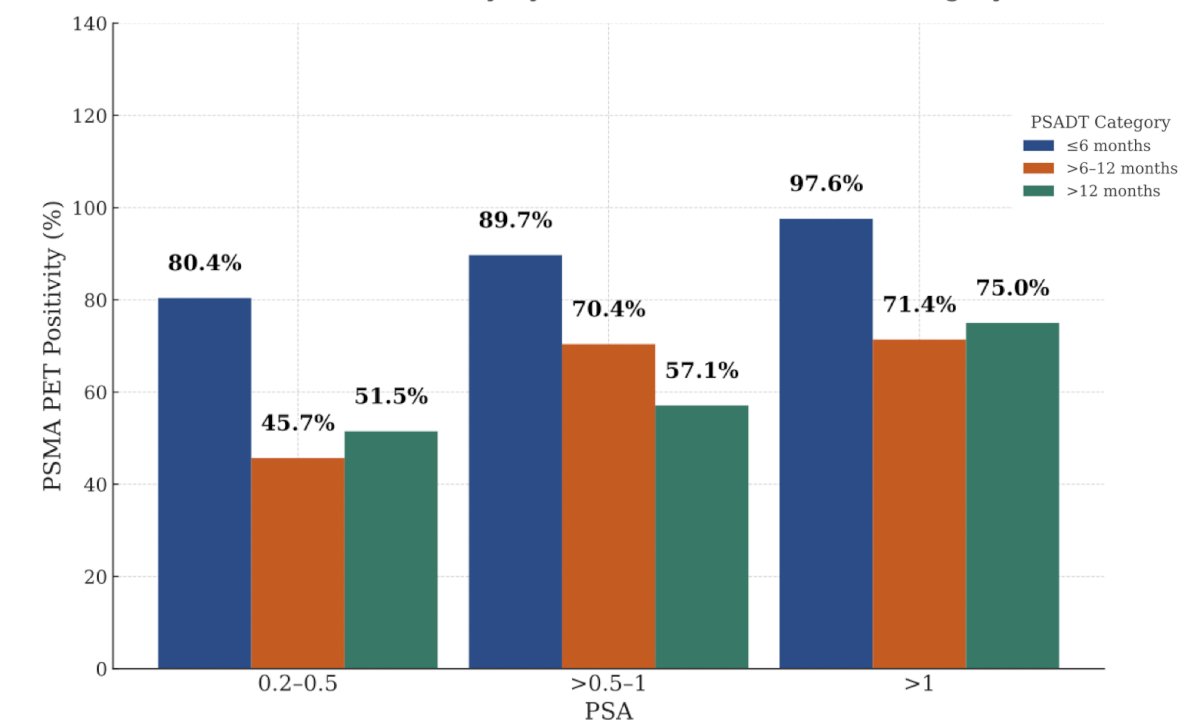
PSA doubling time independently predicted PSMA positivity (OR 0.94 per month, p = 0.0003), with the strongest effect at the lowest PSA range (<= 6 months versus 6-12 months: OR 4.88, p = 0.0019; <= 6 months versus >12 months: OR 3.87, p = 0.001):

Dr. Choudry concluded this presentation discussing the impact of PSA doubling time and absolute PSA on PSMA PET positivity in post-prostatectomy biochemical recurrence with the following take-home points:
- Shorter PSA doubling time was strongly associated with increased PSMA PET positivity
- The effect was most pronounced at lower PSA levels during early biochemical recurrence
- This highlights PSA doubling time as a key factor for selecting optimal timing of PSMA PET imaging
- This data supports the incorporation of PSA doubling time into clinical pathways to improve diagnostic yield and efficiency
Presented by: Mouneeb M. Choudry, MD, Mayo Clinic, Phoenix, AZ
Written by: Zachary Klaassen, MD, MSc – Urologic Oncologist, Associate Professor of Urology, Georgia Cancer Center, Wellstar MCG Health, @zklaassen_md on Twitter during the 2025 Western Section American Urological Association (AUA) Annual Meeting, Napa Valley, CA, Sun, Nov 2 – Thurs, Nov 6, 2025.