

(UroToday.com) During the World Congress of Endourology and Uro-Technology’s Basic Science Poster Session, Dr. Gabriel Carreno Galeano from the University of Louisville presented preclinical data demonstrating that combining a bivalent adenoviral prostate cancer vaccine (Ad-PS2) with immune checkpoint inhibition (ICI) using anti-CTLA4 antibodies induces durable tumor regression and immune memory in a murine model of prostate cancer.
This study builds on their prior work, which showed the efficacy of the Ad-PS2 vaccine, which targets two tumor-associated antigens, PSA and PSCA. While immunotherapy has revolutionized treatment in other solid tumors, prostate cancer has remained largely resistant, with limited response to both tumor vaccines and ICI. Dr. Carreno and his colleagues hypothesized that combining these modalities could overcome this resistance and drive a synergistic immune response to treat prostate cancer.
First, Balb/c mice were injected subcutaneously with 5×10⁵ prostate tumor cells expressing human PSA and PSCA and treatment groups received either the Ad-PS2 tumor vaccine alone, ICI alone (either anti-PD1 or anti-CTLA4), or a combination of both the AdPS2 vaccine and ICI. Dr. Carreno stated that their initial dosing of ICIs (300 µg administered weekly for three weeks) was based on literature precedent; however, dose titration studies were also performed using 200 µg and 100 µg anti-CTLA4 in combination with the Ad-PS2 vaccine. To evaluate immune memory, mice rendered tumor-free were rechallenged with a double dose (1×10⁶ cells) of prostate tumor cells, 90 days after the initial dose, and their status was closely monitored until day 128. CD8+ T cell infiltration was assessed via immunohistochemistry (IHC), and organ tissue toxicity was evaluated by quantifying liver analytes and inflammatory cells.
Dr. Carreno reports that the combination of Ad-PS2 with anti-CTLA4 led to complete tumor regression, with all treated mice achieving a tumor-free status. Moreover, the dose titration studies demonstrated that 200 µg and 100 µg of anti-CTLA4 were sufficient to induce complete tumor regression when combined with Ad-PS2, establishing a lower effective threshold for treatment. In contrast, anti-PD1 monotherapy or combination with Ad-PS2 failed to produce additional therapeutic benefit (Figure 1). Additionally, tissue toxicity analysis showed no significant increase in liver inflammation or serum liver enzyme levels across treatment groups (Figure 2).
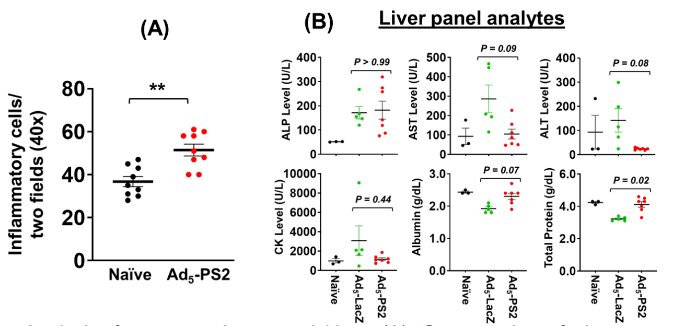
Figure 1 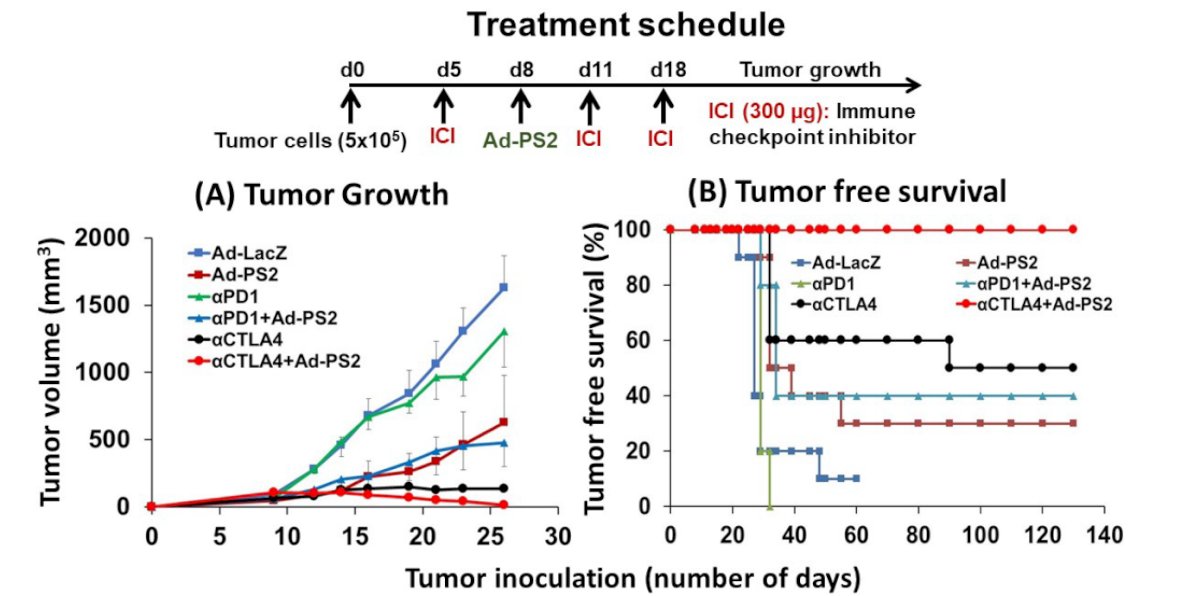
Figure 2
Following rechallenge, all mice remained tumor-free, supporting the durability of the combined vaccine/ICI treatment (Figure 3).
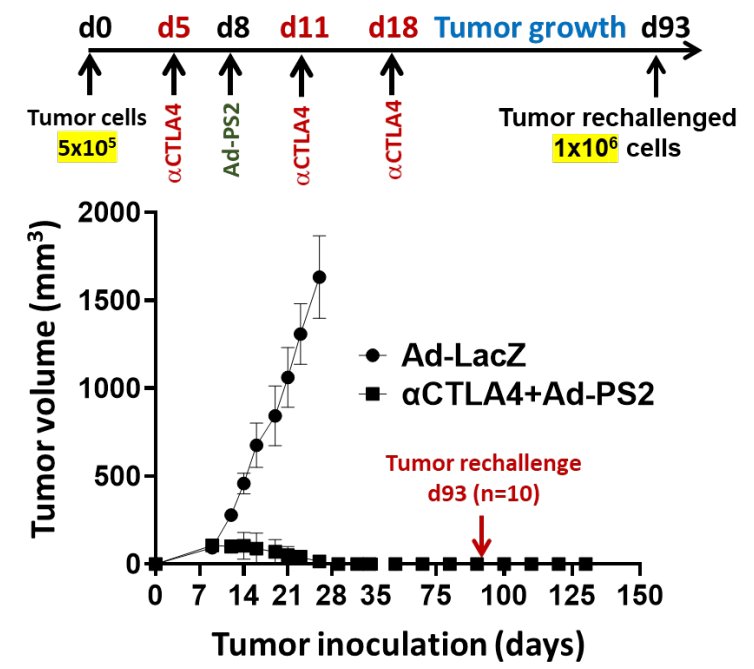
Figure 3
IHC confirmed significantly increased infiltration of CD8+ T cells in tumors treated with Ad-PS2, anti-CTLA4, and Ad-PS2 + anti-PD1. Dr. Carreno also highlights that infiltration could not be quantified in mice treated with Ad-PS2 + anti-CTLA4, as the mice were tumor free (Figure 4).
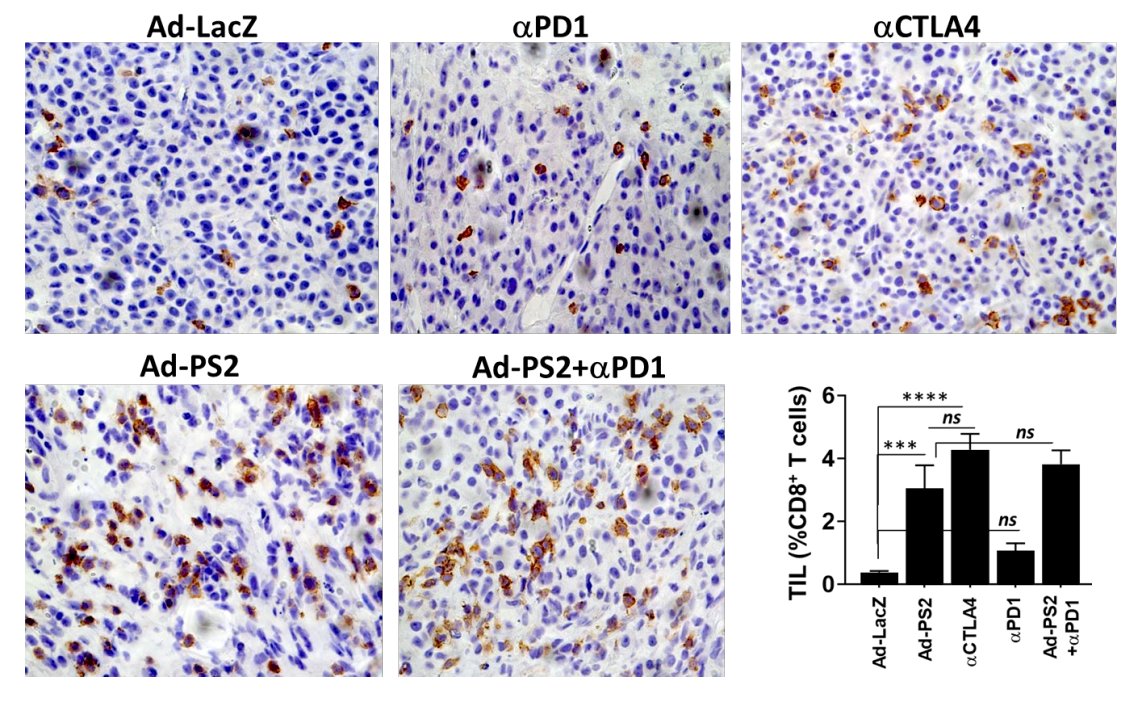
Figure 4
These results suggest that anti-CTLA4 ICI synergizes with the Ad-PS2 vaccine to generate a robust cytotoxic T-cell response capable of inducing both primary tumor clearance and long-term resistance, underscoring the potential clinical value of this combined therapy in future human trials targeting advanced prostate cancer.
Presented by: Gabriel Leonardo Carreno Galeano, MD, University of Louisville
Written by: Tom No, Department of Urology, University of California Irvine, during the World Congress of Endourology and Uro-Technology (WCET) Annual Meeting, September 8 – September 12, 2025, Phoenix, Arizona.
References:
- Karan D. Formulation of the bivalent prostate cancer vaccine with surgifoam elicits antigenspecific effector T cells in PSA-transgenic mice. Vaccine. 2017 Oct 13;35(43):5794-5798. doi: 10.1016/j.vaccine.2017.09.037. Epub 2017 Sep 20. PMID: 28939158; PMCID: PMC5617798.
- Karan D, Dubey S, Van Veldhuizen P, Holzbeierlein JM, Tawfik O, Thrasher JB. Dual antigen target-based immunotherapy for prostate cancer eliminates the growth of established tumors in mice. Immunotherapy. 2011 Jun;3(6):735-46. doi: 10.2217/imt.11.59. PMID: 21668311.