

(UroToday.com) The 2026 USPCC annual meeting featured a treatment of metastatic APMN/S prostate cancer session and a point-counterpoint presentation by Dr. Jason Efstathiou discussing metastasis-directed radiation. Dr. Efstathiou started his presentation by reviewing the evolving understanding of metastatic dissemination.
Drawing on the landmark phylogenetic work by Gundem and colleagues,1 he highlighted that metastatic spread is not simply a one-way process originating from the primary tumor. Rather, both the primary tumor and established metastatic deposits can seed additional metastases, with metastasis-to-metastasis seeding representing a major mechanism of disease progression: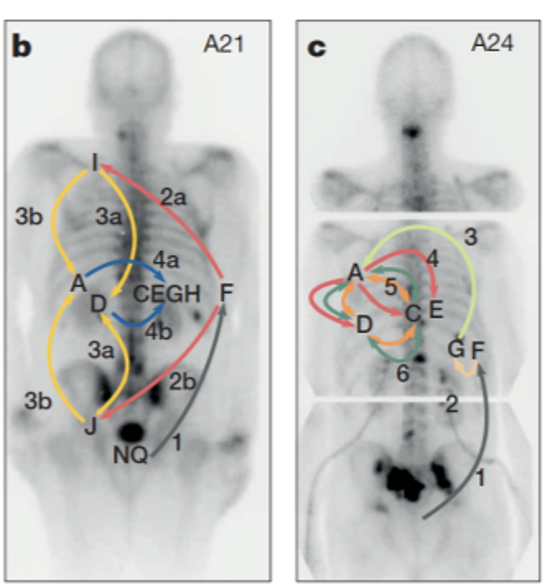
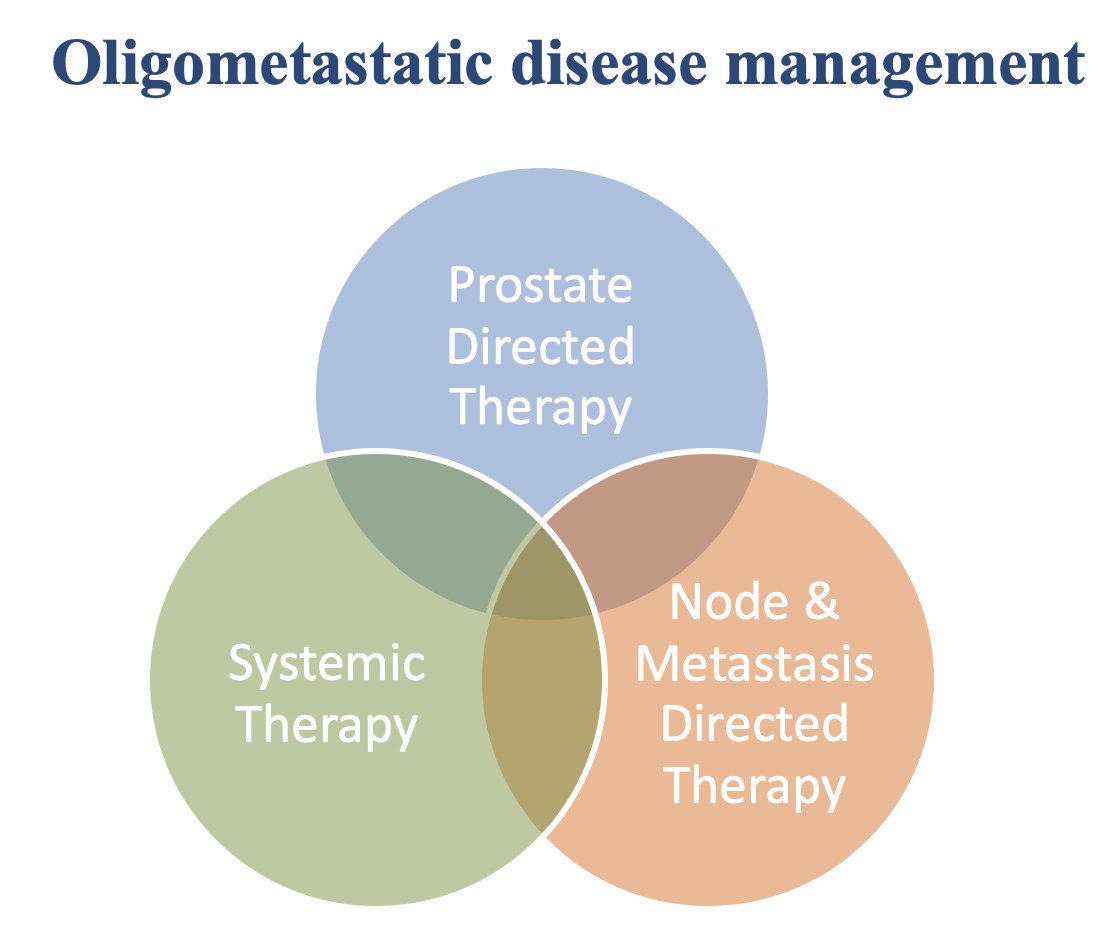
This biologic framework provides the rationale for ablating not only the primary tumor but also visible metastatic deposits if the goal is durable disease control or potential cure in oligometastatic disease.
To date, no completed randomized trial has directly compared prostate-directed radiotherapy with metastasis-directed therapy. Instead, these approaches have generally been evaluated in different clinical populations and therefore answer different questions. Prostate radiotherapy has demonstrated benefit in carefully selected patients with de novo low-burden metastatic disease, whereas randomized metastasis-directed therapy trials have consistently shown improvements in disease control across oligorecurrent and systemic therapy settings. Consequently, these strategies should be viewed as complementary rather than mutually exclusive. Treating the prostate addresses the site where the cancer originated, whereas metastasis-directed therapy targets the lesions responsible for defining the patient's metastatic state. In the era of PSMA PET imaging, limiting treatment to the prostate alone may therefore represent subtotal consolidation.
There is generally evidence supporting prostate-directed radiotherapy in low-volume metastatic APMN prostate cancer. STAMPEDE2 established an overall survival benefit in patients with de novo low-burden metastatic disease, with a reported hazard ratio of 0.64, while PEACE-13 demonstrated improvements in radiographic progression-free survival and reductions in serious genitourinary events without a proven radiotherapy-related overall survival benefit. Modern prostate radiotherapy is generally well tolerated. However, neither trial treated distant metastatic sites, and therefore neither addresses the role of metastasis-directed therapy in metachronous disease, oligoprogression, or PSMA PET-defined metastatic disease. Furthermore, the absence of benefit from prostate-only radiotherapy among patients with high-volume disease may simply reflect inadequate treatment of total tumor burden rather than evidence that comprehensive radiation strategies are ineffective.
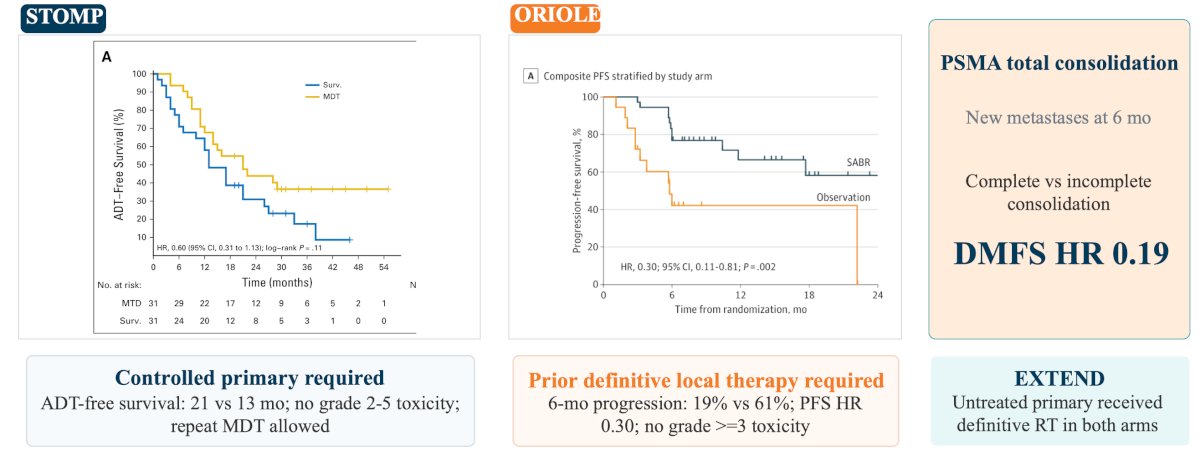
Dr. Efstathiou then discussed randomized metastasis-directed therapy trials performed in patients whose primary tumors had already been controlled. STOMP4 and ORIOLE,5 and were foundational studies supporting metastasis-directed therapy. In STOMP, prior definitive local therapy was required, and metastasis-directed therapy prolonged ADT-free survival from 13 to 21 months without grade 2–5 toxicity, while repeat metastasis-directed therapy remained feasible. ORIOLE similarly required prior definitive local therapy and demonstrated a reduction in six-month progression from 61% to 19%, corresponding to a progression-free survival hazard ratio of 0.30, with no grade 3 or higher toxicity. Perhaps most notably, complete consolidation of all PSMA-avid disease dramatically reduced the development of new metastases at six months (16% versus 63%), with a distant metastasis-free survival hazard ratio of 0.19:
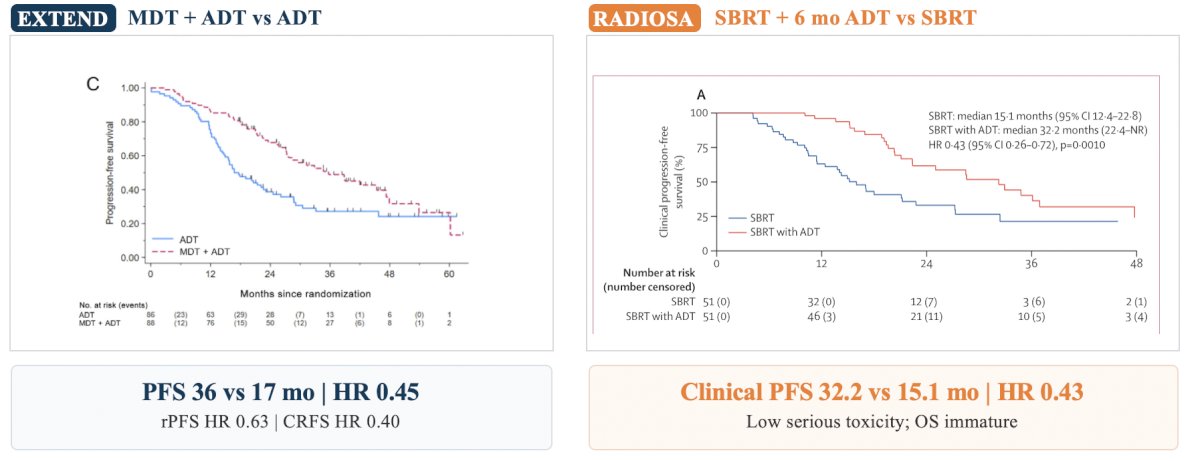
EXTEND6 and RADIOSA7 are complementary randomized trials evaluating integration of metastasis-directed therapy with systemic therapy. EXTEND addressed whether metastasis-directed therapy adds benefit to ADT, whereas RADIOSA assessed whether six months of ADT enhances outcomes following stereotactic body radiotherapy. In the combined intermittent and continuous ADT analysis of EXTEND, the median progression-free survival improved from 17 to 36 months (HR 0.45), while radiographic progression-free survival (HR 0.63) and castration resistance-free survival (HR 0.40) also improved. RADIOSA demonstrated that adding six months of ADT to stereotactic body radiotherapy prolonged clinical progression-free survival from 15.1 to 32.2 months (HR 0.43), with low rates of serious toxicity and immature overall survival data:
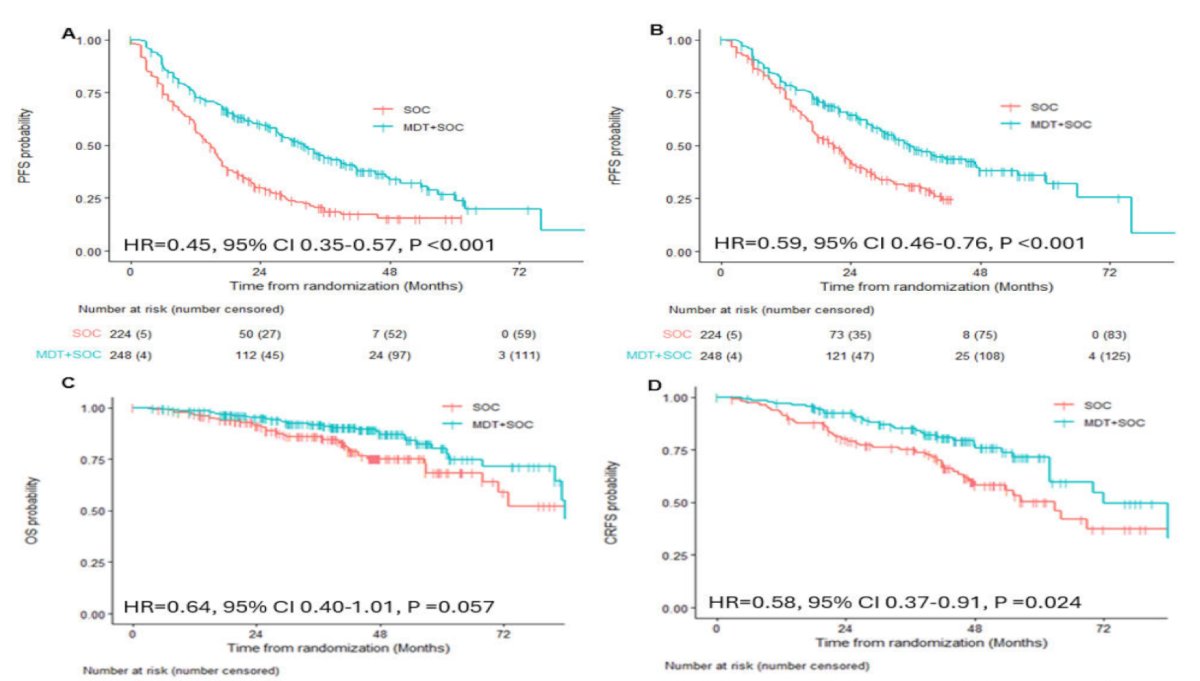
Dr. Efstathiou then focused on the recently reported WOLVERINE8 individual patient data meta-analysis, which he notes is the highest-level synthesis of randomized metastasis-directed therapy evidence currently available. Pooling six randomized trials involving 472 patients with a median follow-up of 40.7 months, metastasis-directed therapy significantly improved progression-free survival (HR 0.45, 95% CI 0.35–0.57), radiographic progression-free survival (HR 0.59, 95% CI 0.46–0.76), and castration resistance-free survival (HR 0.58, 95% CI 0.37–0.91). Overall survival also favored metastasis-directed therapy (HR 0.64, 95% CI 0.40–1.01), although the confidence interval crossed unity and therefore definitive survival benefit remains unproven:
Dr. Efstathiou emphasized that randomized evidence now extends well beyond biochemical recurrence; however, phase III trial confirmation remains essential:
Although SABR-COMET9 was a mixed-histology trial and cannot establish prostate cancer-specific efficacy, it provides proof of principle that comprehensive metastatic ablation can improve survival. In this trial, the median overall survival improved from 28 to 50 months, while 5-year overall survival increased from 17.7% to 42.3%:
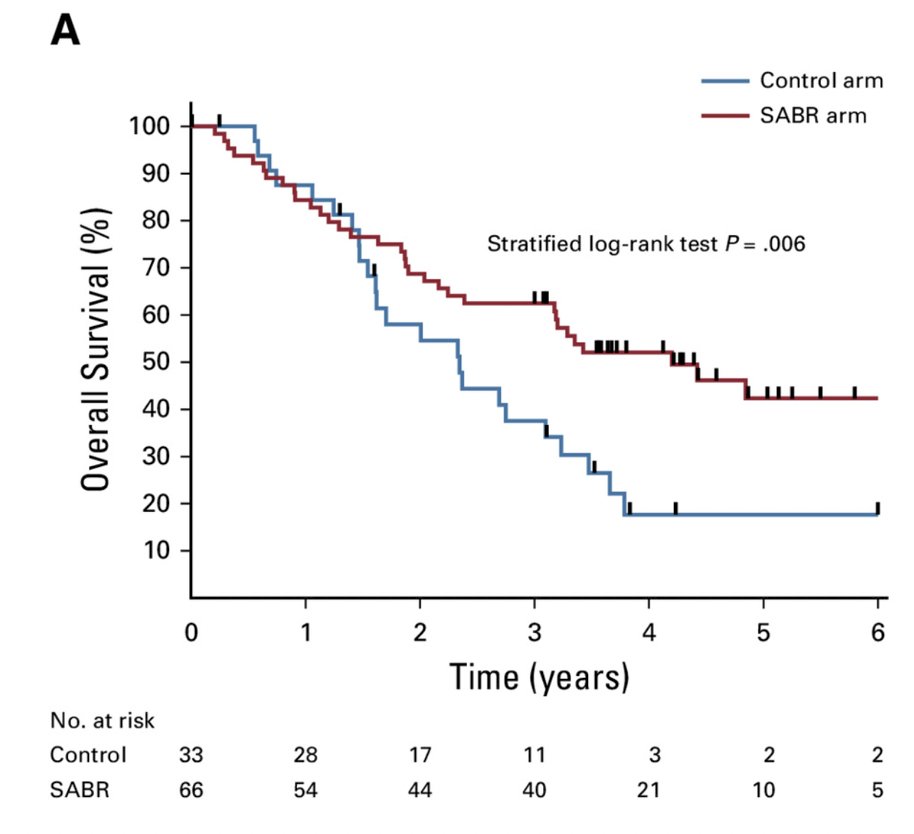
However, only 16 patients had prostate cancer, including 14 assigned to stereotactic ablative radiotherapy and only two to the control arm. Additionally, three treatment-related deaths occurred in the SABR arm across all tumor histologies, underscoring the importance of careful patient selection. Consequently, Dr. Efstathiou viewed SABR-COMET as supporting the biologic plausibility of metastasis-directed therapy while acknowledging that prostate-specific survival benefit remains to be established.
The PEACE V-STORM trial10 evaluated patients with PET-detected pelvic nodal oligorecurrence following prior radical local therapy. Patients were randomized to focal metastasis-directed radiotherapy or elective pelvic nodal radiotherapy with an involved-node boost, with both groups receiving six months of ADT. The 4-year metastasis-free survival improved from 63% to 76%, favoring elective nodal irradiation (HR 0.62). These findings suggest that in pelvic nodal disease, the biologic metastatic unit may extend beyond the single PET-positive lymph node, and that focal node-only stereotactic body radiotherapy may leave untreated microscopic regional disease.
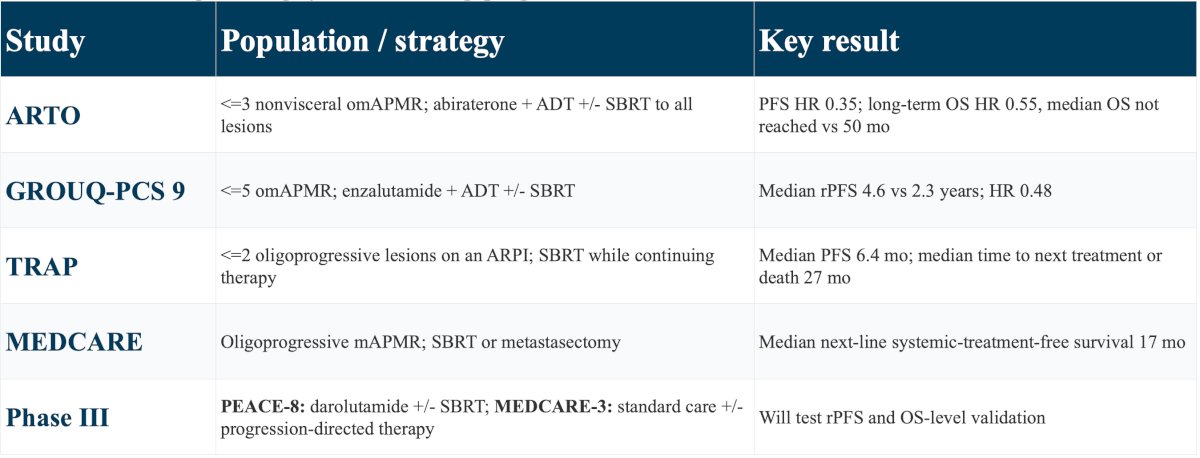
Data in the metastatic APMR prostate cancer space reinforce the rationale for metastasis-directed therapy. Although these trials were performed in a different disease state, Dr. Efstathiou notes that they strengthen the concept of ablating resistant metastatic clones while maintaining an otherwise effective systemic therapy backbone. In ARTO,11 adding stereotactic body radiotherapy to abiraterone + ADT improved progression-free survival (HR 0.35), while long-term follow-up demonstrated an overall survival hazard ratio of 0.55, with the median overall survival not yet reached compared with 50 months. GROUQ-PCS 912 similarly demonstrated improved radiographic progression-free survival with enzalutamide + stereotactic body radiotherapy (median 4.6 versus 2.3 years; HR 0.48). The TRAP trial13 and MEDCARE trial14 further supported treatment of oligoprogressive lesions to prolong continuation of effective systemic therapy. Ongoing phase III trials, including PEACE-8 and MEDCARE-3, will determine whether these disease-control improvements translate into definitive survival benefit:
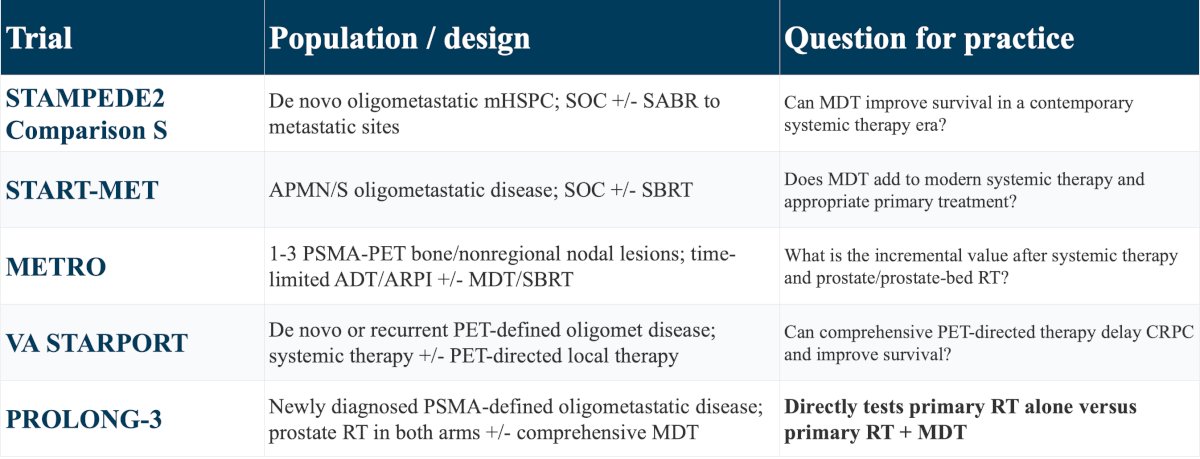
Additionally, there are several ongoing phase III studies designed to refine the role of metastasis-directed therapy in metastatic APMS prostate cancer. STAMPEDE2 Comparison S, START-MET, METRO, VA STARPORT, and PROLONG-3 all evaluate whether comprehensive treatment of visible metastatic disease adds benefit to modern systemic therapy and, when appropriate, prostate-directed radiotherapy. Among these, PROLONG-3 is particularly noteworthy because prostate radiotherapy is delivered in both treatment arms, allowing direct assessment of the incremental value of comprehensive metastasis-directed therapy beyond optimal primary treatment:
Dr. Efstathiou concluded his presentation discussing metastasis-directed radiation in metastatic APMS with the following take-home points:
- Why MDT?
- Directly treats the lesions that define metastatic disease
- Benefit persists when the primary is controlled or equally treated
- Randomized data support progression-free survival, radiographic progression-free survival, castration resistant free survival, and treatment deferral benefit
- Low significant toxicity in selected patients
- Where the evidence is weak:
- Mostly phase II trials with heterogeneous imaging and systemic backbones
- No completed head-to-head trial of primary radiotherapy versus metastasis-directed therapy
- Overall survival benefit in APMN/S remains unproven
- PSMA response/progression rules are evolving
- What remains contested:
- Patient selection?
- How many lesions are too many?
- When can systemic therapy be finite or stopped?
- How should persistent PSMA uptake be handled?
- When and how often should metastasis-directed therapy be repeated?
- Which biomarkers identify true oligometastatic biology?
Presented by: Jason Efstathiou, MD, DPhil, FASTRO, FACRO, Professor of Radiation Oncology, Harvard Medical School, Vice-Chair of Faculty & Academic Affairs and Director of the Genitourinary (GU) Division in the Department of Radiation Oncology, Clinical Co-Director of The Claire and John Bertucci Center for Genitourinary Cancers, Massachusetts General Hospital, Boston, MA
Written by: Zachary Klaassen, MD, MSc – Urologic Oncologist, Associate Professor of Urology, Georgia Cancer Center, Wellstar MCG Health, @zklaassen_md on Twitter during the United States Prostate Cancer Consensus (USPCC) 2026 Annual Meeting, Deer Valley, UT, Thurs, July 30 – Sat, Aug 1, 2026.
References:
- Gundem G, Van Loo P, Kremeyer B, et al. The evolutionary history of lethal metastatic prostate cancer. Nature. 2015 Apr 16;520(7547):353-357.
- Parker CC, James ND, Brawley CD, et al. Radiotherapy to the primary tumour for newly diagnosed, metastatic prostate cancer (STAMPEDE): A randomized controlled phase 3 trial. Lancet 2018 Dec 1;392(10162):2353-2366.
- Bossi A, Foulon S, Maldonado X, et al. Efficacy and safety of prostate radiotherapy in de novo metastatic castration-sensitive prostate cancer (PEACE-1): A multicenter, open-label, randomized, phase 3 study with a 2 x 2 factorial design. Lancet. 2024 Nov 23;404(10467):2065-2076.
- Ost P, Reynders D, Decaestecker K, et al. Surveillance of metastasis-directed therapy for oligometastatic cancer recurrence: A prospective, randomized, multicenter phase II trial. J Clin Oncol. 2018 Feb 10;36(5):446-453.
- Phillips R, Shi WY, Deek M, et al. Outcomes of Observation vs Stereotactic Ablative Radiation for Oligometastatic Prostate Cancer: The ORIOLE Phase 2 Randomized Clinical Trial. JAMA Oncol 2020 Mar 26;6(5):650-659.
- Tang C, Sherry AD, Haymaker C, et al. Addition of metastasis-directed therapy to intermittent hormone therapy for oligometastatic prostate cancer: The EXTEND phase 2 randomized clinical trial. JAMA Oncol. 2023 Jun 1;9(6):825-834.
- Marvaso G, Corrao G, Zaffaroni M, et al. ADT with SBRT versus SBRT alone for hormone-sensitive oligorecurrent prostate cancer (RADIOSA): A randomized, open-label, phase 2 clinical trial. Lancet Oncol. 2025 Mar;26(3):300-311.
- Tang C, Sherry AD, Hwang H, et al. Metastasis-directed therapy and standard of care versus standard of care for oligometastatic prostate cancer (WOLVERINE): A systematic review and individual patient data meta-analysis from the X-MET collaboration. Lancet Oncol. 2026 Feb;27(2):181-190.
- Palma DA, Olson R, Harrow S, et al. Stereotactic Ablative Radiotherapy for Comprehensive Treatment of Oligometastatic Cancers: Long-Term Results of the SABR-COMET Phase II Randomized Trial. J Clin Oncol. 2020 Sep 1;38(25):2830-2838.
- Ost P, Siva S, Brabrand S, et al. Salvage metastasis-directed therapy versus elective nodal radiotherapy for oligorecurrent nodal prostate cancer metastases (PEACE V-STORM): A phase 2, open-label, randomized controlled trial. Lancet Oncol. 2025 Jun;26(6):695-706.
- Francolini G, Allegra AG, Detti B, et al. Stereotactic body radiation therapy and abiraterone acetate for patients affected by oligometastatic castrate-resistant prostate cancer: A randomized phase II trial (ARTO). J Clin Oncol. 2023 Dec 20;41(36):5561-5568.
- Niazi T, Saad F, Tisseverasinghe S, et al. Metastasis-directed therapy in addition to standard systemic therapy in oligometastatic castration-resistant prostate cancer in Canada (GROUQ-PCS 9): A multicentre, open-label, randomized, phase 2 trial. Lancet Oncol. 2025 Sep;26(9):1158-1167.
- Patel P, Dreibe S, Attard G, et al. Stereotactic body radiation therapy for oligoprogressive disease in androgen-suppressed prostate cancer: Primary endpoint analysis of the TRAP trial. Int J Radiat Oncol Biol Phys. 2026 May 1;125(1):285-294.
- Rans K, Joniau S, Berghen C, et al. Progression-directed therapy in oligoprogressive castration-resistant prostate cancer: Final results from the prospective, single-arm, phase 2 MEDICARE trial. Eur Urol Oncol. 2024 Dec;7(6):1441-1450.