

(UroToday.com) The 2025 SUO Annual Meeting included a prostate cancer poster session in which Dr. Fariba Jafari presented the trial-in-progress (TiP) poster for IDeate-Prostate02, a global, multicenter, phase 1/2 umbrella study evaluating ifinatamab deruxtecan (I-DXd)—a B7-H3–directed antibody-drug conjugate (ADC)—alone or in combination with docetaxel, opevesostat, abiraterone acetate, or enzalutamide in patients with previously treated metastatic castration-resistant prostate cancer (mCRPC).
There remains a significant unmet need for effective therapies for mCRPC, particularly for patients who progress despite one or two prior androgen receptor pathway inhibitors (ARPIs). B7-H3 (CD276) is highly overexpressed in mCRPC and associated with poor prognosis and immune resistance. I-DXd is a next-generation ADC composed of a fully human anti–B7-H3 antibody linked to a potent topoisomerase I inhibitor payload (DXd) via a tumor-selective tetrapeptide-cleavable linker.
Early phase studies of I-DXd have demonstrated promising antitumor activity, durable responses, and a manageable safety profile in heavily pretreated mCRPC, supporting expansion into combination regimens.
IDeate-Prostate02 is designed to evaluate I-DXd in multiple therapeutic contexts—both as monotherapy and as part of rational combination strategies.
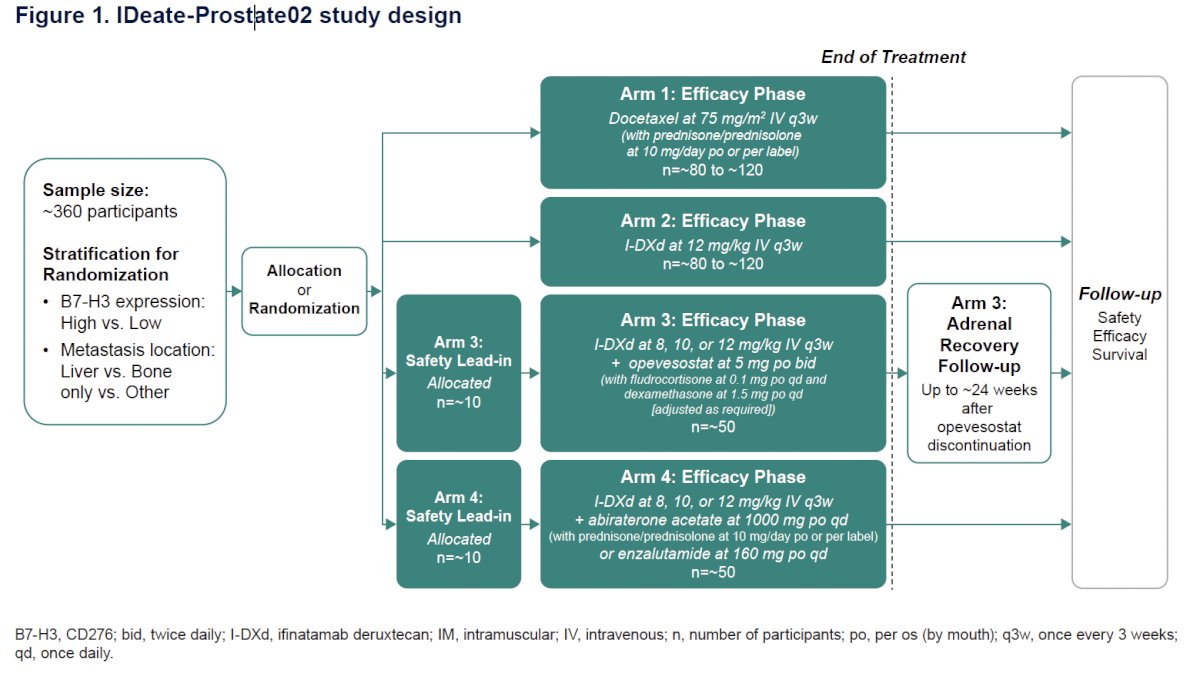
As depicted in Figure 1 below, IDeate-Prostate02 enrolls approximately 360 participants randomized or allocated into one of four arms:
- Arm 1: Docetaxel 75 mg/m² IV q3w (± steroid per label)
- Arm 2: I-DXd 12 mg/kg IV q3w (monotherapy)
- Arm 3: I-DXd (8/10/12 mg/kg q3w) + opevesostat 5 mg PO BID
- Arm 4: I-DXd (8/10/12 mg/kg q3w) + abiraterone 1000 mg qd (with prednisone) or enzalutamide 160 mg qd
Arms 3 and 4 include an initial safety lead-in (n≈10 each) before expansion into the main efficacy cohorts.
Randomization is stratified by:
- B7-H3 expression: high vs low
- Metastatic pattern: liver vs bone-only vs other sites
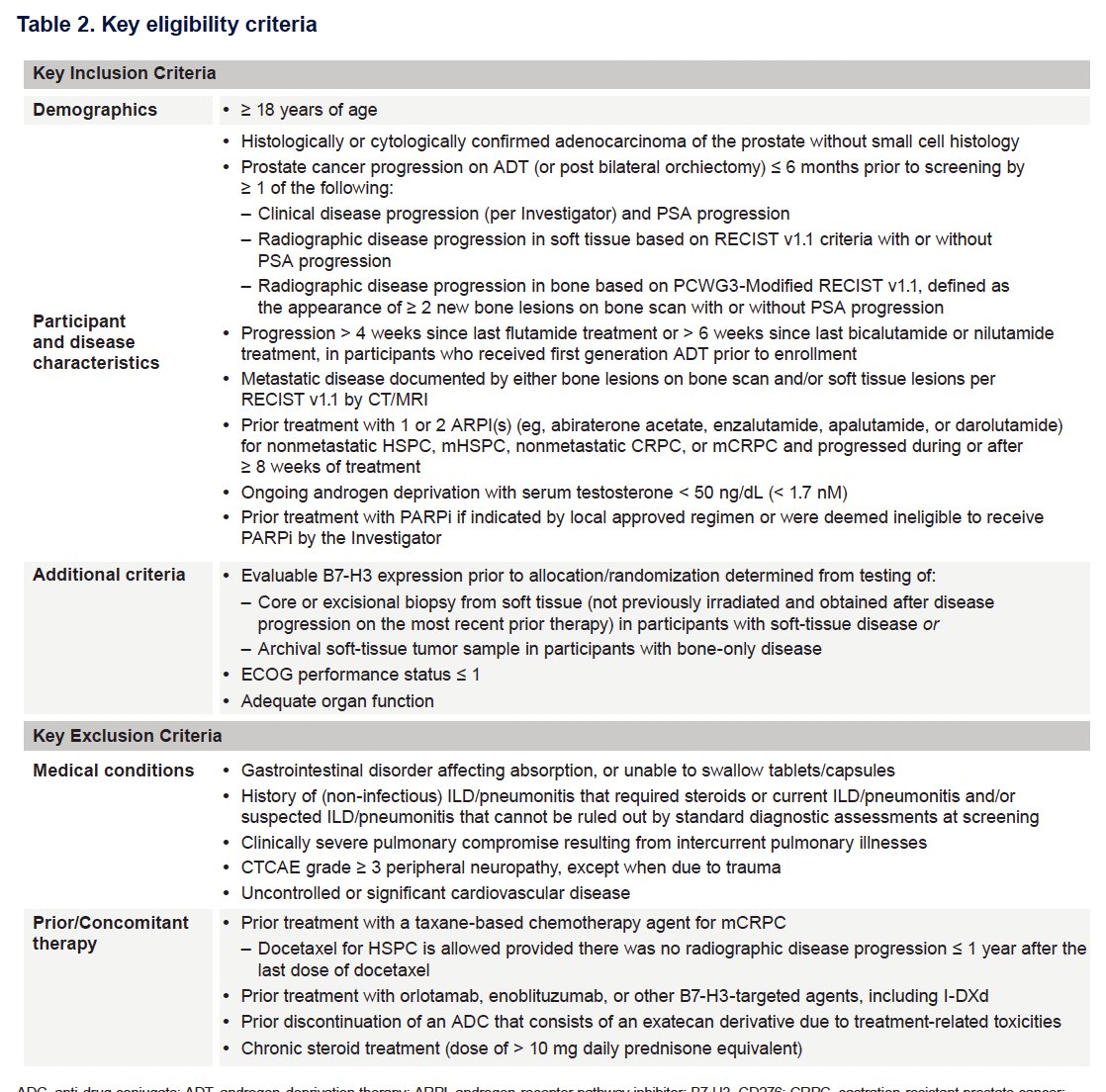
The key eligibility criteria are as follows:
- Histologically/cytologically confirmed adenocarcinoma of the prostate
- Documented metastatic disease by bone scan and/or CT/MRI
- Prior treatment with 1–2 ARPIs
- Disease progression ≤6 months prior to screening via:
- PSA progression
- Radiographic progression (RECIST v1.1 for soft tissue; PCWG3-modified for bone)
- Clinical progression
- Evaluable B7-H3 expression via soft-tissue biopsy or archival sample
- No prior taxane for mCRPC (docetaxel for mHSPC allowed if no progression ≤1 year after last dose)
- No prior B7-H3-targeted therapy
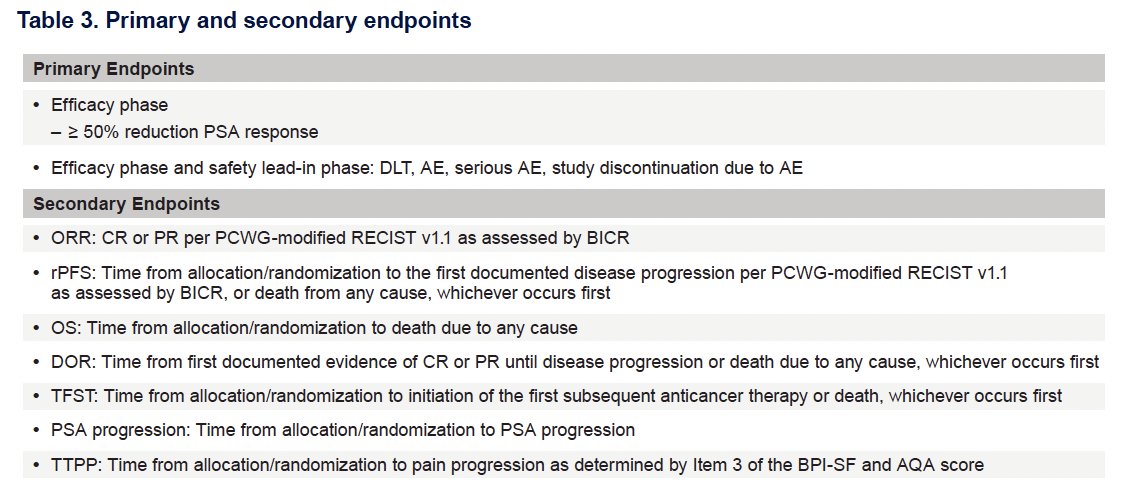
The primary and secondary objectives differ by phase and study arm:
- Phase 1 (Safety Lead-In, Arms 3–4)
- Primary: Evaluate safety/tolerability; establish RP2D for combination regimens.
- Secondary: Characterize duration of response (DOR).
- Phase 2 (Efficacy Phase, Arms 1–4)
- Primary: PSA50 response rate.
- Secondary: Objective response rate (ORR by PCWG-modified RECIST v1.1), rPFS, OS, DOR, TFST, time to PSA progression, time to pain progression (TTPP)
The study assessments are as follows:
- Tumor imaging: CT/MRI every 6 weeks until Week 48, then every 12 weeks
- Safety: AEs monitored through 14–40 days post-treatment, depending on agent
- Biomarkers: B7-H3 expression assessed using an analytically validated IHC assay
The intent-to-treat population will be used for the primary efficacy analyses in the efficacy phase; all randomized participants will be included in this population. The all-participants-as-treated population will be used for the safety data, consisting of all allocated participants in the safety lead-in phase who received ≥ 1 dose of study intervention and all randomized participants in the efficacy phase who received ≥ 1 dose of study intervention. Participants within the same investigational treatment arm at the same dose level/frequency in the safety lead-in phase and efficacy phase will be pooled in the safety analysis.
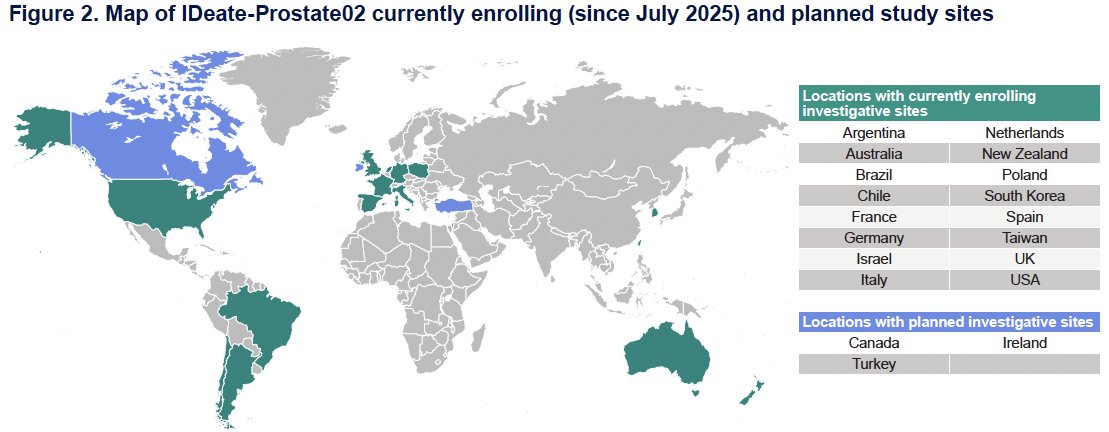
The IDeate-Prostate01 study began on July 03, 2025, and enrollment is currently ongoing globally (Figure 2).
Presented by: Fariba Jafari, PhD, Senior R&D Scientist, SES & Technologies, Laval, Quebec, Canada
Written by: Rashid K. Sayyid, MD, MSc, Assistant Professor, Urologic Oncologist, Department of Urology at The University of Arizona and Banner University Medical Center – Tucson, AZ, @rksayyid on X during the 2025 Society of Urologic Oncology (SUO) annual meeting held in Phoenix, AZ, between the 2nd and 5th of December 2025.