

(UroToday.com) The 2025 SUO annual meeting featured a urothelial carcinoma session and a presentation by Dr. Matthew Galsky discussing 5-year follow-up results from CheckMate-274 assessing adjuvant nivolumab versus placebo for high risk muscle invasive urothelial carcinoma. The phase 3 CheckMate 274 trial of adjuvant nivolumab versus placebo in patients with high-risk muscle invasive urothelial carcinoma after radical surgery met the primary endpoints of improvement in disease free survival with nivolumab versus placebo in ITT patients and in patients with tumor PD-L1 expression ≥1%.1 Efficacy improvements were continued at the 3-year follow-up,2 and interim overall survival favored nivolumab versus placebo. Additionally, efficacy benefits were seen in patients with muscle invasive bladder cancer. At the 2025 SUO annual meeting, Dr. Galsky and colleagues reported extended 5-year follow-up results, including exploratory muscle invasive bladder cancer and circulating tumor DNA (ctDNA) data.
In CheckMate 274, patients were randomized 1:1 to nivolumab 240 mg IV every 2 weeks or placebo for ≤1 year of adjuvant treatment. Patients had radical surgery ± neoadjuvant chemotherapy and were at high risk of recurrence. The primary endpoints were disease free survival in ITT patients and patients with PD-L1 ≥1%, and overall survival and disease specific survival were secondary endpoints. Analyses of the muscle invasive bladder cancer subgroup and of ctDNA (with the Natera Signatera assay) were exploratory.
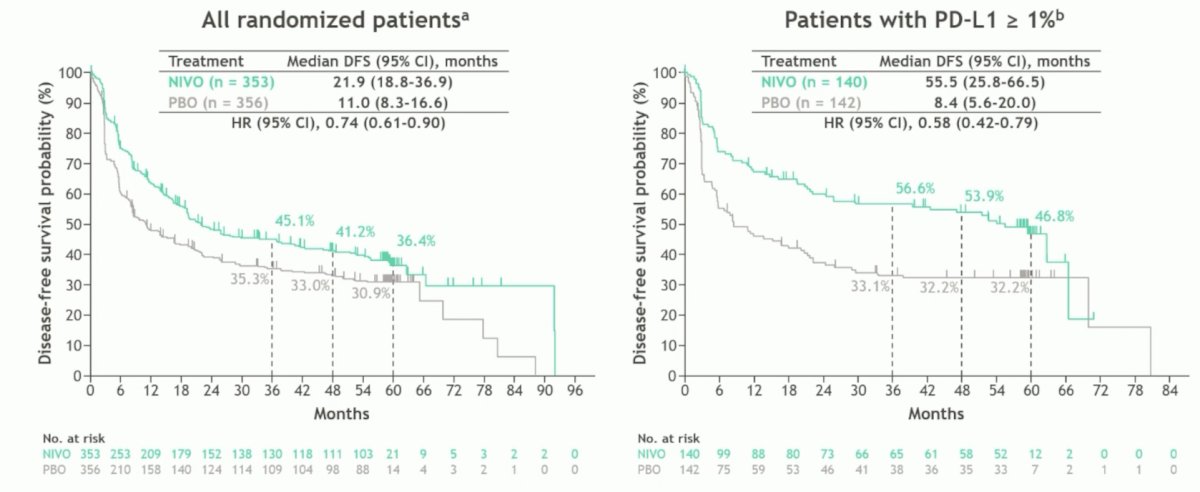
A total of 709 patients (nivolumab, n = 353; placebo, n = 356) were randomized. With a median follow-up of 43.4 months, improvement in disease free survival was observed with nivolumab versus placebo in all randomized patients (HR 0.74, 95% CI 0.61-0.90) and PD-L1 ≥ 1% (HR 0.58, 95% CI 0.42-0.79) patients:
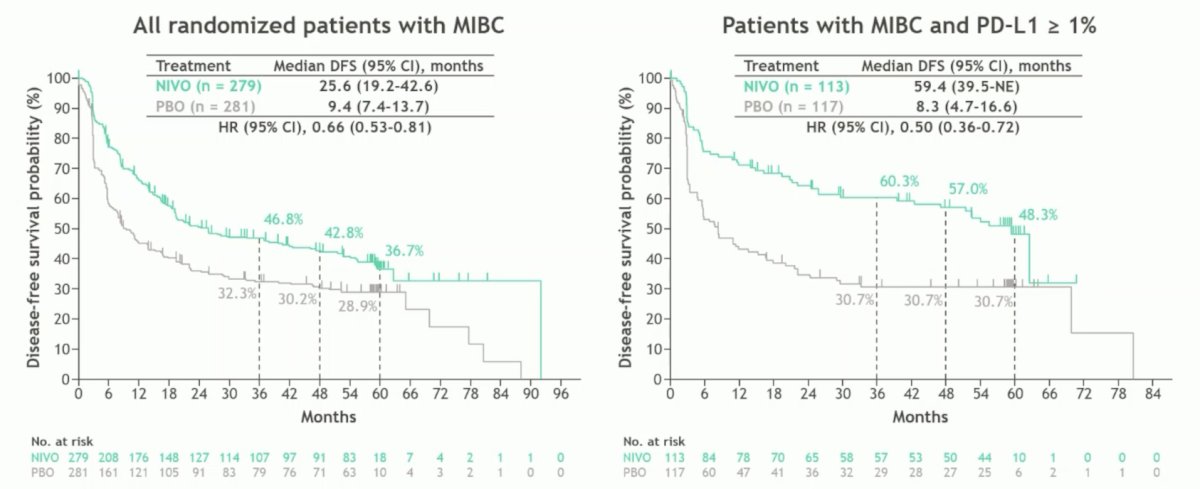
Specific to patients with muscle invasive bladder cancer, improvement in disease free survival was also observed with nivolumab versus placebo in all randomized patients (HR 0.66, 95% CI 0.53-0.81) and PD-L1 ≥ 1% (HR 0.50, 95% CI 0.36-0.72) patients:
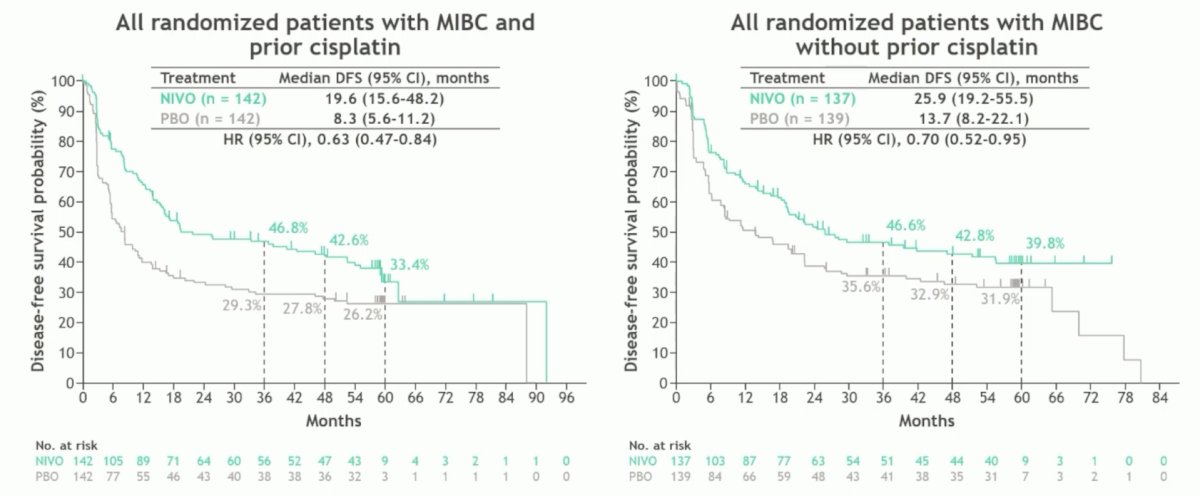
Furthermore, among patients with muscle invasive bladder cancer, improvement in disease free survival was observed with nivolumab versus placebo in patients receiving neoadjuvant chemotherapy (HR 0.63, 95% CI 0.47-0.84) and for those who did not receive neoadjuvant chemotherapy (HR 0.70, 95% CI 0.52-0.95) patients:
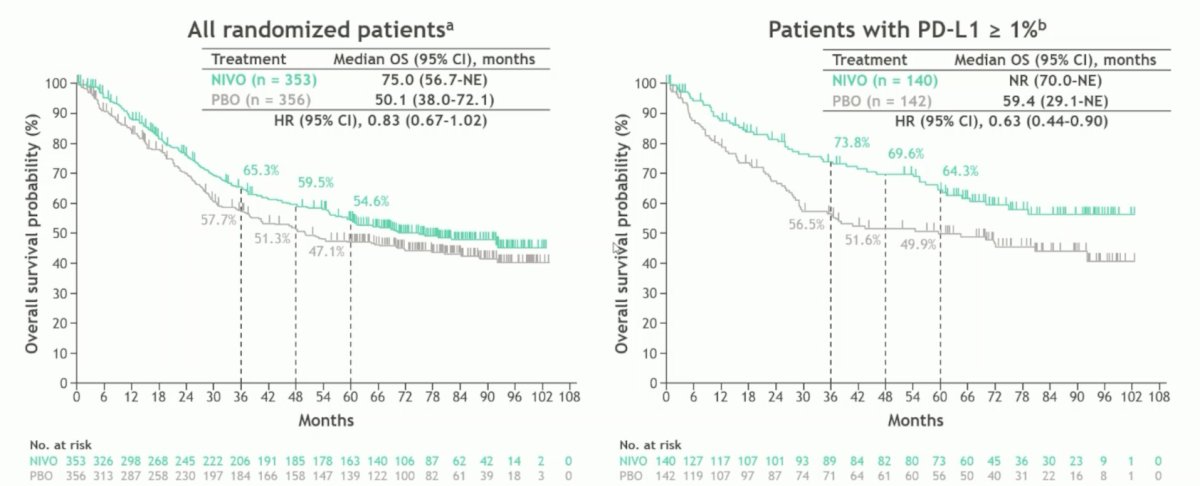
Improvement in overall survival (interim analysis) was observed with nivolumab versus placebo in all randomized patients (although not statistically significant; HR 0.83, 95% CI 0.67-1.02) and PD-L1 ≥ 1% (HR 0.63, 95% CI 0.44-0.90) patients:
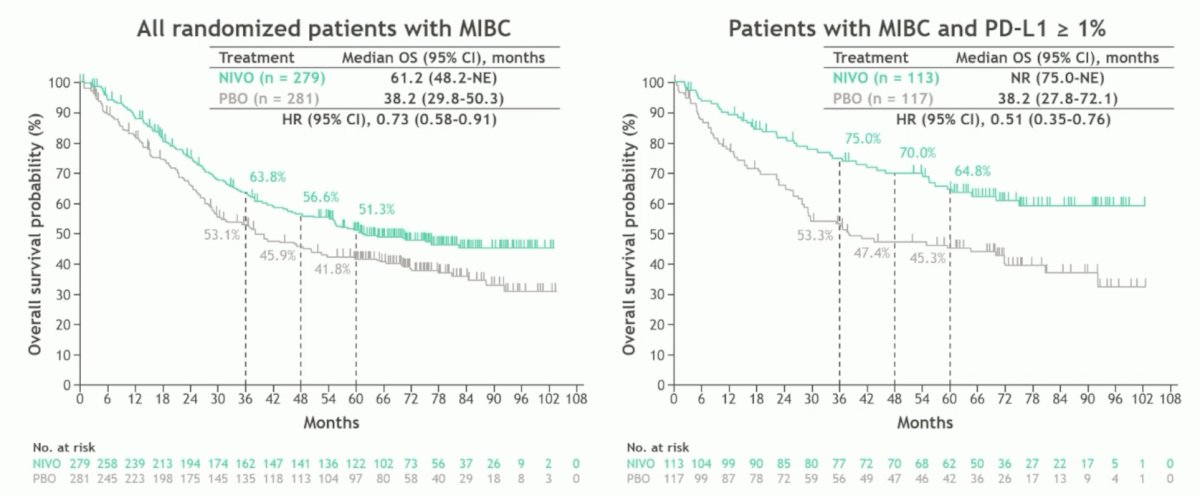
Among muscle invasive bladder cancer patients, there was a significant overall survival benefit with nivolumab versus placebo in all randomized patients (HR 0.73, 95% CI 0.58-0.91) and PD-L1 ≥ 1% (HR 0.51, 95% CI 0.35-0.76) patients:
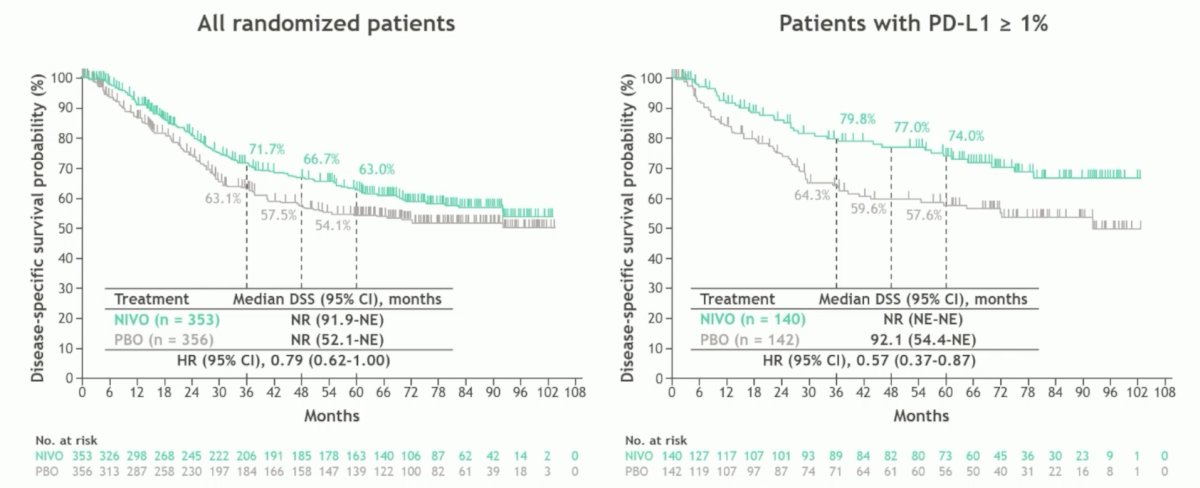
For disease specific survival, nivolumab versus placebo was improved in all randomized patients (HR 0.79, 95% CI 0.62-1.00) and PD-L1 ≥ 1% (HR 0.57, 95% CI 0.37-0.87) patients:
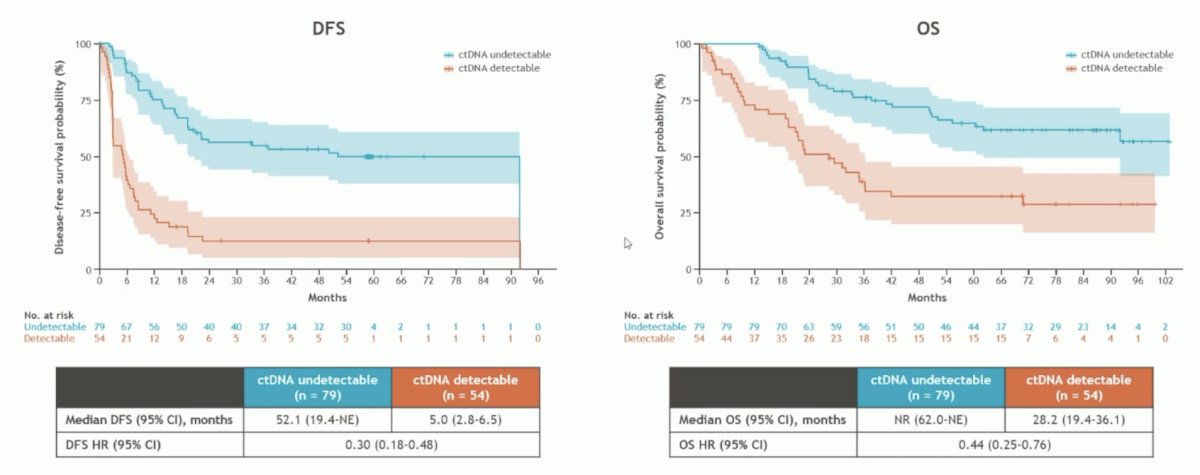
Overall, 133/709 patients (18.8%) had evaluable cycle 1 day 1 ctDNA results, and 54/133 (40.6%) patients were ctDNA positive. Patients with undetectable ctDNA showed a >10 fold longer median disease free survival (HR 0.30, 95% CI 0.18-0.48), as well as an improved overall survival (HR 0.44, 95% CI 0.25-0.76) compared to those with a detectable ctDNA:
No new safety signals were observed since the previous database lock, as patients have been off treatment for at least 4 years.
Dr. Galsky concluded his presentation discussing 5-year follow-up results from CheckMate-274 with the following take home points:
- At 5 years of follow-up, continued improvement in disease free survival with nivolumab versus placebo was observed
- Overall survival and disease specific survival were longer with nivolumab versus placebo
- Efficacy benefit was seen both in ITT patients and in patients with PD-L1 ≥1%
- Continued improvement in disease free survival, and longer overall survival and disease specific survival were observed with nivolumab versus placebo in patients with muscle invasive bladder cancer
- In exploratory analyses, ctDNA status at cycle 1/day 1 of nivolumab was correlated with improvement in disease free survival
- This finding was consistent with prior observations of adjuvant immune checkpoint inhibitor blockade in muscle invasive urothelial carcinoma
- These long-term results support adjuvant nivolumab as a standard of care in patients with high-risk muscle invasive urothelial carcinoma including those with muscle invasive bladder cancer, regardless of prior neoadjuvant chemotherapy
Presented by: Matthew Galsky, MD, Icahn School of Medicine at Mount Sinai, New York, NY
Written by: Zachary Klaassen, MD, MSc – Urologic Oncologist, Associate Professor of Urology, Georgia Cancer Center, Wellstar MCG Health, @zklaassen_md on Twitter during the 2025 Society of Urologic Oncology (SUO) annual meeting held in Phoenix, AZ, between the 2nd and 5th of December 2025.
References:
- Bajorin DF, Witjes JA, Gschwend JE, et al. Adjuvant nivolumab versus placebo in muscle-invasive urothelial carcinoma. N Engl J Med. 2021 Jun 3;384(22):2102-2114.
- Galsky MD, Witjes JA, Gschwend JE, et al. Adjuvant nivolumab in high-risk muscle-invasive urothelial carcinoma: Expanded efficacy from CheckMate 274. J Clin Oncol. 2025 Jan;43(1):15-21.