

(UroToday.com) The 2026 SNMMI annual meeting featured a genitourinary radiotherapeutics session and a presentation by Dr. Yalda Nikanpour discussing whether early 177Lu-PSMA-617 SPECT/CT improves prognostic assessment beyond baseline PSMA PET in metastatic castration resistant prostate cancer (mCRPC). 177Lu-PSMA-617 is an established treatment for mCRPC, although clinical outcomes remain variable. Baseline PSMA PET/CT-derived tumor volume has been associated with disease burden and prognosis in patients receiving PSMA-targeted radioligand therapy. During treatment, post-therapy 177Lu-PSMA-617 SPECT/CT provides serial quantitative assessment of tumor uptake and burden, however the incremental prognostic value of early SPECT-derived volumetric change beyond baseline PSMA PET/CT has not been systematically evaluated. As such, at the SNMMI 2026 annual meeting, Dr. Nikanpour and colleagues presented a study assessing the prognostic contribution of early SPECT-derived volumetric change relative to baseline PSMA PET/CT in patients treated with 177Lu-PSMA-617:
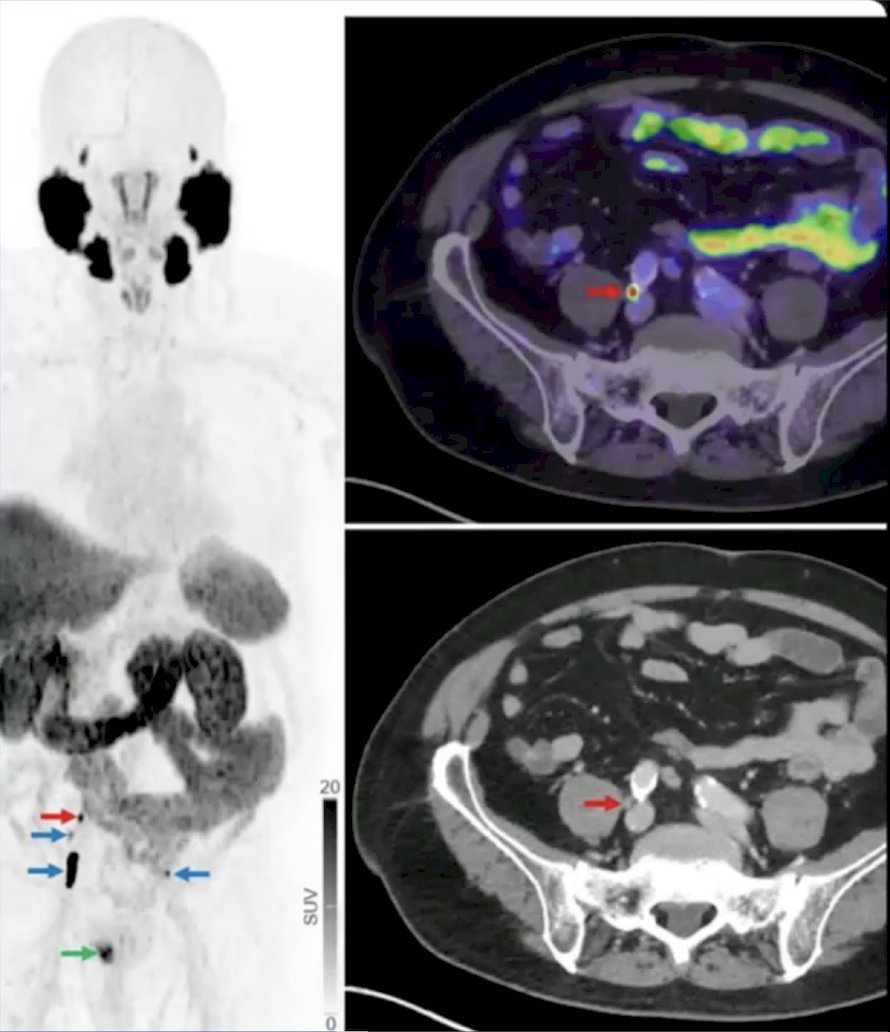
This was a single-center, retrospective analysis of patients with mCRPC treated with 177Lu-PSMA-617 between June 2022 and October 2024 at a quaternary care center. All patients completed six cycles of 177Lu-PSMA-617 therapy. Baseline PSMA PET/CT was available for all patients prior to initiation of 177Lu-PSMA-617, and post-therapy 177Lu-PSMA-617 SPECT/CT was available for all patients and acquired serially during treatment. For the present analysis, quantitative measurements from cycle 1 (C1) and cycle 2 (C2) were used. The tumor volume quantification timeline is reported in the following figure:
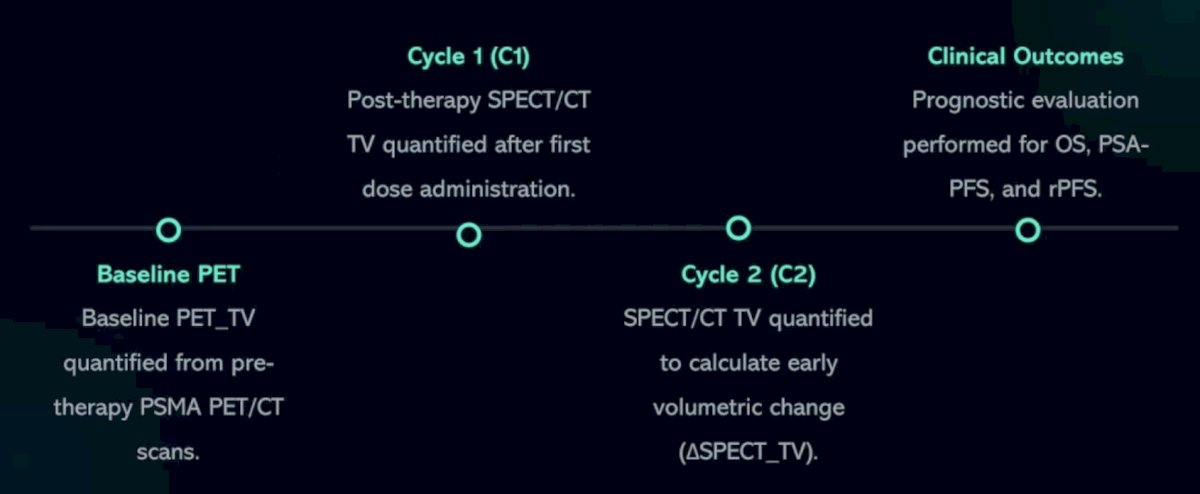
Image analysis was performed using MIM software. PSMA-avid lesions on PET and SPECT were segmented semi-automatically using predefined absolute uptake thresholds and manually reviewed to exclude physiologic uptake, with final contours approved by a board-certified nuclear radiologist. Total tumor volume was quantified on baseline PET (PET_TTV) and on SPECT at C1 and C2. Early SPECT response was defined as volumetric change between C1 and C2 (ΔSPECT_TTV). The clinical endpoints were overall survival, PSA progression-free survival, and radiographic progression-free survival. Prognostic evaluation was performed using nested Cox proportional hazards models evaluating baseline PET_TTV alone and in combination with early ΔSPECT_TTV, with model comparison based on likelihood-ratio testing.
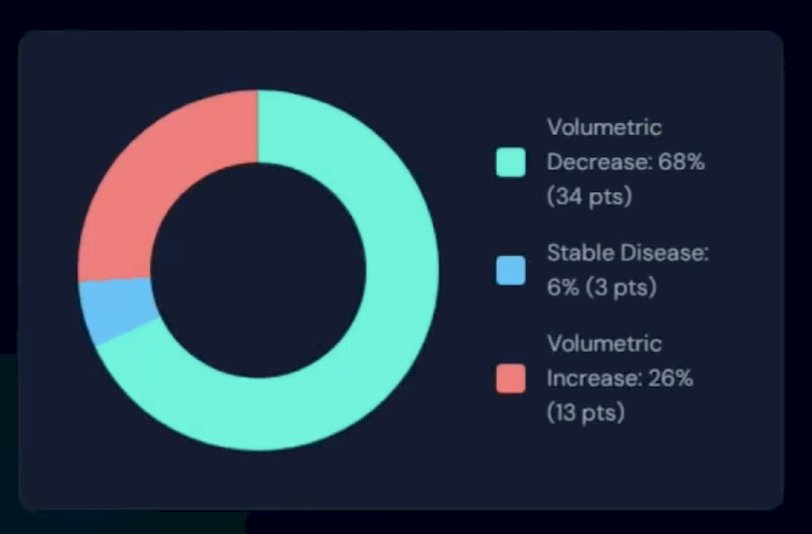
There were 50 patients with mCRPC included in the analysis. Early ΔSPECT_TTV demonstrated heterogeneous response patterns, with volumetric decrease observed in 34 patients (68%), stability in 3 patients (6%), and volumetric increase in 13 patients (26%):
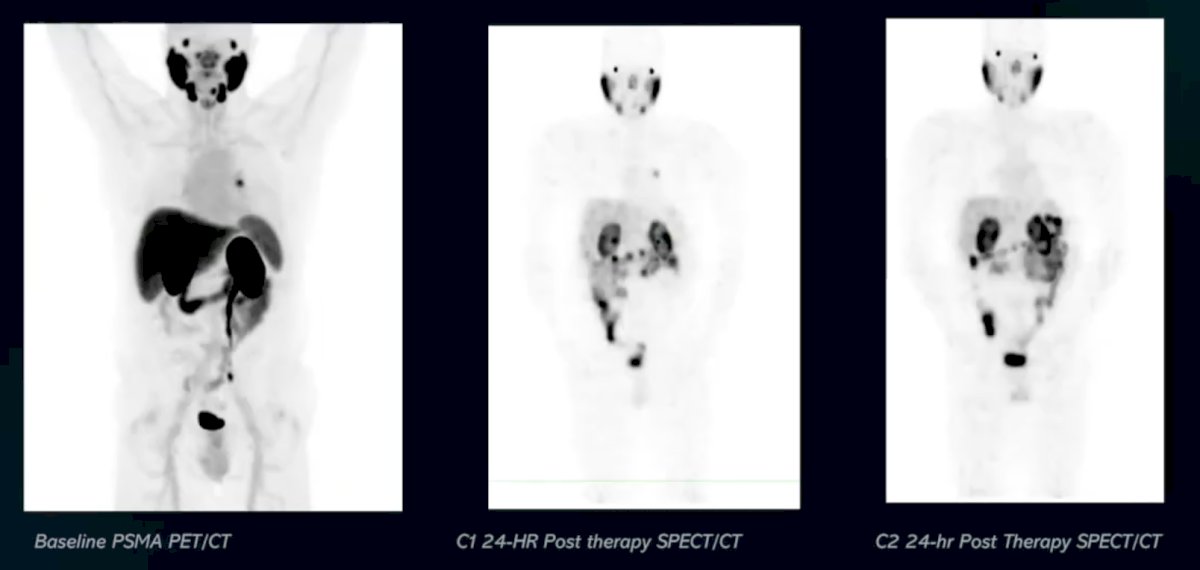
The following images depict a patient with stable volumetric disease:
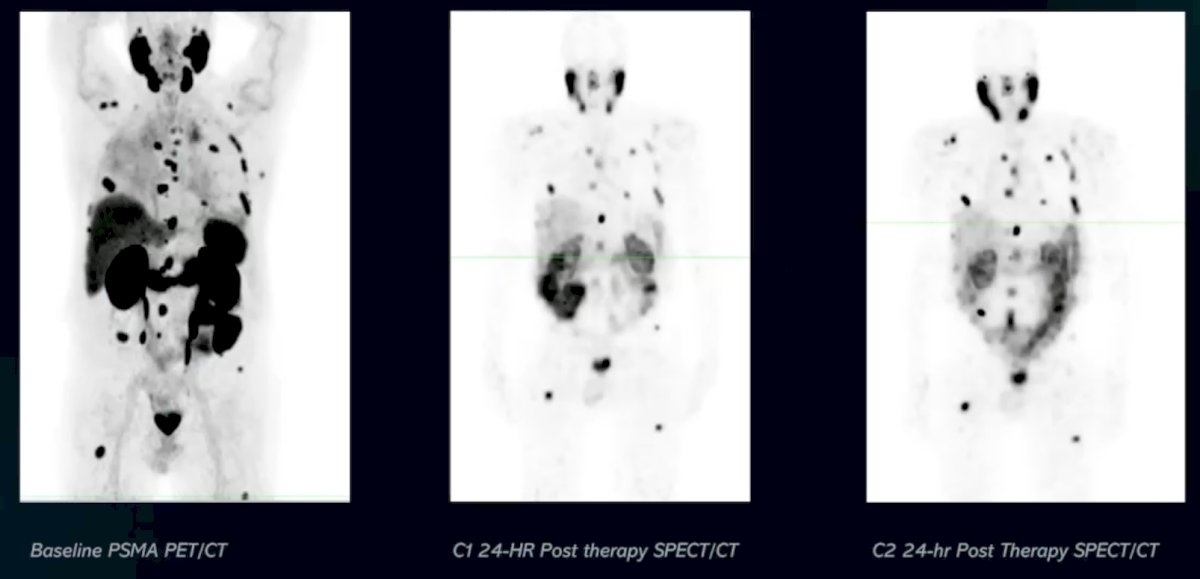
Dr. Nikanpour also presented images of a patient with a volumetric decrease:
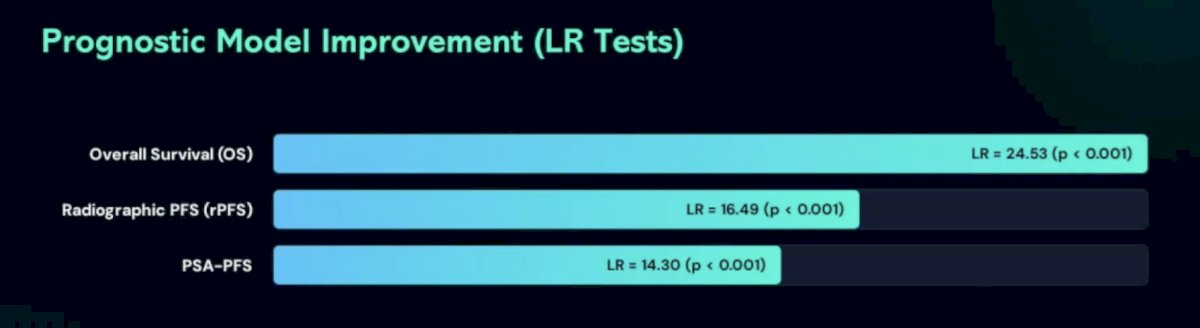
Across all three clinical endpoints, inclusion of early ΔSPECT_TTV significantly improved prognostic model performance compared with baseline PSMA PET tumor volume alone. Likelihood-ratio testing demonstrated a significant incremental contribution of ΔSPECT_TTV for overall survival (likelihood ratio = 24.53, p-value < 0.001), PSA progression free survival (likelihood ratio = 14.30, p-value < 0.001), and radiographic progression free survival (likelihood ratio = 16.49, p-value < 0.001):
Dr. Nikanpour concluded her presentation discussing whether early 177Lu-PSMA-617 SPECT/CT improves prognostic assessment beyond baseline PSMA PET in mCRPC with the following statement:
- Early SPECT-derived volumetric change demonstrated incremental prognostic value beyond baseline PSMA PET/CT tumor volume across multiple clinical endpoints in patients treated with 177Lu-PSMA-617, supporting its potential role in early response assessment during radioligand therapy
Presented by: Yalda Nikanpour, MD, Mayo Clinic, Rochester, MN
Written by: Zachary Klaassen, MD, MSc – Urologic Oncologist, Associate Professor of Urology, Georgia Cancer Center, Wellstar MCG Health, @zklaassen_md on Twitter during the Society of Nuclear Medicine and Molecular Imaging (SNMMI) 2026 Annual Meeting, Los Angeles, CA, Sat, May 30 – Tues, Jun 2, 2026.