

(UroToday.com) The 2026 SNMMI annual meeting featured a genitourinary diagnosis and imaging session and a presentation by Molly Wynveen discussing survival in Veterans with metastatic hormone-sensitive prostate cancer (mHSPC) based on PSMA PET/CT imaging.
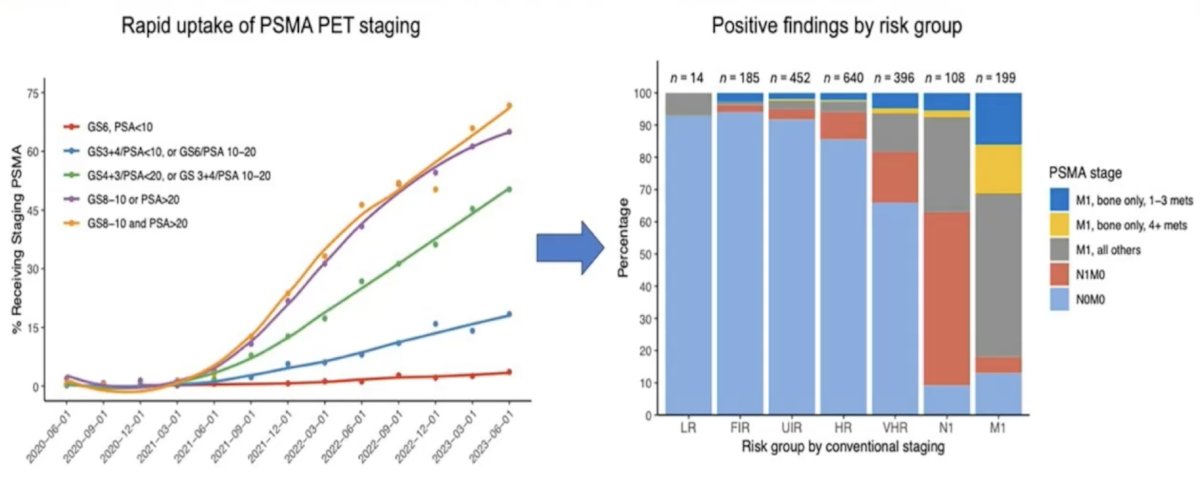
Imaging used for diagnosis and staging of prostate cancer influences treatment and overall survival. PSMA-PET has become increasingly used after 2021 in the diagnosis and staging of patients with prostate cancer. Data suggest that PSMA-PET is highly sensitive, resulting in upstaging and stage migration compared to conventional imaging. To date, there is limited literature that exists regarding PSMA PET and its impact in the metastatic prostate cancer setting. As such, the investigators aimed to evaluate overall survival of patients with mHSPC who underwent PSMA-PET/CT imaging compared to conventional imaging in a nationwide retrospective study of Veterans. Population-level studies suggest an increasing utilization of PSMA PET/CTs in the VA Health System:
Veterans diagnosed with mHSPC based on a natural language processing algorithm or VA Cancer Registry from 2021-2024 were included. Patients were followed from the date of diagnosis until December 15, 2025. Veterans who underwent imaging with PSMA PET/CT within 100 days of diagnosis were included in the PSMA-PET group. The remaining patients were included in the conventional imaging group. Volume of disease for patients in both groups was determined using chart review of images in accordance with CHAARTED criteria. Synchronous disease was determined if diagnosis and metastasis occurred in less than 12 months. Age, race, PSA, Charleston Comorbidity Index (CCI), volume of disease, and timing of presentation (synchronous versus metachronous) at the time of diagnosis were used as covariates in the multivariable Cox model.
Of 2,098 veterans with mHSPC, 567 (27%) underwent PSMA-PET imaging. Veterans with PSMA-PET were younger (71.3 versus 74.8 years, p < 0.001) and had a lower median PSA (42.7 versus 129.2, p < 0.001) with similar median CCI (2.0 versus 2.0) as those with conventional imaging. Veterans with PSMA-PET were more likely to have low volume (44.1% versus 30.2%, p < 0.001) and metachronous (16.9% versus 12.5%, p = 0.01) disease. Overall, veterans with PSMA-PET had a longer median overall survival (54.9 versus 33.0 months, p < 0.001) compared to veterans with conventional imaging:
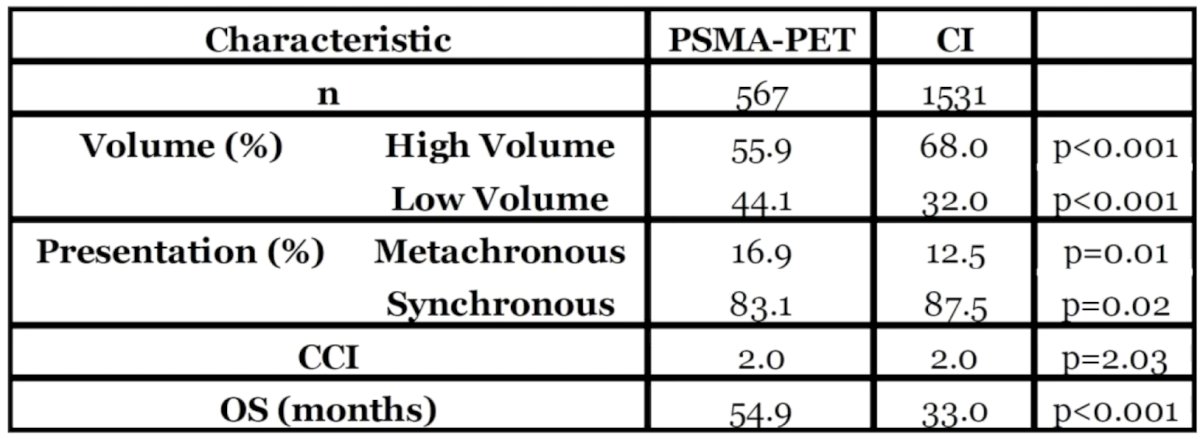
In this study among patients with mHSPC, receipt of a PSMA PET/CT, in a multivariable model including age, race, PSA, CCI, volume of disease, and timing of presentation, was associated with decreased mortality (adjusted HR 0.62, 95% CI 0.52-0.73).
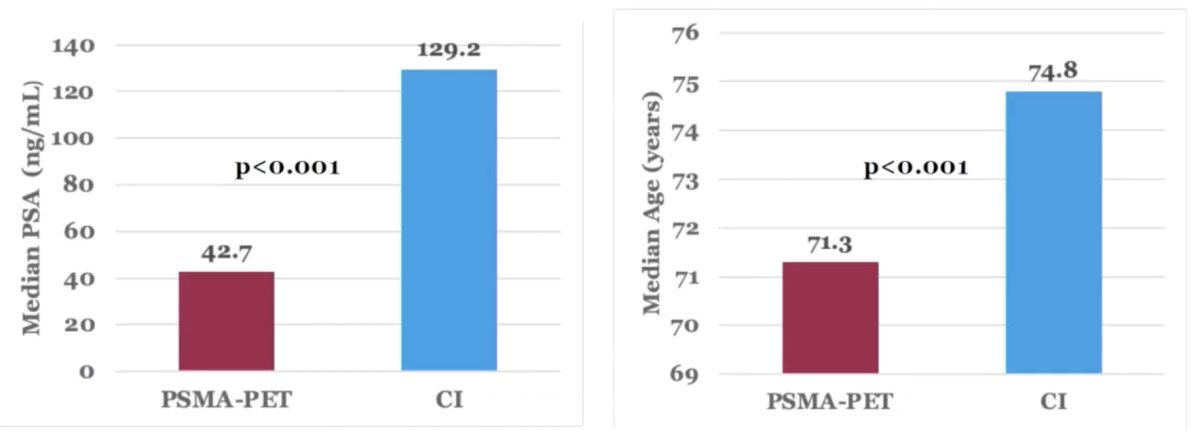
Patients receiving a PSMA PET/CT had a lower PSA (median 42.7 ng/mL) compared to those being staged with conventional imaging (median 129.2 ng/mL; p < 0.001). Additionally, patients receiving a PSMA PET/CT were younger (median age 71.3 years) compared to those staged with conventional imaging (median 74.8 years; p < 0.001):
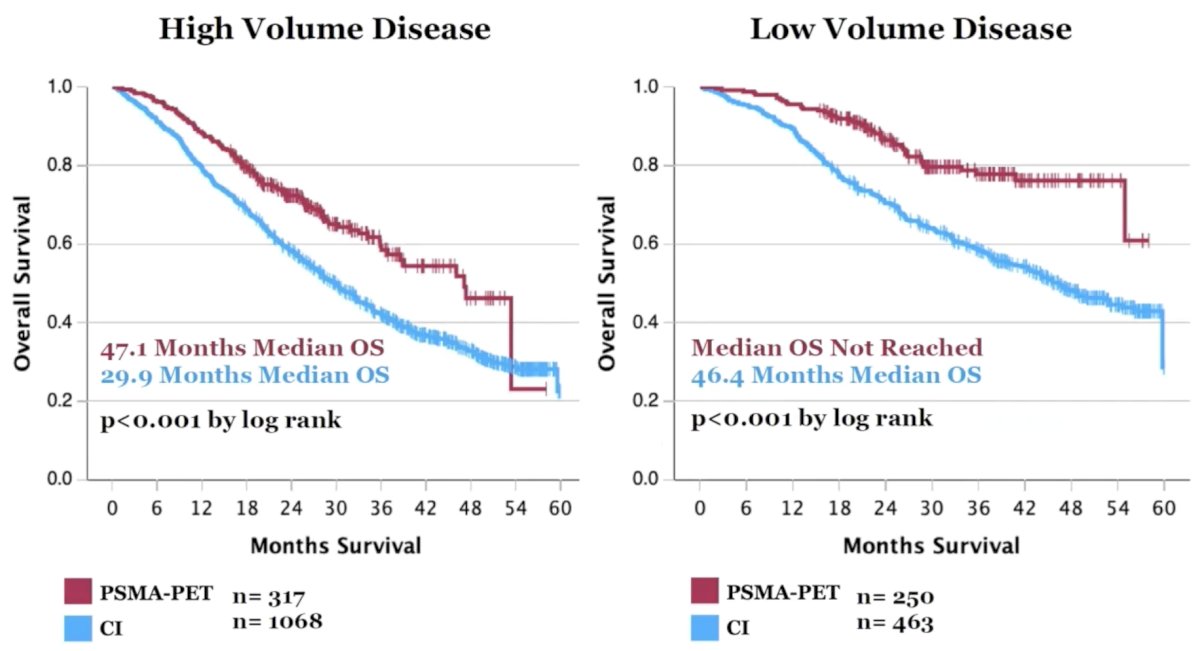
In patients with high volume disease, those with PSMA- PET imaging (22.9%) had a longer median overall survival (47.1 versus 29.9 months, HR 0.61, p < 0.001). In patients with low volume disease, those with PSMA-PET imaging (35.1%) also had a longer median overall survival (not reached versus 46.4 months, HR 0.42, p < 0.001):
Molly Wynveen noted several limitations of this study, including (i) patient factors such as general health, geographic location, and access to care, (ii) clinician awareness, and (iii) facility adoption of PSMA PET technology.
Molly Wynveen concluded her presentation discussing survival in Veterans with mHSPC based on PSMA PET/CT imaging with the following take-home points:
- Patients who underwent PSMA-PET imaging in the diagnosis of mHSPC had longer overall survival than patients who underwent conventional imaging, even when accounting for disease volume and other characteristics
- Patients were generally younger and had a lower PSA
- Patients were more likely to have low volume and metachronous disease
- This may be due to differences in treatment in the PSMA-PET group
- These findings suggest that PSMA-PET causes significant stage migration, especially in patients with low-volume metastatic disease
- These outcomes may be linked to differences in treatment approaches, highlighting the role of PSMA PET in optimizing treatment
Presented by: Molly Wynveen, Veterans Affairs St. Louis Healthcare System, St. Louis, MO
Written by: Zachary Klaassen, MD, MSc – Urologic Oncologist, Associate Professor of Urology, Georgia Cancer Center, Wellstar MCG Health, @zklaassen_md on Twitter during the Society of Nuclear Medicine and Molecular Imaging (SNMMI) 2026 Annual Meeting, Los Angeles, CA, Sat, May 30 – Tues, Jun 2, 2026.