

(UroToday.com) The 2025 Society of Nuclear Medicine and Molecular Imaging (SNMMI) Annual Meeting held in New Orleans, LA, between June 21st and 24th, 2025, was host to an Oncology Discovery and Translational session. Dr. Abhilash Moolupuri presented the initial exploratory and phase I/II results of a trial evaluating a novel PSMA-targeting radiopharmaceutical compound, SMS-5368.
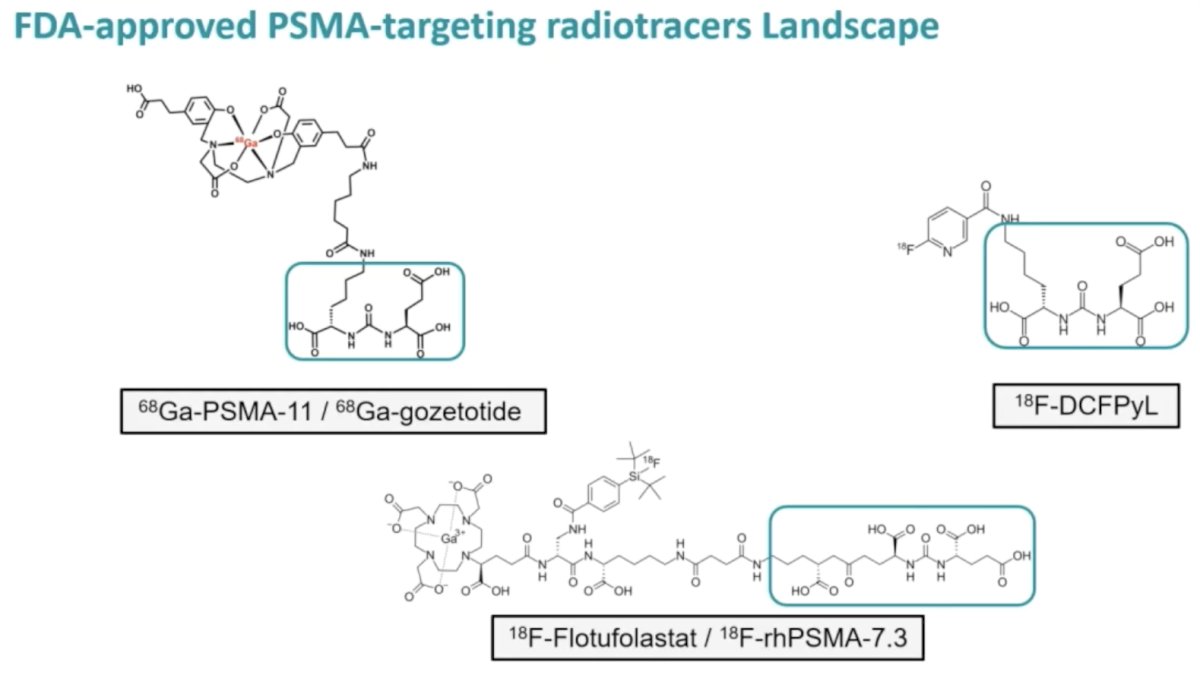
Currently, there are three PSMA-targeting radiotracers approved by the FDA for the staging of prostate cancer patients:
- 68Ga-PSMA-11
- 18F-DCFPyL
- 18F-Flotufolastat
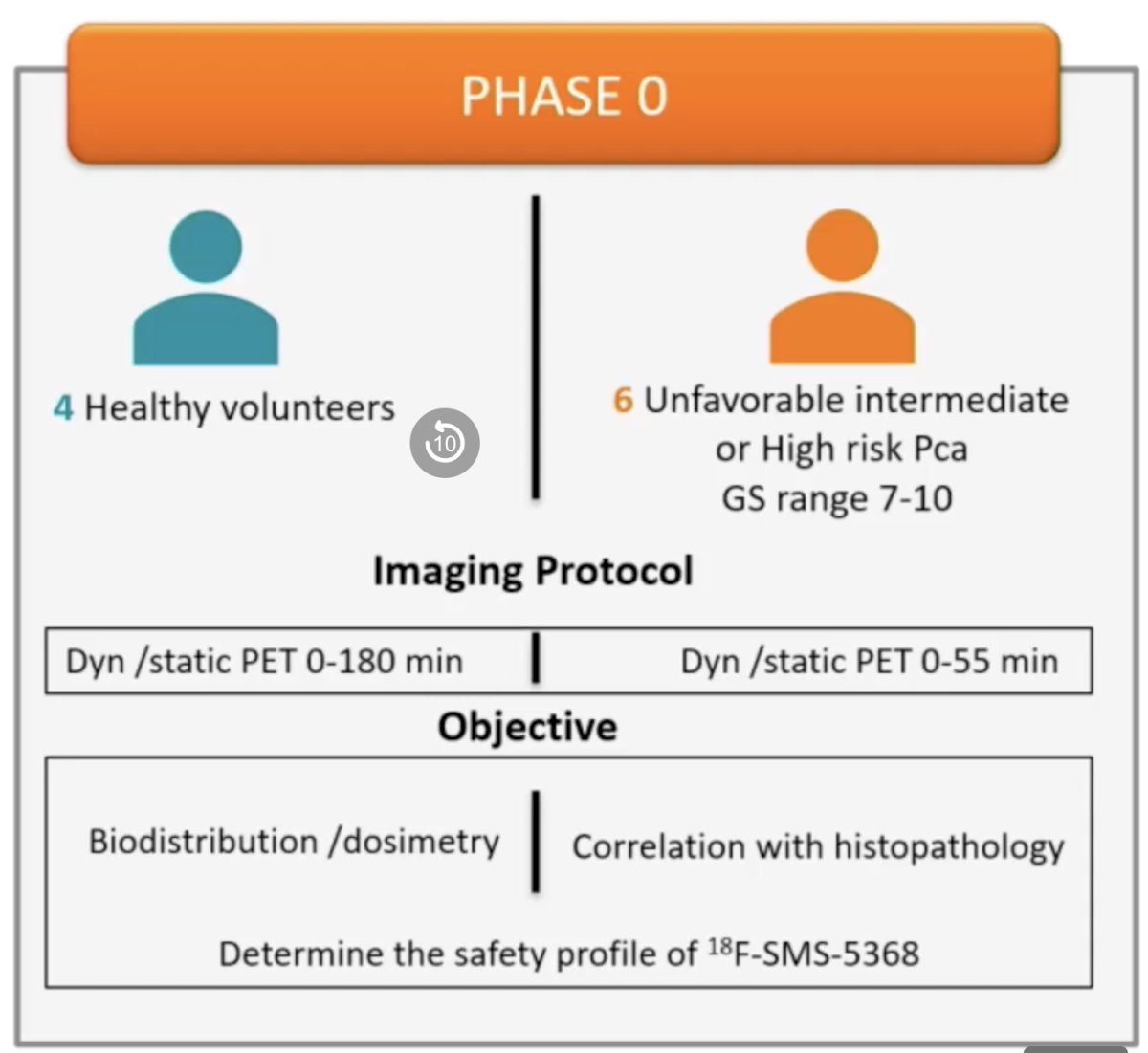
In this presentation, Dr. Hatcher reported the results of both phase 0 and phase I/II trials. In the exploratory phase 0 trial, four healthy volunteers received the novel PSMA-targeting radiopharmaceutical compound, 18F-SMS-5368, followed by PET imaging up to 180 minutes following the radiotracer administration. The objective was to evaluate the biodistribution/dosimetry. Concurrently, six patients with unfavorable intermediate or high-risk prostate cancer planned for a radical prostatectomy also received this radiotracer and underwent PET imaging up to 55 minutes following radiotracer administration. The objective in this cohort was to correlate the PET imaging findings with histopathology.
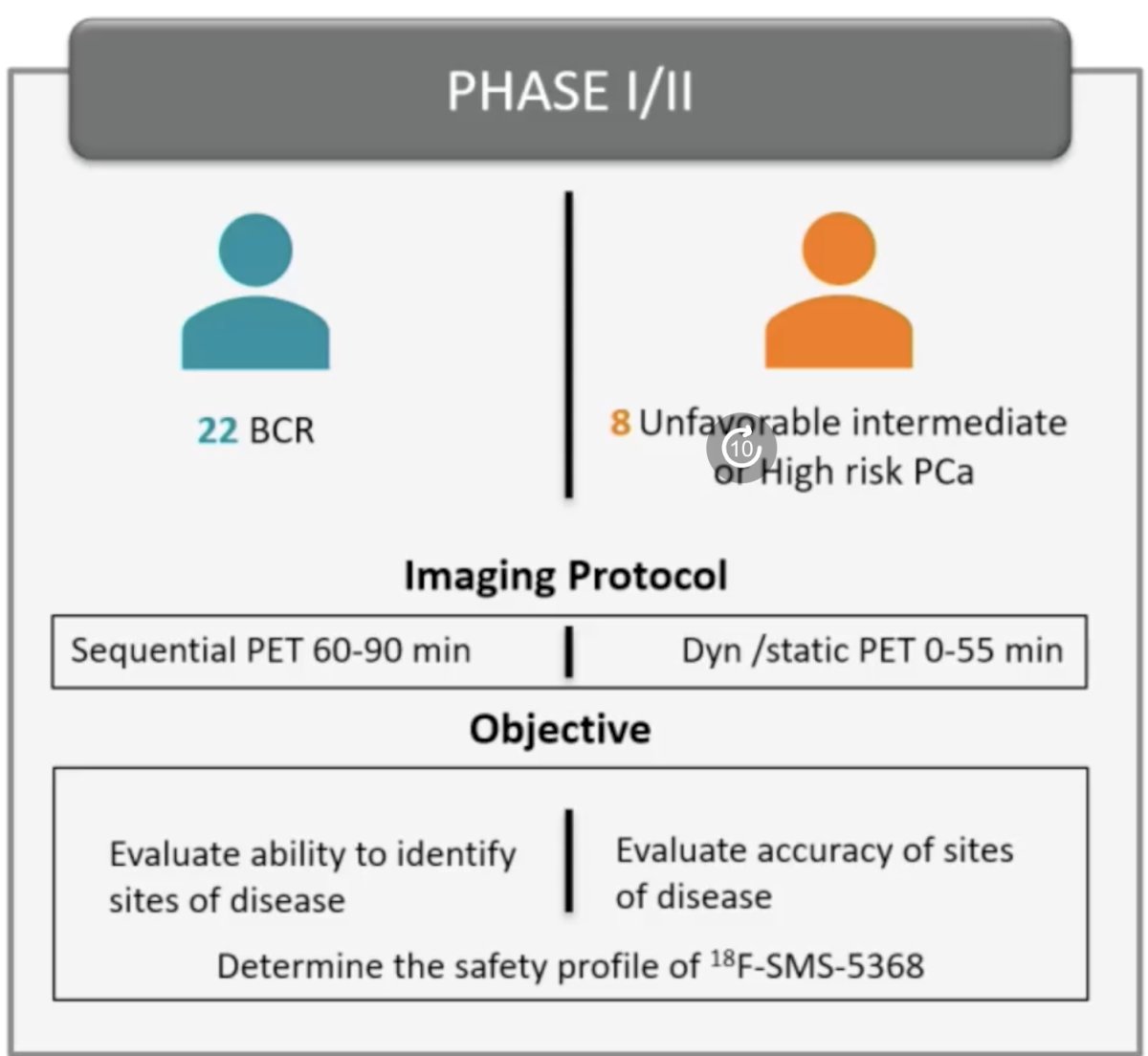
In the phase I/II portion, all included patients had negative conventional imaging (CT or MRI cross-sectional imaging + bone scan). Twenty-two patients had evidence of biochemical recurrence (ASTRO or AUA criteria) and underwent sequential PET imaging at 60-90 minutes to identify sites of disease recurrence. In addition, 8 patients with newly diagnosed unfavorable intermediate- or high-risk prostate cancer underwent PET scans up to 55 minutes following radiotracer administration, and the findings on histopathology were compared to those on the PET scan.
All scans were read by a local radiologist and reviewed by a central radiology team as reference.
The phase 0 results were as follows:
- Rapid blood clearance and little to no urinary excretion (0.4% activity) up to 190 minutes post-injection
- Dosimetry data from the four volunteers confirmed earlier humanized data with 0.858 rem/20mCi (effective dose: 4.29 mSv/370 MBq)
- All prostate cancer patients had 18F-SMS-5368 PET positive lesions correlated with histopathological findings after radical prostatectomy for T stage (pT2-3b) as well as N stage (N1)
- No investigational product-related adverse or serious adverse events were reported

The phase I/II results demonstrated:
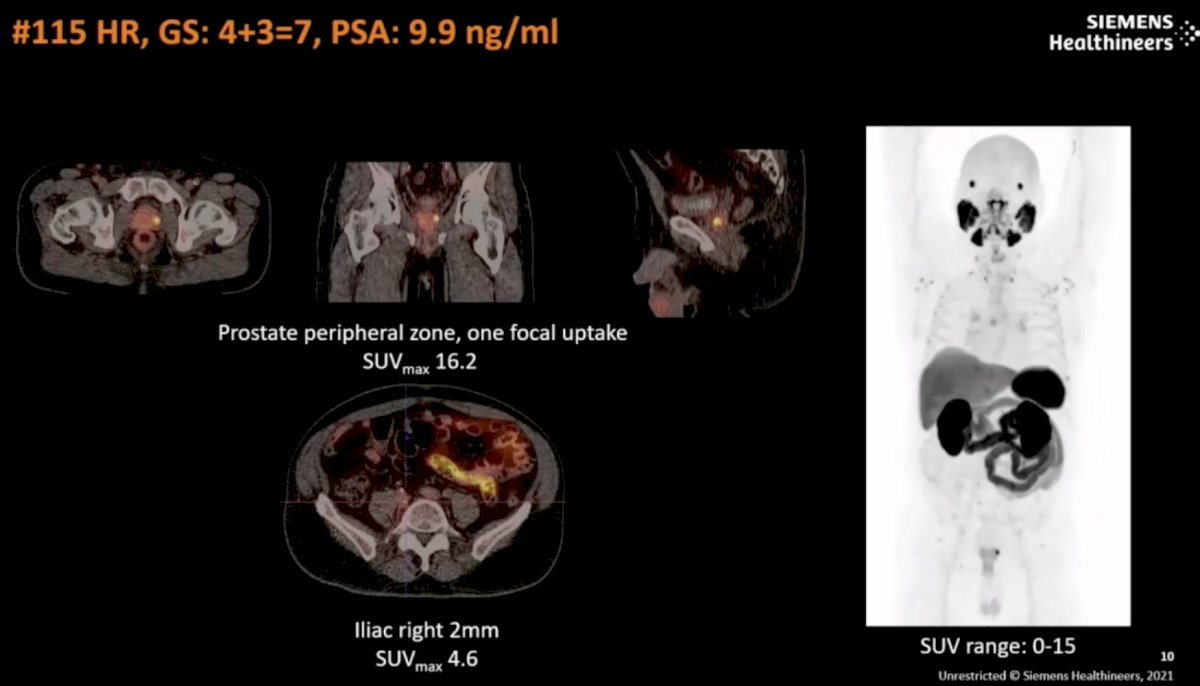
- Favorable visual tumor/background contrast ratio (average 18.55/1.19)
- All 18F-SMS-5368 positive lesions correlated with histopathological findings post-radical prostatectomy
- There was 100% concordance between local and central radiological interpretations
- No investigational drug-related adverse or serious adverse events were reported
Dr. Hatcher concluded that 18F-SMA-5368 is an investigational next generation PSMA PET agent that:
- Exhibits a favorable safety profile
- Demonstrates specific binding to prostate cancer lesions, with sufficient blood clearance and no visual urinary excretion up to 190 minutes post-injection
- The absence of bladder activity may enhance the visualization of local recurrence
Further clinical studies are needed to explore these findings and confirm their potential clinical relevance.
Presented by: Paul Hatcher, MD, Associate Professor of Urology, Department of Urology, The University of Tennessee Medical Center, Knoxville, TN
Written by: Rashid K. Sayyid, MD, MSc – Robotic Urologic Oncology Fellow at The University of Southern California, @rksayyid on Twitter during the 2025 Society of Nuclear Medicine and Molecular Imaging (SNMMI) Annual Meeting, New Orleans, LA, June 21st – 24th, 2025