

(UroToday.com) The 2025 SNMMI annual meeting featured a prostate cancer and dosimetry session and a presentation by Dr. Koichiro Kimura discussing the evaluation of PSMA PET/CT derived predictors for treatment response to 177Lu-PSMA-617. 177Lu-PSMA-617 contributes to prolong progression free survival and overall survival in metastatic castration-resistant prostate cancer (mCRPC) patients who progressed after chemotherapy.1
Pre-therapeutic PSMA PET/CT information can be used to predict 177Lu-PSMA-617 therapy response patterns and outcomes, with various quantitative and visual methods proposed. This study, presented at the SNMMI 2025 annual meeting, aimed to test various proposed PSMA PET/CT-derived outcome predictors in the US expanded access program cohort.
Patients enrolled in the expanded access program for 177Lu-PSMA-617 at 3 institutions (UCLA, UCSF, Johns Hopkins) in the US with available pre-therapeutic PSMA PET/CT and outcome data were included in this analysis. Quantitative analysis was performed for all tumor lesions on PSMA PET/CT with semi-automatically contouring. Total tumor volume, total tumor SUVmean, total tumor SUVmax, total lesion uptake (tumor volume * SUVmean), total lesion quotient (tumor volume / SUVmean), and quantitative PSMA PET tumor–to–salivary gland ratio (high, ≥ 1.5; intermediate, 0.5–1.5; low, ≤ 0.5) were calculated for each patient.
For visual analysis, visual PSMA PET tumor–to–salivary gland ratio (high, most of the lesions showed higher uptake than the parotid glands; intermediate, neither low nor high; low, most of the lesions showed lower uptake than the parotid glands) and heterogeneity and intensity of tumors (1, SUVmax < 15; 2, 15–79 with heterogeneous intensity; 3, 15–79 with homogeneous intensity; 4, ≥ 80) scores were used for assessment. Outcome measures included PSA50, PSA progression free survival, and overall survival. Dr. Kimura and colleagues evaluated the predictive performance of each model using Cox proportional hazards regression analysis and assessed their performance with the concordance index (c-index).
In total, 88 patients with mCRPC who received 177Lu-PSMA-617 within the expanded access program between May 2021 and March 2022 were eligible and included in this analysis. The PSA50 rate was 43%, and for PSA50’s discriminative performance, the total tumor SUVmean achieved the highest AUC of 0.81 (95% CI 0.73-0.90):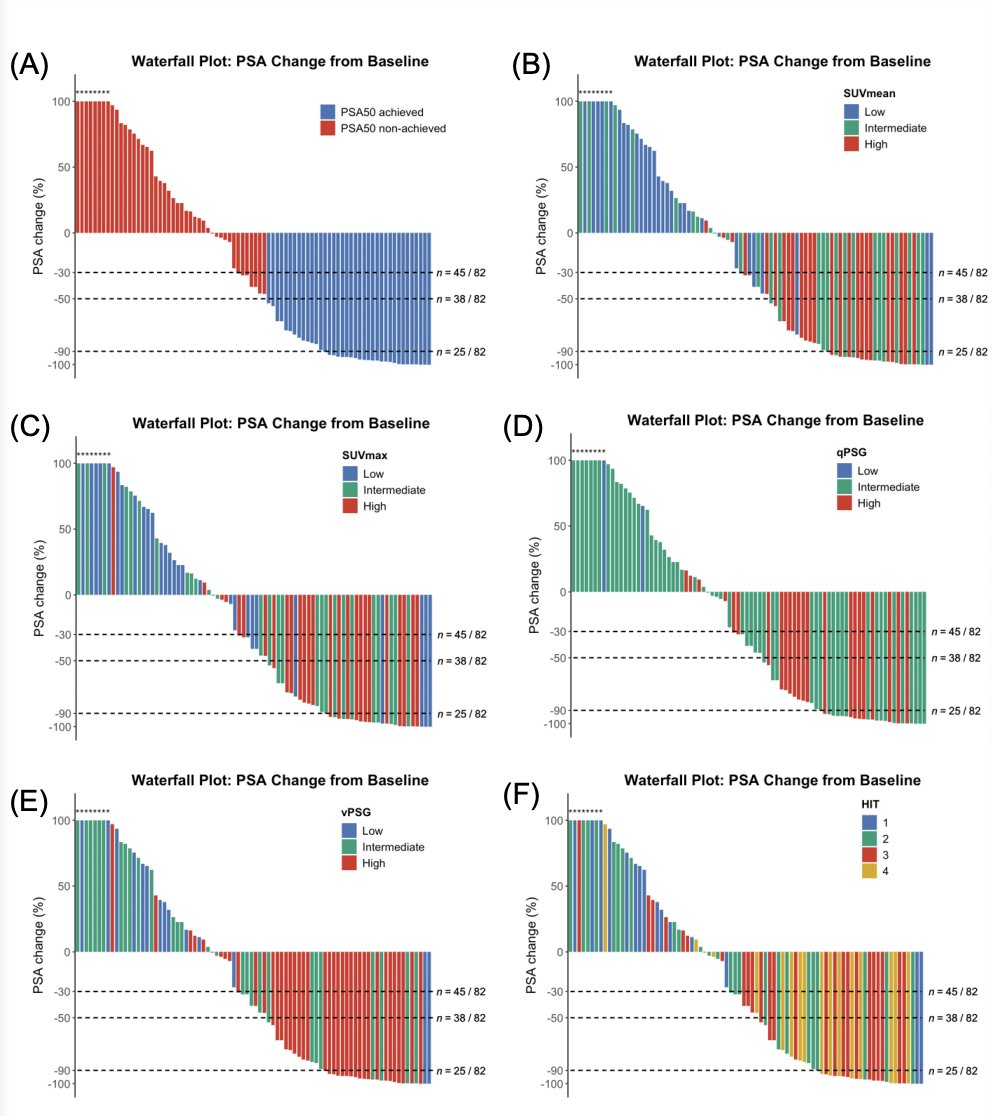
Total tumor SUVmean, total lesion quotient, and quantitative PSMA PET tumor–to–salivary gland ratio were significantly associated with PSA progression free survival (log rank p = 0.006, p = 0.006, and p < 0.001, respectively):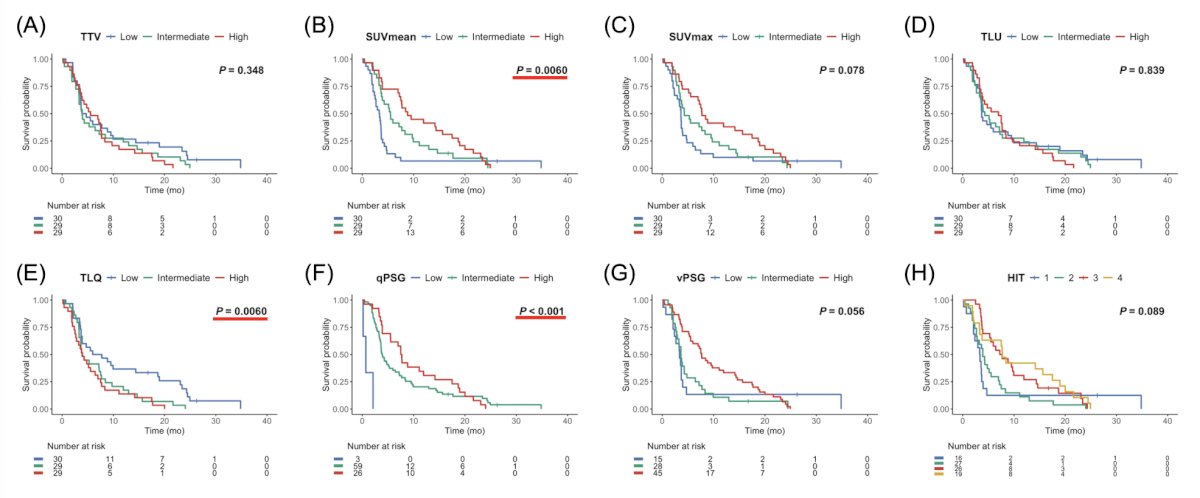
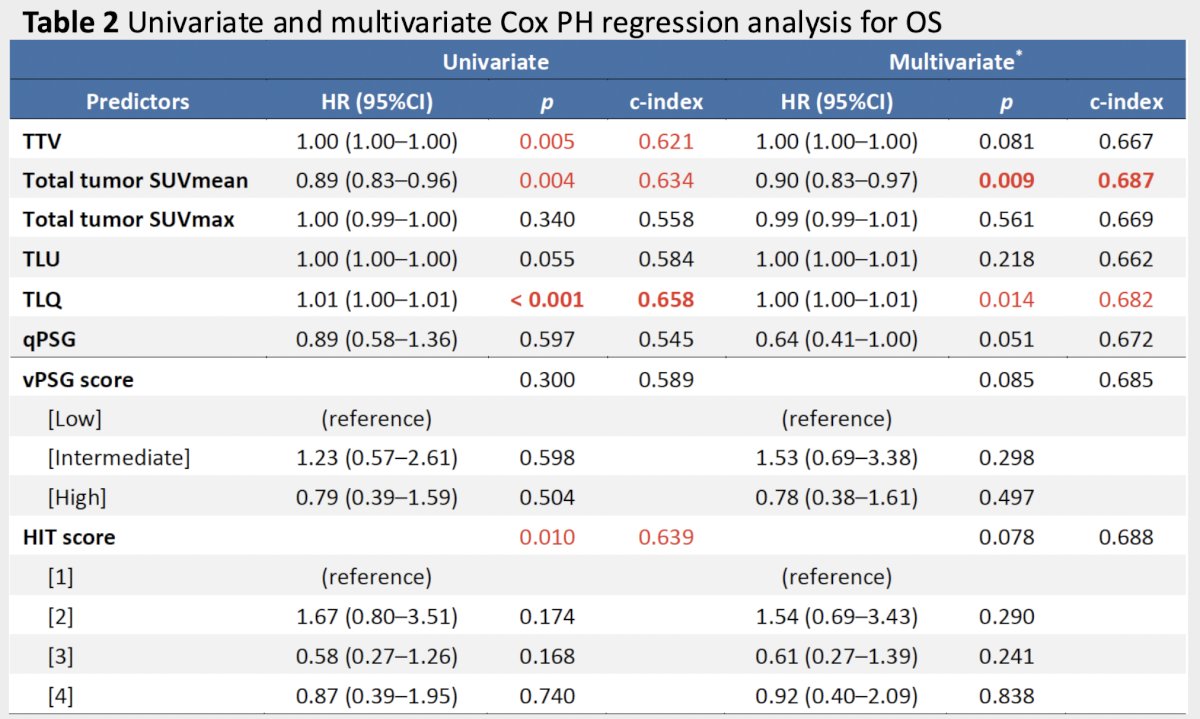
Total tumor volume, total tumor SUVmean, and total lesion quotient were significantly associated with overall survival (log-rank p = 0.015, p = 0.019, and p < 0.001, respectively):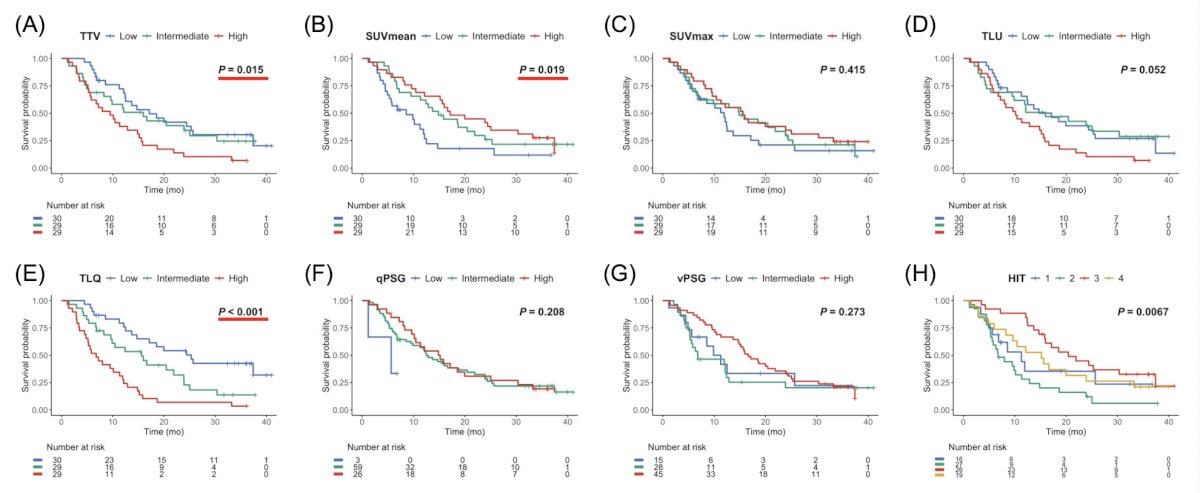
C-index of multivariate Cox proportional hazard regression model of total tumor SUVmean was the highest for PSA progression free survival and overall survival and outperformed the clinical variables model (0.667 versus 0.594; 0.687 versus 0.661, respectively):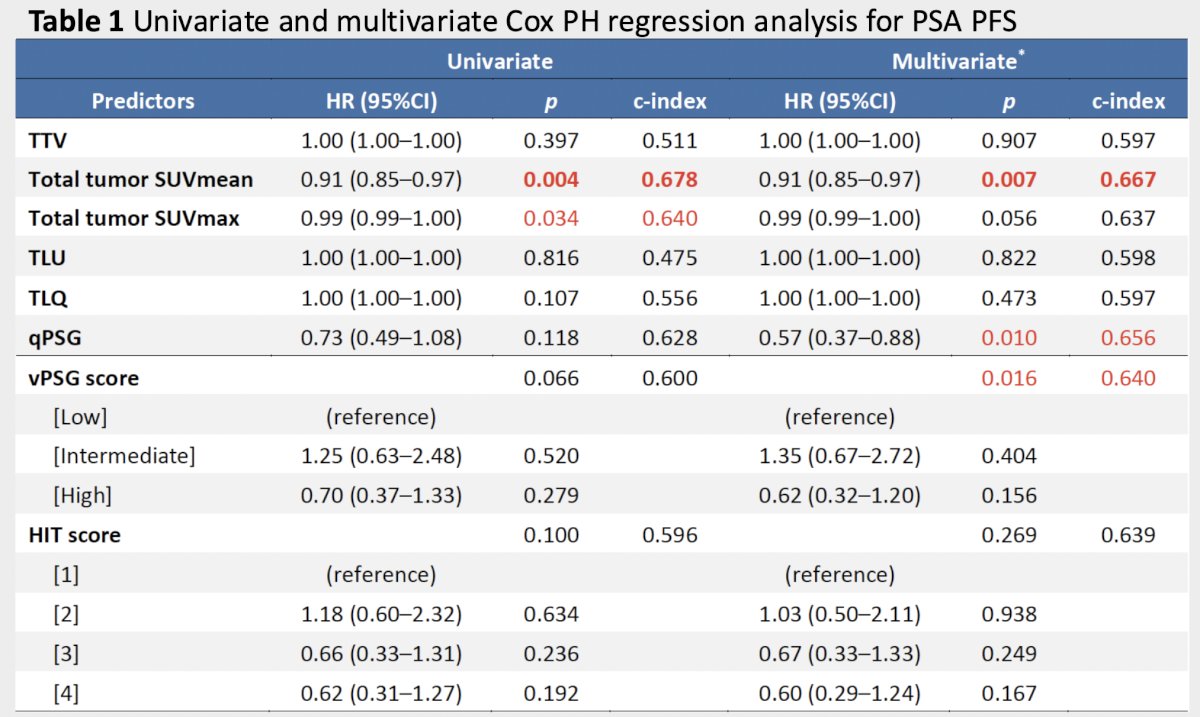
The exploratory cutoff SUV 7.8 of total tumor SUVmean for PSA progression free survival and overall survival using a conditional inference survival tree analysis was identified. Patients with a total tumor SUVmean > 7.8 showed a significantly higher PSA50 achievement rate (64% versus 9%, p < 0.001) and longer median PSA progression free survival and overall survival than those with SUVmean <= 7.8: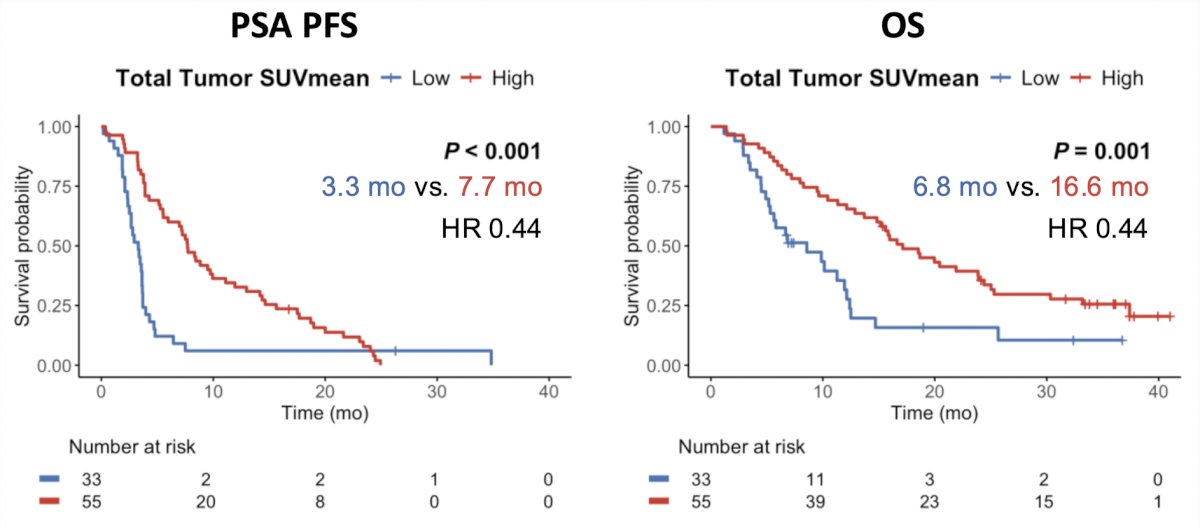
Dr. Kimura concluded his presentation discussing the evaluation of PSMA PET/CT derived predictors for treatment response to 177Lu-PSMA-617 with the following take-home points:
- Quantitative analysis outperformed visual analysis in predicting the outcome of mCRPC with 177Lu-PSMA-617 therapy in the expanded access program cohort
- Total tumor SUVmean was identified as the most robust predictor for PSA progression free survival, while total lesion quotient showed promise as a predictor for overall survival after 177Lu-PSMA-617 therapy
- Incorporating these predictors into clinical decision-making for pre-177Lu-PSMA-617 therapy could aid in patient selection and treatment planning
Presented by: Koichiro Kimura, MD, UCLA, Los Angeles, CA
Written by: Zachary Klaassen, MD, MSc – Urologic Oncologist, Associate Professor of Urology, Georgia Cancer Center, Wellstar MCG Health, @zklaassen_md on Twitter during the Society of Nuclear Medicine and Molecular Imaging (SNMMI) 2025 Annual Meeting, New Orleans, LA, Sat, Jun 21 – Tues, Jun 24, 2025.
Reference: