

(UroToday.com) The 2025 Society of Nuclear Medicine and Molecular Imaging (SNMMI) Annual Meeting held in New Orleans, LA between June 21st and 24th, 2025, was host to a session on molecularly-targeted probe therapy. Dr. Anil Bidkar discussed the combination of a CD46-targeted antibody-drug conjugate (ADC) and radioimmunotherapy for the treatment of prostate cancer patients.
CD46 is a cell surface membrane cofactor protein that is highly expressed in prostate cancer cells, with a particularly high expression in de-differentiated tumors and those with lineage plasticity (e.g., t-SCNC). There is a high expression of CD46 in PSMA-negative tumors,1 which makes CD46 an alternative and complementary target for PSMA. An anti-CD46 targeted antibody, YS5, was recently developed by Dr. Bin Liu at UCSF.
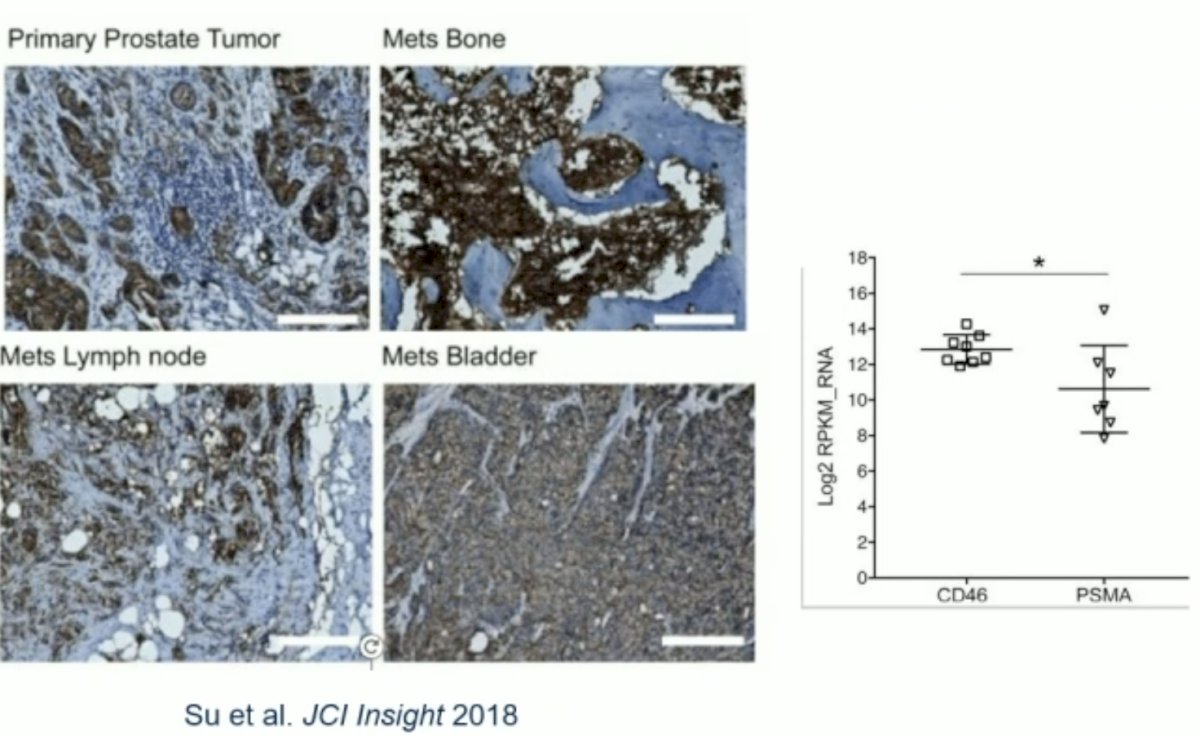
Numerous trials are investigating CD46-targeting agents, as summarized in the image below:
- An ongoing phase Ib/II trial is evaluating the combination of enzalutamide plus FOR46, a Monomethyl auristatin E (MMAE)-containing antibody-drug conjugate that targets CD46, in mCRPC patients with prior progression on abiraterone.
- [225Ac]Macropa-PEG4-YS5 for CD46-targeted alpha particle therapy, which has demonstrated improved biodistribution, reduced off-target binding, and enhanced therapeutic efficacy, particularly at lower doses, compared to 225Ac-DOTA-YS52
- [89Zr]DFO-YS5 has been evaluated as a PET imaging tracer3

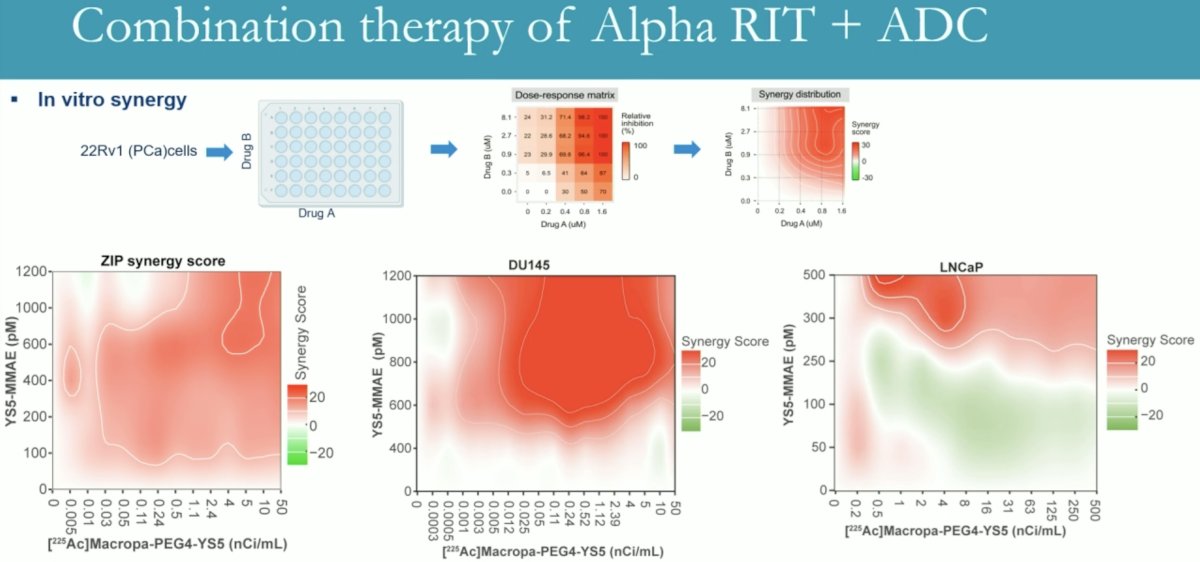
Combining an MMAE and an alpha-emitting particle with a CD46-targeted antibody offers several potential advantages given their separate modes of action and non-overlapping toxicities, with MMAEs known to be radiosensitizers. This potential synergistic mechanism of action has been demonstrated in several in vitro studies.
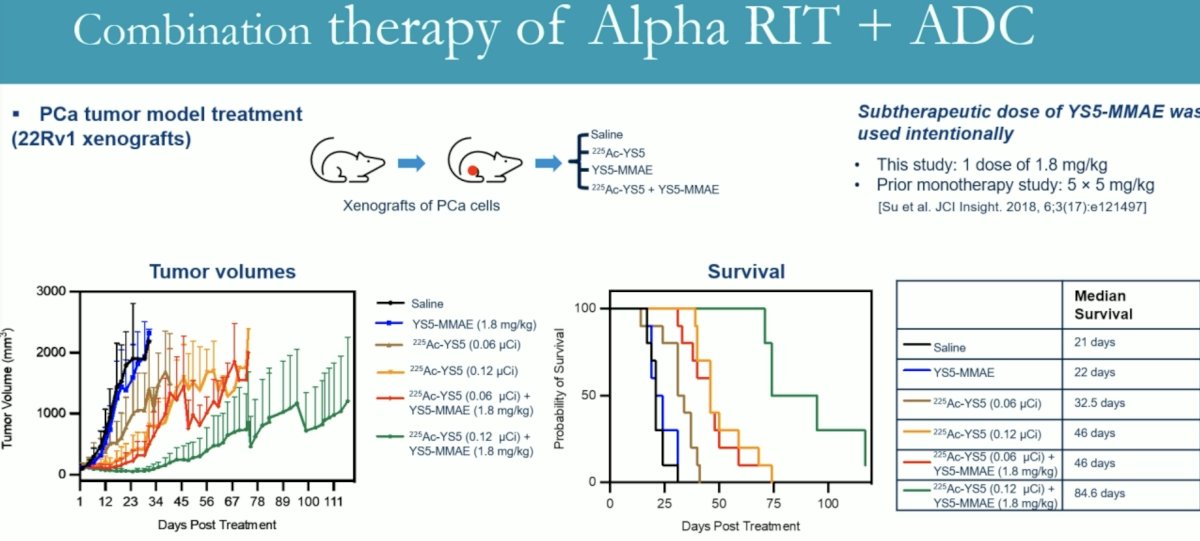
In a prostate cancer mouse model (22Rv1 xenografts), the combination of 225Ac-YS5 (0.12 µCi) + YS5-MMAE (1.8 mg/kg) was associated with the most significant reduction in tumor volume (green curves in the graphs below), compared to YS5-MMAE or 225Ac-YS5 monotherapies, with the longest median survival (84.6 days compared to 21-46 days).
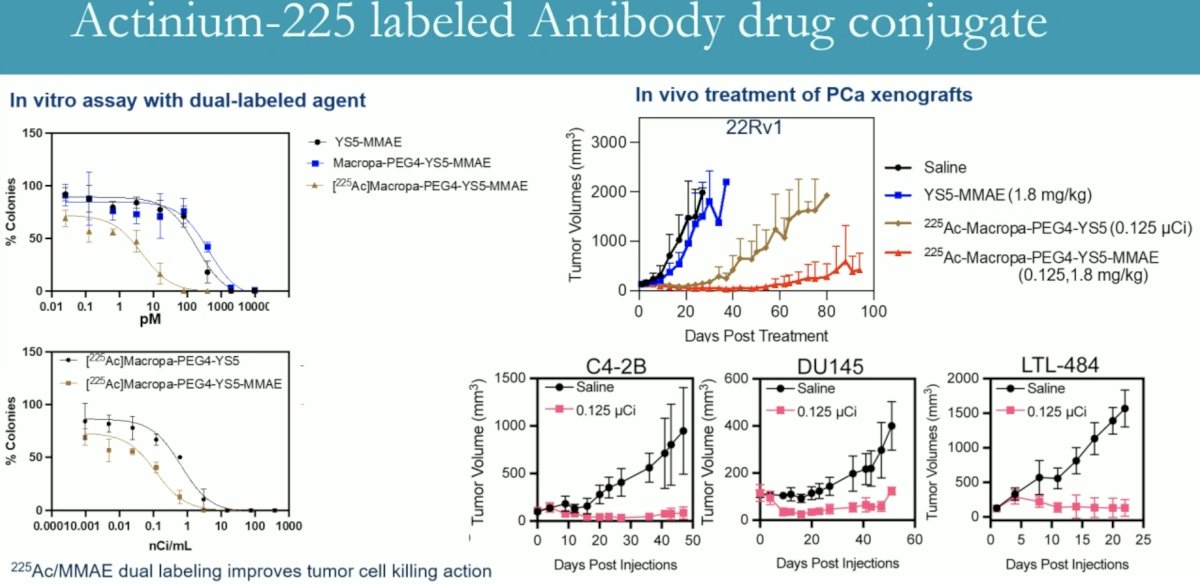
What about using a 225Ac-labeled antibody-drug conjugate that combines the lethal effects of an MMAE and 225Ac in a single agent?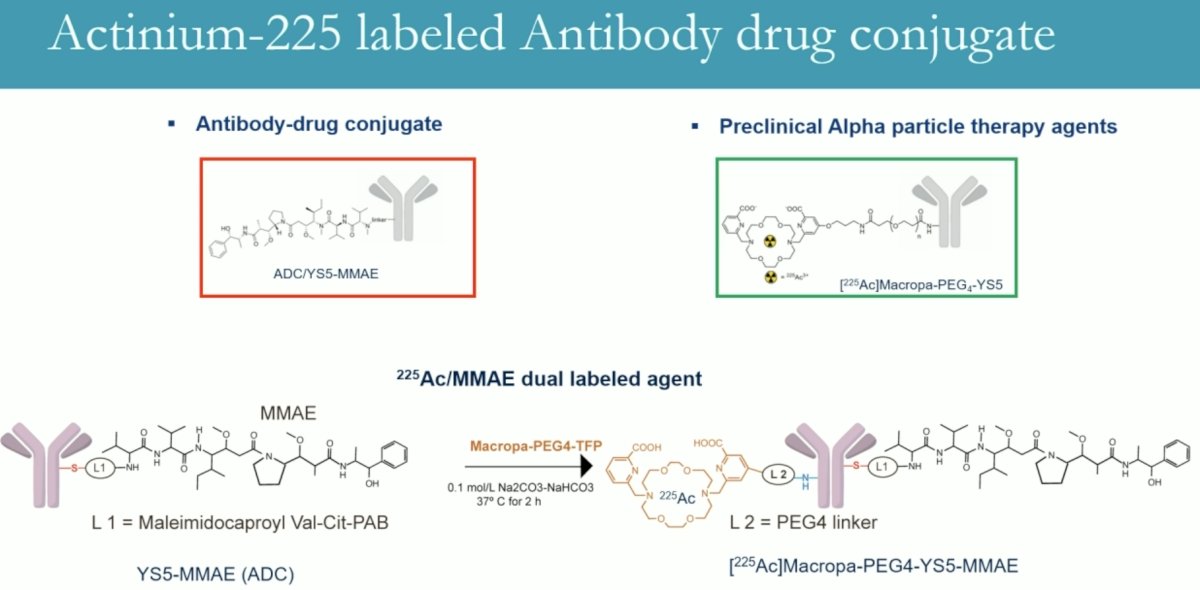
In vitro (left) and in vivo studies (right) suggest that 225Ac/MMAE dual labeling improves tumor cell killing action, as demonstrated in the graphs below.
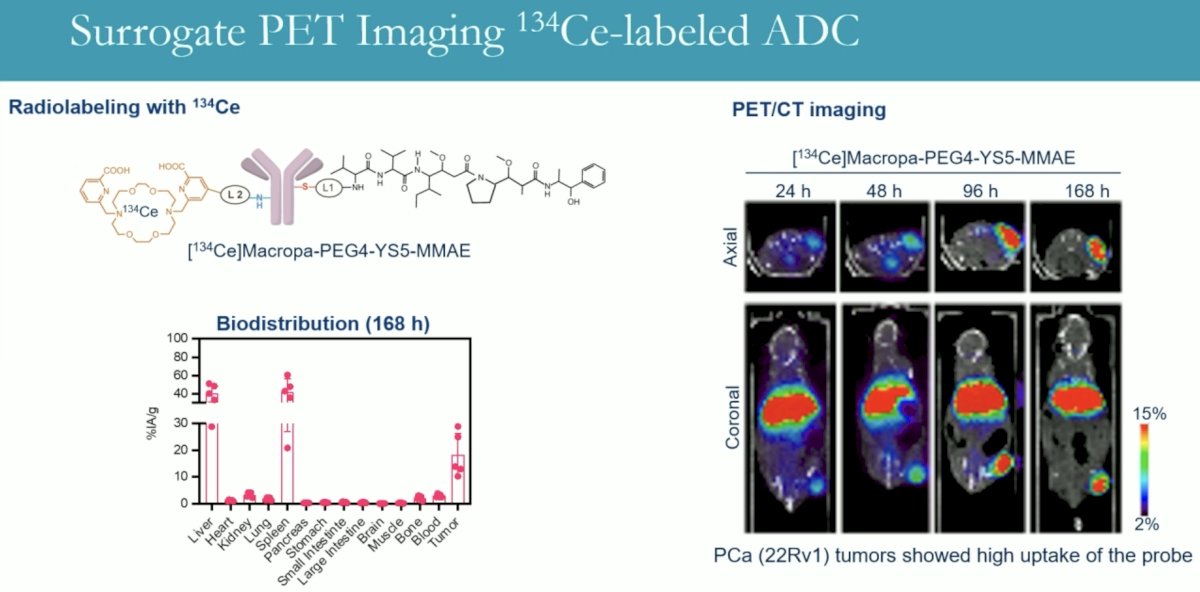
Recent investigations have demonstrated that 134Ce labeling of antibody-drug conjugates allows for surrogate PET imaging in prostate cancer models:
Dr. Bidkar concluded as follows:
- CD46-targeted combination therapy has been developed
- Combining antibody-drug conjugates with Actinium-225 labeled antibody creates a synergistic mechanism for cell death
- 134Ce labeling of antibody-drug conjugates allows for tumor imaging
- The dual MMAE/Ac-225 labeled agent works effectively to treat prostate cancer tumor models
Presented by: Anil Parsram Bidkar, PhD, Postdoctoral Scholar, University of California, San Francisco, CA
Written by: Rashid K. Sayyid, MD, MSc – Robotic Urologic Oncology Fellow at The University of Southern California, @rksayyid on Twitter during the 2025 Society of Nuclear Medicine and Molecular Imaging (SNMMI) Annual Meeting, New Orleans, LA, June 21st – 24th, 2025
References:- Su Y, Liu Y, Behrens CR, et al. Targeting CD46 for both adenocarcinoma and neuroendocrine prostate cancer. JCI Insight. 2018;3(17): e121497.
- Bobba KN, Bidkar AP, Wadhwa A, et al. Development of CD46 targeted alpha theranostics in prostate cancer using ¹³⁴Ce/²²⁵Ac-Macropa-PEG₄-YS5. Theranostics. 2024;14(4): 1344–60.
- Wang S, Li J, Hua J, et al. Molecular imaging of prostate cancer targeting CD46 using immunoPET. Clin Cancer Res. 2020;27(5):1305–15.