

(UroToday.com) The 2025 SESAUA annual meeting featured a bladder cancer session and a presentation by Bree Duncan discussing development and initial experience of a dedicated female bladder cancer clinical care coordinator role. Although the majority of bladder cancer patients are male, women present with higher stage disease and have higher perioperative mortality.
Given the male predominance of this disease, patient-centered resources are often male-focused, and a lower proportion of women are enrolled in clinical trials. Recognizing the lack of educational, research, and clinical support aimed toward women, Vanderbilt University Medical Center established a novel clinical care coordinator position to help women with bladder cancer better navigate their care. At SESAUA 2025, the investigators described the initial experience with implementing this female bladder cancer clinical care coordinator role.
A single female bladder cancer clinical care coordinator (registered RN) was assigned to all women with advanced bladder cancer undergoing radical cystectomy at this academic quaternary care referral center. The female bladder cancer clinical care coordinator met with patients both independently and joined during clinic consultations with physicians, as well as established a direct point of contact for support with clinical trial information, decision-making, patient care resources, educational and emotional support, and day-to-day unexpected needs. The female bladder cancer clinical care coordinator initiates additional communication to address any questions through 6 months following surgery, or longer if clinically indicated: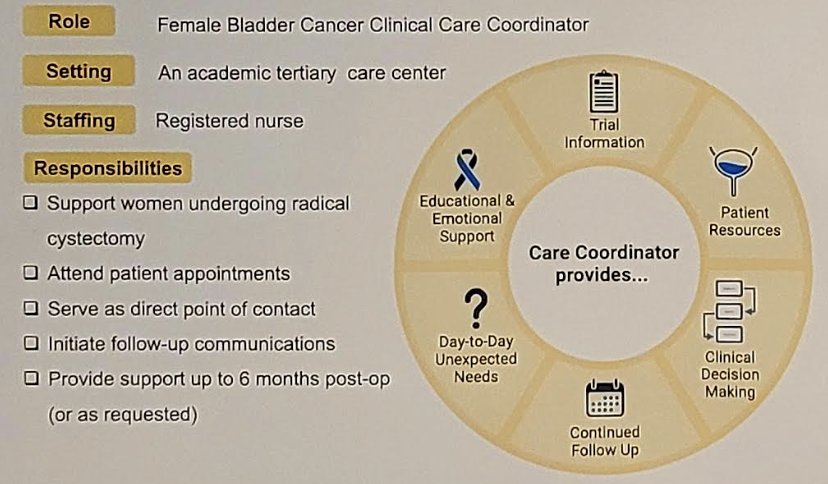
Thirty-four women aged 64 years on average (range 37-79 years) received female bladder cancer clinical care coordinator support before and after radical cystectomy between May 2023 and September 2024. The majority of patients presented with advanced disease, and the most common reason patients initiated contact was for questions concerning scheduling. During the pre-operative phone visit, questions were commonly medical in nature, specifically regarding expected recovery. Three Emergency Department visits were avoided due to the female bladder cancer clinical care coordinator, and 20 unnecessary/incorrectly scheduled appointments were cancelled due to the female bladder cancer clinical care coordinator. The majority (22/34; 65%) of women report they would come to Vanderbilt specifically because of the female bladder cancer clinical care coordinator role: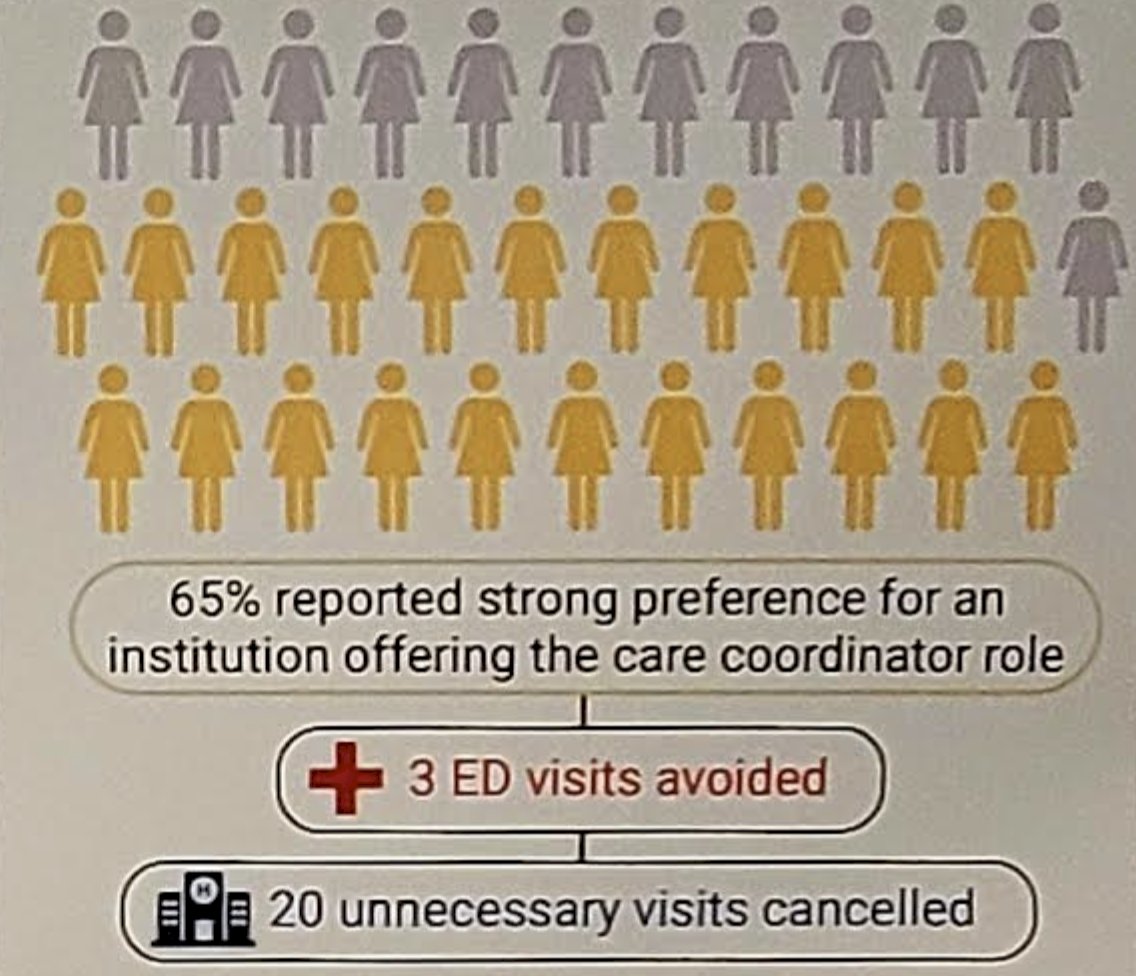
Bree Duncan concluded her presentation discussing the development and initial experience of a dedicated female bladder cancer clinical care coordinator role with the following take-home points:
- The female bladder cancer clinical care coordinator role implementation was successful and impactful, given the limited women-oriented resources. This initiative improved patient satisfaction while also reducing strain on the healthcare system.
- Women undergoing radical cystectomy point to this program as one of the most important reasons for their satisfaction with care at Vanderbilt
- Future directions include expanding to the non-muscle invasive bladder cancer patients and to other institutions.
Written by: Zachary Klaassen, MD, MSc – Urologic Oncologist, Associate Professor of Urology, Georgia Cancer Center, Wellstar MCG Health, @zklaassen_md on Twitter during the Southeastern Section of the American Urological Association (SESAUA) 2025 Annual Meeting, Nashville, TN, Wed, Mar 12 – Sat, Mar 15, 2025.
Related content: Study on Dedicated Patient Navigation for Female Bladder Cancer Patients - Bryn Launer