

Cohort 1 of this study included 653 voided urine specimens (bladder cancer n = 160; non-bladder cancer n = 493) and cohort 2 included 40 cystectomy specimens from muscle invasive bladder cancer patients who received adjuvant gemcitabine + cisplatin treatment. Gene expression was measured by q-PCR and urine was assayed by the Chase test. V1 was either expressed or silenced in bladder cancer cell lines and the transfectants were analyzed for sensitivity to gemcitabine and cisplatin. The mechanism of gemcitabine resistance was evaluated using preclinical in vitro and in vivo models.
In cohort 1, Chase levels were 7-10-fold elevated in patients with bladder cancer compared to patients with benign genitourinary conditions, history of bladder cancer, or other cancers. The Chase test detected bladder cancer with 94.4% sensitivity and 87.4% specificity and had an 84% accuracy in correctly diagnosing the cases with atypical cytology. The stem cell marker CD44 was the major substrate of Chase in bladder cancer cells. V1’s Chase activity induced CD44 cleavage and shedding, activating the JAK2/Stat3 pathway and upregulating cytidine deaminase. They also showed that CDA induces gemcitabine metabolism and efflux of dFdU, an inactive gemcitabine metabolite, and HPLC analysis showed that V1 transfectants have increased levels of dFdU with higher efflux. STAT3 and CDA inhibitors synergistically re-sensitized V1-expressing cells to gemcitabine:
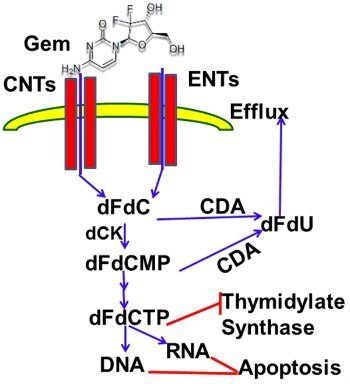
In cohort 2, V1, p-JAK2 and CDA expression predicted failure to gemcitabine + cisplatin treatment (p < 0.0001):

JAK2, STAT3 and CDA inhibitors synergistically re-sensitized V1-expressing cells to gemcitabine. While V1-expressing tumors were resistant, a combination of gemcitabine with a CDA or JAK-2 inhibitor abrogated V1 tumor growth with minimal toxicity.
Joshua van der Eerden concluded his presentation by discussing targeting gemcitabine resistance in bladder cancer via a biomarker-guided pathway with the following take-home points:
- V1/Chase is a potential diagnostic and prognostic biomarker for bladder cancer, driving muscle-invasion, metastasis, and gemcitabine resistance in bladder cancer
- Inhibitors of the Chase signaling pathway can overcome V1-induced gemcitabine resistance, suggesting a precision-based treatment approach to improve treatment response
Presented by: Joshua van der Eerden, Department of Biochemistry and Molecular Biology, Medical College of Georgia, Augusta University, Augusta, GA
Written by: Zachary Klaassen, MD, MSc – Urologic Oncologist, Associate Professor of Urology, Georgia Cancer Center, Wellstar MCG Health, @zklaassen_md on Twitter during the Southeastern Section of the American Urological Association (SESAUA) 2025 Annual Meeting, Nashville, TN, Wed, Mar 12 – Sat, Mar 15, 2025.