

(UroToday.com) The 2025 South Central AUA annual meeting included a session on prostate cancer, featuring a presentation from Dr. Adrian Martinez Correa discussing the prevalence of HRR gene mutations in patients with metastatic prostate cancer among a cohort of Mexican patients. Tumor genetic testing is considered the gold standard for sample typing; however, more than 30% of cases result in tissue failures. Liquid biopsy, a minimally invasive testing method, evaluates circulating tumor DNA (ctDNA) in blood with high concordance, which is why genetic testing in prostate cancer has been increasing in recent years worldwide. This includes Mexico and Latin America, with reports of genetic mutation rates being different from those reported in Caucasian populations. The aim of this study, presented at the 2025 South Central AUA annual meeting, was to determine the prevalence of germline genetic mutations in patients with metastatic castration sensitive and metastatic castration resistant prostate cancer and to establish clinical characteristics at diagnosis.
Overall, 47 Mexican patients with metastatic castration sensitive and metastatic castration resistant prostate cancer were selected for this study:
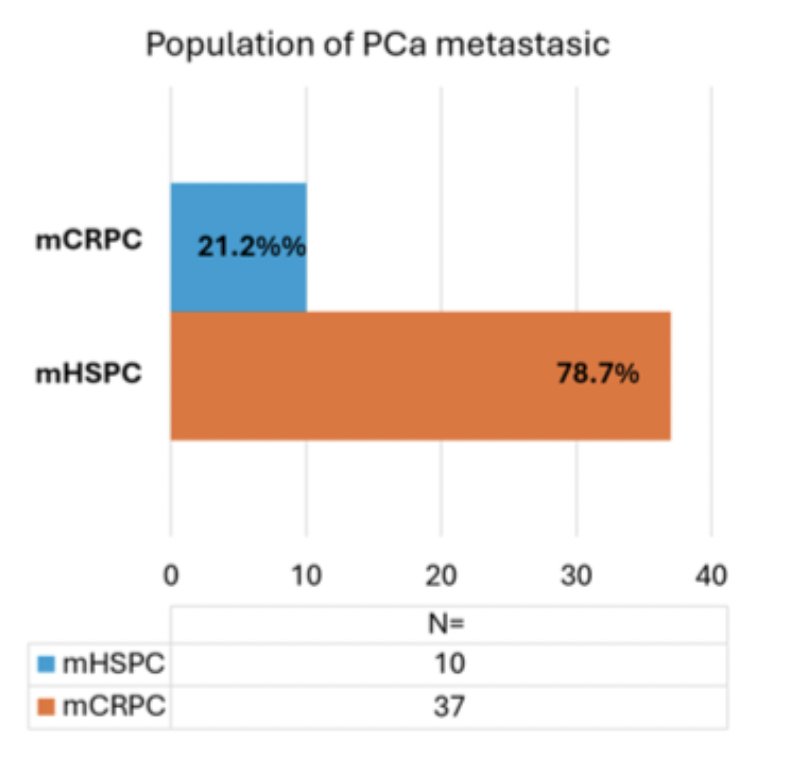
10 mL of whole blood was collected in a Cell-Free DNA BCT tube, and 4 mL of plasma was separated by centrifugation. ctDNA was extracted using the MagMAX Cell-Free DNA Isolation Kit, and the extracted DNA was then used to perform UMI-based target enrichment and sequencing using a custom capture kit developed by MedGenome Labs to detect mutations in 15 HRR genes. The cohort was divided into two groups to assess clinical characteristics.
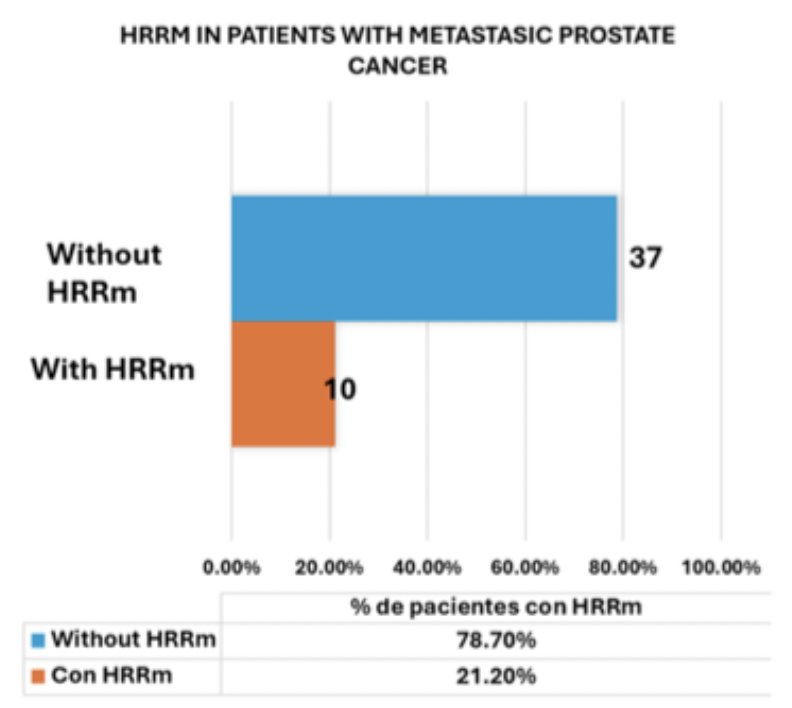
Mutations were identified in 10 of 47 patients (21.2%):
Overall, there were 13 mutations identified in genes: CHEK2 (n = 4; 30.7%), followed by CHEK1 (n = 2; 15.3%), BRCA1 (n = 1; 7.6%), BRCA2 (n = 1; 7.6%), ATM (n = 7.6%) and the rest in a similar percentage: RAD54L (n = 1; 7.6%), RAD51D (n = 1; 7.6%), PALB2 (n = 1; 7.6%):
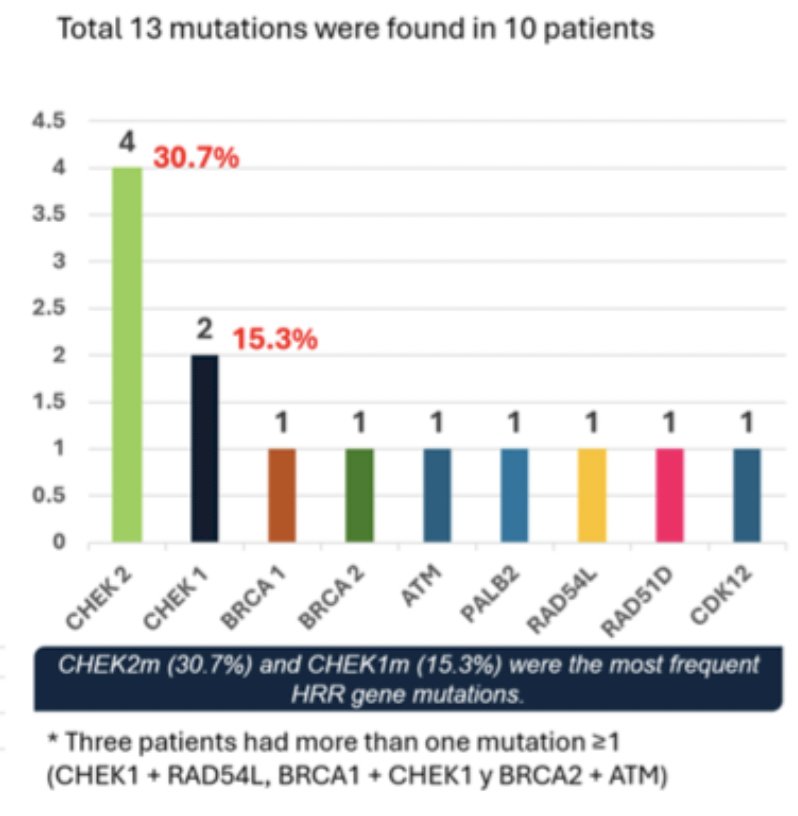
Three patients had more than ≥1 mutation (CHEK1 + RAD54L, BRCA1 + CHEK1, and BRCA2 + ATM). Of these, about three-quarters (n=37; 78.7%) of the population had a diagnosis of metastatic castration sensitive prostate cancer, with the remaining having metastatic castration resistant prostate cancer (n=10; 21.2%). The metastatic castration sensitive prostate cancer group had the highest number of mutations found, the most frequent being CHEK2. In the metastatic castration resistant prostate cancer group, the mutations found were the same number for CHEK2, CHEK1 and RAD54L:
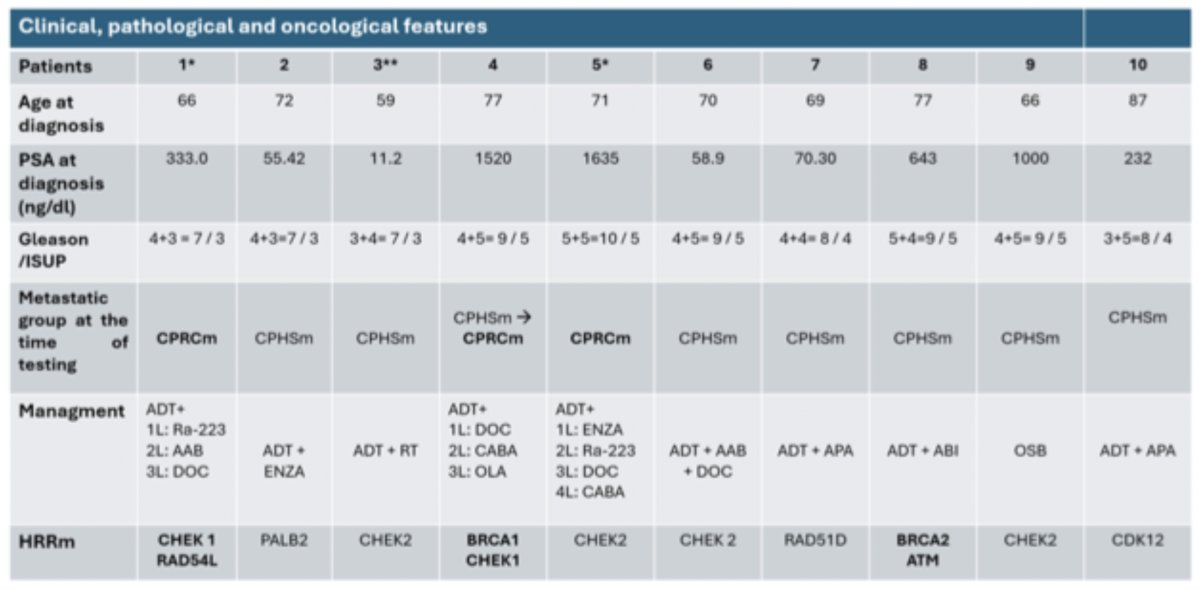
Dr. Correa concluded this presentation discussing the prevalence of HRR gene mutations in patients with metastatic prostate cancer among a cohort of Mexican patients with the following take home messages:
- The results showed a low prevalence of known mutations in prostate cancer within the studied population
- Furthermore, the most frequently identified mutations differed from those reported in pivotal studies
- The analysis of these results provides an opportunity to better establish prognosis, predict response to specific therapies, and identify genomic alterations in this population
Presented by: Adrian Martinez Correa, Hospital Regional de Alta Especialidad en Ixtapaluca, Mexico City, Mexico
Written by: Zachary Klaassen, MD, MSc – Urologic Oncologist, Associate Professor of Urology, Georgia Cancer Center, Wellstar MCG Health, @zklaassen_md on Twitter during the 2025 South Central American Urological Association (AUA) Annual Meeting, Orlando, FL, Wed, Sept 10 – Sat, Sept 13, 2025.