

(UroToday.com) The 2026 ASTRO Multidisciplinary Radiopharmaceutical Therapy Symposium featured a plenary session and a presentation by Dr. Mai Anh Huynh discussing clinical outcomes among patients treated with 177Lu-PSMA-617 and external beam radiotherapy for oligometastatic prostate cancer. 177Lu-PSMA-617 use is expanding for patients with metastatic prostate cancer, but little is known regarding the impact of metastatic burden on treatment response or the efficacy of 177Lu-PSMA-617 when delivered in combination with external beam radiation therapy for oligometastatic disease control.
This was an institutional registry comprising all patients receiving 177Lu-PSMA-617 that was analyzed to identify patients who received external beam radiation therapy with ablative intent to all known sites of active disease. Patient and treatment characteristics were abstracted from the medical record and imaging review. Kaplan-Meier and Cox proportional hazards regression were used to analyze time to event endpoints, and logistic regression was used to analyze the association between PSA response and covariates.
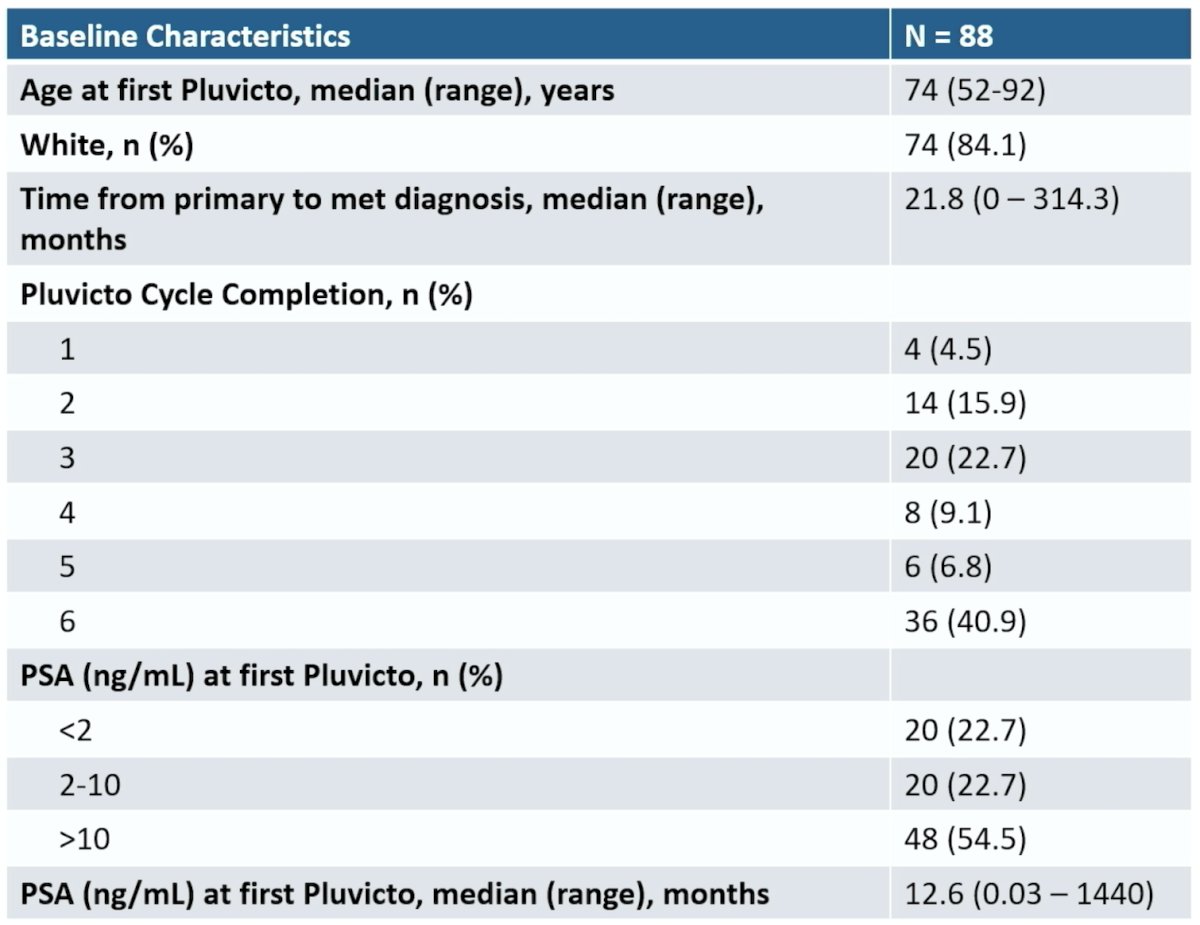
From June 2022 to August 2025, 88 men were treated with 177Lu-PSMA-617 for metastatic prostate cancer and received external beam radiation therapy for oligometastatic disease control. The median age at first 177Lu-PSMA-617 dose was 74 years (range: 52-92). Race was predominantly white (84.1%), followed by Hispanic (6.8%), Black (5.7%), and Asian, American Indian/Alaskan Native, and other (all 1.1%). The median time from initial diagnosis to metastatic diagnosis was 21.8 months (range 0-314.3), and most patients (40.9%) received 6 177Lu-PSMA-617 cycles, 15.9% received 4 or 5 cycles, 38.6% received 2 or 3 cycles, and 4.5% received 1 cycle. PSA at first 177Lu-PSMA-617 dose was <2 ng/mL (22.7%), 2-10 ng/mL (22.7%), and >10 ng/mL (54.5%):
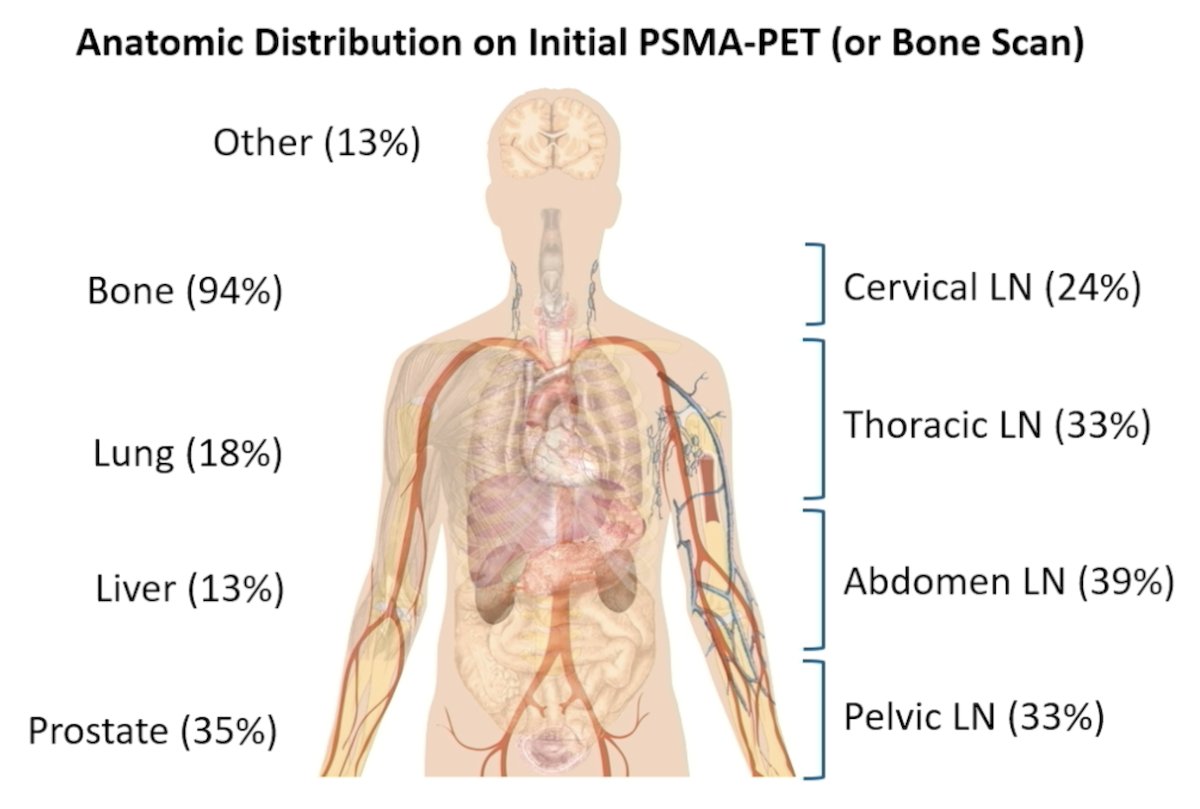
The anatomic distribution of PSMA-PET positive disease at time of 177Lu-PSMA-617 included the prostate (35.2%), pelvic lymph nodes (33%), abdominal or retroperitoneal nodes (38.6%), thoracic or mediastinal lymph nodes (33%), cervical or neck lymph nodes (23.9%), bone (94.3%), liver (12.5%), lung (18.2%), or other (12.5%):
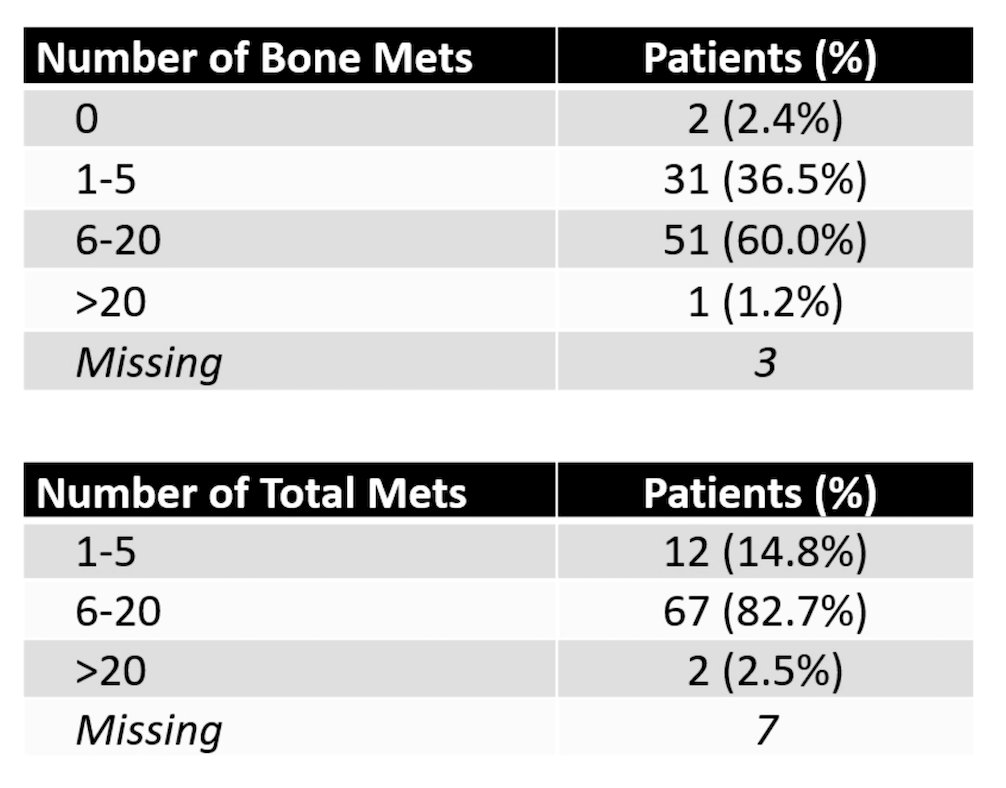
Most patients receiving 177Lu-PSMA-617 had polymetastatic disease, with the total number of metastases at the time of 177Lu-PSMA-617 initiation 6-20 (82.7%), and fewer than 5 active sites in 14.2%. The total number of bone metastases was 1-5 in 36.5%, and 6-20 in 60% of patients:
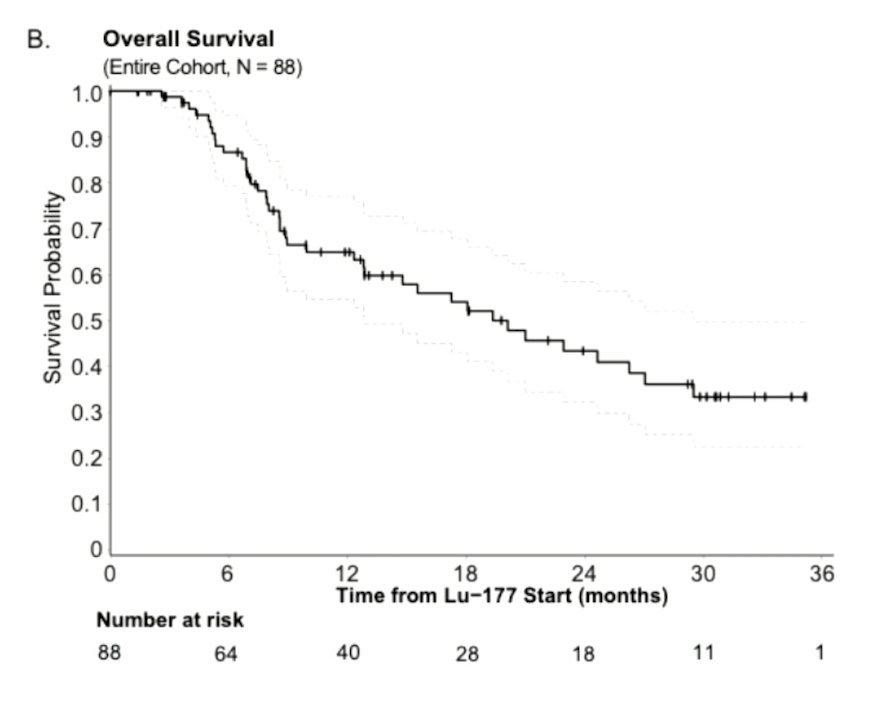
The median follow-up was 22.1 months among patients still alive, and the median overall survival was 20.1 months (95% CI 12.8 – 27):
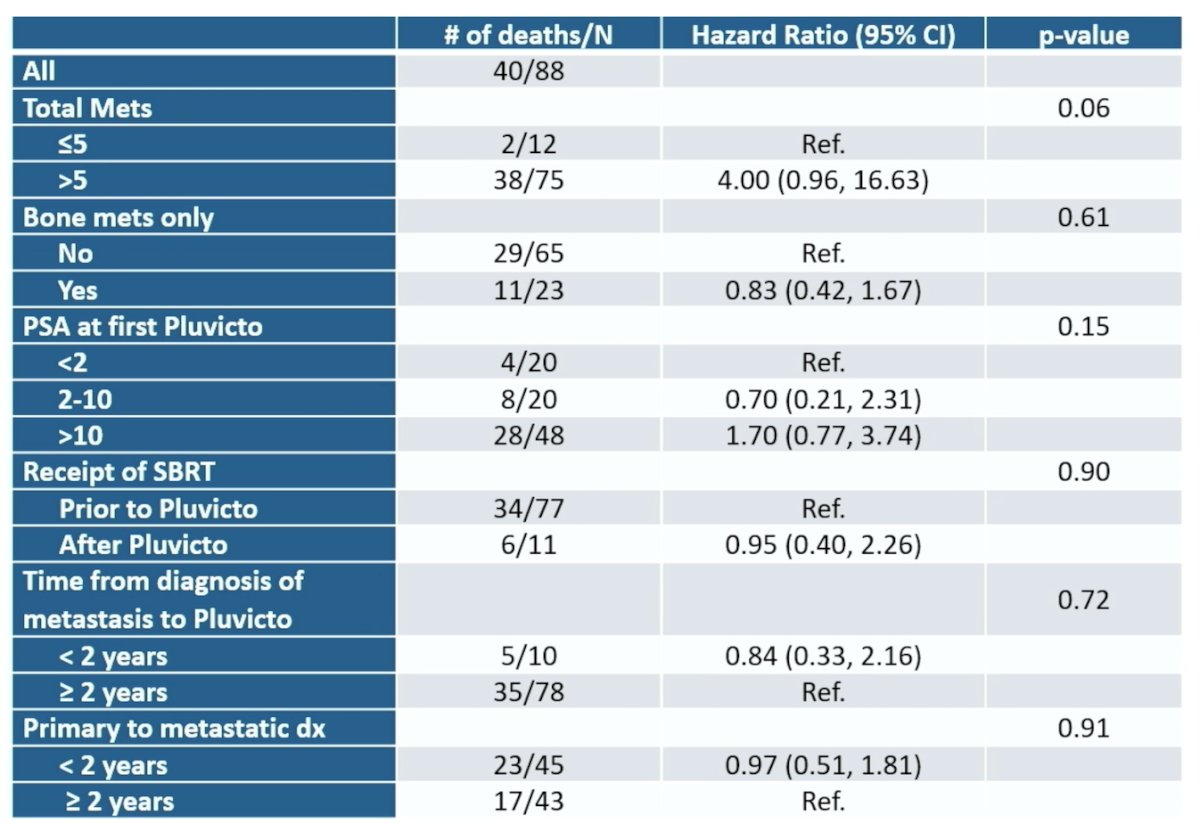
PSA at first 177Lu-PSMA-617 dose, number of bone metastases, and total number of bone metastases were not associated with overall survival on univariate analysis. Patients with fewer than 5 metastases at the time of 177Lu-PSMA-617 had a trend towards increased survival than those with > 5 (HR 4.00, p = 0.06):
PSA50 response was 55.7%, with a median time from first 177Lu-PSMA-617 to PSA50 of 1.6 months (range 1.1-6.9): 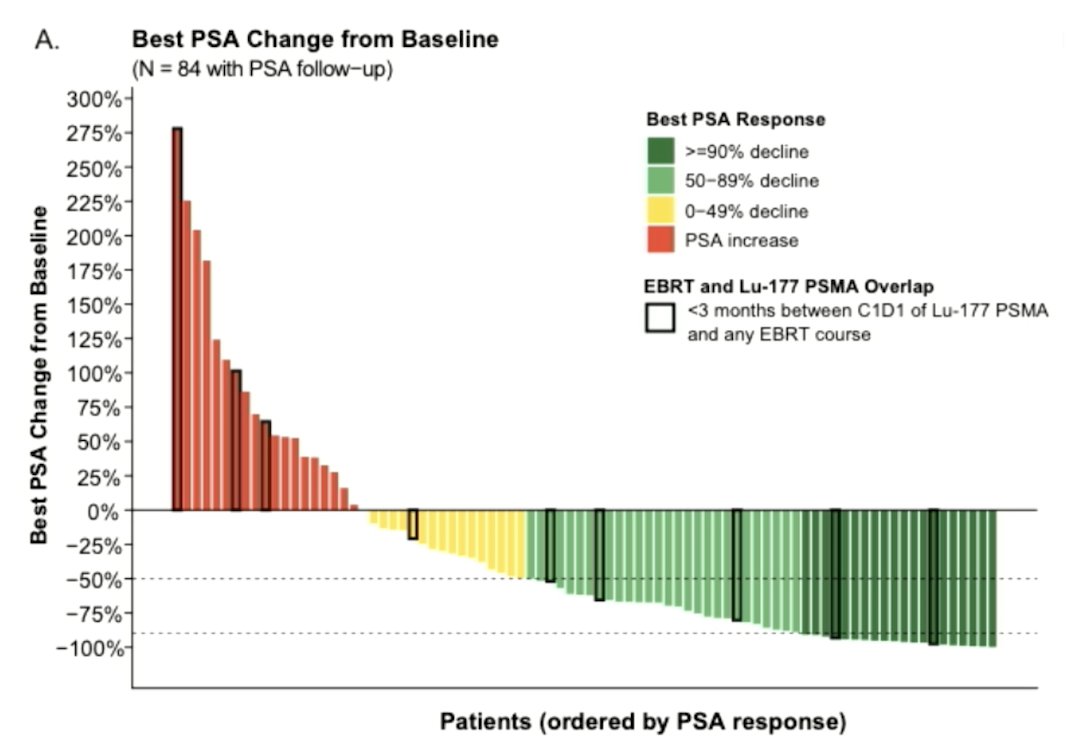
Dr. Huynh concluded her presentation discussing clinical outcomes among patients treated with 177Lu-PSMA-617 and external beam radiotherapy for oligometastatic prostate cancer with the following take-home points:
- A diverse population of patients treated with both 177Lu-PSMA-617 and external beam radiation therapy for oligometastatic disease control demonstrated favorable overall survival
- Bone-only involvement, initial PSA, and total number of bone metastases were not associated with survival after 177Lu-PSMA-617 in this patient cohort
- There was a trend toward improved overall survival with a total metastatic burden <= 5
- Selective use of ablative external beam radiation therapy to metastatic or primary sites for patients with oligometastatic prostate cancer in combination with 177Lu-PSMA-617 may augment clinical outcomes, including PSA50 response rate and overall survival
- Further prospective study is warranted
Presented by: Mai Anh Huynh, MD, PhD, Brigham and Women’s, Dana-Farber Cancer Center, Harvard Medical School, Boston, MA
Written by: Zachary Klaassen, MD, MSc – Urologic Oncologist, Associate Professor of Urology, Georgia Cancer Center, Wellstar MCG Health, @zklaassen_md on Twitter during the 2026 American Society for Radiation Oncology (ASTRO) Multidisciplinary Radiopharmaceutical Therapy Symposium, Palm Desert, CA, Tues, Feb 17 – Wed, Feb 18, 2026.