

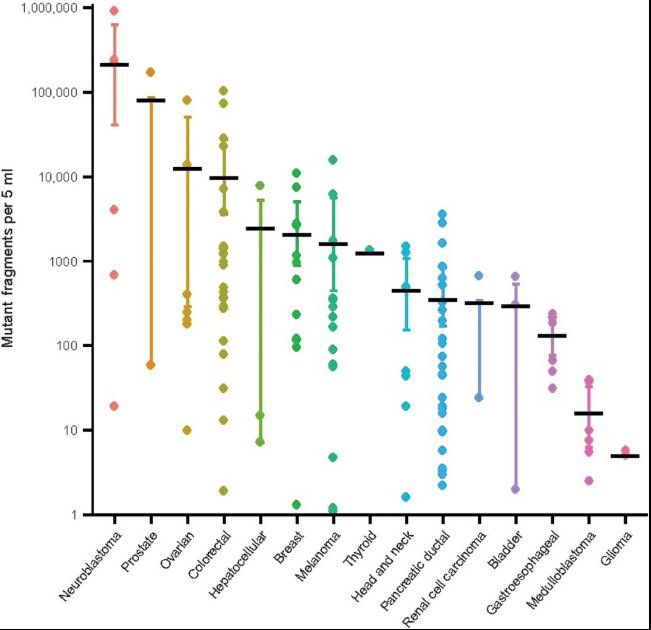
(UroToday.com) The 2025 Interdisciplinary Genitourinary Cancer Forum featured a radical approaches to bladder cancer session and a presentation by Dr. Andrew Hahn discussing the role of ctDNA in monitoring patients with metastatic disease. Dr. Hahn started his presentation by highlighting that ctDNA is composed of fragments of tumor-derived DNA found in the cell free DNA pool of blood. The short half-life of ctDNA reflects real time tumor activity and is shed at variable rates by cancer type and variable quantities within each cancer type:
ctDNA is measured by a targeted assay to look for specific mutations, or via genome-wide untargeted approaches. There are two approaches to targeted assays:
- Tumor-guided: sequence the tumor first and design patient specific assays for plasma (Signatera)
- Tumor agnostic: test plasma for known oncogenic mutations and the sensitivity is influenced by ctDNA fraction
The potential uses in metastatic cancer include assessment for prognosis, monitoring treatment response, and/or to guide treatment decisions. Limitations of ctDNA include (i) tumor location influencing shedding (ie. brain, peritoneum), (ii) tumor biology influencing shedding (metastatic RCC sheds less than metastatic urothelial carcinoma), and (iii) biologic noise from CHIP.
Metastatic urothelial carcinoma has been an early leader among genitourinary cancer for ctDNA utilization because there is no other tumor biomarker and there is a high shedding rate for urothelial carcinoma. In a post-hoc analysis of the KEYNOTE-361 trial assessing pembrolizumab +/- chemotherapy versus chemotherapy in metastatic urothelial carcinoma, baseline tumor informed maxVAF was prognostic in patients treated with pembrolizumab1:
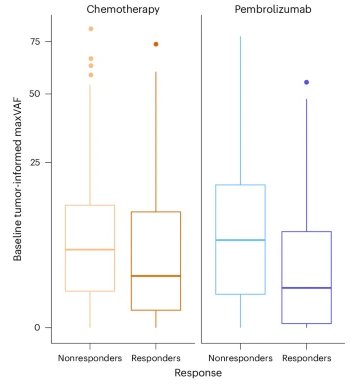
At cycle 2, 11.5% had ctDNA clearance in the pembrolizumab arm compared to 41.2% in the chemotherapy arm by maxVAF:
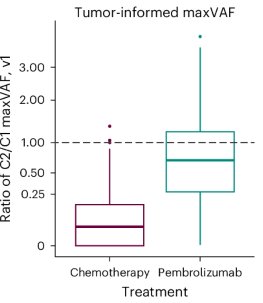
However, ctDNA dynamic change did not improve upon RECIST v1.1 when explaining overall survival.
Dr. Hahn noted that multiple studies have used ctDNA to inform treatment choice in metastatic urothelial carcinoma.2,3 Helal et al.3 showed that 63 of 140 patients with metastatic urothelial carcinoma had an “actionable” alteration, but only 8/63 received targeted treatment. Importantly, based on the Thor Cohort 1 data,4 erdafitinib is approved for FGFR3/2 alterations.
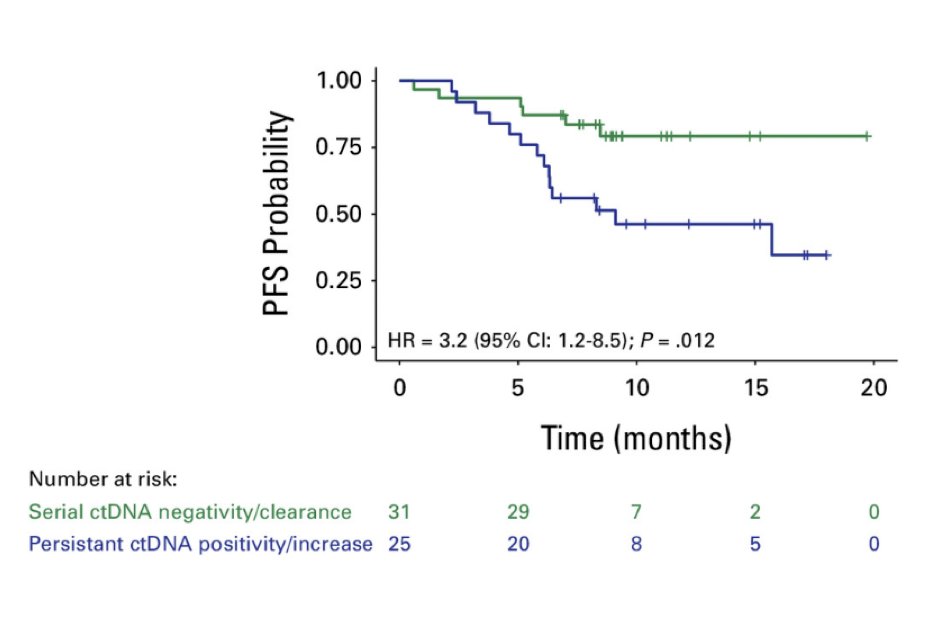
With regards to ctDNA in metastatic RCC, tumor-informed panels have improved upon the low shedder reputation of RCC, and recent studies have reported 65% and 91% of patients had detectable ctDNA. In studies of tumor-informed panels, ctDNA burden and dynamics are prognostic5:
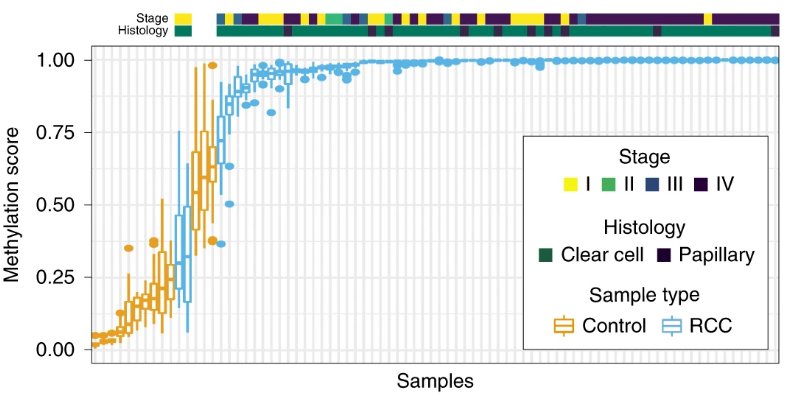
Dr. Hahn notes there are many future directions for liquid assays, including assessment of the methylation score for patients with RCC:
Dr. Hahn concluded his presentation discussing the role of ctDNA in monitoring patients with metastatic disease with the following take home points:
- Utility of ctDNA is influenced by many factors including tumor type, burden and sites of disease, and the assay used to measure it
- Metastatic urothelial carcinoma is the leading cancer for using ctDNA, and ctDNA is prognostic at baseline and with dynamic change
Presented by: Andrew Hahn, MD, MD Anderson Cancer Center, Houston, TX
Written by: Zachary Klaassen, MD, MSc – Urologic Oncologist, Associate Professor of Urology, Georgia Cancer Center, Wellstar MCG Health, @zklaassen_md on Twitter during the Interdisciplinary Genitourinary Cancer Forum 2025, between June 19 – 22, 2025 in St. Petersburg, Florida, United States
References:
- Powles T, Chang YH, Yamamoto Y, et al. Pembrolizumab for advanced urothelial carcinoma: Exploratory ctDNA biomarker analyses of the KEYNOTE-361 phase 3 trial. Nat Med. 2024 Sep;30(9);2508-2516.
- Powles T, Sridhar SS, Loriot Y, et al. Avelumab maintenance in advanced urothelial carcinoma: Biomarker analysis of the phase 3 JAVELIN Bladder 100 trial. Nat Med. 2021 Dec;27(12):2200-2211.
- Helal C, Pobel C, Bayle A, et al. Clinical utility of plasma ctDNA sequencing in metastatic urothelial cancer. Eur J Cancer. 2023 Dec:195:113368.
- Loriot Y, Matsubara N, Park SH, et al. Erdafitinib or Chemotherapy in Advanced or Metastatic Urothelial Carcinoma. N Engl J Med. 2023 Nov 23;389(21):1961-1971.
- Basu A, Au C, Kommalapati A, et al. Longitudinal testing of circulating tumor DNA in patients with metastatic renal cell carcinoma. JCO Precis Oncol. 2024 Dec:8:e2400667.