

(UroToday.com) The 2025 European Society of Medical Oncology (ESMO) Annual Congress held in Berlin, Germany, was host to the Poster presentation session. Dr. Mahaz Kayani presented the poster On-treatment serum prostate specific antigen (PSA) and metastatic burden at treatment start: landmark analysis of 7129 patients starting long-term androgen deprivation (ADT) and randomised in the STAMPEDE platform protocol.
Dr. Kayani highlighted that while on-treatment PSA levels are known to correlate with outcomes in hormone-sensitive prostate cancer (HSPC), the optimal timing for assessment, clinically relevant thresholds, and integration with disease burden or nodal status remain undefined in a unified, randomized setting. This study evaluated PSA levels at 6, 12, and 24 weeks post-randomization and explored how metastatic volume and nodal status influence overall survival (OS).
This pooled analysis included 7,129 patients with metastatic or very high-risk non-metastatic prostate cancer enrolled across five phase 3 trials within the STAMPEDE platform. Patients were treated with androgen deprivation therapy (ADT) alone, ADT plus docetaxel (± zoledronic acid), ADT plus abiraterone (± enzalutamide), or prostate radiotherapy in the metastatic cohort, while all patients with non-metastatic disease received radiotherapy. Metastatic disease burden was retrospectively categorized as high or low volume according to CHAARTED criteria following trial enrollment.
The primary endpoint was OS measured from each predefined landmark 6, 12, and 24 weeks after randomization. Landmark analyses employed Kaplan-Meier survival estimates (96-month OS) and multivariable Cox regression models adjusted for treatment allocation, baseline PSA (log-transformed), age, Gleason score, WHO performance status, tumour stage, nodal status, CHAARTED metastatic volume, prior local therapy, time from ADT initiation to PSA measurement, and NSAID/aspirin use.
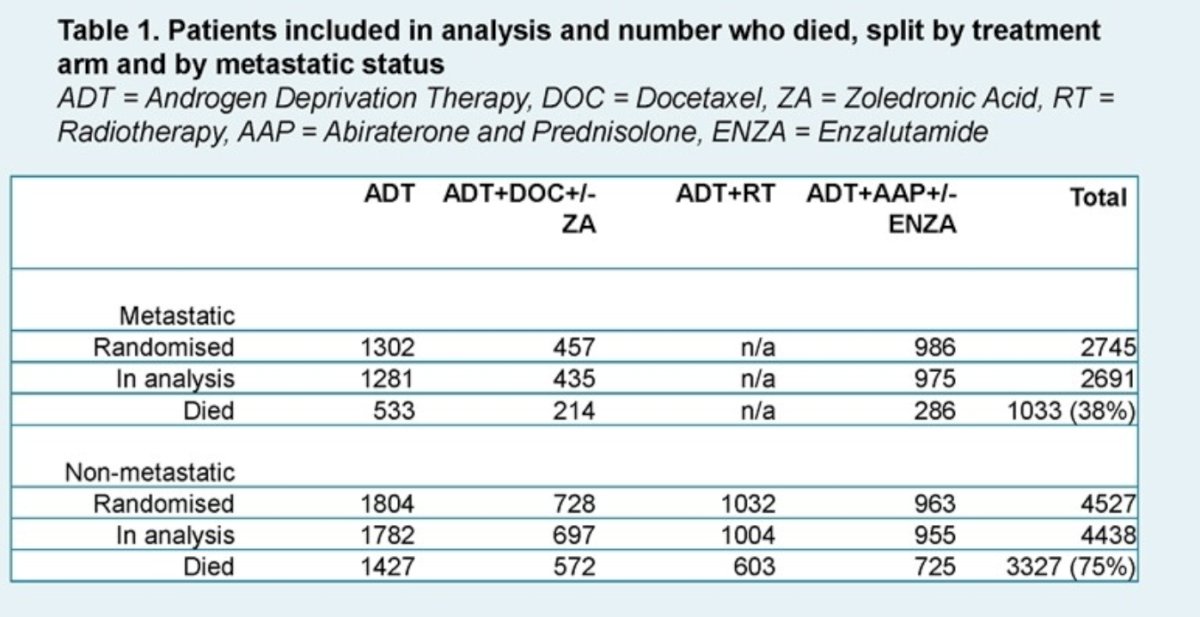
A total of 7,129 patients were included in the analysis, comprising 2,691 with metastatic and 4,438 with non-metastatic disease. Among those with metastatic disease, 38% (1,033/2,691) had died by data cutoff, while mortality was higher in the non-metastatic group, with 75% (3,327/4,438) deaths recorded. Treatment distribution varied by disease stage: metastatic patients received ADT alone (n=1,281), ADT plus docetaxel ± zoledronic acid (n=435), or ADT plus abiraterone ± enzalutamide (n=975), whereas non-metastatic patients additionally received radiotherapy, consistent with trial protocols.
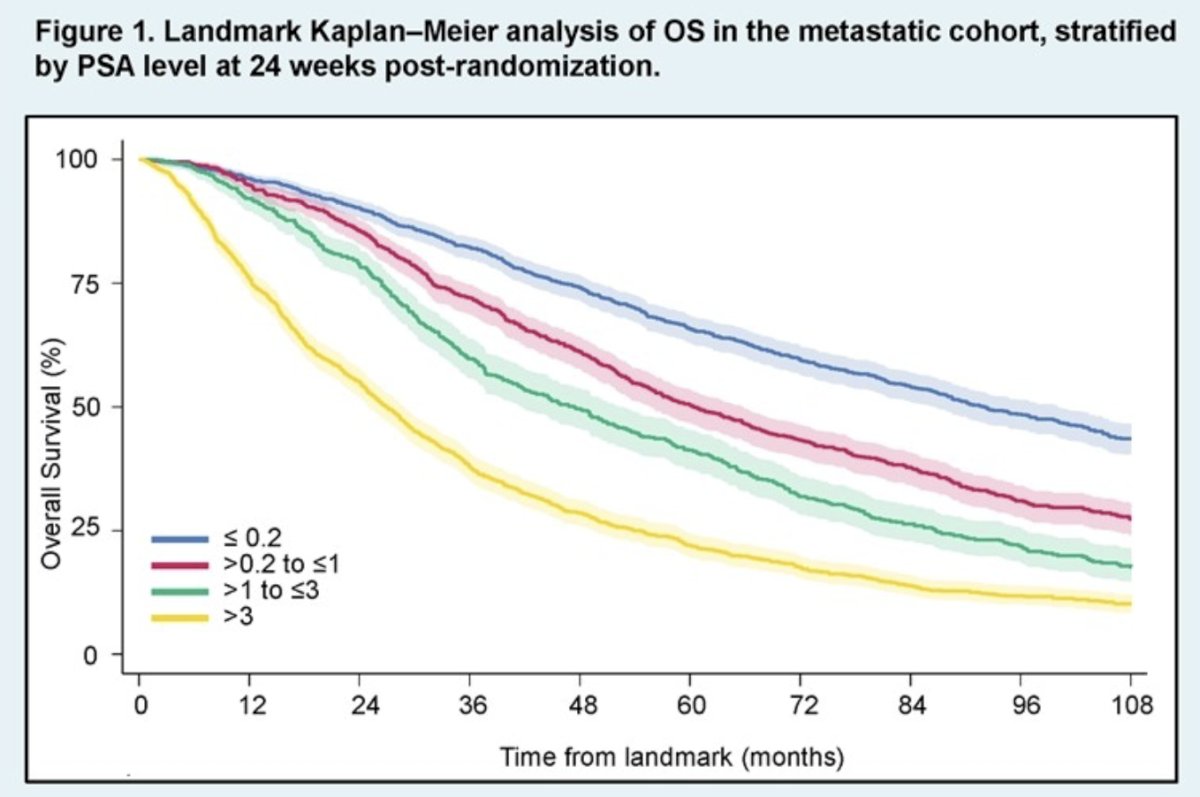
Dr Kayani noted that at 24 weeks, 30.1% of patients in the metastatic cohort and 50.1% in the non-metastatic cohort achieved a PSA level ≤0.2 ng/mL. Notably, a comparable prognostic benefit for overall survival was observed when this PSA threshold was reached as early as 6 or 12 weeks, suggesting that early PSA suppression serves as a consistent and meaningful predictor of long-term outcomes across disease stages.
Higher PSA levels at landmark assessments were strongly correlated with worse overall survival. Specifically, increasing PSA categories (>0.2 to ≤1, >1 to ≤3, and >3 ng/mL) were associated with progressively poorer outcomes as illustrated in the Kaplan-Meier curves below, and this relationship remained significant even after adjusting for baseline covariates such as age, Gleason score, ECOG status, and metastatic burden.
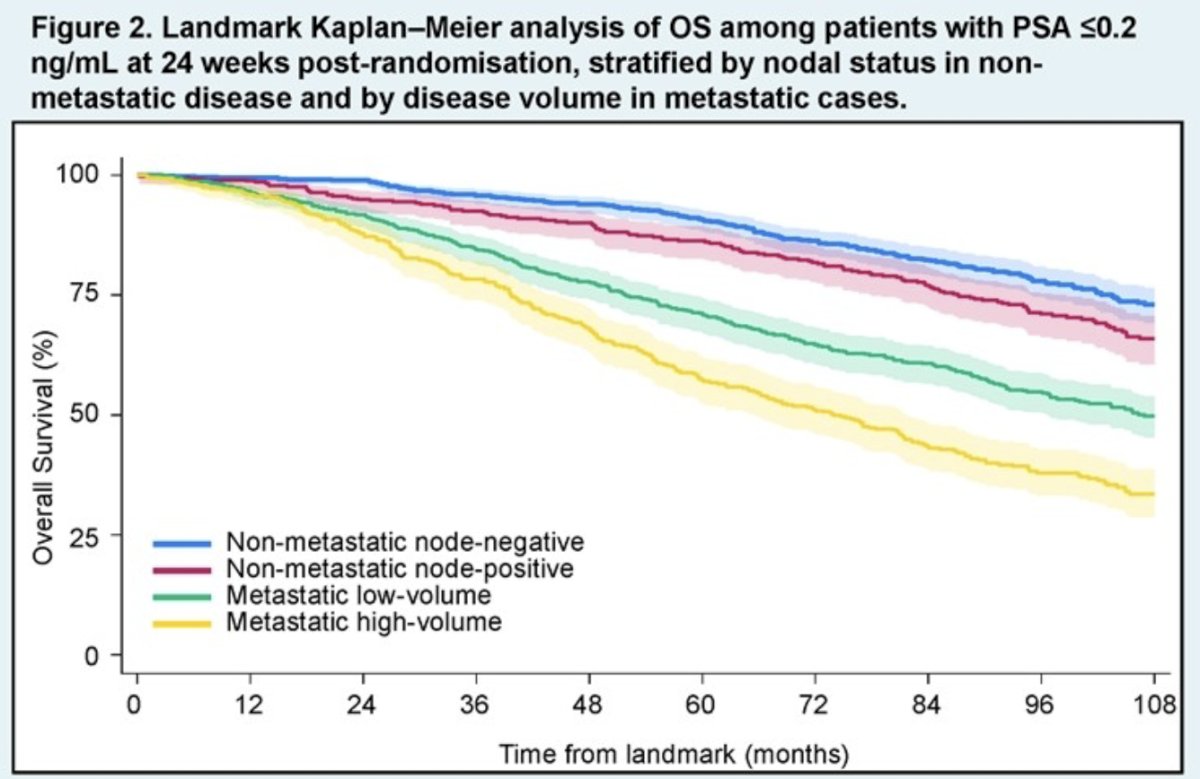
When stratified by CHAARTED disease volume, prognosis remained significantly modified within each PSA category. Among patients with PSA ≤0.2 ng/mL at 24 weeks, those with low-volume metastatic disease demonstrated markedly better 96-month overall survival (64.1%) compared to patients with high-volume metastases (44.6%). Similarly, in non-metastatic disease, node-negative patients consistently achieved superior long-term survival compared to node-positive cases, emphasizing that both PSA response and disease burden independently influence prognosis in advanced prostate cancer.
Across all timepoints (6, 12, and 24 weeks), higher PSA categories were consistently associated with increased risk of death compared with PSA ≤0.2 ng/mL. This relationship held true for both low- and high-volume metastatic disease, though hazard ratios were generally higher in high-volume patients.
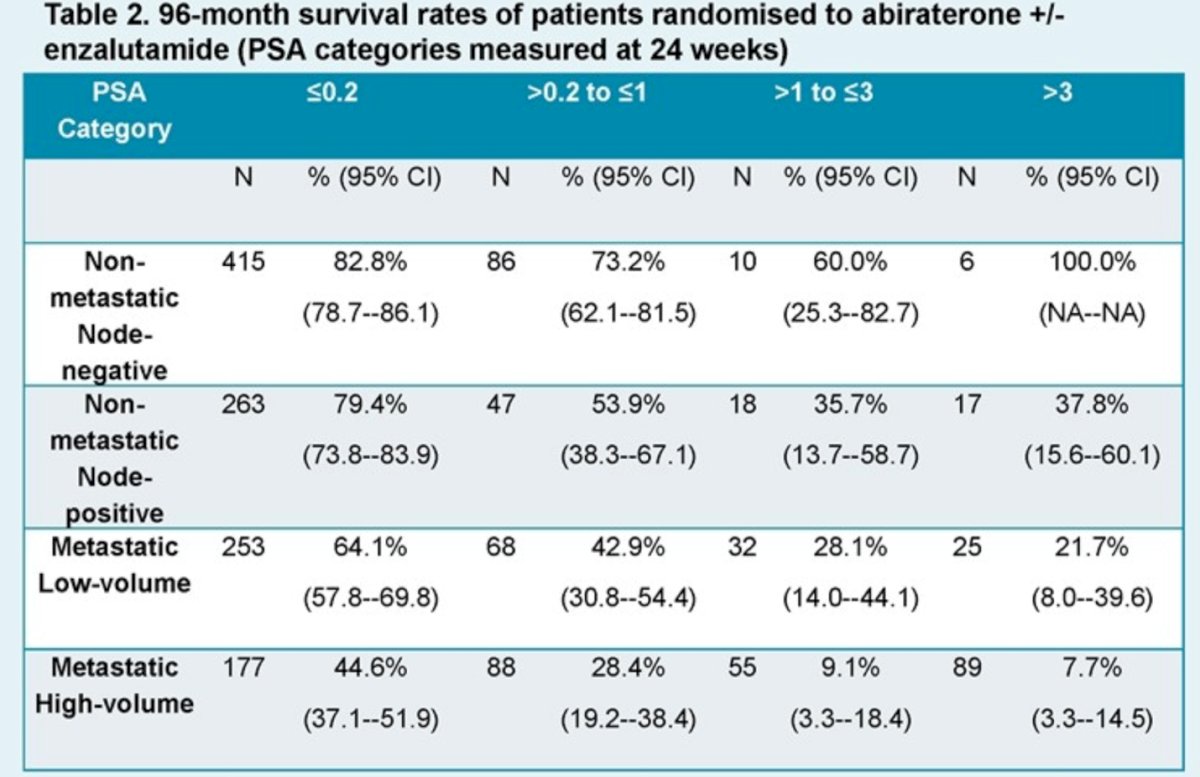
Notably, the combination of abiraterone plus enzalutamide achieved the highest proportion of patients reaching PSA ≤0.2 ng/mL at 24 weeks and was associated with the most favorable overall survival across all analyzed subgroups, including non-metastatic, low-volume, and high-volume metastatic disease.
Dr. Kayani concluded their poster presentation with the following key messages:
- On-treatment PSA and disease burden should be considered together for prognostication.
- Achieving PSA ≤0.2 ng/mL within 6–12 weeks strongly predicts favorable long-term survival.
- Metastatic volume and nodal status further refine risk within the same PSA category.
- Abiraterone-based therapy yields deeper PSA responses and improved survival outcomes.
- These findings support early PSA monitoring and integrated risk stratification to optimize treatment intensity and follow-up.
- Prospective validation is warranted to confirm these results.
Presented by: Mahaz Kayani, PhD(c), Clinical Research Fellow, MRC Clinical Trials Unit at University College of London, London, United Kingdom.
Written by: Julian Chavarriaga, MD – Urologic Oncologist at Cancer Treatment and Research Center (CTIC) via Society of Urologic Oncology (SUO) Fellow at The University of Toronto. @chavarriagaj on Twitter during the 2025 European Society for Medical Oncology (ESMO) Annual Congress, Berlin, Germany, October 17–21, 2025