

(UroToday.com) The 2025 ESMO annual meeting featured a prostate cancer session and a presentation by Dr. Tahlia Scheinberg discussing PCPro as a prognostic plasma lipidomic biomarker in TheraP (ANZUP 1603). TheraP showed that 177Lu-PSMA-617 improves PSA response rate, objective tumor response rate, and radiographic progression-free survival, compared with cabazitaxel in participants with PSMA-positive, non-FDG-discordant mCRPC progressing after docetaxel.1
Elevated circulating sphingolipids, including ceramides, are associated with short progression-free survival and overall survival in mCRPC patients treated with docetaxel or androgen receptor pathway inhibitors. PCPro is a validated, CLIA/NATA compliant plasma lipid biomarker, comprising ceramides: ceramide (d18:1/18:0), ceramide (d18:1/24:0), ceramide (d18:1/24:1), total cholesterol, and triglycerides. In an mCRPC cohort, participants who were PCPro positive had shorter radiographic progression-free survival and overall survival when treated with androgen receptor pathway inhibitors, and shorter overall survival when treated with taxanes. This report at ESMO 2025 is the first report of the association of PCPro status with clinical outcomes in participants treated with either 177Lu-PSMA-617 or cabazitaxel.
Baseline plasma from 108/200 (54%) TheraP participants were profiled by liquid chromatography-mass spectrometry for PCPro:
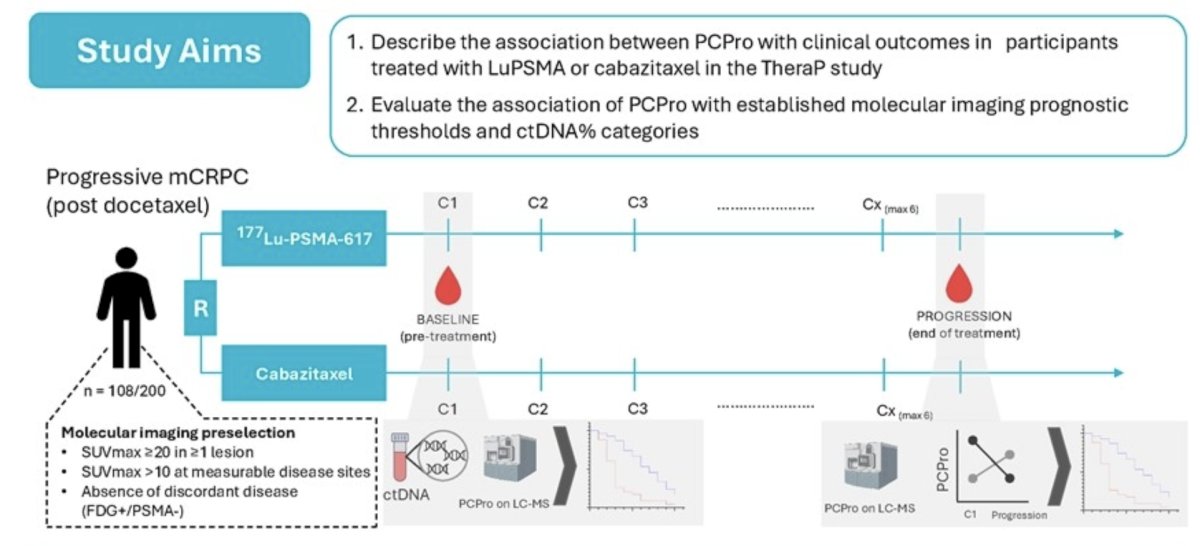
Associations with radiographic progression-free survival and overall survival were assessed by Kaplan-Meier and Cox regression methods.
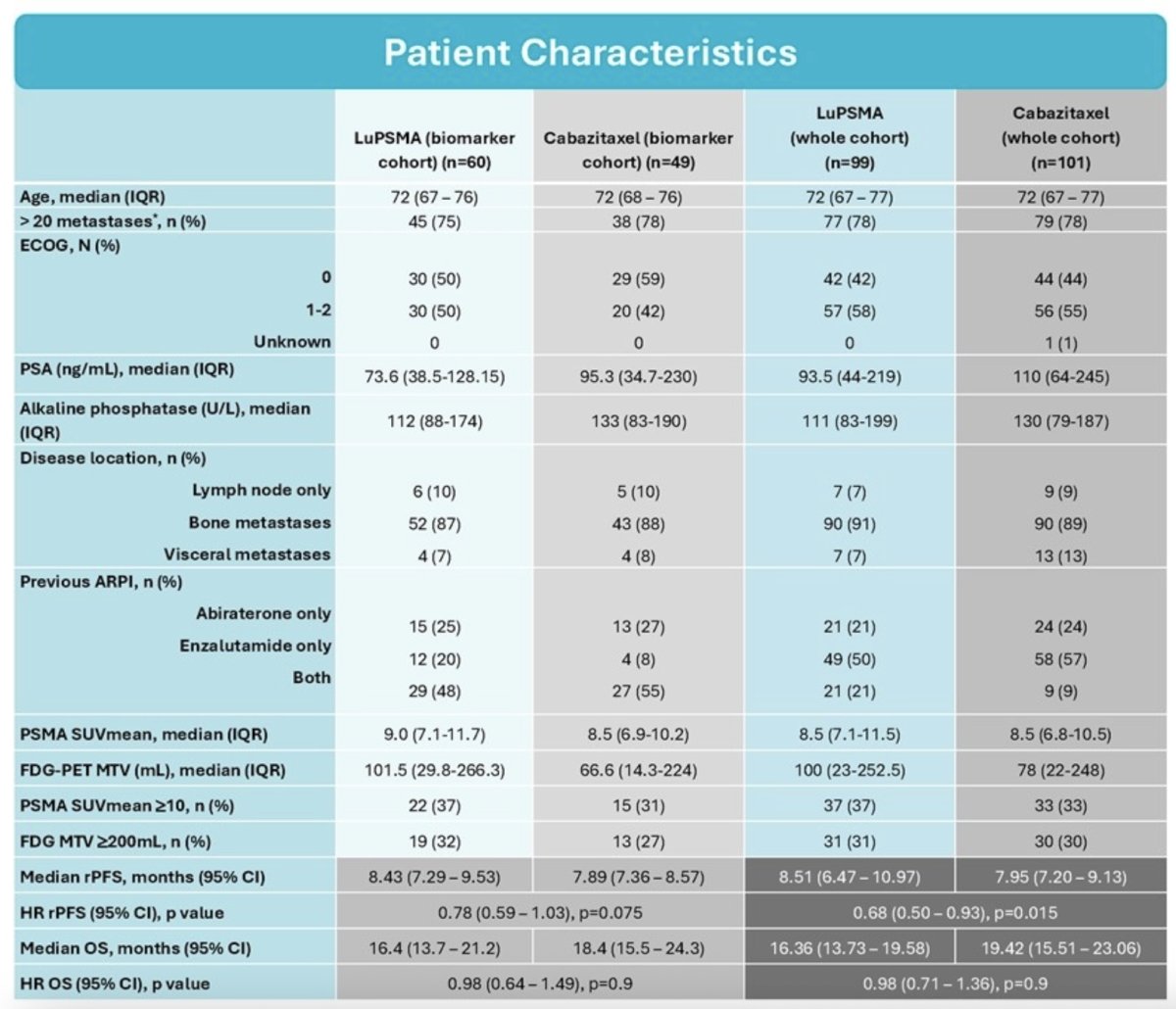
Overall, 22/108 (20%) participants were PCPro positive in this biomarker-evaluated cohort. The patient characteristics for this analysis are as follows:
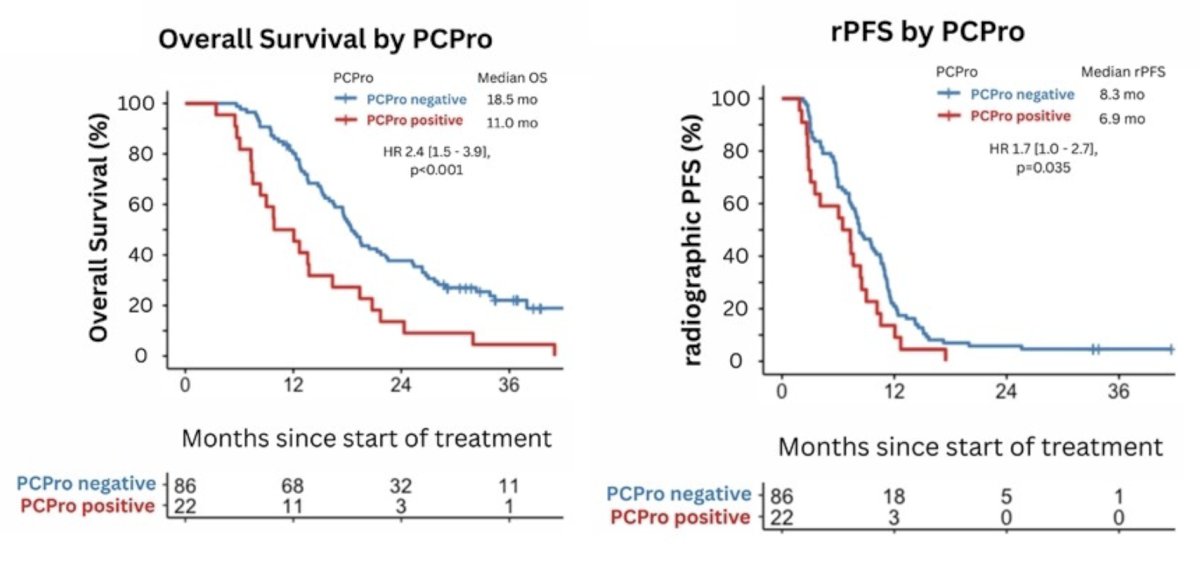
Participants who were PCPro-positive had shorter overall survival (HR 2.4, 95% CI 1.5 – 3.9, p = 0.001) and radiographic progression-free survival (HR 1.7, 95% CI 1.04 – 2.7, p = 0.035) than those who were PCPro-negative:
PCPro was positive in 14/59 (24%) participants assigned 177Lu-PSMA-617 and 8/49 (16%) assigned cabazitaxel. The prognostic significance of PCPro for overall survival and radiographic progression-free survival was independent of whether treatment was with 177Lu-PSMA-617 or cabazitaxel (interaction p-value overall survival = 0.8, radiographic progression-free survival = 0.2):
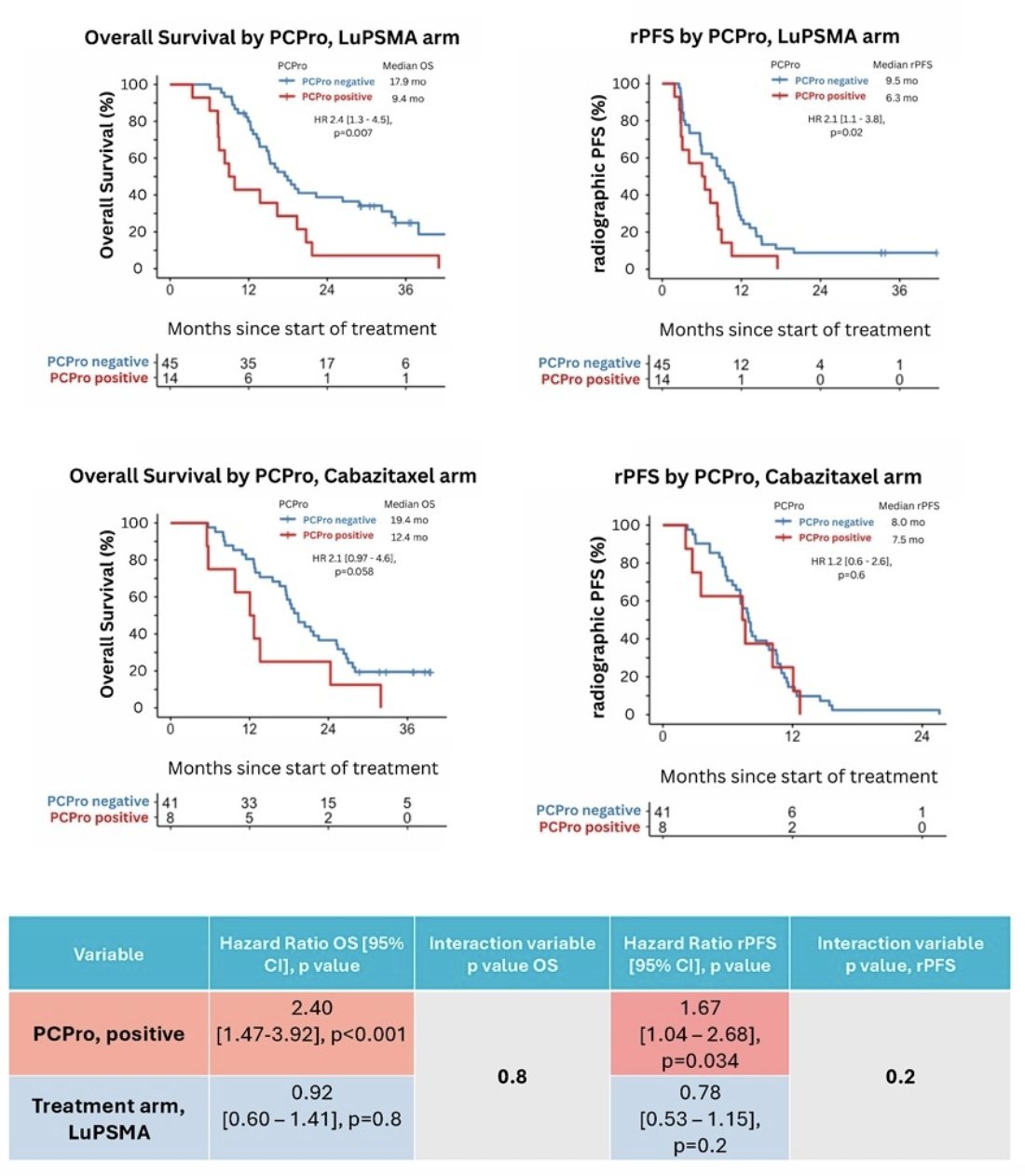
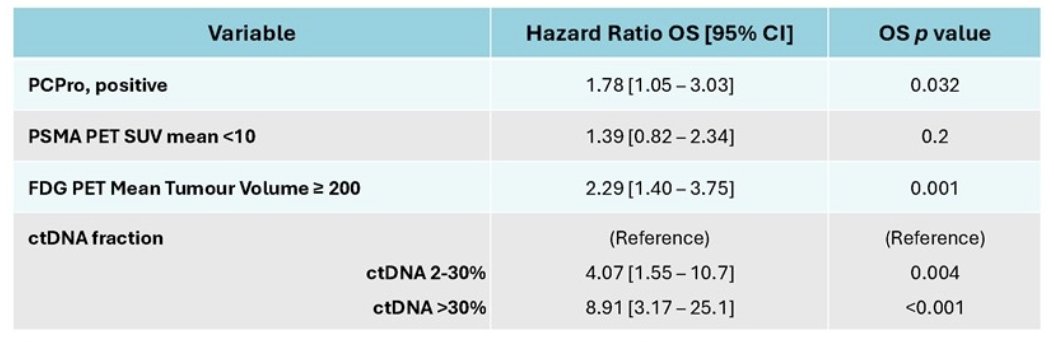
PCPro was also an independently significant prognostic factor for overall survival in a model accounting for other prognostic factors:
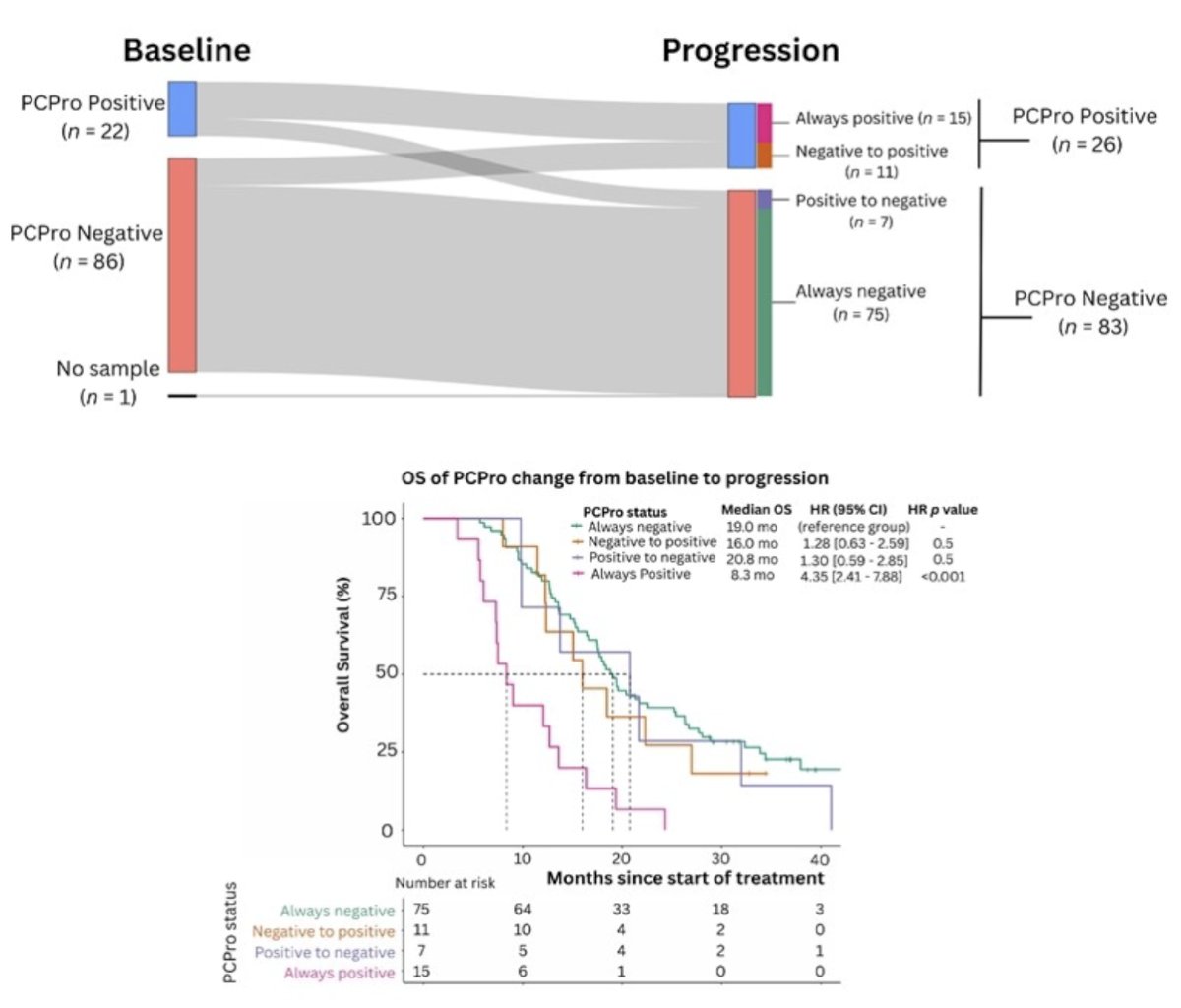
Patients who remained PCPro positive at progression had the worst prognosis:
Dr. Scheinberg concluded this presentation discussing PCPro as a prognostic plasma lipidomic biomarker in TheraP (ANZUP 1603) with the following take-home points:
- PCPro positive status was an independently significant prognostic factor for shorter overall survival in participants treated with either 177Lu-PSMA-617 or cabazitaxel in TheraP
- Participants who remained PCPro positive at baseline and at progression had the worst prognosis
- These data support further research of PCPro as a prognostic biomarker in mCRPC being treated with 177Lu-PSMA-617 or taxane chemotherapy
Presented by: Tahlia Scheinberg, MD, University of Sydney, Camperdown, Australia
Written by: Zachary Klaassen, MD, MSc – Urologic Oncologist, Associate Professor of Urology, Georgia Cancer Center, Wellstar MCG Health, @zklaassen_md on Twitter during the 2025 European Society of Medical Oncology (ESMO) Annual Meeting, Berlin, Germany, Fri, Oct 17 – Tues, Oct 21, 2025.
Reference:
- Hofman MS, Emmett L, Sandhu S, et al. [(177)Lu]Lu-PSMA-617 versus cabazitaxel in patients with metastatic castration-resistant prostate cancer (TheraP): A randomized, open-label, phase 2 trial. Lancet. 2021 Feb 27;397(10276):797-804.