

(UroToday.com) The 2025 ESMO annual meeting featured a prostate cancer session and a presentation by Dr. Kaiwei Yang discussing a phase 2 trial assessing neoadjuvant darolutamide + ADT for high/very-high risk locally advanced prostate cancer. Radical prostatectomy is associated with adverse surgical outcomes and an increased risk of disease progression in patients with high-risk/very high-risk localized prostate cancer. This study aims to explore the efficacy and safety profile of neoadjuvant darolutamide + ADT for high and very-high-risk locally advanced prostate cancer.
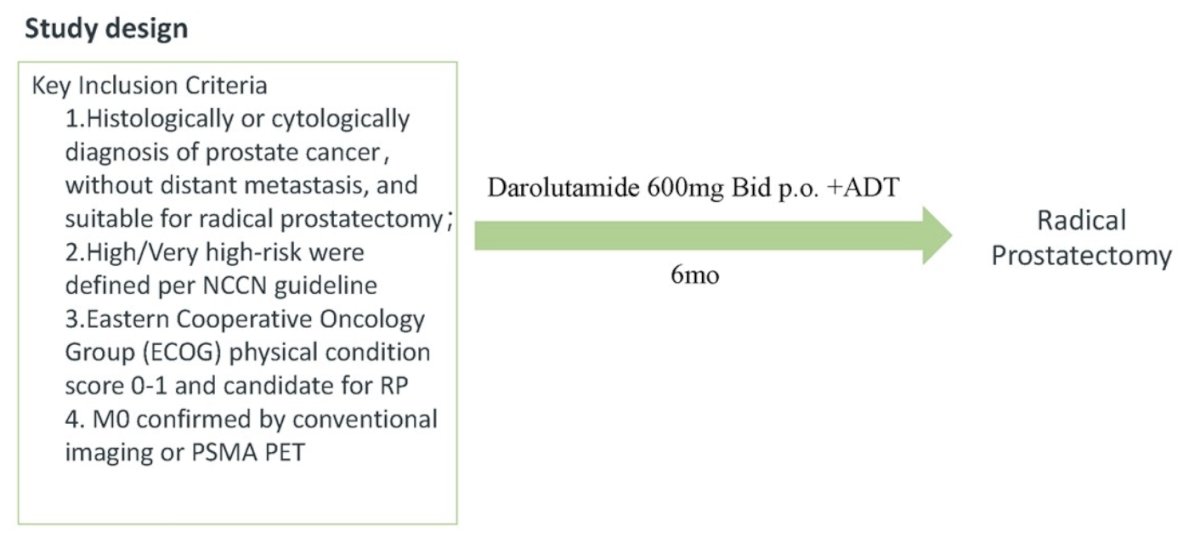
This is a single-arm, multicenter, open-label phase II trial that recruited 53 localized high and very high-risk prostate cancer patients in China between August 2023 and December 2024. Eligible patients had high or very high risk localized prostate cancer per the NCCN guideline with no prior novel hormonal treatment, and were deemed suitable for undergoing radical prostatectomy. Darolutamide (600 mg BID PO) in combination with ADT was used as neoadjuvant therapy for up to 6 months in all patients, followed by radical prostatectomy. The primary endpoint is down-staging rate, the secondary endpoints were pathologic complete response or minimal residual disease, positive surgical margin rate, biochemical complete response rate (PSA < 0.1 ng/ml), and safety:
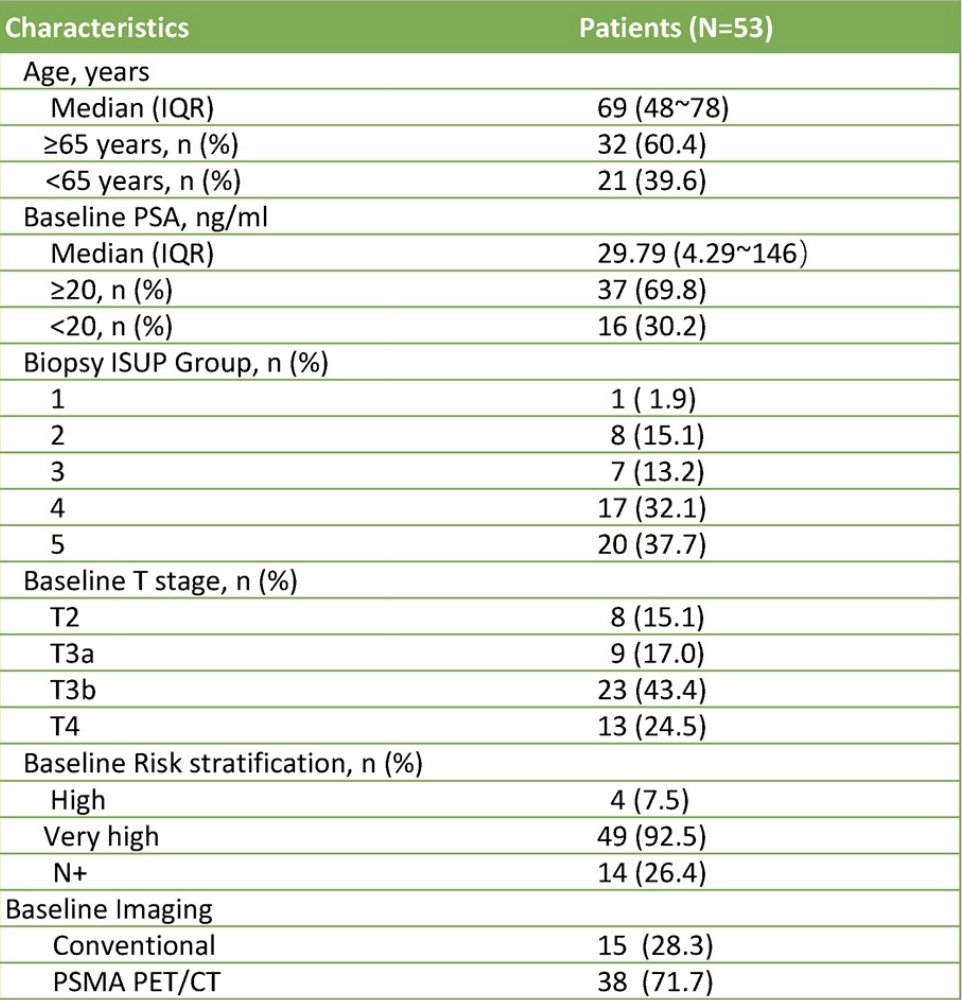
The median age of enrolled patients was 69 years (IQR 48-78), the median PSA at baseline was 29.79 ng/ml (IQR 4.29-146 ng/ml), and ISUP groups 4 and 5 were 28.3% (15/53) and 41.5% (22/53), respectively. M0 was confirmed by PSMA PET/CT (38/53) or CT + bone scan (15/53):
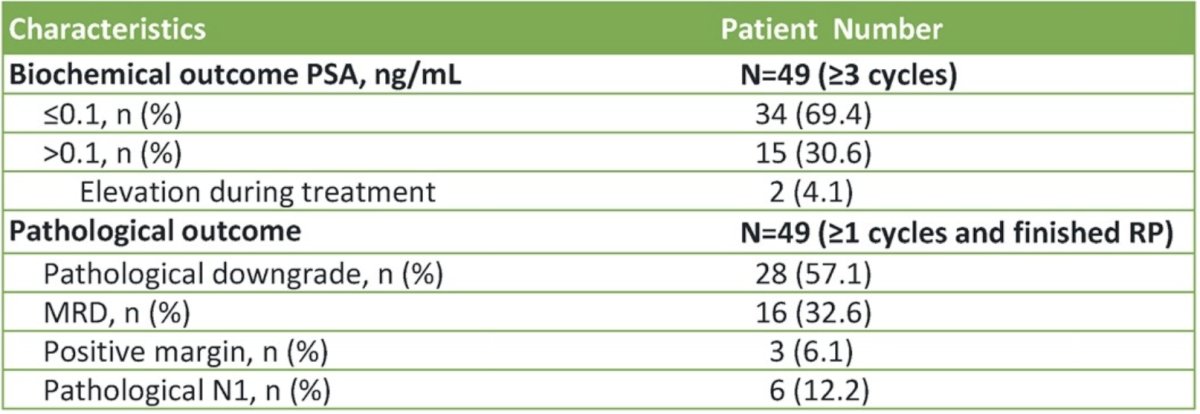
Of all 53 enrolled patients, seven patients did not finish 6 cycles of treatment due to treatment-emergent adverse events (n = 4), anxiety of surgery delay (n = 2), and PSA elevation (n = 1), and two declined surgery secondary to treatment-emergent adverse events. Of 49 patients who completed more than 1 cycle of treatment and had pathological results, the down-staging rate was 57.1% (28/49), with 3 positive surgical margins and minimal residual disease achieved in 16 patients (32.6%). Of 49 patients completing neoadjuvant therapy for more than 3 cycles, the biochemical complete response rate is 69.4% (34/49), and two patients had a PSA elevation:
There were no intraoperative complications attributed to darolutamide. The treatment was generally well tolerated, with 7.5% grade 3 hepatic dysfunction. The most common grade 1-2 adverse effects were hot flashes and hepatic dysfunction.
Dr. Yang concluded this presentation discussing a phase 2 trial assessing neoadjuvant darolutamide + ADT for high/very-high risk locally advanced prostate cancer by emphasizing that neoadjuvant darolutamide + ADT for up to six months followed by radical prostatectomy is effective and safe.
Presented by: Kaiwei Yang, Peking University First Hospital, Beijing, China
Written by: Zachary Klaassen, MD, MSc – Urologic Oncologist, Associate Professor of Urology, Georgia Cancer Center, Wellstar MCG Health, @zklaassen_md on Twitter during the 2025 European Society of Medical Oncology (ESMO) Annual Meeting, Berlin, Germany, Fri, Oct 17 – Tues, Oct 21, 2025.