

(UroToday.com) The 2025 European Society of Medical Oncology (ESMO) Annual Congress held in Berlin, Germany, was host to the Poster presentation session. Dr. Avina Rami presented the poster Efficacy and Safety of 177Lu-PSMA-617 (LuPSMA) in Elderly Patients (pts) with Metastatic Castration-Resistant Prostate Cancer (mCRPC).
Dr. Rami began by noting that while Lutetium-177 PSMA-617 is an established therapy for mCRPC, pivotal trials such as VISION and PSMAfore primarily enrolled younger, fitter patients (median age around 70 years), leaving a lack of evidence in older populations.1,2 To address this gap, his team evaluated the efficacy, safety, and feasibility of LuPSMA in men aged ≥80 years who had previously received chemotherapy, aiming to determine whether outcomes in octogenarians are comparable to those observed in younger cohorts from prior trials.
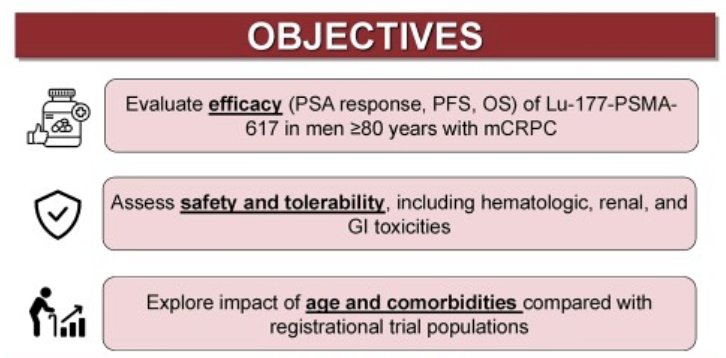
The study had three key objectives summarized below.
This was a retrospective, multi-institutional study conducted across Dana-Farber Cancer Institute, Mayo Clinic, and Vanderbilt University, including men aged ≥80 years with mCRPC who had received at least one prior taxane and one ARPI, and subsequently at least one cycle of LuPSMA between August 2022 and December 2024. Key endpoints included PSA50/90 response, PFS, OS, and safety (graded per CTCAE v5.0). Analyses incorporated Kaplan-Meier estimates and Cox models stratified by age (<85 vs ≥85 years), with descriptive and survival outcomes reported.
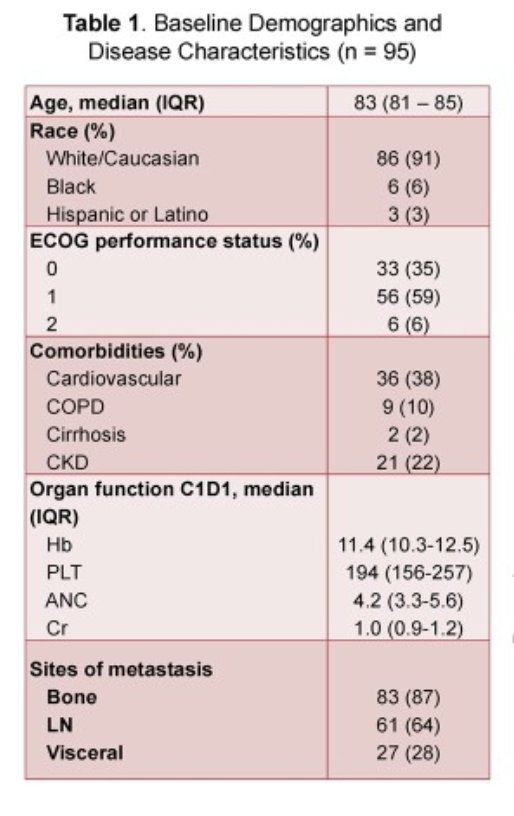
Baseline characteristics are summarized in the table. The median age was 83 years (IQR 81–85), and most patients were White (91%) with preserved performance status (ECOG 0–1 in 94%). Cardiovascular comorbidities were present in 38%, and 22% had CKD. Median baseline hemoglobin was 11.4 g/dL, and 87% had bone metastases, 64% lymph node involvement, and 28% visceral disease.
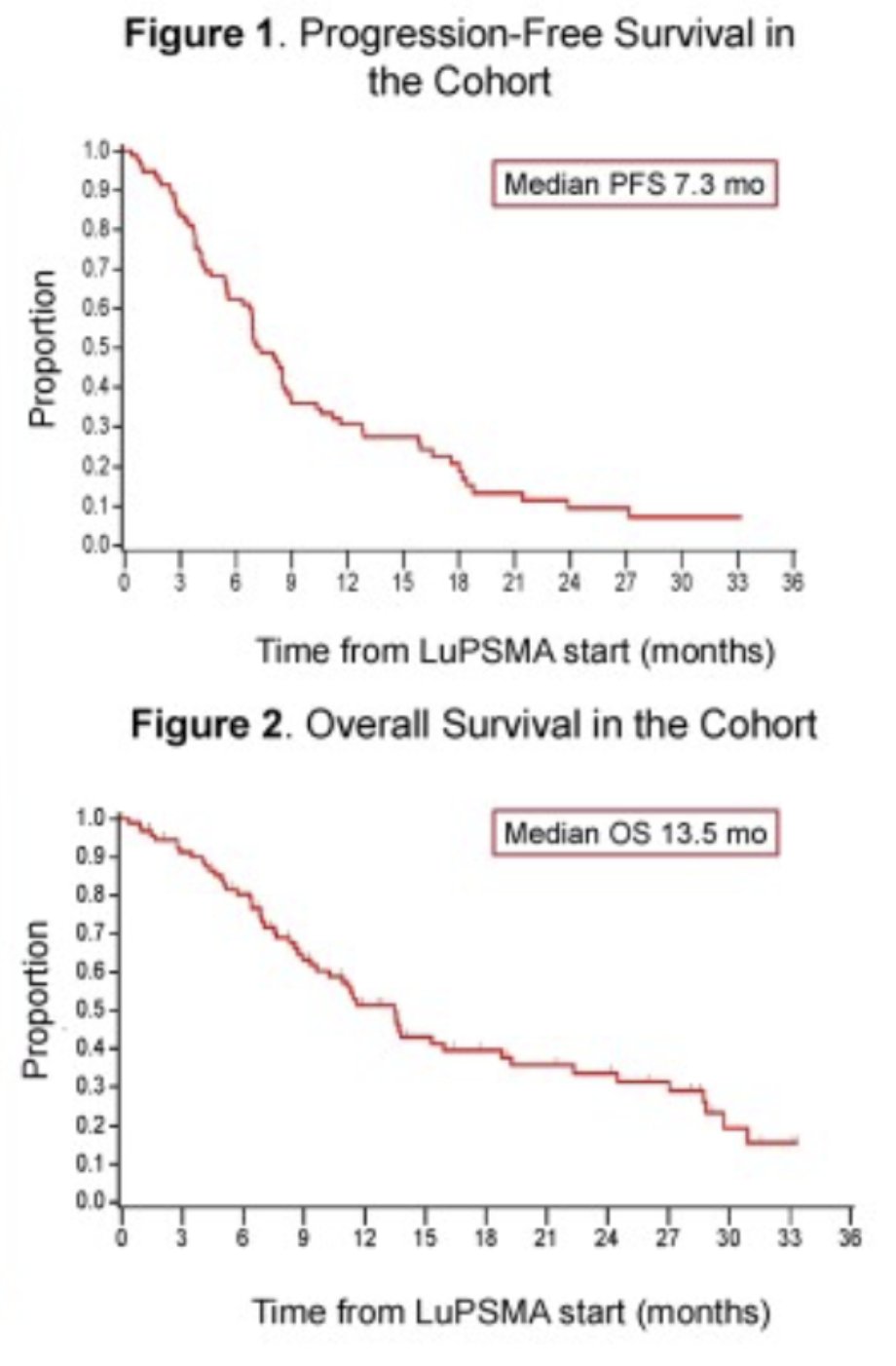
Median PFS and OS in this elderly cohort were 7.3 and 13.5 months, respectively, which are comparable to outcomes reported in younger, fitter populations from prior LuPSMA trials. supporting the feasibility and maintaining efficacy of LuPSMA in octogenarian patients with mCRPC.
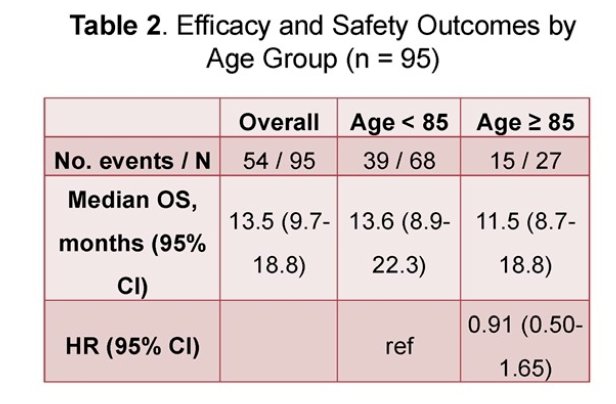
When stratifying by age group, outcomes were similar between patients aged <85 and those ≥85 years. Median OS was 13.6 months for the younger subgroup and 11.5 months for those ≥85, with no significant difference observed (HR 0.91, 95% CI 0.50–1.65), indicating that advanced age alone did not adversely affect survival with LuPSMA therapy.
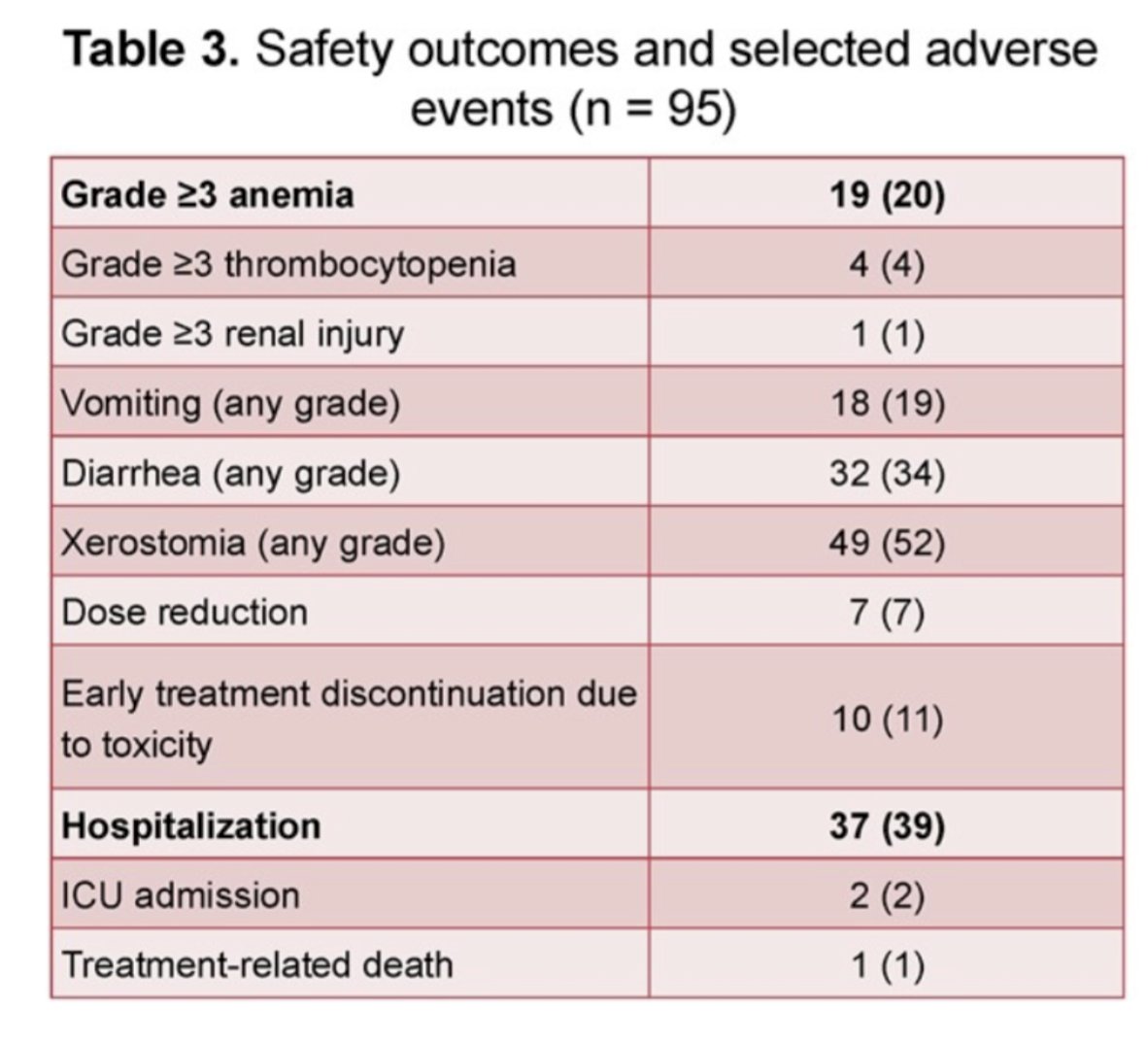
Lastly, in terms of safety, LuPSMA was generally well tolerated among octogenarians. Grade ≥3 anemia occurred in 20% of patients, while grade ≥3 thrombocytopenia and renal injury were uncommon (4% and 1%, respectively). Xerostomia (52%) and diarrhea (34%) were the most frequent non-hematologic adverse events. Dose reductions were required in only 7% of patients, and treatment discontinuation due to toxicity occurred in 11%. Importantly, just one treatment-related death (1%) was reported.
Dr. Rami concluded his poster presentation with the following key points:
- Efficacy and toxicity outcomes (PFS 7.3 mo, OS 13.5 mo) in this cohort of men aged ≥80 years were comparable to those observed in the VISION trial (PFS 8.7 mo, OS 15.3 mo).
- Despite higher rates of comorbidities, treatment outcomes were maintained.
- Nearly 40% of patients required hospitalization, emphasizing the need for frailty and geriatric assessments in this population.
- These findings confirm the feasibility of LuPSMA in carefully selected octogenarian patients with mCRPC.
Presented by: Avina Rami, MD, Internal Medicine Resident at Brigham and Women's Hospital, Cambridge, Massachusetts, United States.
Written by: Julian Chavarriaga, MD – Urologic Oncologist at Cancer Treatment and Research Center (CTIC) via Society of Urologic Oncology (SUO) Fellow at The University of Toronto. @chavarriagaj on Twitter during the 2025 European Society for Medical Oncology (ESMO) Annual Congress, Berlin, Germany, October 17–21, 2025
Reference:
- Sartor O, de Bono J, Chi KN, Fizazi K, Herrmann K, Rahbar K, Tagawa ST, Nordquist LT, Vaishampayan N, El-Haddad G, Park CH, Beer TM, Armour A, Pérez-Contreras WJ, DeSilvio M, Kpamegan E, Gericke G, Messmann RA, Morris MJ, Krause BJ; VISION Investigators. Lutetium-177-PSMA-617 for Metastatic Castration-Resistant Prostate Cancer. N Engl J Med. 2021 Sep 16;385(12):1091-1103. doi: 10.1056/NEJMoa2107322. Epub 2021 Jun 23. PMID: 34161051; PMCID: PMC8446332.
- Morris MJ, Castellano D, Herrmann K, de Bono JS, Shore ND, Chi KN, Crosby M, Piulats JM, Fléchon A, Wei XX, Mahammedi H, Roubaud G, Študentová H, Nagarajah J, Mellado B, Montesa-Pino Á, Kpamegan E, Ghebremariam S, Kreisl TN, Wilke C, Lehnhoff K, Sartor O, Fizazi K; PSMAfore Investigators. 177Lu-PSMA-617 versus a change of androgen receptor pathway inhibitor therapy for taxane-naive patients with progressive metastatic castration-resistant prostate cancer (PSMAfore): a phase 3, randomised, controlled trial. Lancet. 2024 Sep 28;404(10459):1227-1239. doi: 10.1016/S0140-6736(24)01653-2. Epub 2024 Sep 15. Erratum in: Lancet. 2025 Dec 21;404(10471):2542. doi: 10.1016/S0140-6736(24)02716-8. PMID: 39293462; PMCID: PMC12121614.