

(UroToday.com) The 2025 ESMO annual meeting featured a prostate cancer session and a presentation by Dr. Shun Zhang discussing a phase 1 study of QLH12016, an androgen receptor PROTAC degrader in heavily pretreated patients with metastatic castration-resistant prostate cancer (mCRPC).
Patients with mCRPC have limited treatment options and a poor prognosis due to resistance to antiandrogen therapy. QLH12016 is an oral PROTAC protein degrader targeting the androgen receptor, which might achieve more potent and deeper inhibition of androgen receptor signaling. At ESMO 2025, Dr. Zhang and colleagues presented results from an ongoing, phase 1, open-label study of QLH12016 in heavily pretreated patients with mCRPC.
Eligible patients had mCRPC that progressed after ≥1 novel hormonal agent and ≥1 taxane-based chemotherapy (unless medically contraindicated, intolerable, or refused), and were on ADT, regardless of the status of ligand-binding domain. Patients received oral QLH12016 once daily until disease progression, intolerable toxicity, or other discontinuation events:
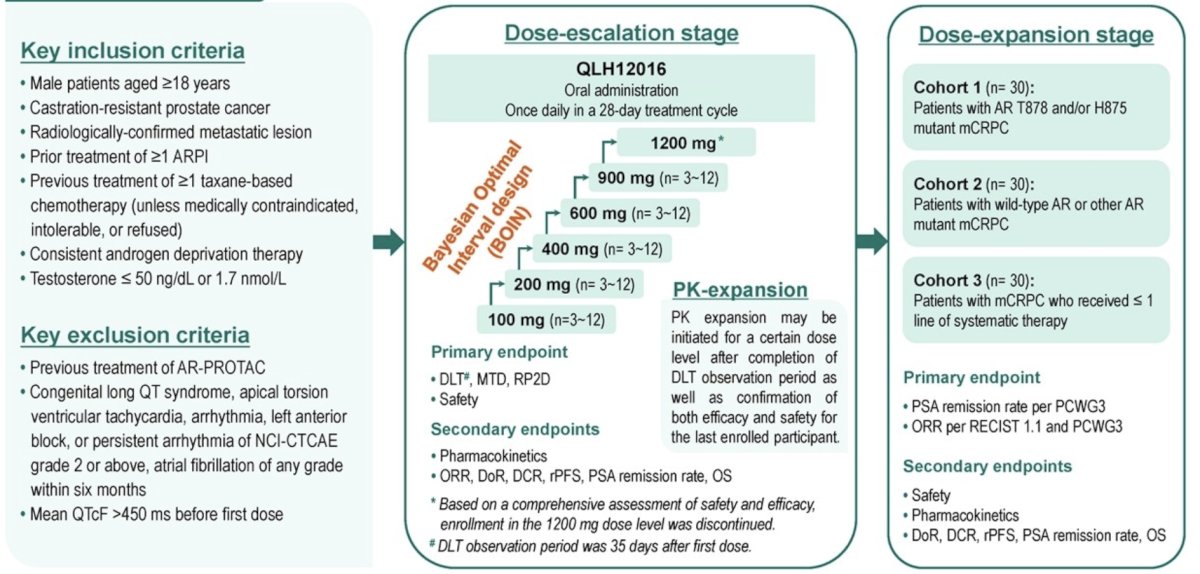
Dose-limiting toxicity observation period was 35 days after the first dose of QLH12016. The primary endpoints were dose-limiting toxicity and maximum tolerated dose/recommended phase 2 dose.
As of data cutoff (July 1, 2025), 44 patients were enrolled and treated with QLH12016 at 100 to 1200 mg daily. All patients had metastatic diseases, and 28% had visceral diseases (lung, 13.6%; liver, 6.8%). 27.3% of patients were ligand-binding domain wild type, and 72.7% had ligand-binding domain mutations (L702H included):

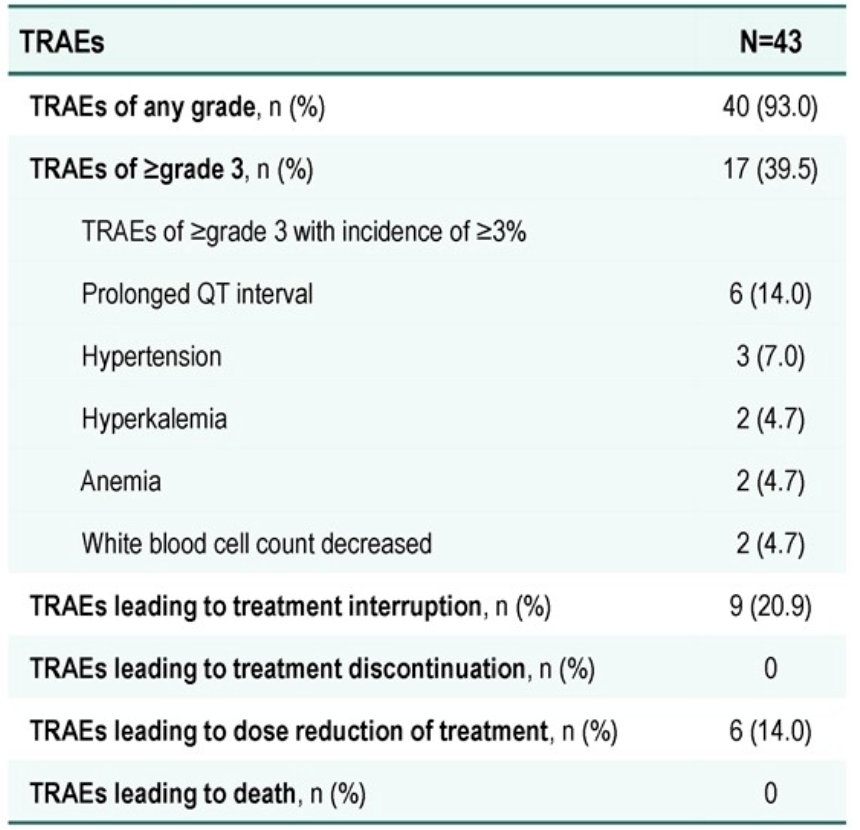
Dose escalation is complete, and the pharmacokinetic expansion is ongoing (n = 43, safety analysis). No dose-limiting toxicities were observed, and the maximum tolerated dose was not reached. Forty (93.0%) patients had treatment-related adverse events (grade ≥3, n = 17, 39.5%). The most common treatment-related adverse events were anemia (63.9%), asthenia (47.2%), and decreased body weight (41.7%). Grade ≥3 treatment-related gastrointestinal adverse events were not observed, and grade ≥ 3 treatment-related hematological adverse events were infrequent (anemia, 4.7%; neutropenia, 4.7%):
There were patients who achieved a PSA response in each dose level, including 14 patients having a PSA30 response, and 9 patients with a PSA50 response. In 17 patients with a baseline target lesion and at least one radiological assessment, 4 (23.5%) patients achieved a partial response, and 8 (47.1%) had stable disease. The objective response rate and disease control rate were 23.5% and 70.6%, respectively:

The median radiographic progression-free survival was 7.4 months (95% CI 3.7-9.4), 9.2 months (95% CI 3.7-not reached), and 9.0 months (95% CI 5.3-12.7) in all patients, in the 600 mg cohort, and in patients in the 100 mg – 600 mg dose levels, respectively. In the subgroup analysis, the median radiographic progression-free survival was 5.3 months (95% CI 1.8-7.4) in the androgen receptor ligand binding domain mutant patients (n = 12) and was 9.2 months (95% CI 3.7 – not reached) in the androgen receptor ligand binding domain wild type patients (n = 32). The median overall survival was not mature.
Dr. Zhang concluded this presentation discussing a phase 1 study of QLH12016, an androgen receptor PROTAC degrader in heavily pretreated patients with mCRPC, with the following take-home points:
- QLH12016 was safe and well tolerated with favorable gastrointestinal and hematological safety profiles, supporting it as a potential treatment option for advanced prostate cancer as monotherapy and in combination therapies
- Promising clinical activity in mCRPC was observed with QLH12016, regardless of the ligand-binding domain status, warranting further development in additional clinical trials
Presented by: Shun Zhang, Affiliated Drum Tower Hospital Medical School of Nanjing University, Nanjing, China
Written by: Zachary Klaassen, MD, MSc – Urologic Oncologist, Associate Professor of Urology, Georgia Cancer Center, Wellstar MCG Health, @zklaassen_md on Twitter during the 2025 European Society of Medical Oncology (ESMO) Annual Meeting, Berlin, Germany, Fri, Oct 17 – Tues, Oct 21, 2025.