

(UroToday.com) The 2025 ESMO annual meeting featured a prostate cancer session and a presentation by Dr. Konstantin Seifert discussing imaging and treatment of the prostatic acid phosphatase with 68Ga-OncoACP3-DOTA and 177Lu-OncoACP3-DOTA in prostate cancer patients. PSMA PET is the standard in prostate cancer diagnostics, but has limitations at low PSA levels and after PSMA targeted therapy. 68Ga-OncoACP3-DOTA targets the prostatic acid phosphatase (ACP3) and shows promising clinical results. In this retrospective analysis, the first 25 PET with 68Ga-OncoACP3-DOTA and the first patient treated with 177Lu-OncoACP3-DOTA were analyzed.
According to Section §13(2b) of the German Medicinal Products Act, the 68Ga-OncoACP3-DOTA was produced and used. This was a retrospective analysis of 27 68Ga-OncoACP3-DOTA scans in 25 prostate cancer patients, with matched PSMA PET data available. Prostate cancer lesion SUVmax for 68Ga-OncoACP3-DOTA were compared against a PSMA targeting radioligand (either 18F-PSMA-1007 or 68Ga-PSMA-11). Superior diagnostic performance of either tracer was awarded if 50 % higher uptake or 10 % more prostate cancer lesions were detected. Adverse events were reported using CTCAE v5.0.
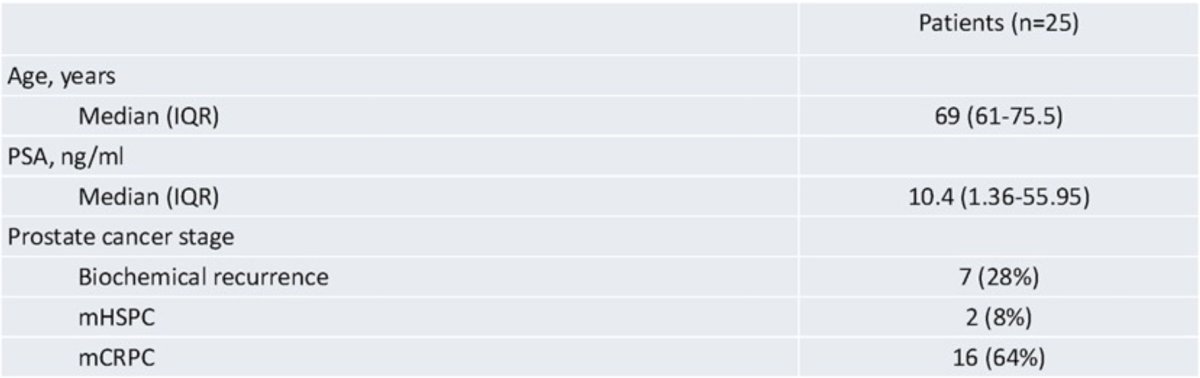
The characteristics of the included patients are highlighted in the following table:
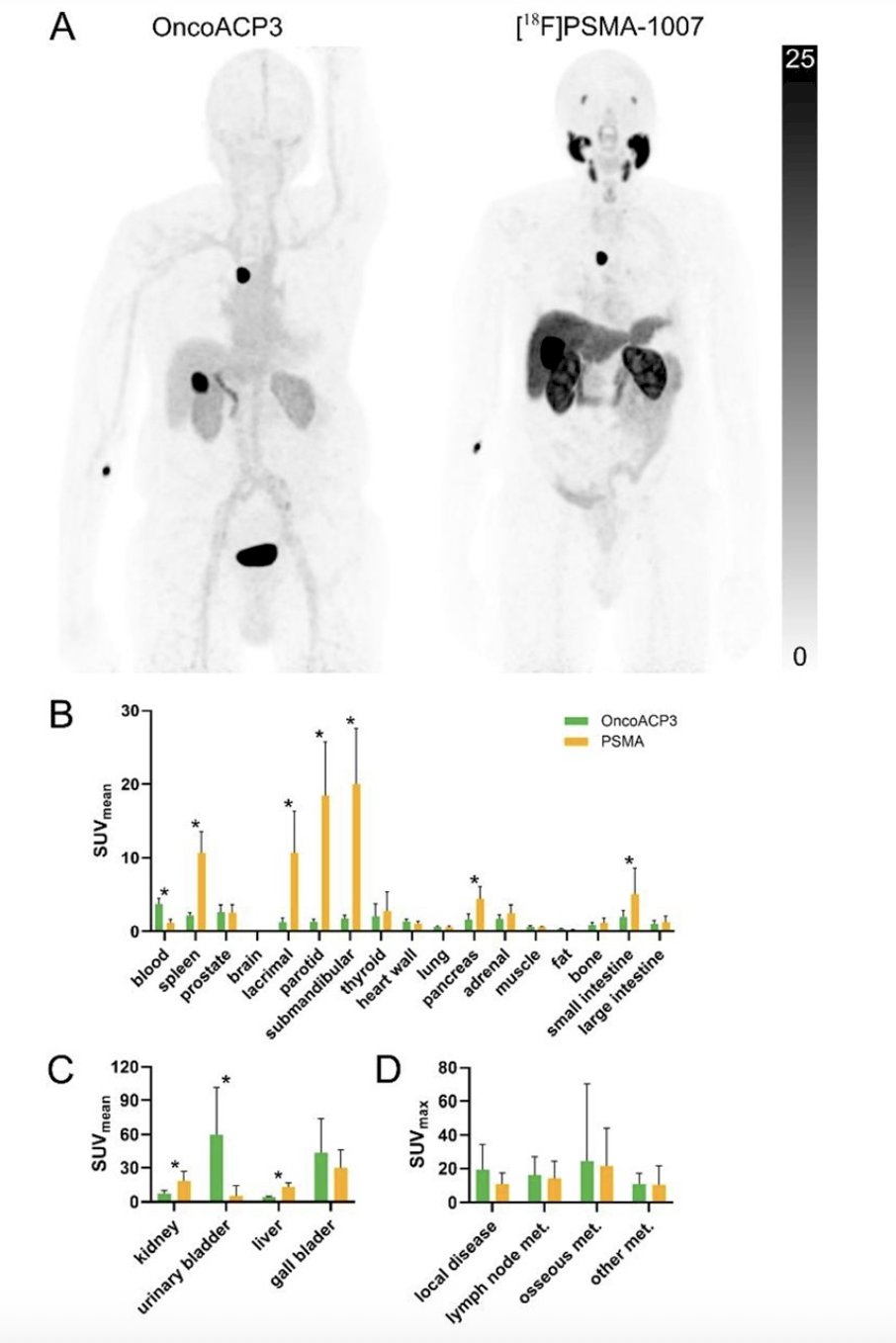
All prostate cancer patients received 68Ga-OncoACP3-DOTA PET scans a mean of 62 min after injection of a median 145 MBq 68Ga-OncoACP3-DOTA, and no side effects were observed. In comparison to 18F-PSMA-1007, 68Ga-OncoACP3-DOTA uptake was significantly lower in the liver, kidney, parotid gland, and small intestine (all p < 0.002), and demonstrated prostate cancer manifestations in all 25 patients:
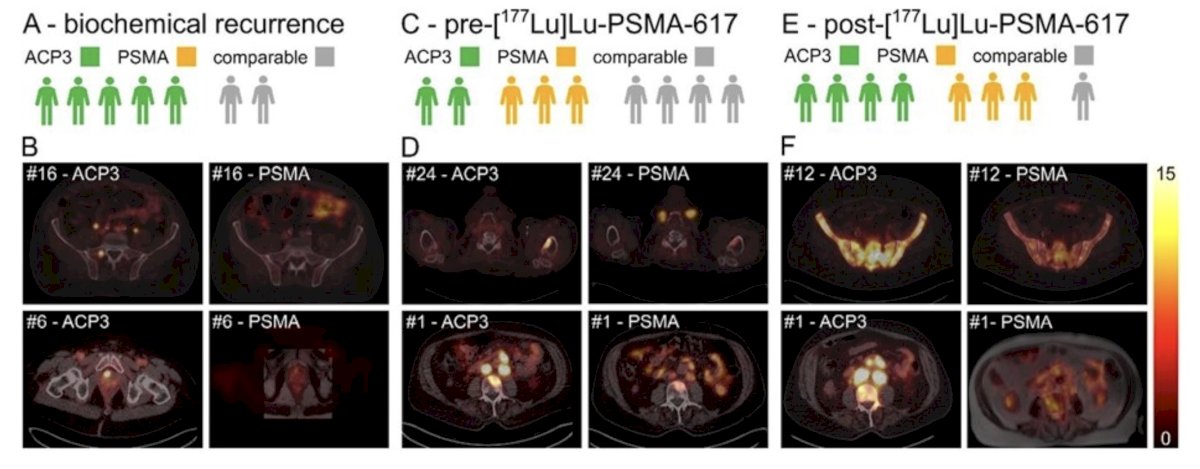
The diagnostic performance of 68Ga-OncoACP3-DOTA was superior to matched PSMA PET in 12/27 scans (55%):
To date, therapy with 177Lu-OncoACP3-DOTA has been safe and feasible in the first patients treated.
Dr. Seifert concluded his presentation discussing imaging and treatment of the prostatic acid phosphatase with 68Ga-OncoACP3-DOTA and 177Lu-OncoACP3-DOTA in prostate cancer patients with the following take home points:
- 68Ga-OncoACP3-DOTA is a promising new PET tracer
- 68Ga-OncoACP3-DOTA had complementary or superior lesion detection compared with PSMA tracers, with a highly favorable biodistribution
- High and specific tumor uptake provides a strong rationale to explore OncoACP3-DOTA for beta and alpha-emitting radioligand therapy
Presented by: Konstantin E. Seifert, University Hospital Muenster, Muenster, Germany
Written by: Zachary Klaassen, MD, MSc – Urologic Oncologist, Associate Professor of Urology, Georgia Cancer Center, Wellstar MCG Health, @zklaassen_md on Twitter during the 2025 European Society for Medical Oncology (ESMO) Annual Congress, Berlin, Germany, October 17–21, 2025