

(UroToday.com) The 2025 European Society of Medical Oncology (ESMO) Annual Congress held in Berlin, Germany, was host to the Poster presentation session. Dr. Pablo Alvarez Ballesteros presented the poster Real-World Experience with Radium-223 in Metastatic Castration-Resistant Prostate Cancer: A Single-Center Retrospective Study.
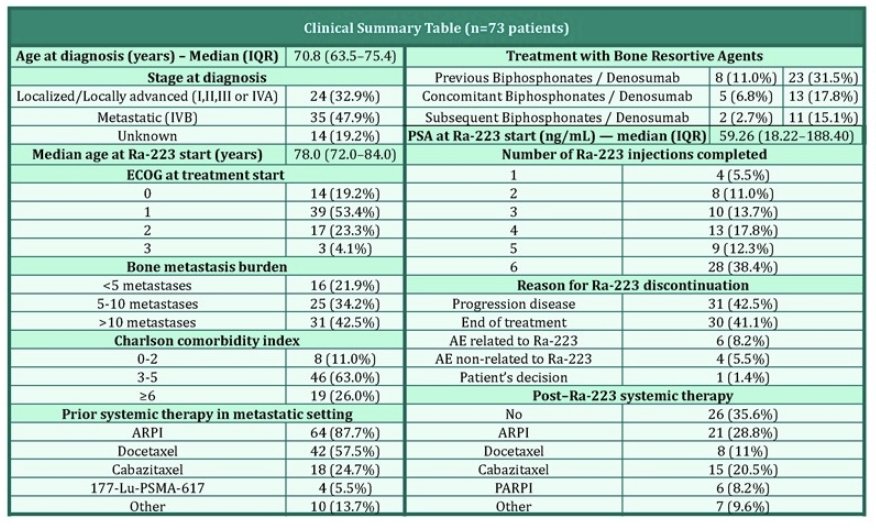
Dr. Alvarez highlighted that Radium-223 (Ra-223) remains a standard treatment option for men with bone-predominant mCRPC. However, real-world data on outcomes and predictors of benefit are limited. His team presented an expanded single-center series aimed at contextualizing the use of Ra-223 in current clinical practice and identifying patient or disease features associated with improved benefit.
They conducted a retrospective analysis of all patients treated with Radium-223 at Hospital Universitario 12 de Octubre (Madrid, Spain) between November 2015 and August 2023. Patients without a confirmed diagnosis of mCRPC or those enrolled in clinical trials were excluded. Baseline variables included age, ECOG performance status, extent of bone disease, and prior or subsequent systemic therapies. The primary endpoints were overall survival (OS)measured from the first Ra-223 injection to death and time to progression (TTP), defined as the interval from the first injection to the first documented progression (radiographic, biochemical, or clinical).
To address immortal-time bias, they applied a prespecified 12-week (84-day) landmark analysis comparing patients who completed six Ra-223 injections versus those who received fewer. They also conducted a calendar-era comparison of patients treated before 2018 (pre-2018) versus 2018 onwards (2018+). Reasons for discontinuation were extracted from clinical records. Both univariate and multivariable Cox proportional hazards models were used to estimate hazard ratios for predefined covariates including ALP, hemoglobin, ECOG, prior docetaxel or ARPI use, treatment era, bone disease extent, and age.
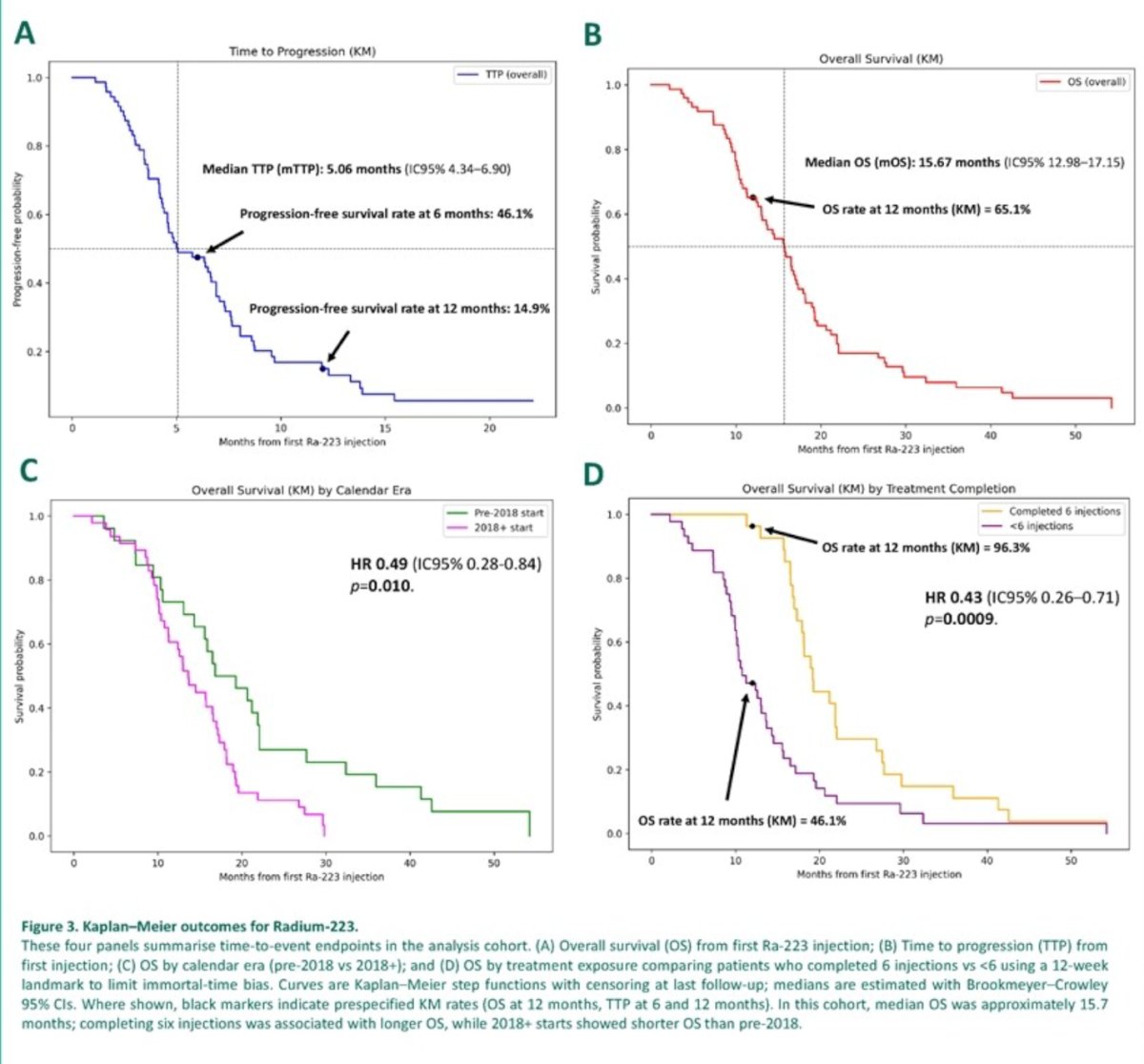
Median OS for the cohort was 15.7 months, while median TTP was 5.1 months. The probability of remaining progression-free was 46% at 6 months and 15% at 12 months. In the prespecified 12-week landmark analysis, completing all six Ra-223 injections was associated with significantly longer OS compared to receiving fewer than six (HR 0.43; p=0.0009), with 12-month survival rates of 96.3% vs 46.1%, respectively.
When stratified by calendar era, patients treated after 2018 had shorter OS (HR 2.05; p=0.010), likely reflecting changes in patient selection and prior treatment exposure. On multivariable Cox analysis, elevated ALP (>120 U/L) and low Hb (<12 g/dL) were both independently associated with shorter OS (adjusted HR ~2.0 each; p<0.05). A 2018+ start also remained an adverse prognostic factor after adjustment, while ECOG ≥2 showed a borderline negative impact. Interestingly, prior docetaxel exposure showed a trend toward improved survival (HR 0.64; 95% CI 0.40–1.04; p=0.07), whereas prior ARPI therapy had no significant association with OS.
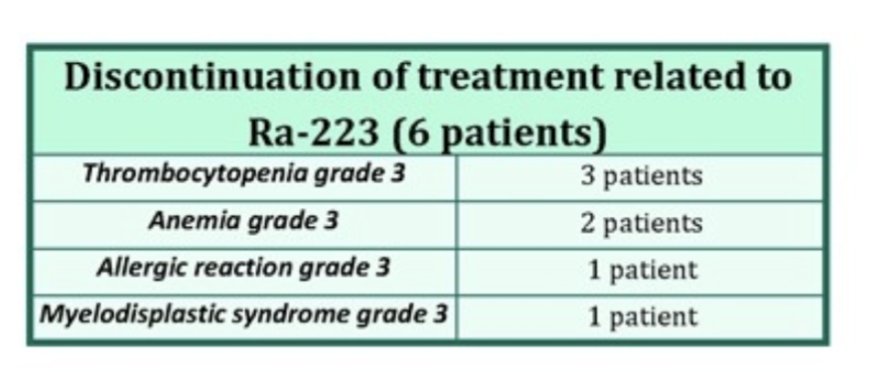
Among patients with a documented Ra-223 completion date (n=72), 36% did not receive any subsequent systemic therapy. For this subset, median OS from the time of progression was 7.9 months (IQR 4.4–9.6; n=21). Treatment discontinuation related to Ra-223 occurred in six patients, most commonly due to grade 3 thrombocytopenia (n=3) and anemia (n=2), followed by allergic reaction (n=1) and myelodysplastic syndrome (n=1) as shown below.
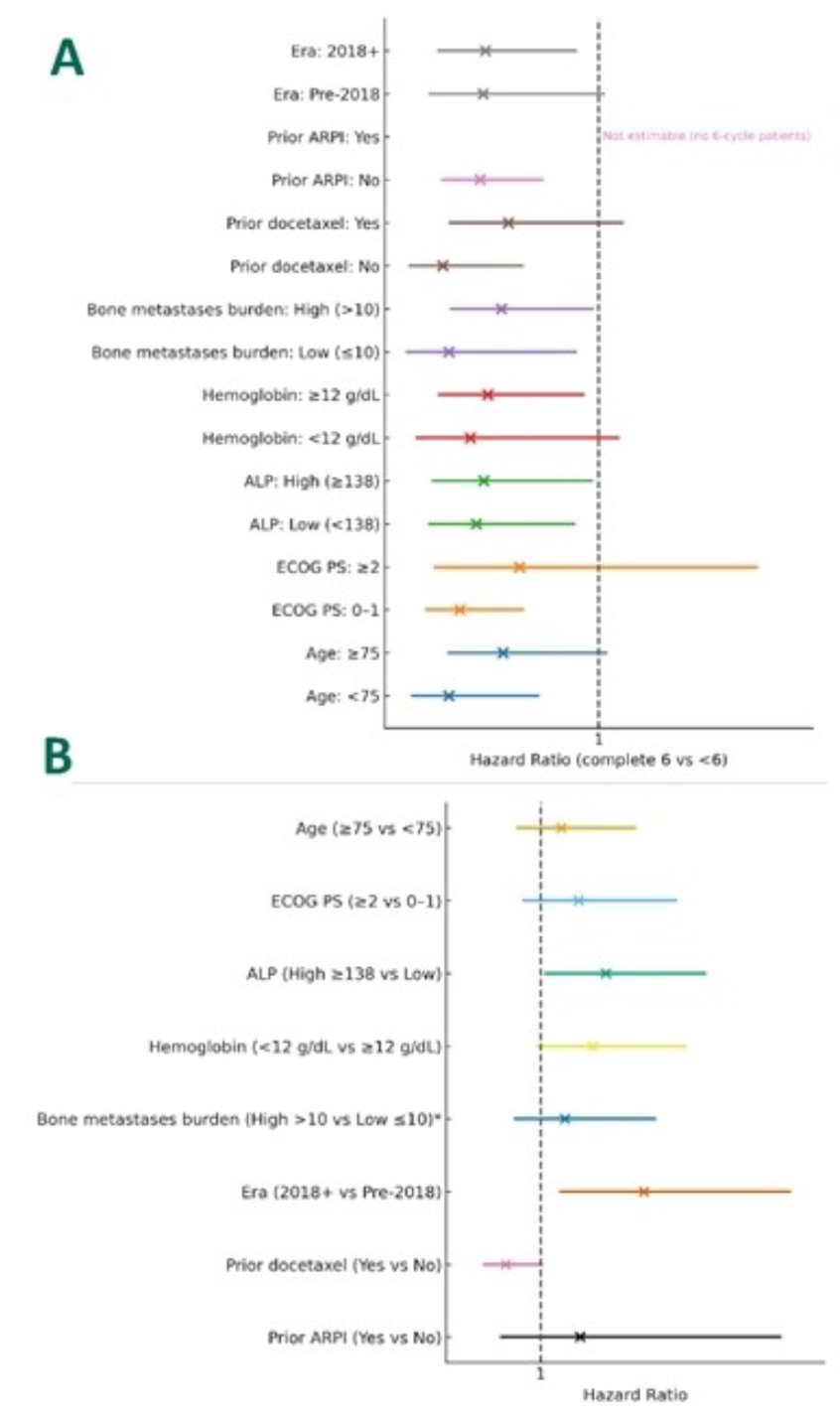
Lastly, as illustrated in the forest plots, several clinical and biochemical factors influenced treatment completion and survival outcomes. Completing all six Ra-223 cycles was less likely among patients with ECOG ≥2, elevated ALP (≥138 U/L), or Hb <12 g/dL. Conversely, younger patients (<75 years) and those previously treated with docetaxel were more likely to complete all planned cycles.
In multivariable analyses, ECOG ≥2, elevated ALP, and anemia remained independently associated with shorter OS, while prior docetaxel maintained a favorable trend. These data underscore the prognostic value of baseline functional and hematologic parameters in guiding Ra-223 therapy selection and completion.
Dr. Alvarez concluded their poster presentation highlighting the following key points:
- In routine clinical practice, Ra-223 provides durable survival outcomes in an older, heavily pretreated mCRPC population.
- Completion of all six Ra-223 injections remains the most actionable predictor of clinical benefit.
- Higher baseline ALP and hemoglobin <12 g/dL independently correlate with worse overall survival.
- Prior docetaxel treatment demonstrated a favorable survival trend.
- An apparent decline in outcomes post-2018 likely reflects changes in case-mix and treatment sequencing.
- These findings reinforce the continued role of Ra-223 for bone-predominant mCRPC and highlight the need for supportive care and treatment continuity to achieve full six-cycle completion.
Presented by: Pablo Alvarez Ballesteros, MD, Medical Oncologist at Hospital Universitario 12 de Octubre, Madrid, Spain.
Written by: Julian Chavarriaga, MD – Urologic Oncologist at Cancer Treatment and Research Center (CTIC) via Society of Urologic Oncology (SUO) Fellow at The University of Toronto. @chavarriagaj on Twitter during the 2025 European Society for Medical Oncology (ESMO) Annual Congress, Berlin, Germany, October 17–21, 2025