

(UroToday.com) The 2025 ESMO annual meeting featured a prostate cancer session and a presentation by Dr. Josette R. Staufert-Gutierrez discussing a ten-year perspective on radium-223 in metastatic castration-resistant prostate cancer (mCRPC). Radium-223 is an alpha-emitting radionuclide that prolongs overall survival and improves quality of life in patients with mCRPC, demonstrated in the ALSYMPCA1 and PEACE-32 trials. This study aimed to improve the understanding of radium-223 benefit in our population, in the era of new hormonal therapies (ie. androgen receptor pathway inhibitors).
This was a retrospective analysis of patients with mCRPC treated with radium-223 between 2014 and 2024 following prior therapy with taxanes and androgen receptor pathway inhibitors. The primary endpoint was overall survival, and the secondary endpoints were progression free survival, control of pain using Visual Analogue Scale (VAS, response defined as a decrease >2 VAS from baseline), and rate of decline in serum ALP levels. Overall survival and progression free survival were calculated using Kaplan-Meier method. Univariable and multivariable analysis were used to identify clinic-pathological variables that influence outcomes.
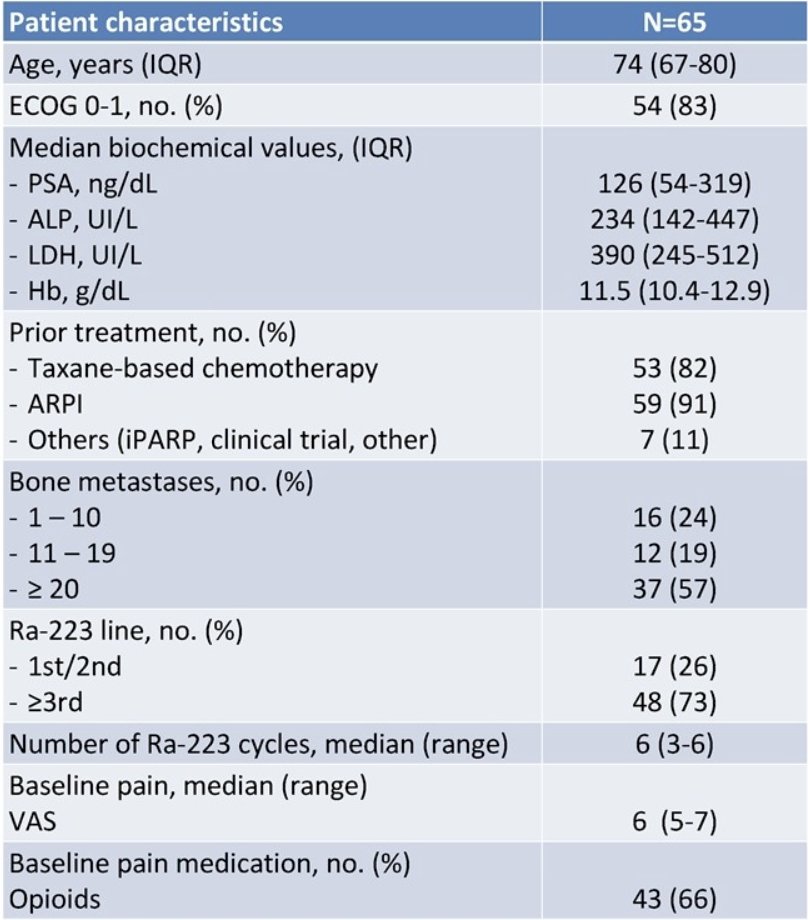
There were 65 patients included, with a median age of 74 years (IQR, 67–80), 83% had ECOG performance status of 0-1, and 57% ≥ 20 bone metastases. Overall, 82% of patients received taxane-based chemotherapy, and 91% had been treated with androgen receptor pathway inhibitors. The initial median PSA was 126 ng/dL (IQR 54-139), ALP was 234U/L (IQR 142-447), LDH was 390U/L (245-512), and hemoglobin was 11.5 g/dL (IQR 10.4-12.9). There were 73% of patients that received radium-223 as ≥3rd line therapy, and the median cycles administered were 6 (IQR 3-6). Pain was reported in 61 patients, with 66% receiving an opioid treatment. The median VAS score at baseline was 6 (5–7):
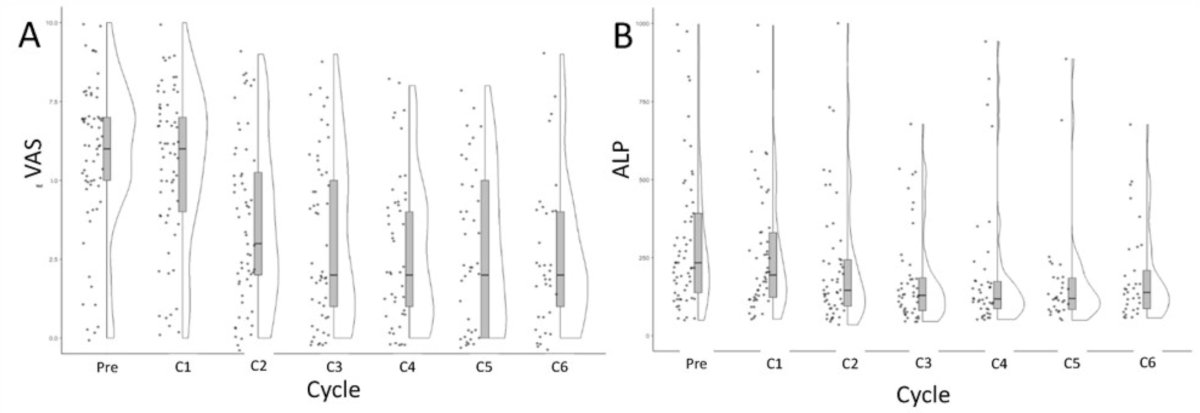
Reduction in pain was observed after the cycle one with sustained pain control throughout the treatment period (p < 0.001), and a decline in ALP levels ≥30% was consistently observed from cycle 2:
The median progression free survival was 5.2 months (95% CI 4.6–6.0), and median overall survival was 7.6 months (95% CI 6.6–12.0):

Completing six cycles of radium-223 improved overall survival (14 months versus 4.5 months, HR 0.14, 95% CI, 0.08-0.27), and prescribed opioids before treatment declined overall survival (13 months versus 6.4 months, HR 6.4, 95% CI, 1.39–4.38):

Both were independent risk factors for overall survival in multivariable analysis.
Dr. Staufert-Gutierrez concluded her presentation discussing a ten-year perspective on radium-223 in mCRPC with the following take home points:
- In this heavily pretreated patient population with high tumor burden, treatment with radium-223 provided effective pain control
- Survival outcomes were primarily influenced by completion of the full treatment regimen and prior opioid use, underscoring the impact of treatment adherence and baseline clinical status on prognosis
Presenterd by: Josette R. Staufert-Gutierrez, MD, Ciudad de Mexico, Mexico
Written by: Zachary Klaassen, MD, MSc – Urologic Oncologist, Associate Professor of Urology, Georgia Cancer Center, Wellstar MCG Health, @zklaassen_md on Twitter during the 2025 European Society for Medical Oncology (ESMO) Annual Congress, Berlin, Germany, October 17–21, 2025
References:
- Parker C, Nilsson S, Heinrich D, et al. Alpha emitter radium-223 and survival in metastatic prostate cancer. N Engl J Med 2013;369(3):213-223.
- Tombal B, Choudhury A, Saad F, et al. Enzalutamide plus radium-223 in metastatic castration-resistant prostate cancer: results of the EORTC 1333/PEACE-3 trial. Ann Oncol. 2025 Sep;36(9):1058-1067.