

(UroToday.com) The 2025 ESMO annual meeting featured a prostate cancer session and a presentation by Dr. Alicia K. Morgans discussing real-world PSA response with darolutamide or abiraterone in metastatic hormone-sensitive prostate cancer (mHSPC) triplet therapy. In patients with mHSPC, triplet therapy with abiraterone + ADT + docetaxel has shown positive results in the phase 3 ARASENS1 and PEACE-1 studies,2 respectively.
In this study presented at ESMO 2025, Dr. Morgans and colleagues reported real-world PSA response in patients receiving darolutamide + ADT + docetaxel/abiraterone + ADT + docetaxel triplet therapy, overall and by baseline PSA groups.
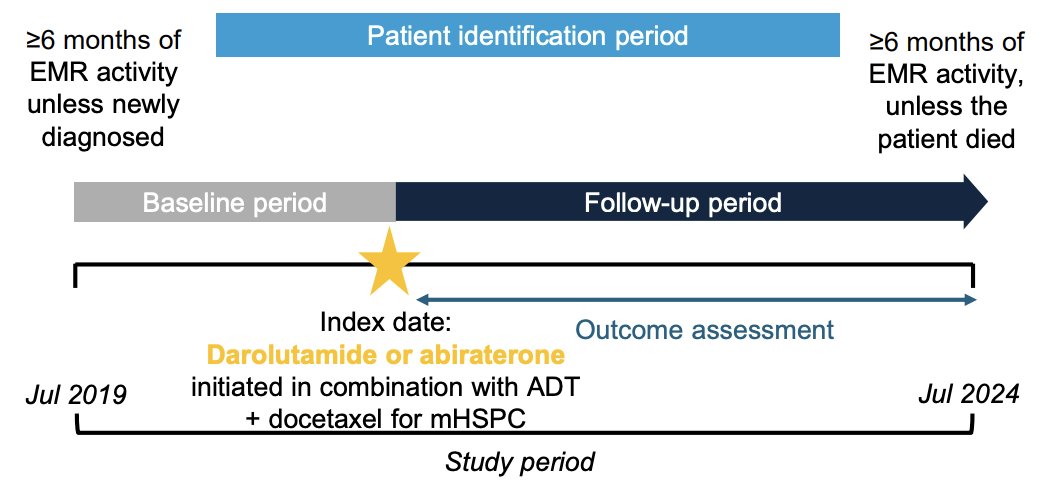
ARAAT was a retrospective chart review cohort study including adult patients with mHSPC in the US-based ConcertAI Patient360TM database who initiated darolutamide + ADT + docetaxel or abiraterone + ADT + docetaxel triplet therapy from January 2020 to January 2024. The endpoints were time to undetectable PSA (<0.2 ng/mL) and time to metastatic castration-resistant prostate cancer (mCRPC), by baseline PSA groups (low [Q1] ≤7.83 ng/mL; high [Q2–4] >7.83 ng/mL), and the relationship between undetectable PSA and time to mCRPC. The ARAAT study design is as follows:
Of 242 evaluable patients (darolutamide + ADT + docetaxel n=141; abiraterone + ADT + docetaxel n=101), baseline characteristics were similar between cohorts. Among patients with low and high baseline PSA, baseline characteristics were similar between patients who received darolutamide and abiraterone:

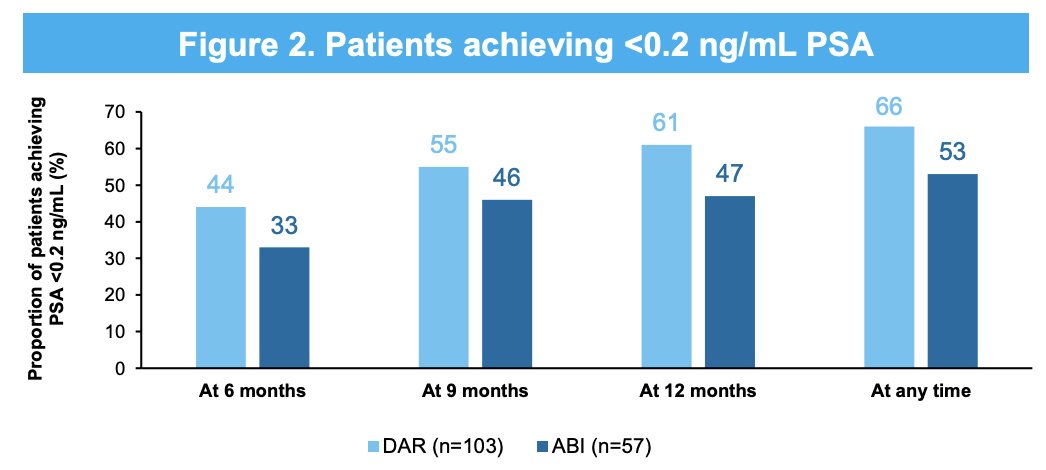
Median baseline PSA was 36 ng/mL in darolutamide + ADT + docetaxel patients and 22 ng/mL in abiraterone + ADT + docetaxel patients. Undetectable PSA was achieved by 66% of darolutamide + ADT + docetaxel patients and 53% of abiraterone + ADT + docetaxel patients:
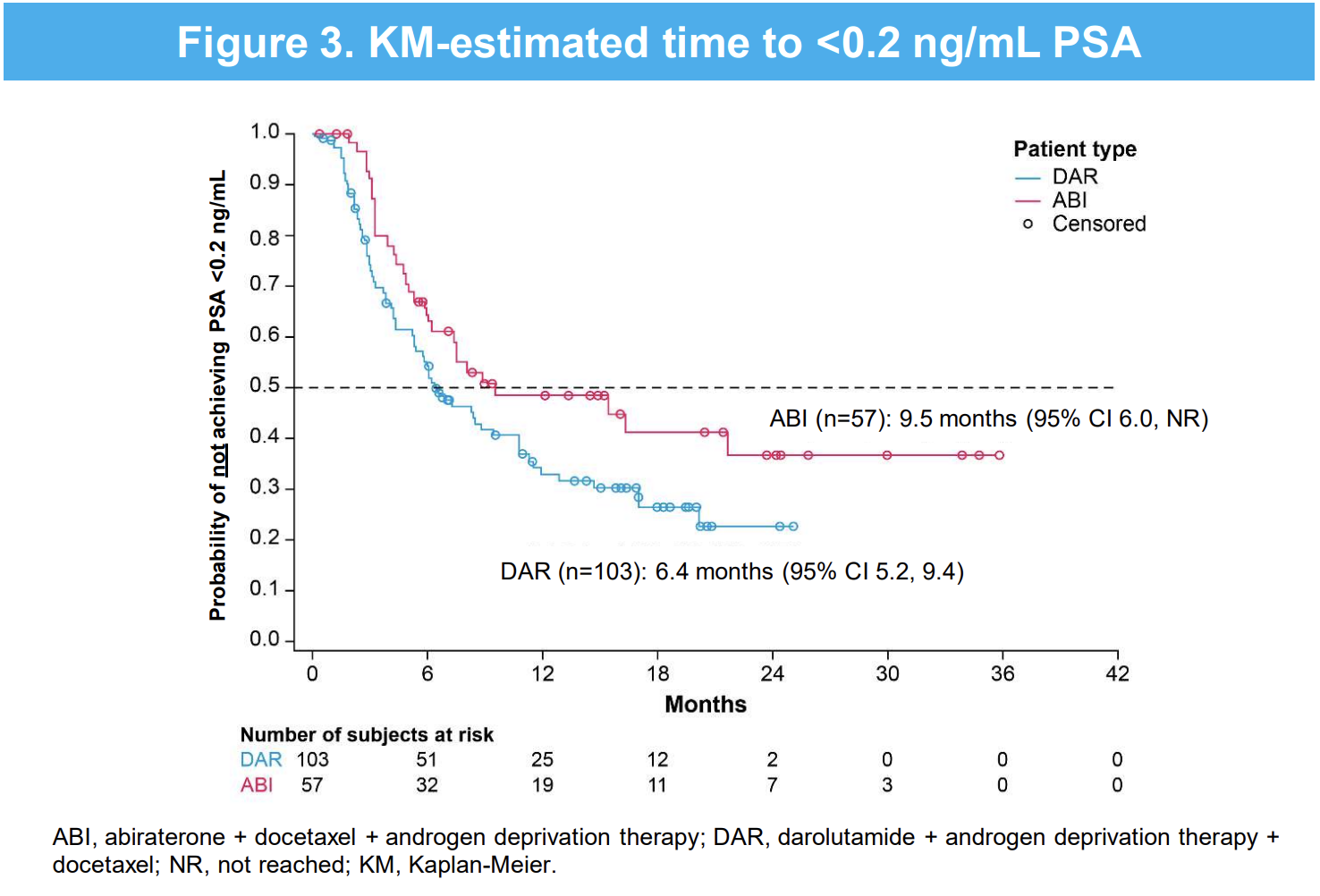
Time to PSA < 0.2 ng/mL also appeared to be shorter in the darolutamide cohort (6.4 months) than in the abiraterone cohort (9.5 months):
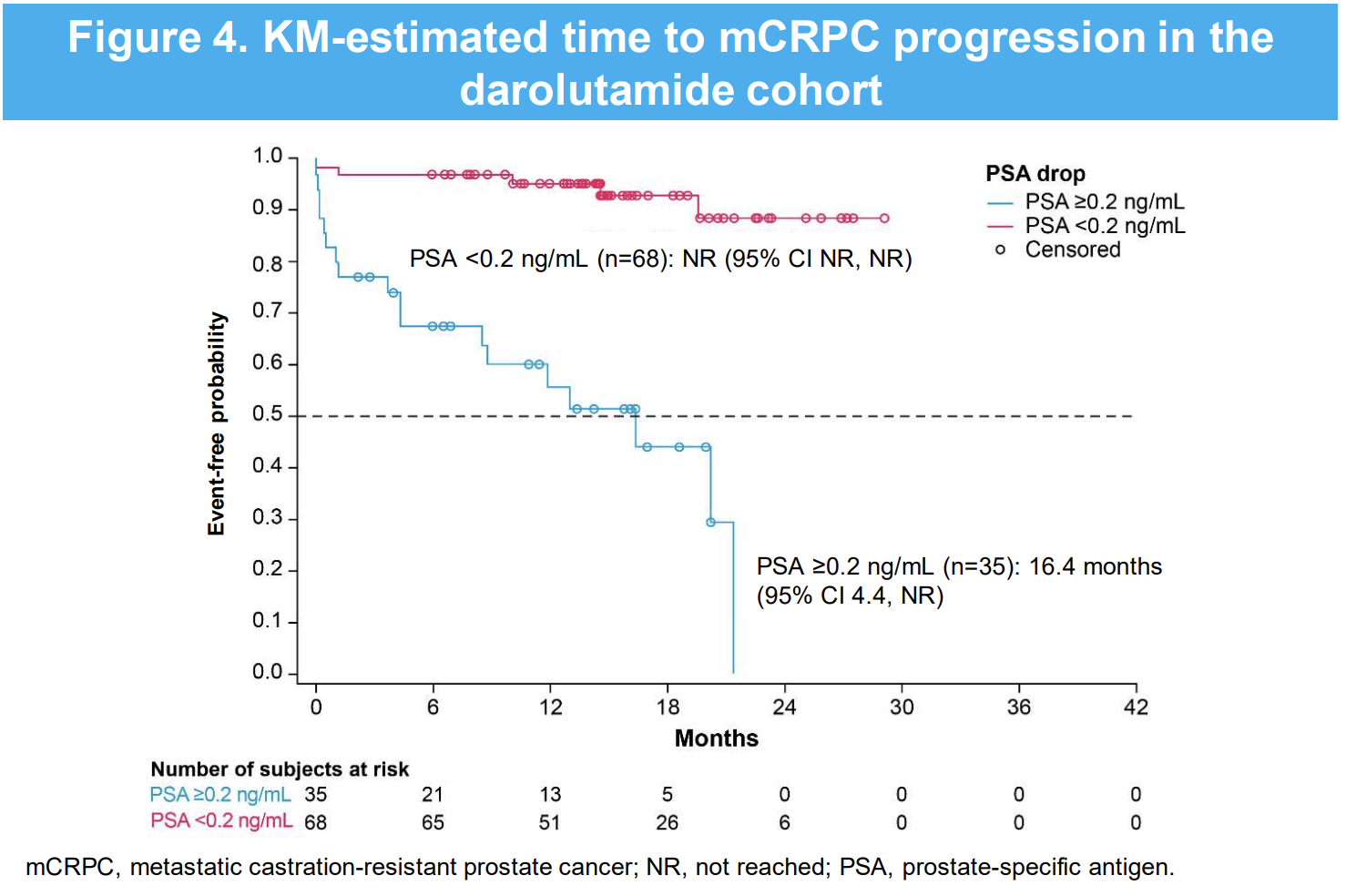
In the darolutamide cohort, patients who achieved a PSA < 0.2 ng/mL had a lower risk and longer time to mCRPC progression than those who did not achieve PSA < 0.2 ng/mL:
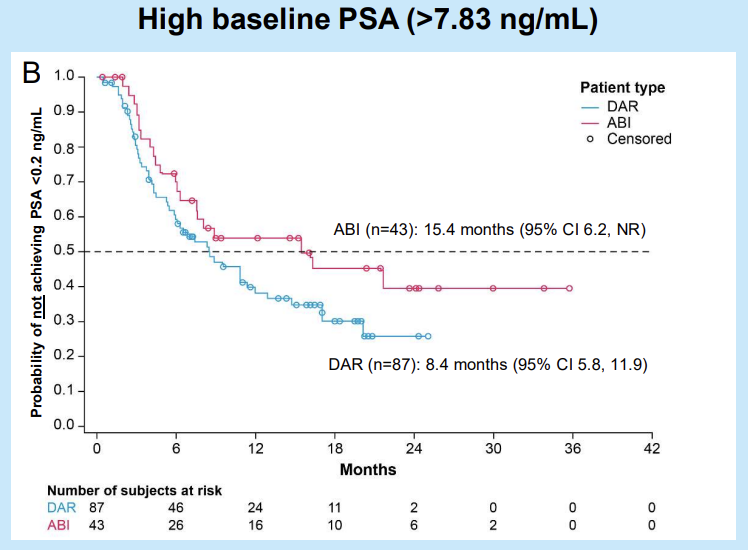
In patients with high baseline PSA, time to PSA < 0.2 ng/mL was 8.4 months for darolutamide + ADT + docetaxel and 15.4 months for abiraterone + ADT + docetaxel:
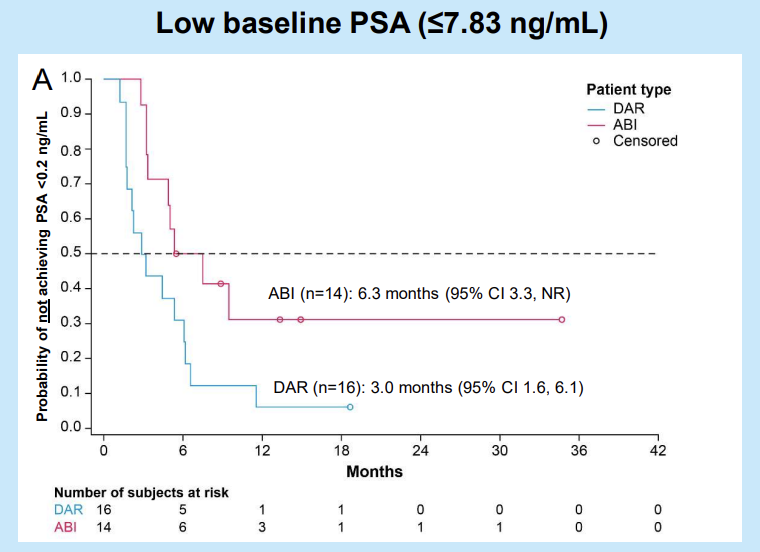
In patients with low baseline PSA, time to PSA < 0.2 ng/mL was 3.0 months for darolutamide + ADT + docetaxel and 6.3 months for abiraterone + ADT + docetaxel:
In patients with high baseline PSA, time to mCRPC was not reached for darolutamide + ADT + docetaxel and 19.6 months for abiraterone + ADT + docetaxel:

In patients with low baseline PSA, time to mCRPC was not reached for darolutamide + ADT + docetaxel and 19.7 months for abiraterone + ADT + docetaxel:

Dr. Morgans concluded her presentation discussing real-world PSA response with darolutamide or abiraterone in mHSPC triplet therapy with the following take-home points:
- The ARAAT real-world study supports the findings of the phase 3 ARASENS trial, which showed that darolutamide triplet therapy is an effective treatment for mHSPC
- Darolutamide triplet therapy provided deep and durable PSA responses in the overall population and across baseline PSA groups:
- Regardless of baseline PSA group, PSA <0.2 ng/mL was achieved by more patients and in a shorter time in the darolutamide cohort than in the abiraterone cohort
- Time to progression to mCRPC was longer with darolutamide than with abiraterone, regardless of baseline PSA group
- In the darolutamide cohort, achieving PSA <0.2 ng/mL was correlated with clinical benefit in terms of lower risk of progression to mCRPC
Presented by: Alicia Morgans, MD, MPH, Genitourinary Medical Oncologist, Medical Director of Survivorship Program at Dana-Farber Cancer Institute, Boston, MA
Written by: Zachary Klaassen, MD, MSc – Urologic Oncologist, Associate Professor of Urology, Georgia Cancer Center, Wellstar MCG Health, @zklaassen_md on Twitter during the 2025 European Society of Medical Oncology (ESMO) Annual Meeting, Berlin, Germany, Fri, Oct 17 – Tues, Oct 21, 2025.
References:
- Smith MR, Hussain M, Saad F, et al. Darolutamide and Survival in Metastatic, Hormone-Sensitive Prostate Cancer. N Engl J Med. 2022 Mar 24;386(12):1132-1142.
- Fizazi K, Foulon S, Carles J, Roubaud G, et al. Abiraterone plus prednisone added to androgen deprivation therapy and docetaxel in de novo metastatic castration-sensitive prostate cancer (PEACE-1): A multicentre, open-label, randomized, phase 3 study with a 2 x 2 factorial design. Lancet. 2022 Apr 30;399(10336):1695-1707.