

(UroToday.com) The 2025 ESMO annual meeting featured a prostate cancer session and a presentation by Dr. Igle Jan de Jong discussing insights from the REASSURE assessing combined treatment with radium-223 and enzalutamide in patients with metastatic castration-resistant prostate cancer (mCRPC). Enzalutamide and radium-223 both prolong overall survival in patients with mCRPC, and the PEACE III trial reported positive outcomes with combined enzalutamide + radium-223 treatment.1 Median radiographic progression free survival and overall survival were significantly longer in the enzalutamide + radium-223 arm compared with the enzalutamide arm. At the ESMO 2025 annual meeting, Dr. de Jong and colleagues reported outcomes of patients who received combined enzalutamide + radium-223 in a real-world setting using the global prospective REASSURE study.
There were 1,472 patients analyzed, including a subgroup receiving combined enzalutamide + radium-223 (patients started radium-223 and enzalutamide within 30 days of each other, n=45):
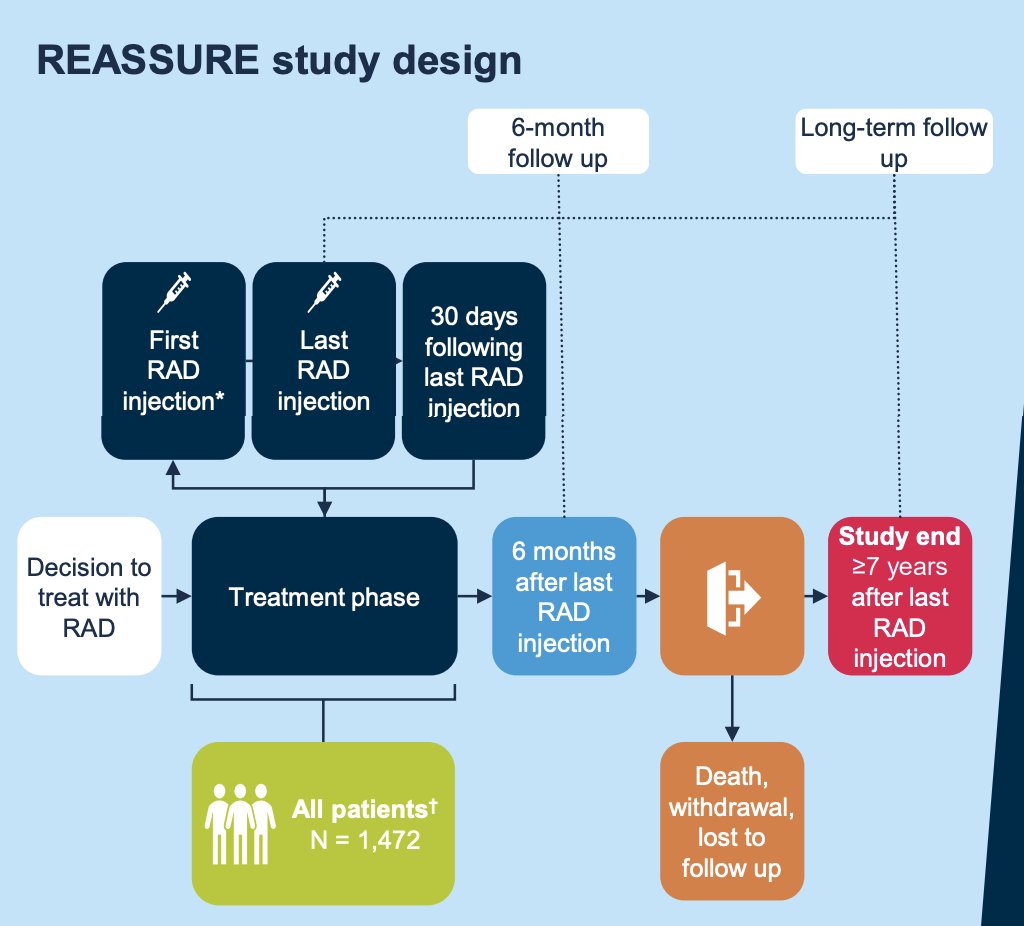
This analysis reported the baseline characteristics, short- and long-term safety for enzalutamide + radium-223 and all patients.
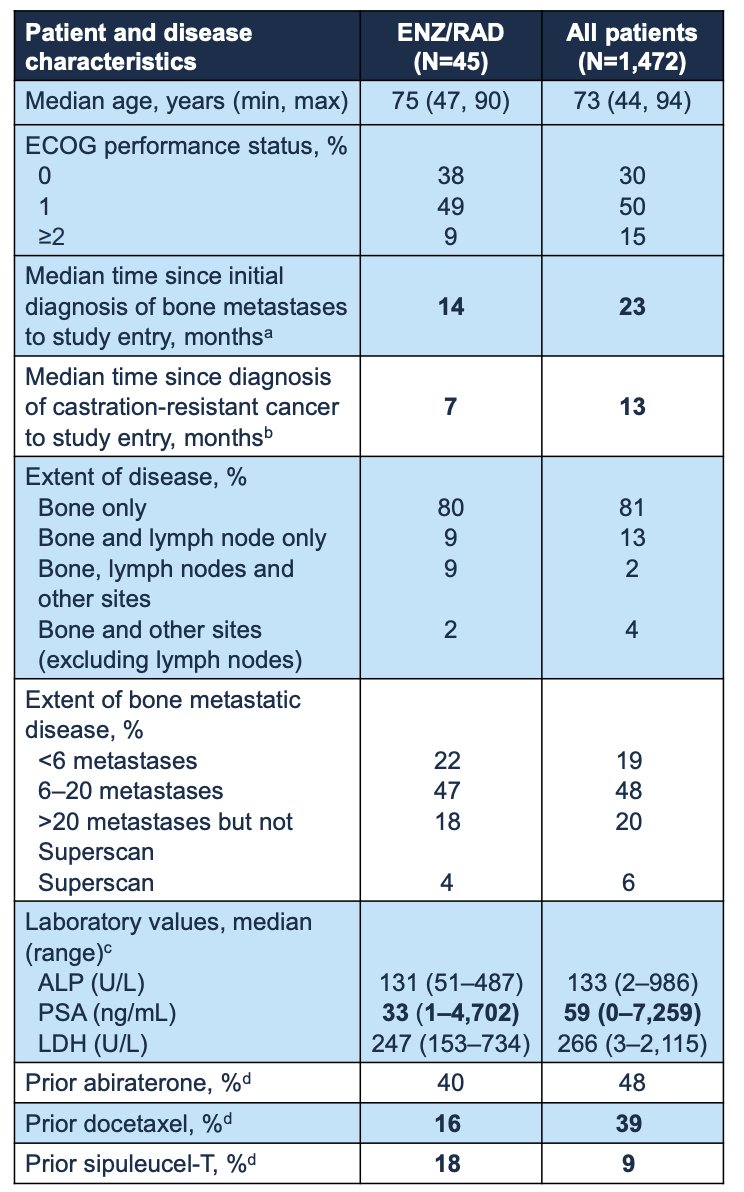
Baseline characteristics of enzalutamide + radium-223 were similar to all patients, except for shorter times from initial bone metastases and castration resistance diagnosis to study entry, and fewer patients had prior docetaxel:
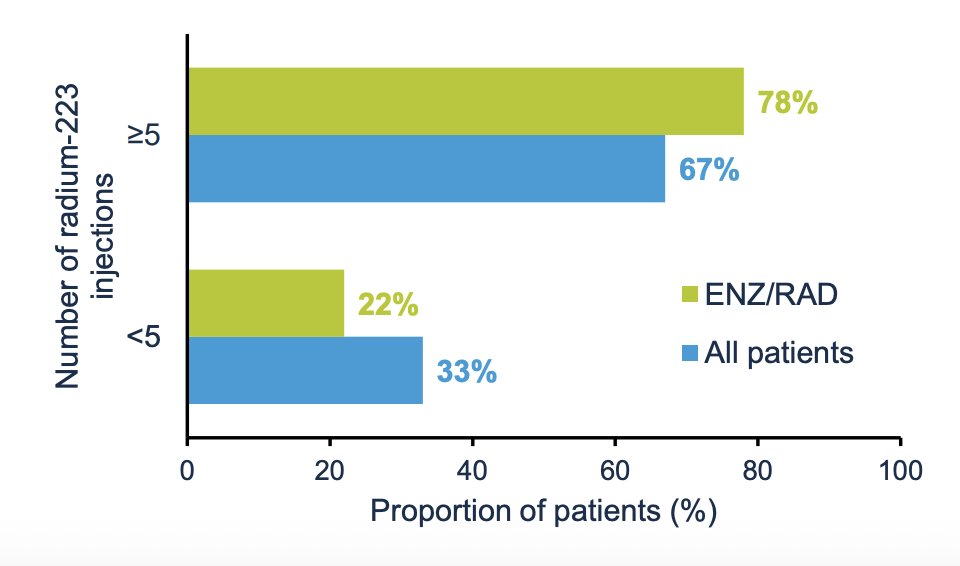
The median number of radium-223 injections was 6 in enzalutamide + radium-223 and in all patients. However, 73% of enzalutamide + radium-223 patients completed radium-223 treatment versus only 60% amongst all patients:
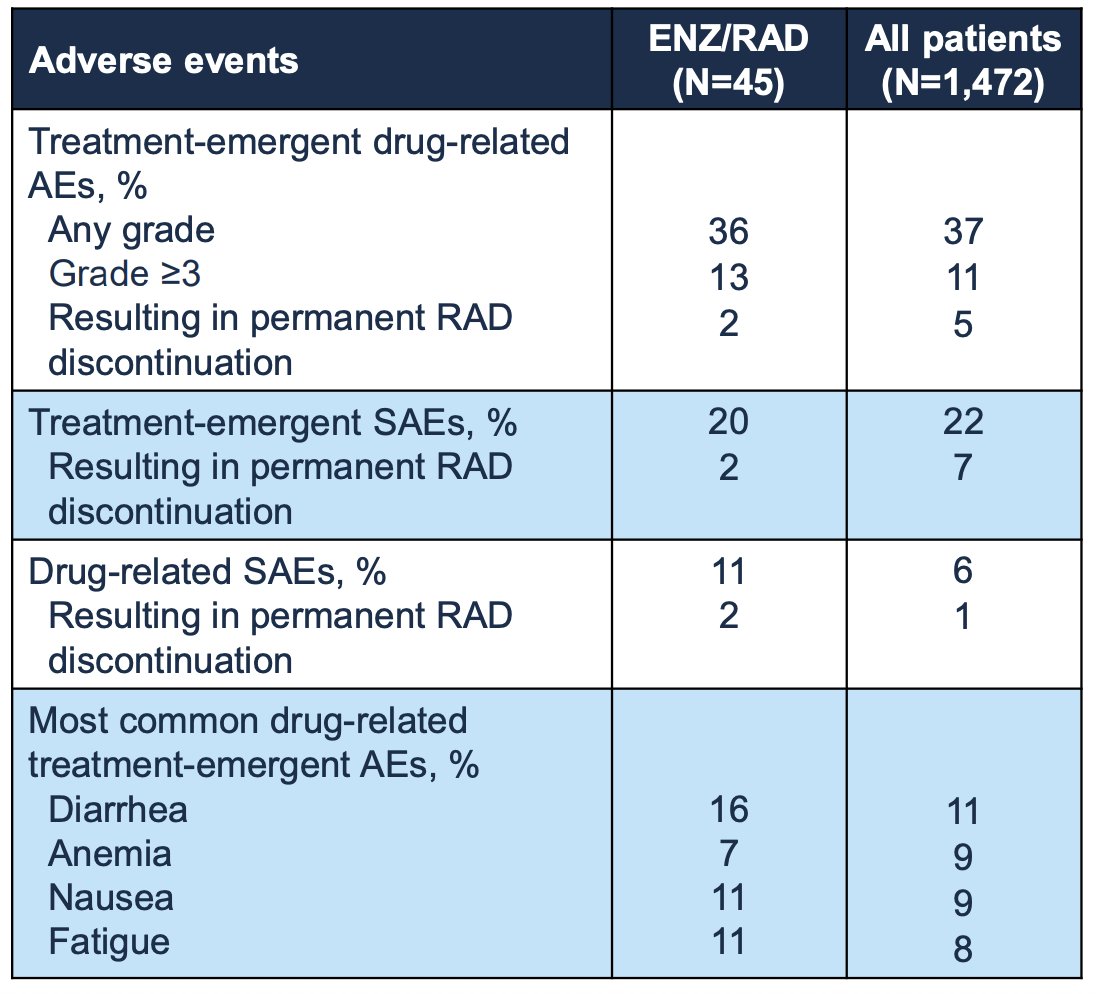
Treatment emergent serious adverse events and treatment emergent drug-related adverse events were observed in 20% and 36% of patients, respectively, similar to all patients. However, drug-related serious adverse events were slightly higher in enzalutamide + radium-223 patients (11%), while it was 6% in all patients:
Concomitant bone protective agents included denosumab and zoledronic acid, which were received by 56% and 9% of enzalutamide + radium-223 patients, respectively. Overall, 7% experienced fractures. Incidence of fractures was slightly higher amongst all patients (10%), with fewer patients receiving concomitant bone protective agents (denosumab 28% and zoledronic acid 13%). The median overall survival was 19.3 months for enzalutamide + radium-223 patients and 15.6 months for all patients:
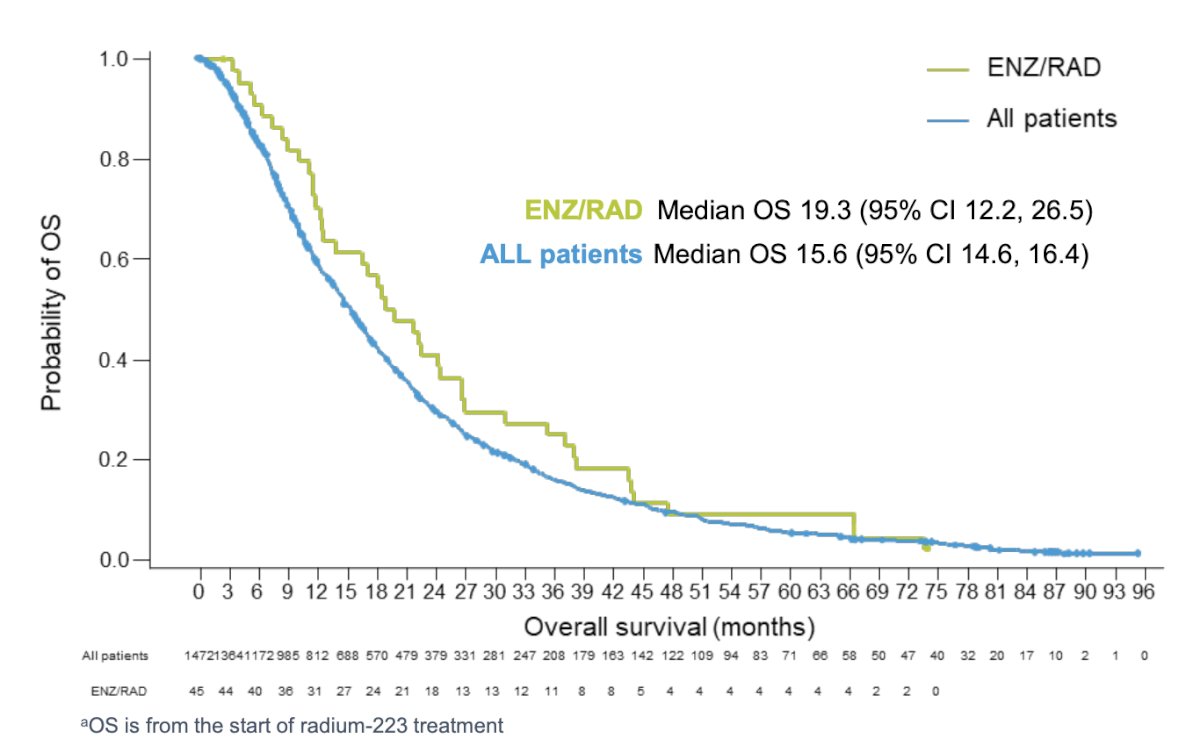
Dr. de Jong concluded this presentation discussing insights from the REASSURE assessing combined treatment with radium-223 and enzalutamide in patients with mCRPC with the following take home points:
- In this subgroup of patients treated with combined enzalutamide + radium-223 in a real-world setting, there was no new safety signals
- The combination was well tolerated and most patients completed radium-223
- Overall survival for enzalutamide + radium-223 was longer
- Patients received enzalutamide + radium-223 earlier in the disease course based on time from mCRPC, time from initial diagnosis of bone metastases and prior docetaxel
- Fracture incidence was low in enzalutamide + radium-223, and the majority of patients received bone protective agents
Presented by: Igle Jan de Jong, MD, PhD, FEBU, University Medical Center Groningen, Groningen, Netherlands
Written by: Zachary Klaassen, MD, MSc – Urologic Oncologist, Associate Professor of Urology, Georgia Cancer Center, Wellstar MCG Health, @zklaassen_md on Twitter during the 2025 European Society for Medical Oncology (ESMO) Annual Congress, Berlin, Germany, October 17–21, 2025
References: