

(UroToday.com) The 2025 ESMO annual meeting featured a prostate cancer session and a presentation by Dr. Niven Mehra discussing BULLSEYE assessing 177Lu-PSMA-617 in oligometastatic hormone-sensitive prostate cancer. 177Lu-PSMA-617 is a novel treatment for patients with castration resistant prostate cancer and is FDA-approved based on the VISION1 and PSMAfore trials.2 Previously, Dr. Mehra and colleagues showed that 177Lu-PSMA-617 could be applied to patients with oligometastatic hormone-sensitive prostate cancer [3]. At ESMO 2025, the investigators reported the results of the BULLSEYE phase II trial.
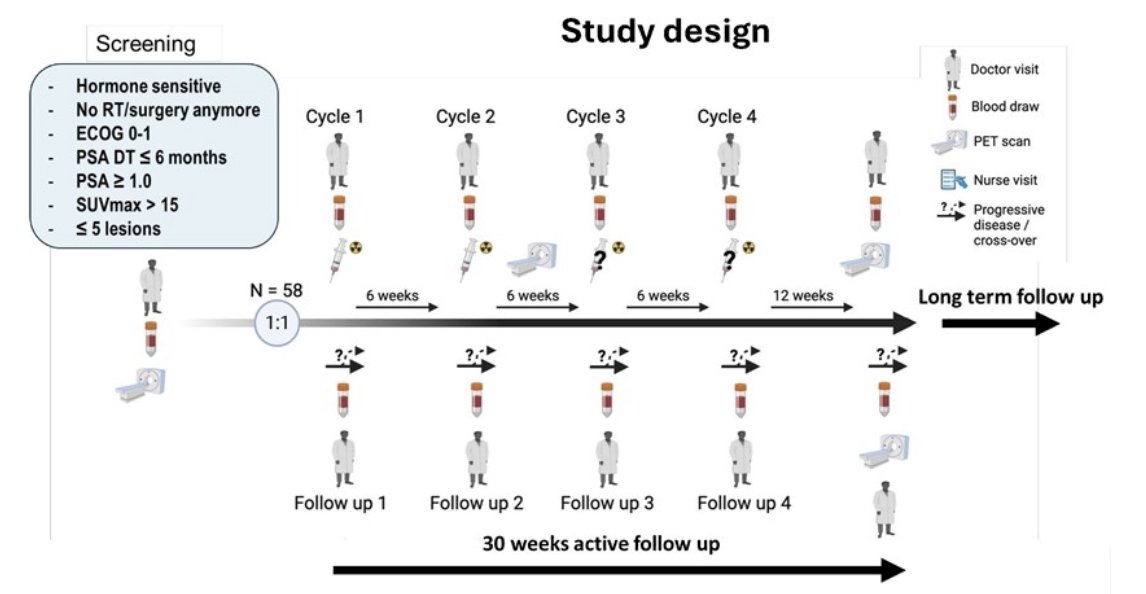
BULLSEYE was an international, multicenter, open-label, randomized phase II trial. There were 58 patients randomized 1:1 to 177Lu-PSMA-617 versus the standard of care of deferred ADT. Patients in the standard of care arm were allowed to receive 177Lu-PSMA-617 upon disease progression. Eligibility consisted of fast-progressing oligometastatic hormone-sensitive prostate cancer following local treatment with ≤5 metastases. The primary outcome was progression-free survival (ie, time without ADT). Secondary outcomes were PSA response, adverse events, quality of life, and outcomes observed in the control arm receiving 177Lu-PSMA-617. The trial design for BULLSEYE is as follows:
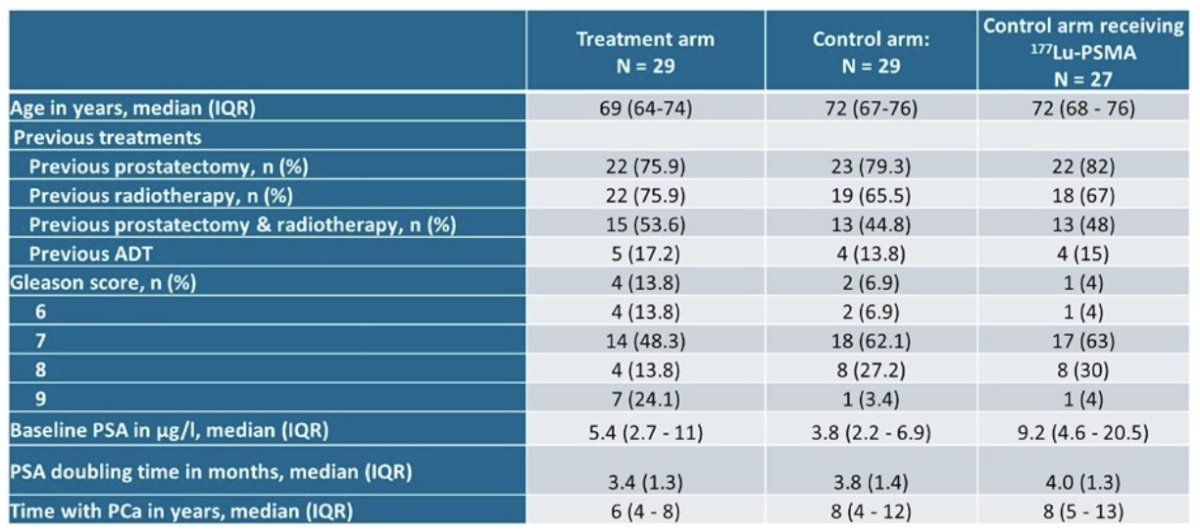
Between April 2020 and July 2024, 78 men were screened, of whom 58 were eligible (data cutoff March 2025), with the following baseline demographics:
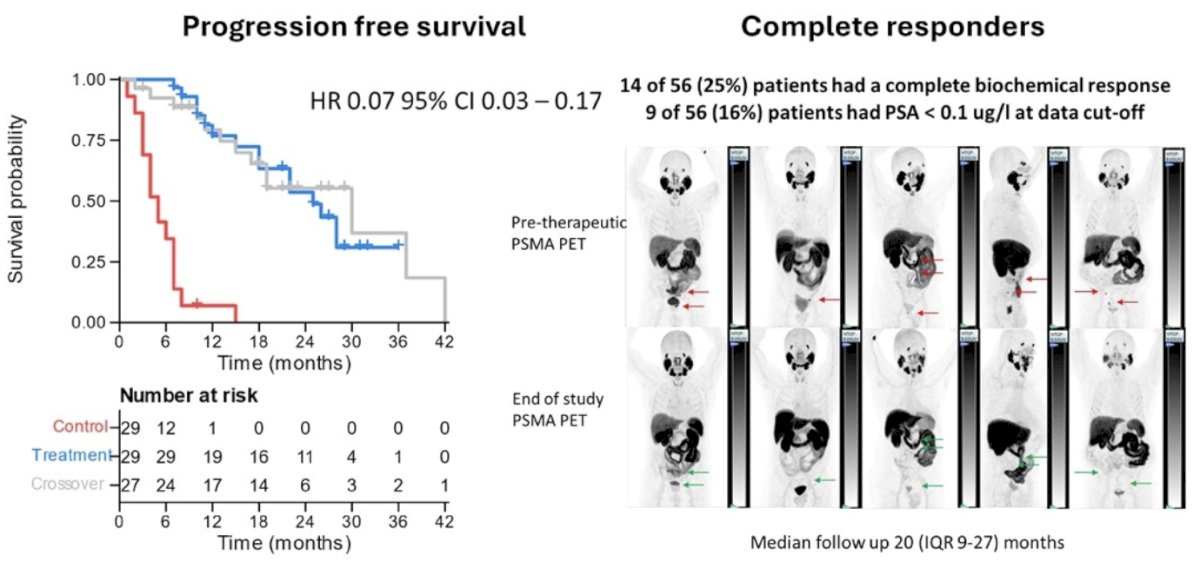
Patients received a median of 4 (IQR 4-4) cycles of 7.4GBq 177Lu-PSMA-617. During a median follow-up of 27 months (IQR 18-32), one standard of care arm patient (3%) remained without disease progression as compared to 14 (48%) patients in the 177Lu-PSMA-617 group. The median per protocol progression-free survival was 5 (IQR 3-7) and 18 (IQR 10-28) months for the standard of care arm and 177Lu-PSMA-617, respectively (HR 0.07, 95% CI 0.03-0.17; p < 0.001):
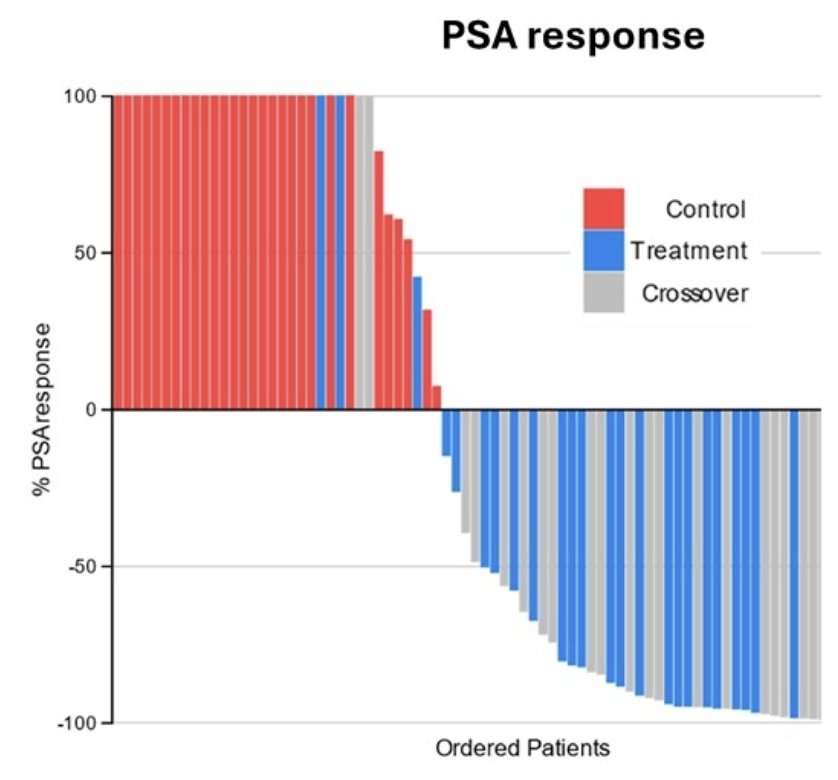
Overall, 31/56 of patients treated with 177Lu-PSMA-617 had a ≥90% PSA decline, and 14 had a complete biochemical response:
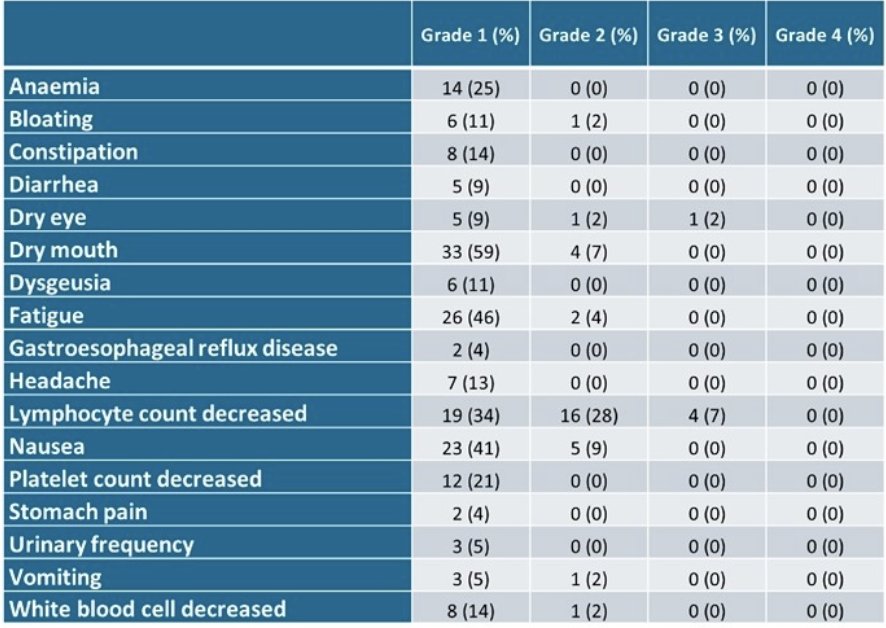
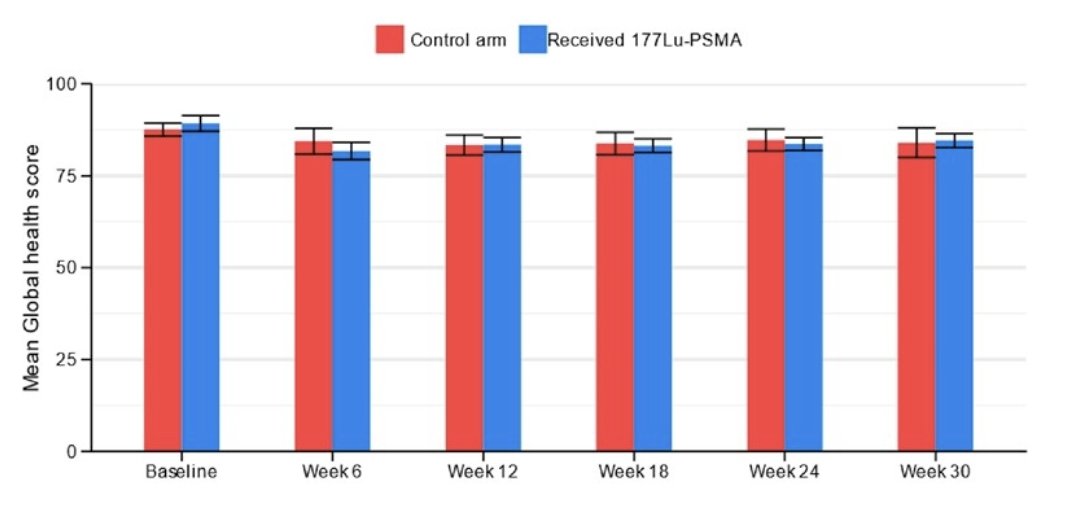
The most common treatment-related adverse events were: grade 1 xerostomia (59%), fatigue (46%), nausea (41%), and bone marrow toxicity (25%). Clinically relevant grade ≥2 adverse events were observed in less than 10% of patients, and quality of life remained stable during the study:
There was no adverse effect on the mean global health score (EORTC QLQ-C30) with the addition of 177Lu-PSMA-617:
Dr. Mehra concluded his presentation discussing BULLSEYE with the following take-home points:
- BULLSEYE included a high-risk oligo-recurrent patient population with a PSA doubling time ≤6 months
- 177Lu-PSMA-617 resulted in >PSA90 in >50% of patients, and 25% had a complete biochemical response
- 177Lu-PSMA-617 postpones castration for 25 months in 50% of patients
- Side effects were mild, and patients retained a good quality of life
- 177Lu-PSMA-617 is a promising new treatment in metachronous oligometastatic hormone-sensitive prostate cancer
Presented by: Niven Mehra, MD, Radboud University Medical Center, Nijmegen, Netherlands
Written by: Zachary Klaassen, MD, MSc – Urologic Oncologist, Associate Professor of Urology, Georgia Cancer Center, Wellstar MCG Health, @zklaassen_md on Twitter during the 2025 European Society of Medical Oncology (ESMO) Annual Meeting, Berlin, Germany, Fri, Oct 17 – Tues, Oct 21, 2025.
References:
- Sartor O, de Bono J, Chi KN et al. Lutetium-177-PSMA-617 for Metastatic Castration-Resistant Prostate Cancer. N Engl J Med. 2021 Sep 16;385(12):1091-1103.
- Morris MJ, Castellano D, Herrmann K, et al. 177Lu-PSMA-617 versus a change of androgen receptor pathway inhibitor therapy for taxane-naïve patients with progressive metastatic castration-resistant prostate cancer (PSMAfore): A phase 3, randomized, controlled trial. Lancet 2024 Sep 28;404(10459):1227-1239.
- Privé BM, Peters SMB, Musealaers CHJ, et al. Lutetium-177-PSMA-617 in low-volume hormone-sensitive metastatic prostate cancer: A prospective pilot study. Clin Cancer Res. 2021 July 1;27(13):3595-3601.