

(UroToday.com) The 2025 European Society of Medical Oncology (ESMO) Annual Congress held in Berlin, Germany, was host to the Poster presentation session. Dr. Jiwei Huang presented the poster CLEAR-IT: Preliminary Results from a Phase II Study Evaluating Cadonilimab Plus Lenvatinib in Previously Immunotherapy-Treated Advanced/Metastatic Clear Cell Renal Cell Carcinoma (ccRCC).
Dr Huang highlighted that immune checkpoint inhibitor (ICI)-based regimens have become the first-line standard of care for advanced renal cell carcinoma (aRCC). However, there remains no preferred therapeutic strategy for patients who progress after first-line ICI therapy. Cadonilimab, a novel PD-1/CTLA-4 bispecific antibody, has demonstrated encouraging antitumor activity in early studies.
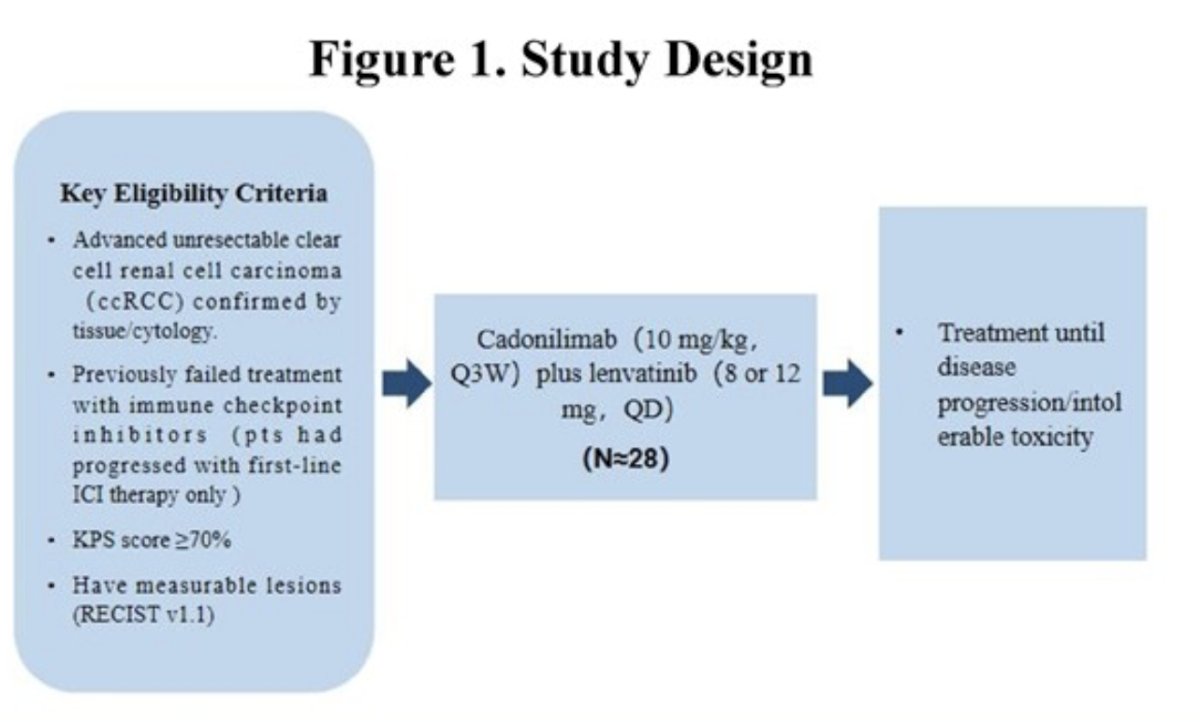
The CLEAR-IT trial is a single-arm, multicenter, phase II study (NCT06035224) designed to evaluate cadonilimab in combination with lenvatinib in patients with unresectable advanced or metastatic clear cell renal cell carcinoma (ccRCC) who had progressed on prior first-line ICI-based therapy. Patients received lenvatinib (8 mg once daily for those weighing <60 kg; 12 mg once daily for those ≥60 kg) in combination with cadonilimab (10 mg/kg intravenously every 3 weeks) until disease progression or intolerable toxicity.
The primary endpoint was objective response rate (ORR) assessed per RECIST v1.1, while secondary endpoints included disease control rate (DCR), progression-free survival (PFS), overall survival (OS), and safety outcomes. The study design is shown below.
From August 2023 to April 2025, a total of 24 patients with advanced or metastatic clear cell renal cell carcinoma (ccRCC) previously treated with first-line ICI-based therapy were enrolled. The median age was 62 years (range, 43–78), with 75% being male and 67% having an ECOG performance status of 0. All patients presented with distant metastases, most commonly involving the lung (71%), bone (42%), lymph nodes (25%), liver (12%), and other sites (25%)
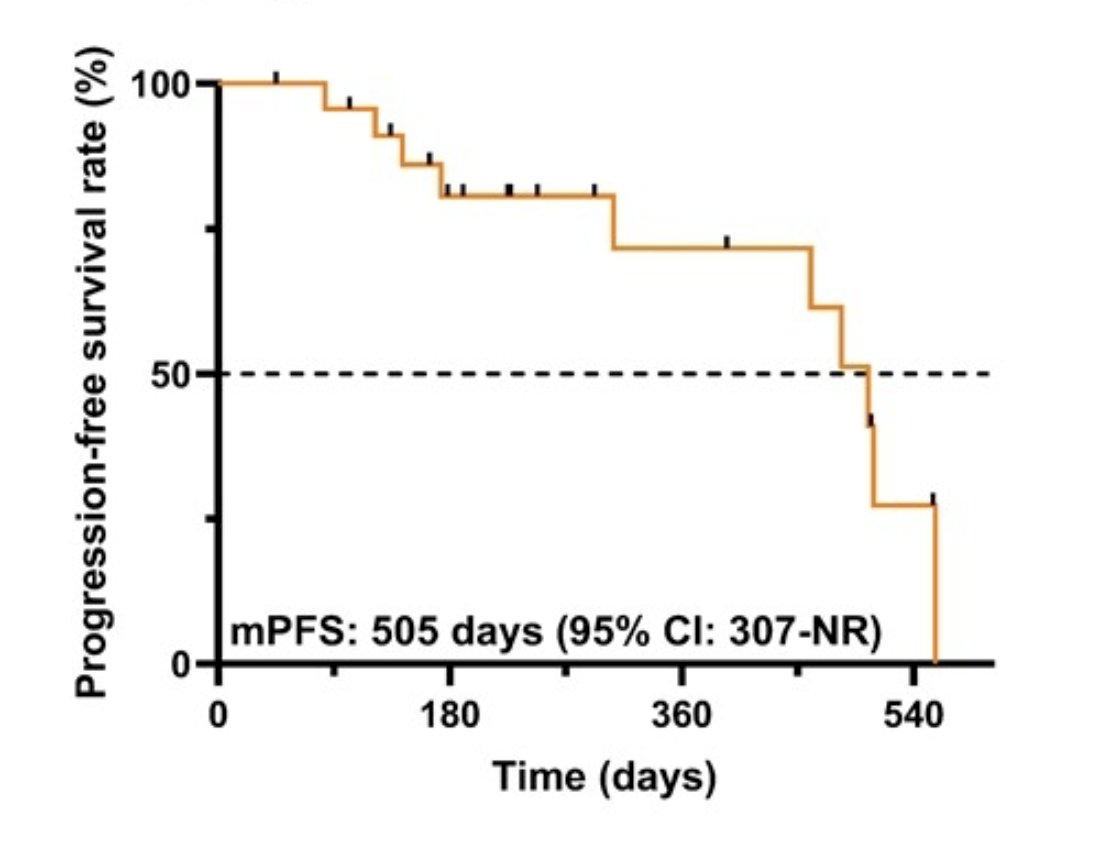
In terms of efficacy, among the 24 evaluable patients, the ORR was 29%, including 2 complete responses and 5 partial responses. The DCR reached 96%, with 16 patients achieving stable disease (SD) and only 1 showing progressive disease. The median progression-free survival was 16.8 months, indicating promising antitumor activity in this ICI-pretreated population.
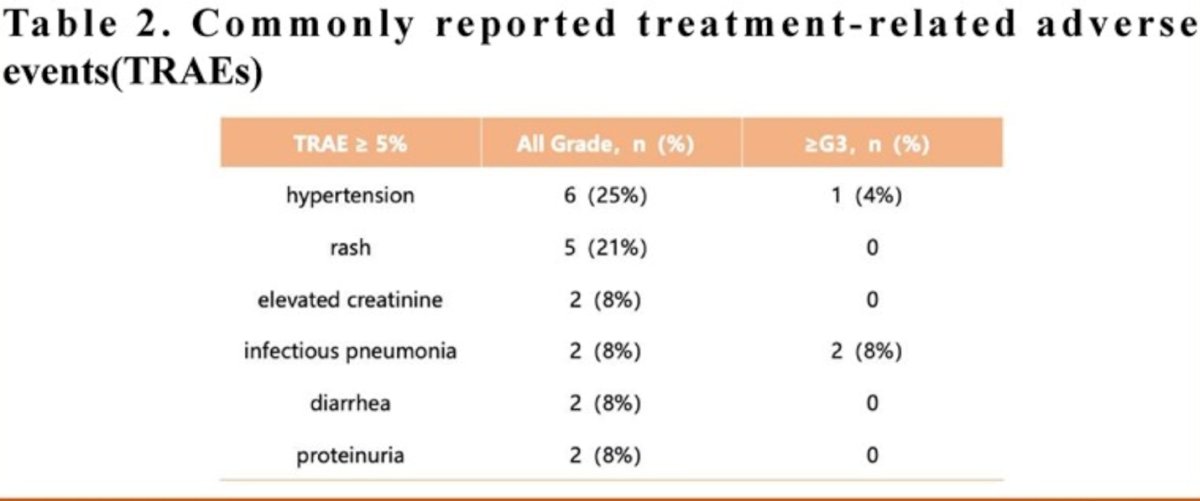
Lastly, treatment-related adverse events (TRAEs) were predominantly grade 1–2. The most frequently reported events included hypertension (25%), rash (21%), elevated creatinine (8%), infectious pneumonia (8%), diarrhea (8%), and proteinuria (8%). Grade ≥3 TRAEs occurred in 17% of patients and consisted mainly of hypertension, infectious pneumonia, and a single case of esophageal fistula.
Dr Huang concluded the presentation with the following takeaways:
- CLEAR-IT is the first study to evaluate cadonilimab in ICI-pretreated advanced ceRCC.
- The combination of cadonilimab and lenvatinib demonstrated encouraging antitumor activity (ORR 29%, DCR 96%, median PFS 16.8 months) with a manageable safety profile.
- These results support further investigation of this regimen in a larger cohort. Enrollment is ongoing, and updated data will be presented.
Presented by: Jiwei Huang, MD, Shanghai Jiao Tong University, Shanghai, China
Written by: Julian Chavarriaga, MD – Urologic Oncologist at Cancer Treatment and Research Center (CTIC) via Society of Urologic Oncology (SUO) Fellow at The University of Toronto. @chavarriagaj on Twitter during the 2025 European Society for Medical Oncology (ESMO) Annual Congress, Berlin, Germany, October 17–21, 2025