

(UroToday.com) The 2025 European Society of Medical Oncology (ESMO) Annual Congress, held in Berlin, Germany, between October 17th and 21st was host to the session Mini Oral session 2: GU tumours, renal & urothelial Dr. Miguel Zugman presented abstract 2610MO - Genomic Analysis of Papillary Renal Cell Carcinoma (PRCC): MET Alterations Are Uncommon and Enriched in Patients of African Ancestry.
Dr. Zugman began by noting that MET alterations occur in approximately 30–40% of papillary renal cell carcinoma (pRCC) cases. This has prompted several clinical trials evaluating MET-targeted therapies, including the SAMETA study.1 However, many biological and clinical aspects of MET-altered pRCC remain poorly understood. To address this gap, the investigators conducted a comprehensive analysis aimed at characterizing the clinical, pathological, and genomic features associated with MET alterations in pRCC.
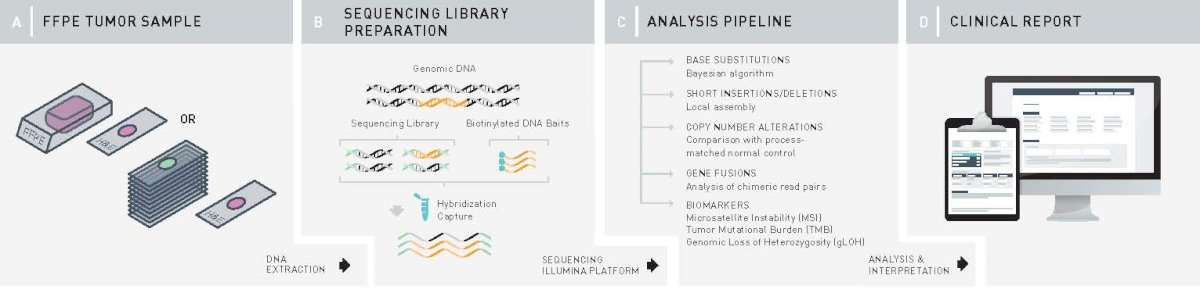
Their cohort included 395 papillary RCC cases, all analyzed using the FoundationOne CDx assay. This comprehensive genomic profiling platform evaluates tumor tissue for mutations, rearrangements, and copy number alterations across more than 300 cancer-related genes. For 382 of these cases, the investigators also leveraged a research-use-only version of the platform capable of estimating copy number at the chromosome arm level. In this approach, a chromosome arm is classified as gained if more than half of its segments exhibit a copy number exceeding the sample’s median. This enabled the detection of subtle, low-level gains on the long arm of chromosome 7 alterations that conventional genomic testing methods typically fail to capture.
The investigators compared the clinical and biomarker characteristics of patients with MET-altered versus MET–wildtype papillary RCC. As summarized in the table, MET⁺ tumors were associated with a younger median age (63 vs 66 years) and a greater number of pathogenic genomic alterations per tumor (3.5 vs 2). A higher proportion of African ancestry was also noted among patients with MET⁺ disease (42.5% vs 20.8%), a trend approaching significance (p=0.06) that may suggest ancestry-related differences in biomarker prevalence. However, no significant differences were observed in PD-L1 expression, tumor mutational burden, microsatellite instability, or homologous recombination deficiency signatures, though limited sample size may have constrained the ability to detect smaller effects.

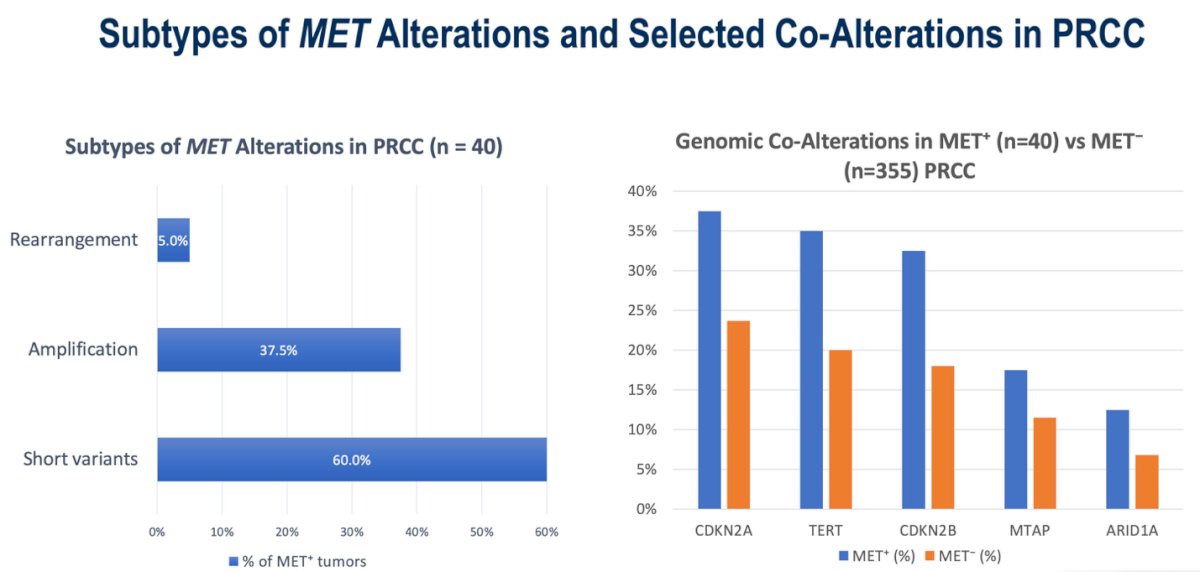
The investigators next examined the spectrum of MET alterations and their associated genomic co-alterations. As shown in the figure below, short variants, exclusively missense mutations, were the most common type, occurring in 60% of MET⁺ tumors. MET amplifications were identified in 38% of cases, while rearrangements were rare, detected in only 5%. Regarding co-occurring genomic alterations, the most frequent in MET⁺ tumors were CDKN2A, TERT, and CDKN2B, followed by MTAP and ARID1A. Although no formal statistical analysis was performed due to the limited sample size, these findings suggest a recurrent pattern of cell-cycle and telomerase pathway dysregulation in MET-altered papillary RCC.
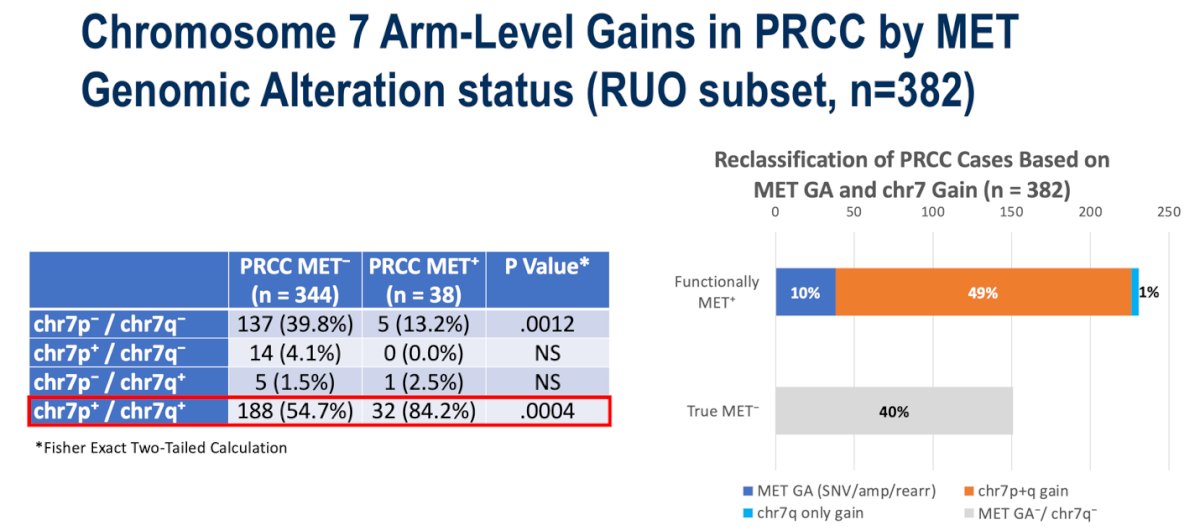
Dr. Zugman emphasized that 7q gain was observed in both MET⁺ and MET⁻ papillary RCC tumors. Although this alteration was more frequent among MET⁺ cases, the key finding was that over half of MET⁻ tumors also harbored chromosome 7q gain. This observation is significant because prior studies and clinical trials have often classified arm-level chromosome 7 gain as indicative of MET-driven disease. When the investigators reclassified tumors using this broader definition, incorporating chr7p+q+ gain along with MET short variants, amplifications, and rearrangements, more than half of previously MET⁻ tumors were redefined as “functionally MET⁺.” These findings suggest that earlier criteria may have already encompassed a wider subset of MET-activated tumors, underscoring the need for clearer, standardized definitions of biomarker-positive disease in future trials.
Dr Zugman concluded his presentation with the following take-home messages:
- MET alterations were identified in about 10% of papillary RCC tumors in this cohort, with short variants being the most common subtype.
- They also observed that MET alterations were nearly twice as prevalent in patients of African ancestry, reinforcing the need for inclusive trial enrollment, not just for equity, but for scientific validity.
- In addition, the cohort demonstrated a significant enrichment of low-level chromosome 7q gain, emphasizing the need for standardized and precise biomarker definitions in MET-driven papillary RCC.
Presented by: Miguel Zugman, MD, Post-doctoral Fellow at City of Hope Cancer Center, Los Angeles, CA. United States of America.
Written by: Julian Chavarriaga, MD – Urologic Oncologist at Cancer Treatment and Research Center (CTIC) via Society of Urologic Oncology (SUO) Fellow at The University of Toronto. @chavarriagaj on Twitter during the 2025 European Society of Medical Oncology (ESMO) Annual Congress held in Berlin, Germany, between October 17th and 21st.
Reference:
- Chouieri T. SAMETA: A Phase III study of savolitinib + durvalumab vs sunitinib and durvalumab monotherapy in patients with MET-driven, unresectable, locally advanced/metastatic papillary renal cell carcinoma. Oncologist. 2023 Aug 23;28(Suppl 1):S11–2. doi: 10.1093/oncolo/oyad216.018. PMCID: PMC10445576.