

(UroToday.com) The 2025 European Society for Medical Oncology (ESMO) Annual Congress held in Berlin, Germany was host to a urothelial carcinoma poster session. Dr. Terence Friedlander presented the results of EV-103 Cohort K that evaluated the efficacy and safety of enfortumab vedotin (EV) +/- pembrolizumab (P) in cisplatin-ineligible patients with previously untreated locally advanced or metastatic urothelial carcinoma.
EV+P is the 1st line standard of care treatment for patients with previously untreated locally advanced or metastatic urothelial carcinoma, irrespective of cisplatin eligibility.1,2 Results from the phase 1b/2 EV-103/KEYNOTE-869 (NCT03288545) study, including Dose Escalation/Cohort A and Cohort K, resulted in the accelerated approval of EV+P for the treatment of patients with locally advanced or metastatic urothelial carcinoma who are ineligible for cisplatin.3,4
The pivotal phase 3 EV-302/KEYNOTE-A39 (NCT04223856) study confirmed the efficacy of EV+P in a broader patient population,5 which included both cis-eligible and ineligible participants. Results led to global approvals of EV+P, as well as its recognition by global treatment guidelines as standard of care for 1st line treatment of patients with locally advanced or metastatic urothelial carcinoma, irrespective of cisplatin eligibility.1,2,4,6,7
Updated results after approximately 2.5 years of median follow-up demonstrated that the overall survival (OS) and progression-free survival (PFS) benefits in patients treated with EV+P were maintained, irrespective of cisplatin eligibility, with a median OS of more than 2.5 years.8
The EV-103 study provides insights into the long-term outcomes of EV+P in patients ineligible for cisplatin. After 5 years of follow-up in the Dose Escalation/Cohort A, EV+P continued to show durable responses and a meaningful survival, with a median OS exceeding 2 years and median PFS exceeding 1 year, with a manageable safety profile.9
Herein, Dr. Friedlander presented the updated, long-term results from EV-103 Cohort K after a median follow-up of almost 3.5 years.
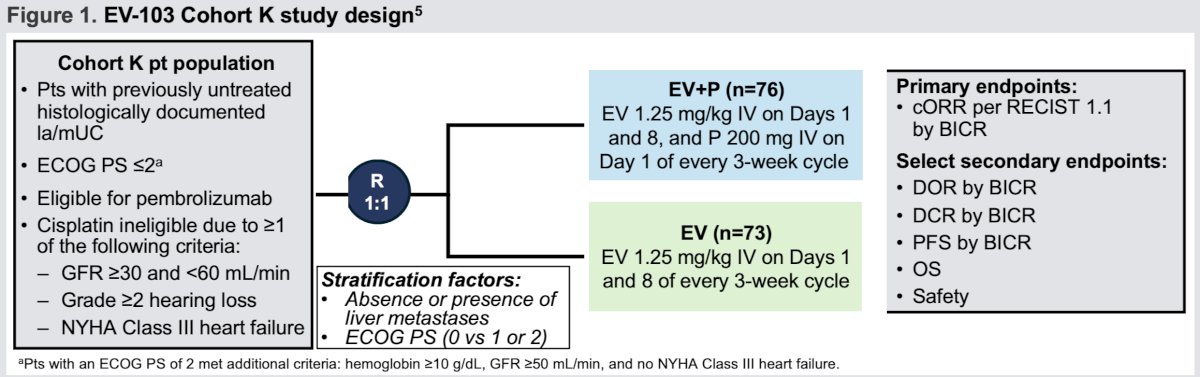
The study design of EV-103 Cohort K is illustrated below. Cohort K included cisplatin-ineligible patients with previously untreated locally advanced or metastatic urothelial carcinoma who underwent 1:1 randomization to:
- EV + P (n=76)
- EV (n=73)
The primary endpoint was confirmed ORR. Select secondary endpoints were:
- Duration of response
- Duration of complete response
- Progression-free survival
- Overall survival
- Safety
The study cohort included 149 patients (EV+P, n=76; P, n=73). The baseline demographics and disease characteristics were representative of a patient population with cisplatin-ineligible, locally advanced/metastatic urothelial carcinoma. Most patients had prognostically unfavorable disease characteristics at baseline, with 84% in the EV+P arm and 82% in the EV arm having visceral disease.
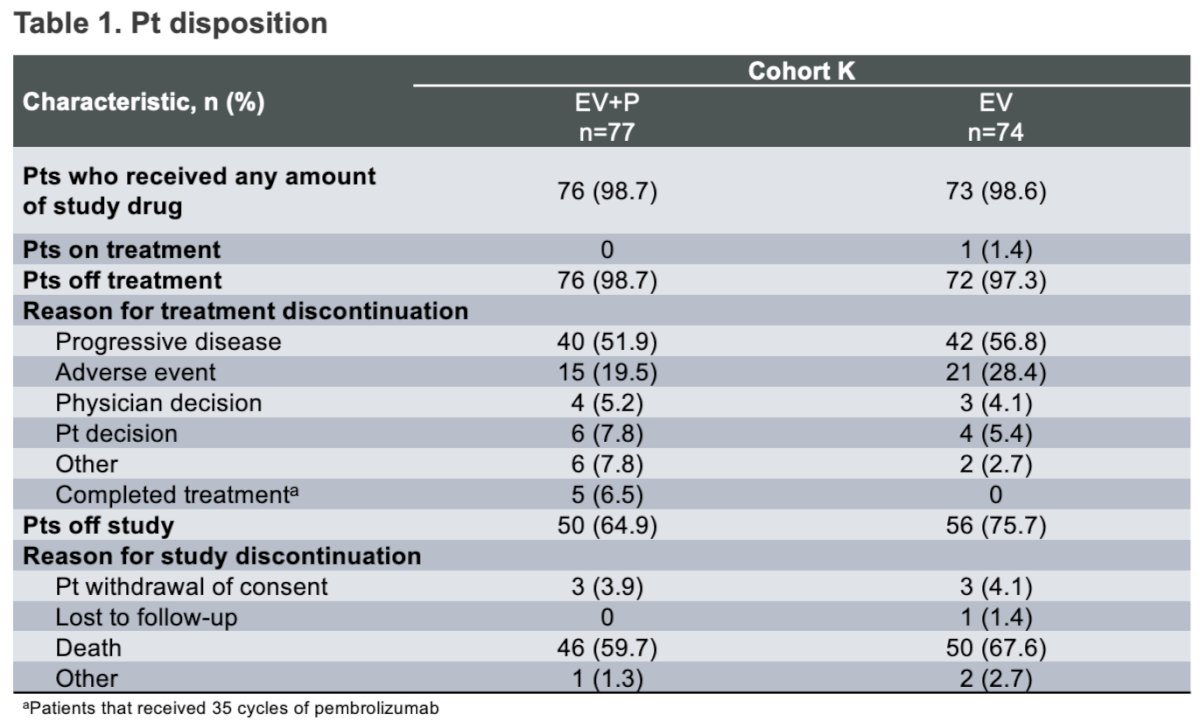
The data cutoff date for this analysis was November 20, 2024. The median follow-up duration was 43.7–44.8 months. The median treatment duration (range) was 9.7 (0.6–45.9) months for EV+P and 5.5 (0.5–44.4) months for EV. Patients in the EV+P arm received a median of 12 treatment cycles, while those in the EV arm received a median of 8 cycles. At the time of data cutoff, all patients in the EV+P arm and 72 patients in the EV arm were off study treatment.
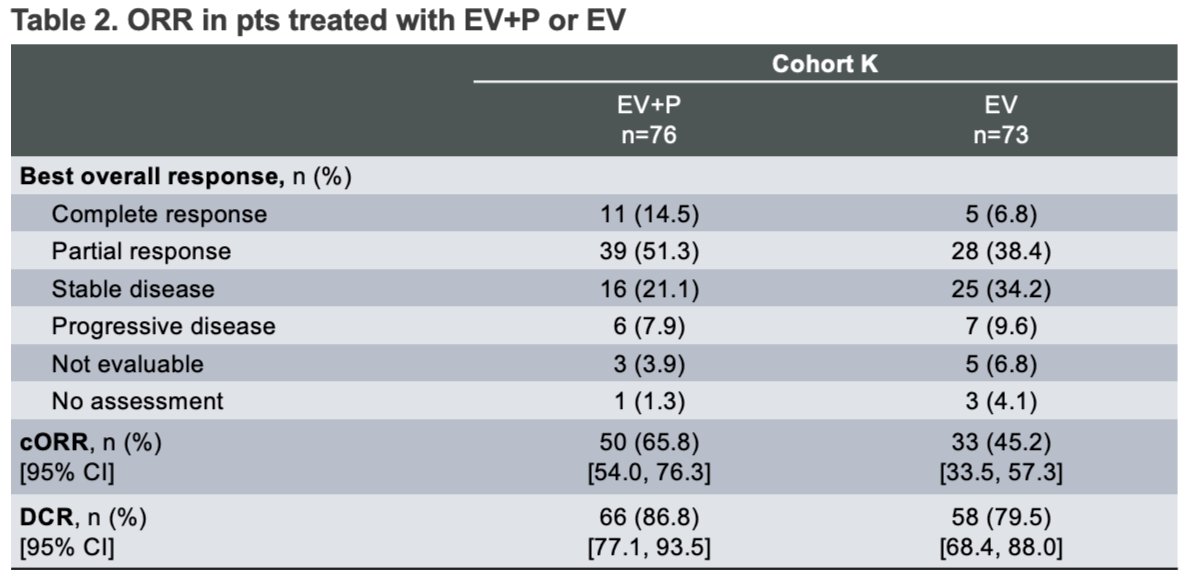
The confirmed ORR by BICR was 66% for EV+P and 45% for EV (Table 2).
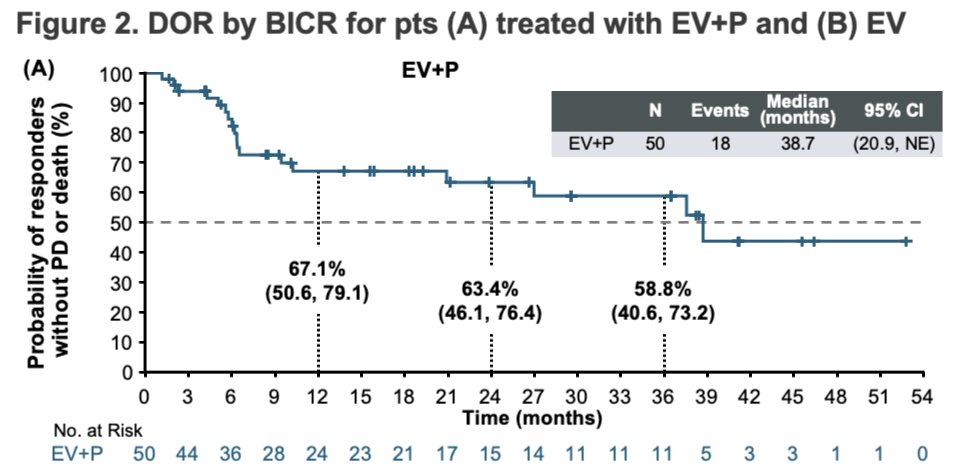
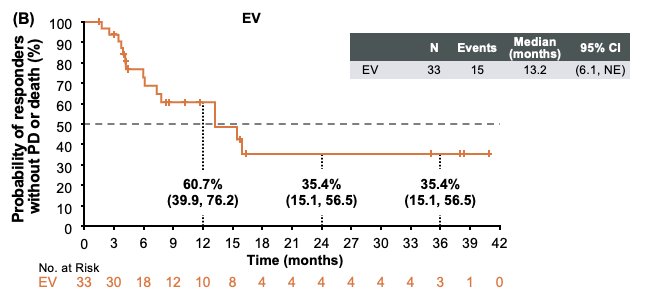
The median DOR was 38.7 months in the EV+P arm and 13.2 months in the EV arm.
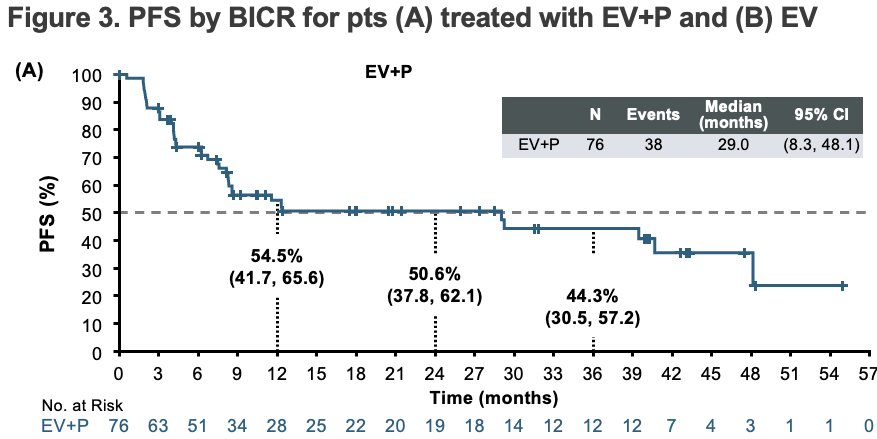
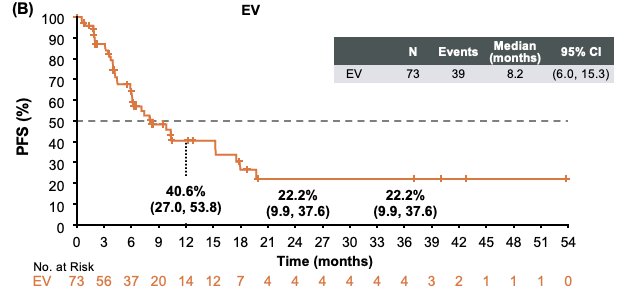
The median PFS was 29 months for EV+P and 8.2 months for EV.
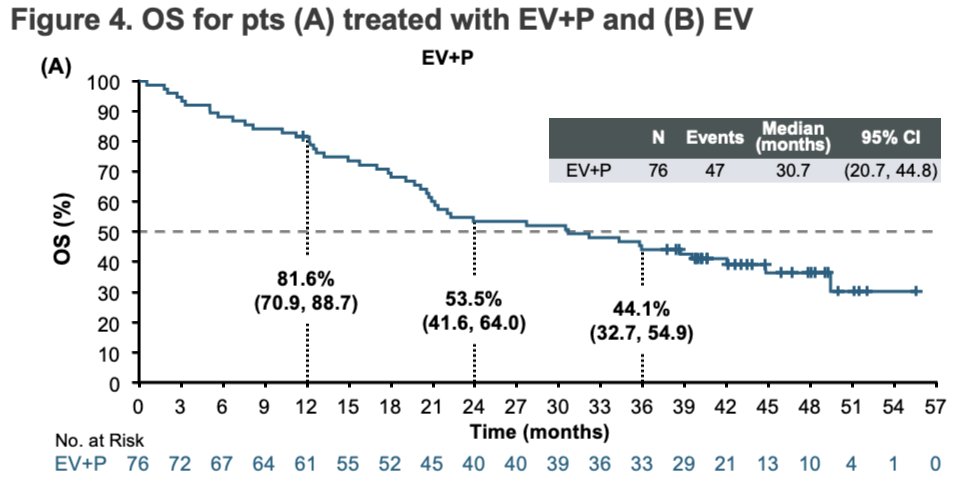
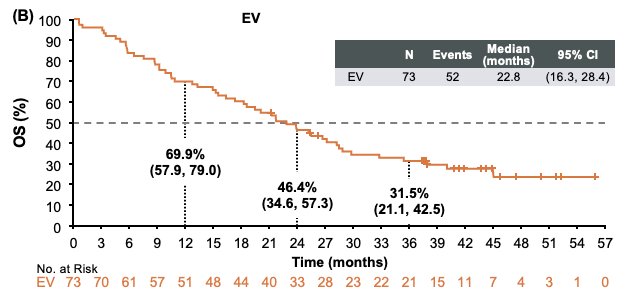
The median OS was 30.7 months for EV+P and 22.8 months for EV.
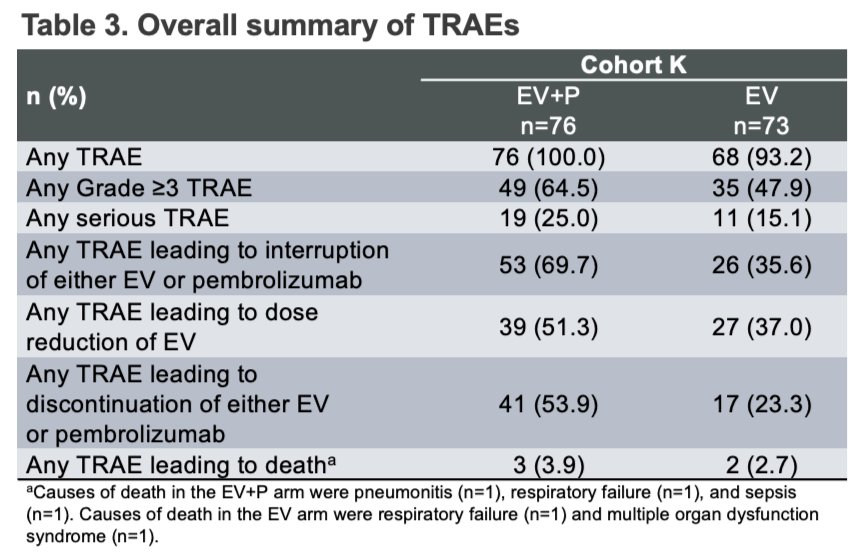
An overall summary of treatment-related adverse events (TRAEs) is shown in Table 3:
The most common Grade ≥3 TRAEs for EV+P were maculopapular rash (17%), fatigue (9%), and neutropenia (9%). The most common for EV were hyperglycemia (9.6%), fatigue (8%), neutropenia (7%), and diarrhea (7%). Treatment-related adverse events of serious interest (AESI) for EV were primarily low grade in the EV+P and EV arms (Table 4):
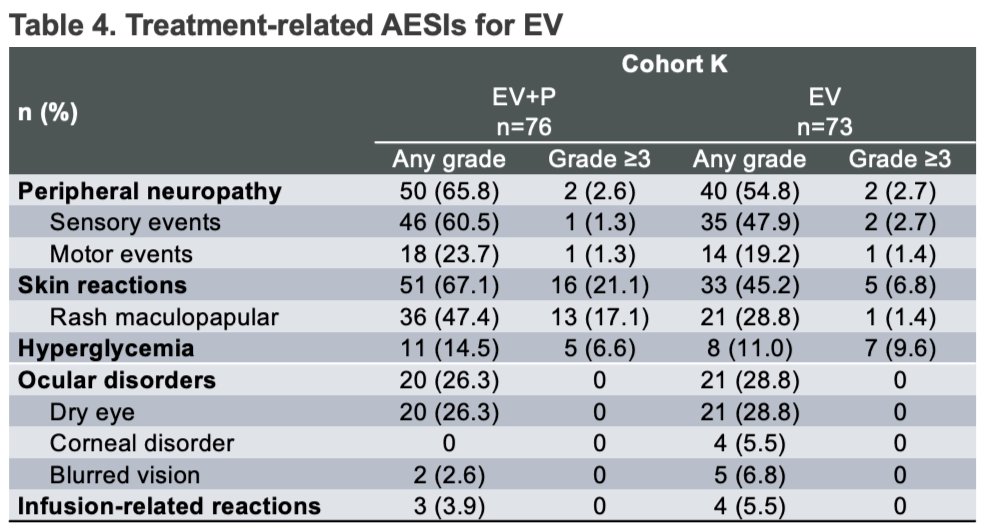
The most common treatment-related AESIs in both the EV+P and EV arm were peripheral neuropathy (66% and 55%, respectively), skin reactions (67% and 45%, respectively), and ocular disorders (26% and 29%, respectively).
Consistent with previous reports, severe skin reactions (any grade: 27.6%), hypothyroidism (any grade: 13%), and pneumonitis (any grade: 10.5%) were the most common treatment‑emergent AESIs for P in the EV+P arm and were primarily low grade in nature.
The majority of the EV treatment-related AESIs improved or resolved in both arms (Table 5).
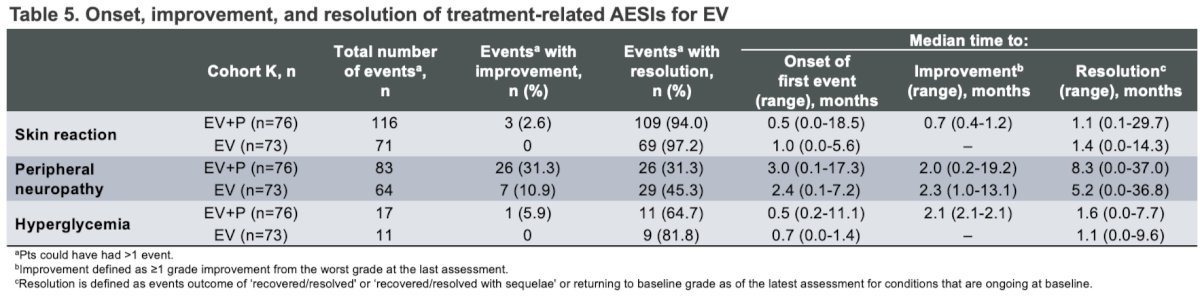
The median time to onset of peripheral neuropathy was 3 months in the EV+P arm and 2.4 months in the EV arm, while median time to resolution was 8.3 months in the EV+P arm and 5.2 months in the EV arm.
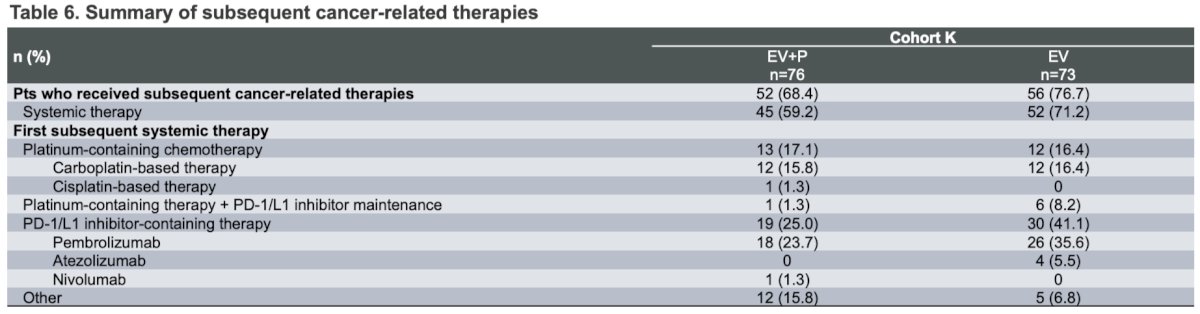
With regards to subsequent cancer-related therapies, 45 patients (59%) in the EV+P arm and 52 (71%) in the EV arm received subsequent systemic therapy (Table 6):
Dr. Friedlander concluded as follows:
- 1st line EV+P continues to demonstrate durable responses, survival benefits, and a manageable safety profile in cisplatin-ineligible patients with locally advanced or metastatic urothelial carcinoma.
- With longer follow-up, the safety profile was consistent with previous reports, and most of the EV adverse events of significant interest improved or resolved
- These long-term results are consistent with those reported from the pivotal EV-302 trial and add to data supporting 1st line treatment with EV+P in patients with locally advanced or metastatic urothelial carcinoma
Presented by: Terence Friedlander, MD, Division of Hematology/Oncology, Department of Medicine, University of California, San Francisco, CA, USA
Written by: Rashid K. Sayyid, MD, MSc, Assistant Professor, Urologic Oncologist, Department of Urology at The University of Arizona and Banner University Medical Center – Tucson, AZ, @rksayyid on X during the 2025 European Society for Medical Oncology (ESMO) Annual Congress, Berlin, Germany, October 17–21, 2025
References:
- Astellas Pharma Inc. European Commission approves Astellas PADCEV (enfortumab vedotin) in combination with KEYTRUDA (pembrolizumab) for first-line treatment of advanced urothelial cancer. Accessed July 2025. https://newsroom.astellas.us/2024-08-27-European-Commission-Approves-Astellas-PADCEV-TM-enfortumab-vedotin-in-Combination-with-KEYTRUDA-R-pembrolizumab-for-First-Line-Treatment-of-Advanced-Urothelial-Cancer
- Powles T, Loriot Y, Gupta S, et al. Enfortumab vedotin plus pembrolizumab in locally advanced or metastatic urothelial carcinoma: updated analysis from EV-302. Ann Oncol. 2024;35:485–490.
- O’Donnell PH, Balar AV, Vuky J, et al. Enfortumab vedotin plus pembrolizumab in previously untreated locally advanced or metastatic urothelial carcinoma: cohort K results. J Clin Oncol. 2023;41:4107–4117.
- US Food and Drug Administration. FDA grants accelerated approval to enfortumab vedotin-ejfv with pembrolizumab for locally advanced or metastatic urothelial carcinoma. Accessed July 2025. https://www.fda.gov/drugs/resources-information-approved-drugs/fda-grants-accelerated-approval-enfortumab-vedotin-ejfv-pembrolizumab-locally-advanced-or-metastatic
- Powles T, Sridhar SS, Grivas P, et al. Enfortumab vedotin plus pembrolizumab in previously untreated advanced urothelial carcinoma. N Engl J Med. 2024;390:875–888.
- Pfizer Canada. PADCEV (enfortumab vedotin) in combination with pembrolizumab approved by Health Canada to treat advanced bladder cancer. Accessed July 2025. https://www.pfizer.ca/en/media-centre/padcev-enfortumab-vedotin-in-combination-with-pembrolizumab-approved-by-health-canada-to-treat-advanced-bladder-cancer
- Astellas Pharma Inc. Japan’s Ministry of Health, Labour and Welfare approves PADCEV (enfortumab vedotin) with KEYTRUDA (pembrolizumab) for first-line treatment of radically unresectable urothelial carcinoma. Accessed July 2025. https://newsroom.astellas.us/2024-09-24-Japans-Ministry-of-Health,-Labour-and-Welfare-Approves-PADCEV-TM-enfortumab-vedotin-with-KEYTRUDA-R-pembrolizumab-for-First-Line-Treatment-of-Radically-Unresectable-Urothelial-Carcinoma
- Powles T, Grivas P, Sridhar SS, et al. Enfortumab vedotin plus pembrolizumab for advanced urothelial carcinoma: final overall survival results from EV-302. Ann Oncol. 2025;36(10):1212–1219.
- Rosenberg J, Powles T, Grivas P, et al. Enfortumab vedotin plus pembrolizumab for advanced urothelial carcinoma: results from EV-302. Poster presented at: 2024 ESMO Annual Meeting; September 13–17, 2024; Barcelona, Spain.