

(UroToday.com) The 2025 ESMO annual meeting featured a urothelial carcinoma mini oral session and a presentation by Dr. Alexandra Drakaki discussing dose optimization in FORAGER-1, a phase 1 study of LY3866288, a potent, highly isoform-selective FGFR3 inhibitor in FGFR3-altered advanced solid tumors. Activating FGFR3 genetic alterations occur in 15–20% of metastatic urothelial cancers and <5% of other solid tumors. Erdafitinib, an approved pan FGFR inhibitor has equal potency for FGFR1–4 and is associated with toxicity driven by off-target non-FGFR3 inhibition.
Additionally, vepugratinib is an oral, highly potent, and isoform-selective small molecule FGFR3 inhibitor designed to limit off-target toxicities. The initial results from the FORAGER-1 study showed a favorable safety profile and promising antitumor activity in patients with previously treated FGFR3-altered metastatic urothelial cancer. FGFR3 inhibition in FGFR3-altered urothelial carcinoma cell lines has been shown to induce nectin-4 expression, and vepugratinib added to enfortumab vedotin ± pembrolizumab led to robust antitumor activity in FGFR3-altered metastatic urothelial cancer tumor-bearing models.
Adults with advanced or metastatic solid tumors with an FGFR3 alteration (tumor or blood) were eligible in dose escalation. Dose optimization randomized FGFR3-altered metastatic urothelial cancer into 3 DLs (200, 300, and 400 mg BID), stratified by prior FGFR inhibitor treatment. Data presented were pooled results from dose escalation + dose optimization patients: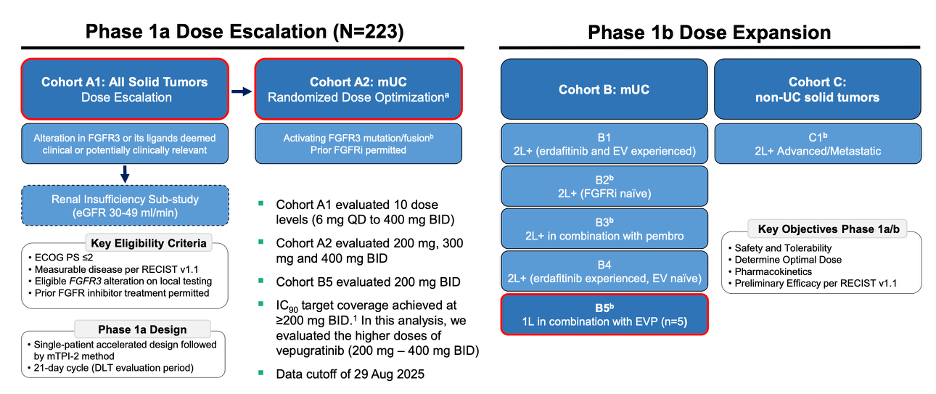
As of August 29, 2025, 223 patients were treated with monotherapy Vepugratinib (LY3866288) (6 mg QD–400 mg BID), and 138 la/mUC patients received ≥200 mg BID. For patients treated with vepugratinib monotherapy at 200mg BID the median age was 67, the majority of patients had an ECOG performance status of 1, and the median number of prior lines of therapy was 2 (range, 1-7). Within the safety cohort of patients (all tumors) that received ≥200 mg BID, the most common (≥15%) treatment-emergent adverse event was diarrhea, predominantly grade 1. High-grade TEAEs typical of pan-FGFR inhibitors (eg. Hyperphosphatemia, Nail/skin disorders, and ocular toxicities) were uncommon. In 59 patients treated at 200 mg BID, the most common treatment-emergent adverse events were diarrhea (59%), AST/ALT (22%/27%,) and fatigue (34%), mostly grade 1 and 2. Hyperphosphatemia (19%) was transient and predominantly grade 1. Few TE adverse events led to a dose reduction (14%) or discontinuation (3%)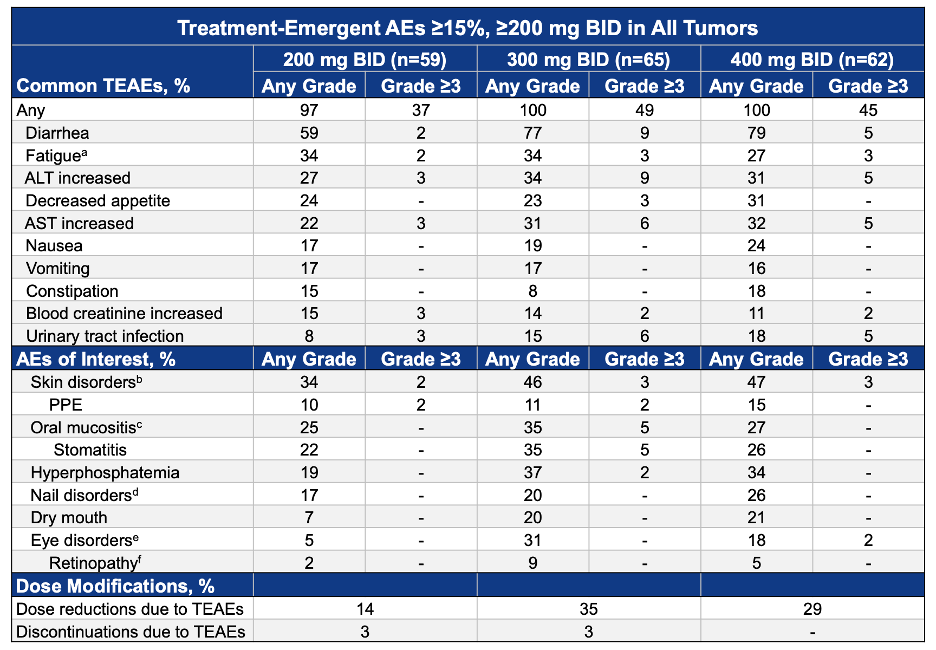
The 200 mg BID dose was optimal in terms of efficacy and tolerability in a heavily pre-treated metastatic urothelial carcinoma population. The objective response rate was 34%, and at a median follow-up of 8 months in responding patients, 61% (20/33) of responses across dose levels remain on treatment: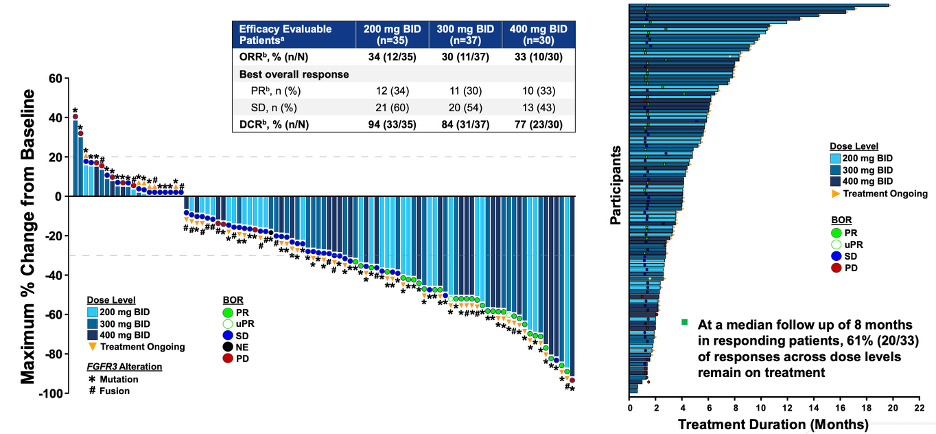
Dr. Drakaki concluded her presentation discussing FORAGER-1 with the following take-home points:
- LY3866288 at 200 mg BID was well-tolerated and demonstrated promising antitumor activity in FGFR inhibitor pretreated and naive patients with FGFR3-altered metastatic urothelial cancer
- FORAGER-2 is a global, registrational study investigating vepugratinib in combination with enfortumab vedotin and pembrolizumab in first-line metastatic urothelial carcinoma
Written by: Zachary Klaassen, MD, MSc – Urologic Oncologist, Associate Professor of Urology, Georgia Cancer Center, Wellstar MCG Health, @zklaassen_md on Twitter during the 2025 European Society of Medical Oncology (ESMO) Annual Meeting, Berlin, Germany, Fri, Oct 17 – Tues, Oct 21, 2025.