

(UroToday.com) The 2023 ESMO annual meeting included a session on prostate cancer, featuring a presentation by Dr. Niven Mehra discussing the efficacy of olaparib + abiraterone vs placebo + abiraterone in the non-BRCA mutation subgroup of patients with metastatic castration-resistant prostate cancer (mCRPC) in the PROpel trial. PROpel met its primary endpoint with a significant investigator-assessed radiographic progression-free survival (rPFS) benefit with olaparib + abiraterone vs placebo + abiraterone in the intention-to-treat population in first-line mCRPC (HR 0.66, 95% CI 0.54–0.81).1 At the final pre-specified analysis, there was a trend to improved overall survival (OS) with olaparib + abiraterone vs placebo + abiraterone (median 42.1 vs 34.7 months; HR 0.81, 95% CI 0.67–1.00; p = 0.0544):2
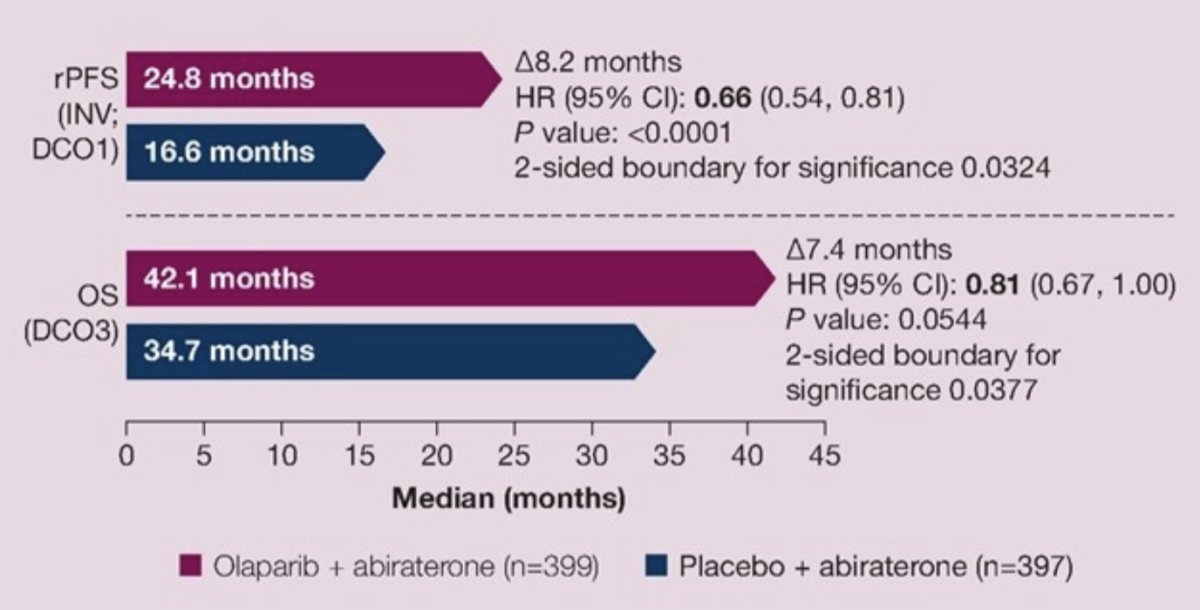
Of note, the greatest magnitude of benefit was seen in the BRCA mutation subgroup. Importantly, post hoc exploratory analyses were conducted to further investigate outcomes in non-BRCA mutation patients.
PROpel was a phase 3 double-blind trial and patients were enrolled irrespective of biomarker status and randomized 1:1 to receive olaparib (300 mg twice daily) or placebo, and abiraterone (1000 mg once daily) + prednisone/prednisolone (5 mg twice daily). Treatment continued until radiographic disease progression, unacceptable toxicity, or withdrawal of consent. Aggregated tumor tissue (FoundationOne®CDx) and ctDNA (FoundationOne®Liquid CDx) test results, performed after randomization and before primary analysis, were used to classify patient mutation status. Non-BRCA mutation patients had no positive BRCA mutation test result and at least one negative BRCA mutation tissue or ctDNA result. The trial design for PROpel is as follows:

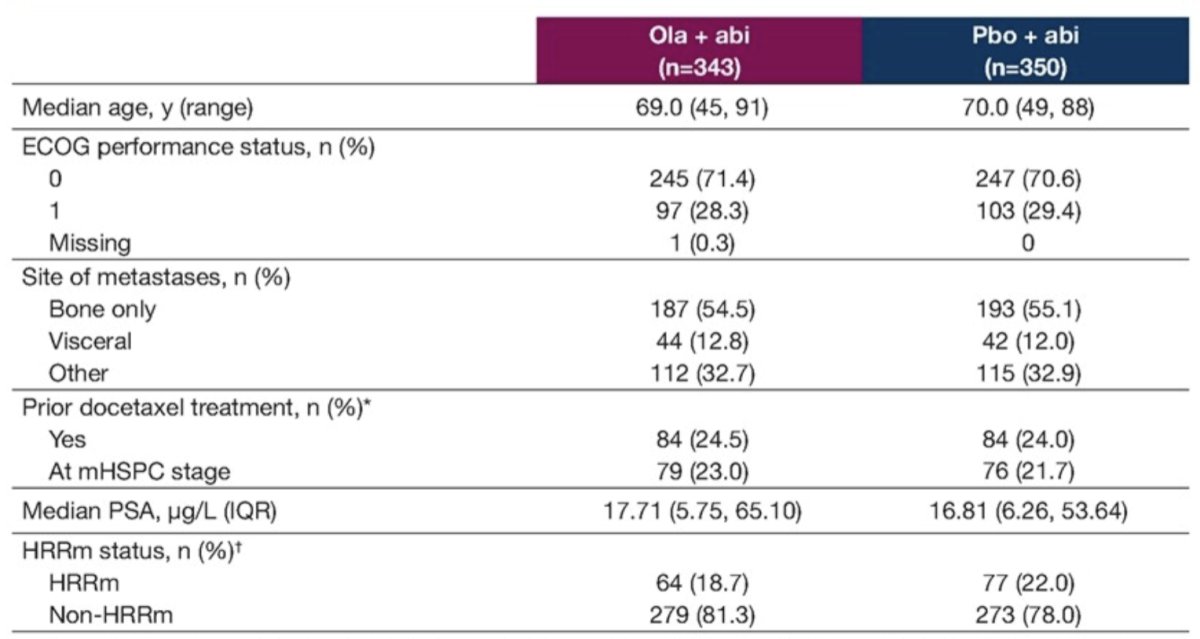
Of the 796 patients in the trial, 693 (87.1%) were classified as non-BRCA mutation:
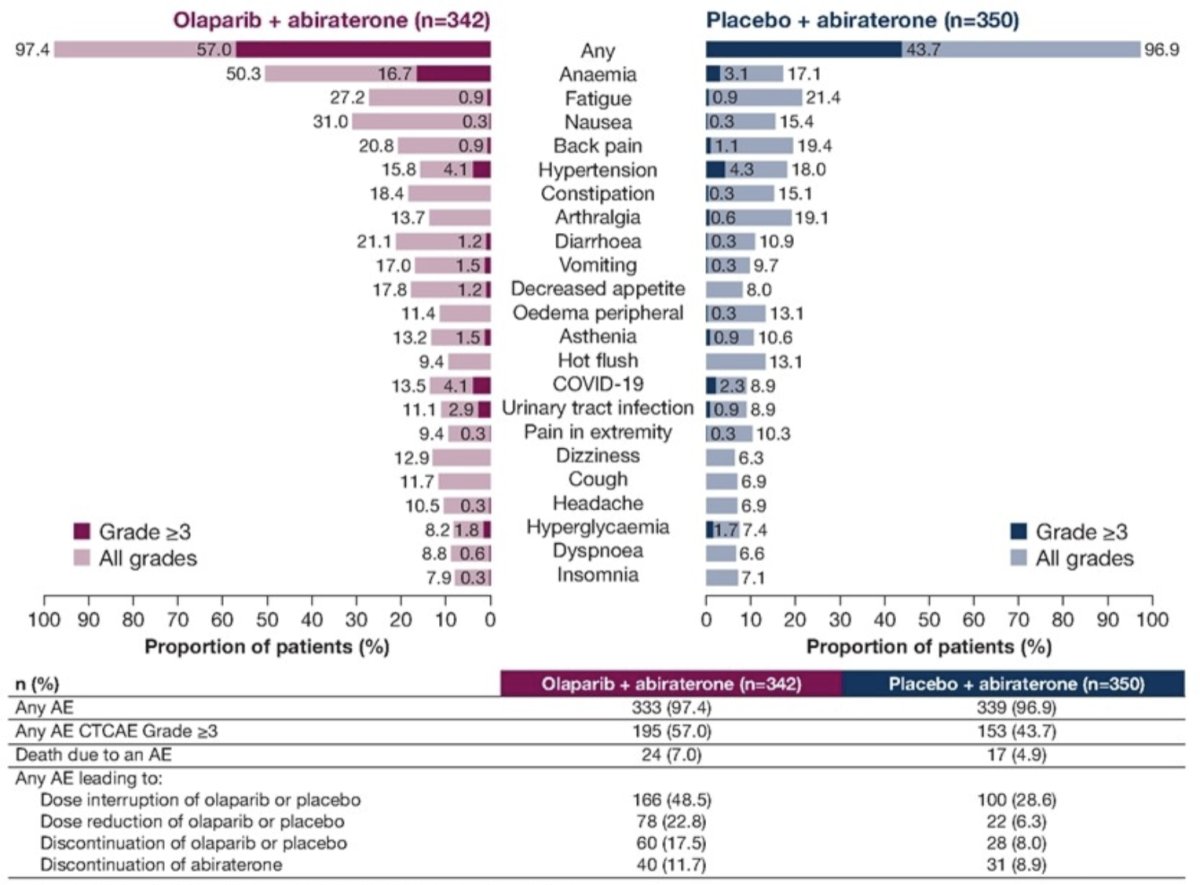
The following table highlights the most common adverse events (frequency of >= 7.5%) and safety profile for the non-BRCA mutant population, which was consistent with the intention to treat the population and those of the individual treatments:
As follows are the rPFS, OS, and additional secondary endpoints in the non-BRCA mutation population, which demonstrated a clinically meaningful benefit for olaparib + abiraterone versus placebo + abiraterone. Specifically, there was a benefit for olaparib + abiraterone for rPFS, but not for OS:
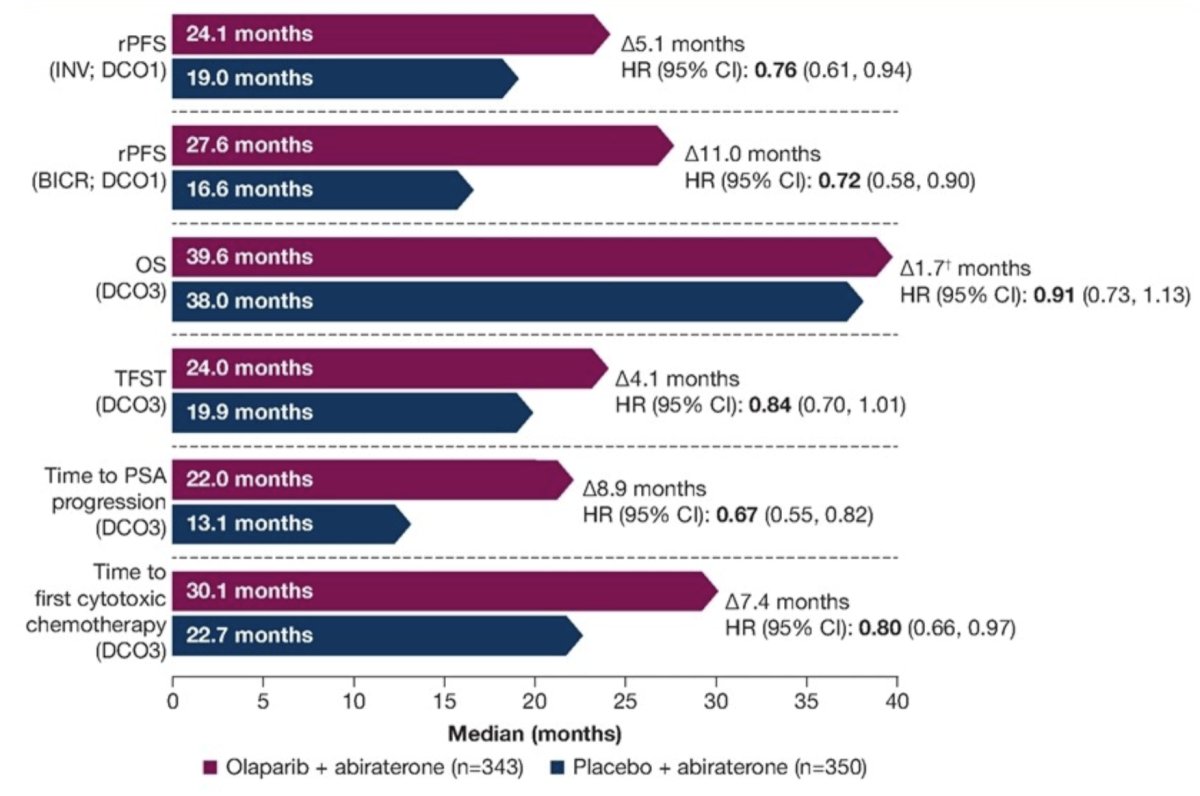
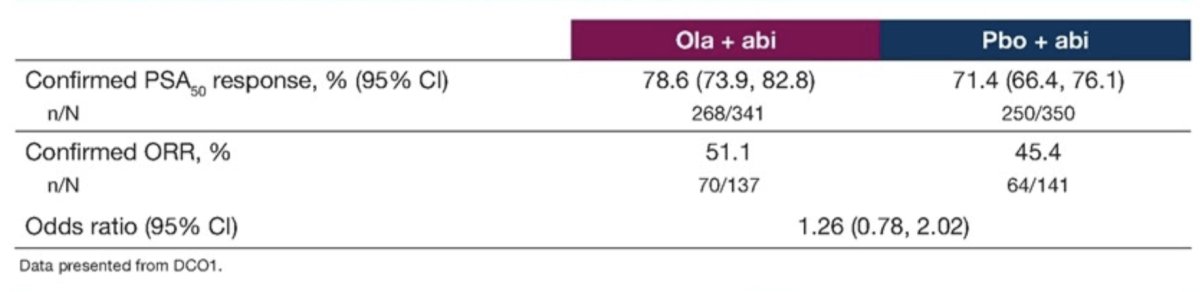
The median time to second progression or death (PFS2) was not reached in the olaparib + abiraterone or the placebo + abiraterone arms (HR 0.86, 95% CI 0.65-1.14). These medians were not reached because of censoring of patients, following no evaluable PFS2 assessment or two consecutive missed visits. There was no difference in confirmed PSA50 response or ORR:
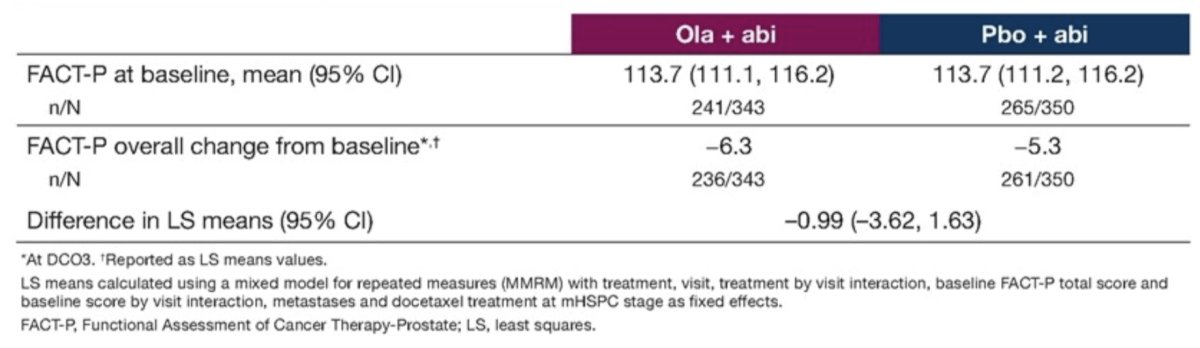
At baseline, patients in both treatment arms were considered to be in good health (FACT score >= 76) and there was no significant difference in both treatment arms when FACT-P total score overall change from baseline was assessed:
Dr. Mehra concluded his presentation by discussing the efficacy of olaparib + abiraterone vs placebo + abiraterone in the non-BRCA mutation subgroup of patients with mCRPC in the PROpel trial with the following concluding statements:
- Although not statistically significant, median OS was 42.1 months with olaparib + abiraterone, representing a 7.4 month improvement compared with placebo + abiraterone in the intention to treat population
- In the non-BRCA mutation subpopulation of PROpel, first line treatment with olaparib + abiraterone resulted in numerically improved rPFS and OS for patients with mCRPC
- These results collectively support olaparib + abiraterone as an important new treatment option for consideration in non-BRCA mutant patients
Presented by: Niven Mehra, MD, PhD, Radboud University Medical Centre, Nijmegen, Netherlands
Written by: Zachary Klaassen, MD, MSc – Urologic Oncologist, Associate Professor of Urology, Georgia Cancer Center, Wellstar MCG Health, @zklaassen_md on Twitter during the 2023 European Society of Medical Oncology (ESMO) Annual Meeting, Madrid, Spain, Fri, Oct 20 – Tues, Oct 24, 2023.
References:
- Clarke N, Armstrong AJ, Thiery-Vuillemin A, et al. Abiraterone and olaparib for metastatic castration-resistant prostate cancer. NEJM Evidence 2022.EVIDoa2200043.
- Saad F, Clarke NW, Oya M, et al. Olaparib plus abiraterone versus placebo plus abiraterone in metastatic castration-resistant prostate cancer (PROpel): final prespecified overall survival results of a randomized, double-blind, phase 3 trial. Lancet Oncol. 2023 Oct;24(10):1094-1108.