

A Paradigm Shift in ERAS Implementation
Dr. Jill Hamilton-Reeves' presentation represents a pivotal moment in perioperative nutrition science. Moving beyond theoretical frameworks, her research demonstrates how evidence-based nutritional interventions can measurably transform surgical outcomes through systematic implementation and rigorous scientific validation.
The Four Pillars of Nutritional Optimization
She reinforced four critical nutritional strategies that form the foundation of effective ERAS protocols: comprehensive screening and assessment, medical nutrition therapy, oral nutrition support with immunonutrition, and carbohydrate loading. These interventions collectively reduce complications, infections, and length of stay—outcomes that directly impact both patient welfare and healthcare economics.
Groundbreaking Carbohydrate Loading Research
The centerpiece of Dr. Hamilton-Reeves' work is the CIPS study (NCT06057532), a meticulously designed randomized controlled trial examining carbohydrate formulations in major urologic surgeries. The research compared UCAN® complex carbohydrates against traditional Gatorade® formulations, revealing compelling evidence for metabolic superiority of complex carbohydrates.
The findings are striking: while all groups experienced expected intraoperative hyperglycemia, UCAN® demonstrated superior metabolic stability with the smallest glucose increase (+53.6 mg/dl versus +75.6 mg/dl for standard Gatorade® and +94.8 mg/dl for high-dose formulations). More importantly, continuous glucose monitoring data revealed lower glucose variability and more stable insulin and C-peptide responses with complex carbohydrates—suggesting better metabolic resilience during surgical stress.
Addressing the Cachexia Challenge
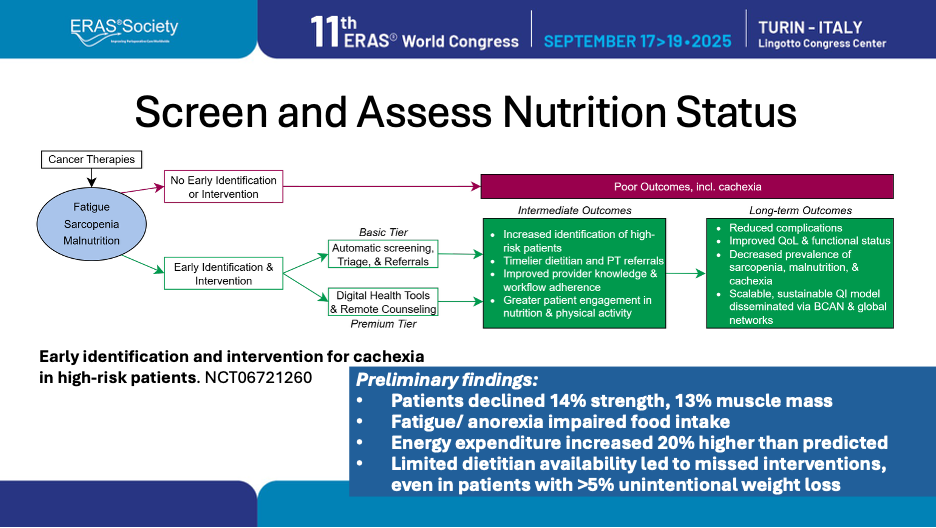
Perhaps most clinically relevant is the research addressing early identification and intervention for cachexia in high-risk patients. The preliminary findings paint a sobering picture: patients declined 14% in strength and 13% in muscle mass, while energy expenditure increased 20% above predicted levels. This data underscores the critical importance of proactive nutritional intervention, particularly given that limited dietitian availability led to missed interventions even in patients with significant unintentional weight loss.
Innovation in Care Delivery
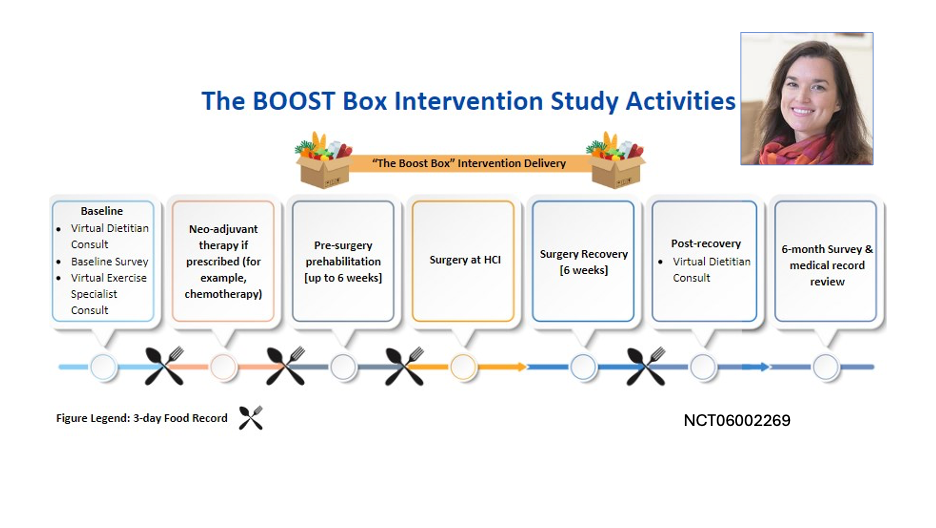
Successful implementation of comprehensive prehabilitation programs, demonstrating the feasibility of EMR-integrated screening tools, escalation alerts, and structured care pathways. The "BOOST Box" intervention study exemplifies innovative approaches to virtual dietitian consultations throughout the perioperative journey, addressing scalability challenges in nutritional care delivery.
Clinical Implications and Future Directions
This research provides the evidence base needed to move nutritional optimization from supportive care to essential intervention. The work aligns with 2023 Anesthesiology Guidelines recommending carbohydrate-containing clear liquids ≥2 hours prior to surgery, moving away from traditional extended fasting that increases nausea, hunger, and stress responses.
Dr. Hamilton-Reeves concluded with three strategic imperatives: leverage innovation and experimentation, collaborate across disciplines, recognizing that no single specialty can optimize perioperative nutrition alone, and systematically identify and address practice gaps and limitations.
The Bottom Line
The central message resonates with profound clinical truth: "Nutrition is not an afterthought—it is a lifeline." This research transforms our understanding of perioperative nutrition from a supportive measure to a critical intervention that measurably improves surgical outcomes. For healthcare systems serious about enhanced recovery, these findings provide both the scientific foundation and practical roadmap for implementing evidence-based nutritional strategies that deliver measurable impact on patient outcomes.
The work represents a maturation of ERAS principles, moving from identifying what should be done to demonstrating how it can be done effectively, safely, and at scale.
Presented by: Jill Hamilton-Reeves, PhD, RD, CSO, University of Kansas, Lawrence, Kansas
Written by: Stephen B. Williams, MD, MBA, MS, FACS, FACHE @SWilliams_MD on Twitter during the 11th Enhanced Recovery After Surgery (ERAS®) World Congress, September 17-19, 2025, Turin, Italy