

(UroToday.com) The 2026 European Association of Urology (EAU) annual meeting featured an advancements in metastatic castration resistant prostate cancer (mCRPC) therapy session and a presentation by Dr. Giulio Francolini discussing long-term overall survival from the randomized phase II ARTO trial assessing the benefit of stereotactic body radiotherapy addition to abiraterone in oligometastatic castrate resistant prostate cancer (CRPC) patients. ARTO is a multicenter, randomized phase II study evaluating the impact of adding stereotactic body radiation therapy to abiraterone acetate and ADT in first line treatment of oligometastatic CRPC. Previous analyses demonstrated a significant advantage for the experimental arm in terms of biochemical progression free survival and radiological progression free survival after a median follow-up of 24.9 months.1 At EAU 2026, Dr. Fancolini and colleagues presented updated long-term data, including overall survival and prostate cancer specific survival.
In ARTO, patients with oligometastatic CRPC (≤3 non-visceral metastatic lesions) were randomized 1:1 to receive either abiraterone acetate + ADT alone (control arm) or the same systemic regimen combined with stereotactic body radiation therapy (experimental arm). Cox regression models were applied to compare biochemical progression free survival, radiological progression free survival, overall survival, and prostate cancer specific survival between treatment groups.
A total of 157 patients were enrolled in the ARTO trial. After a median follow-up of 53 months (IQR 43–60), 103 biochemical progression free survival events were observed (41 versus 62 in the experimental and control arms, respectively), 100 radiological progression free survival events occurred (40 versus 60, respectively), and 65 deaths were recorded (24 versus 41, respectively). The experimental arm confirmed a significant improvement in both biochemical progression free survival (43 versus 17 months, HR 0.49, 95% CI 0.33–0.73, p < 0.001) and radiological progression free survival (44 versus 17 months, HR 0.48, 95% CI 0.32–0.72, p < 0.001). A statistically significant advantage was also observed for overall survival (not reached versus 50 months, HR 0.55, 95% CI 0.33–0.92, p = 0.02):
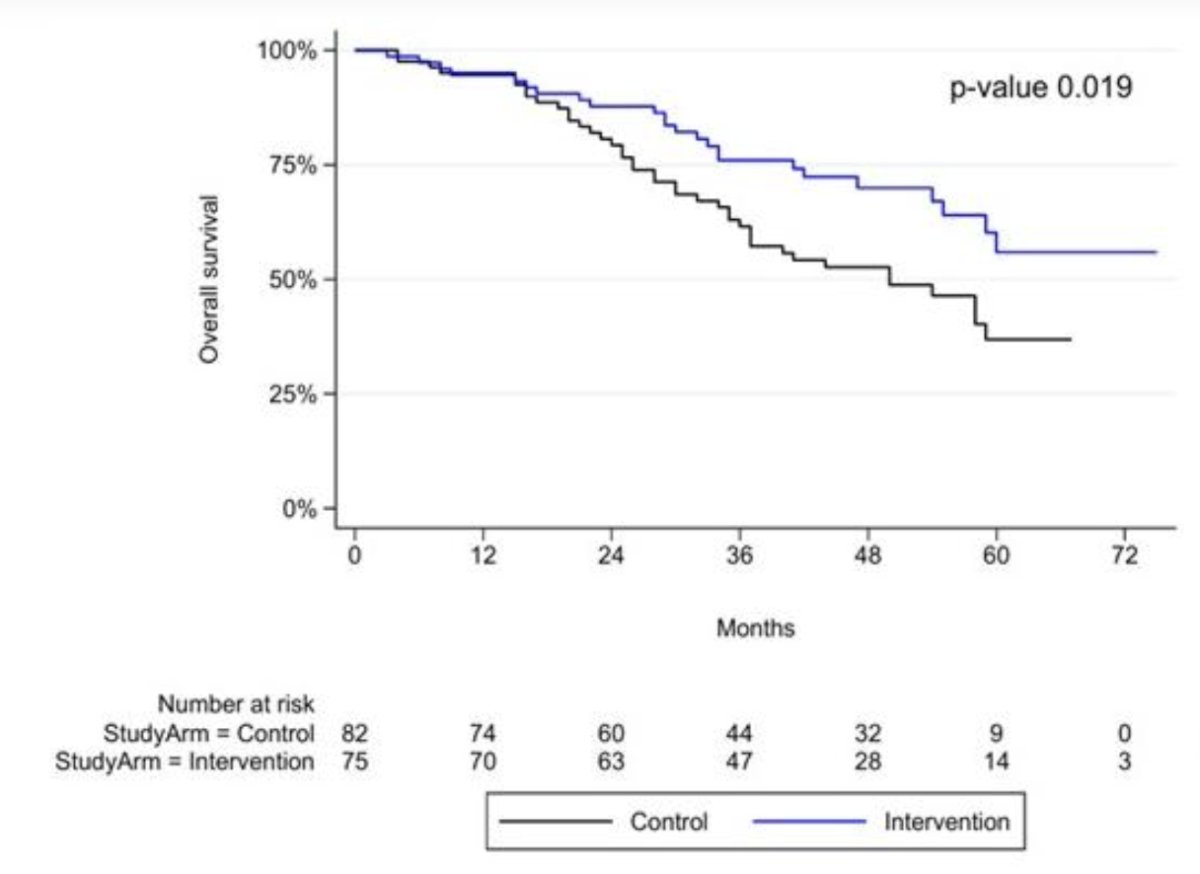
and prostate cancer specific survival (not reached, HR 0.37, 95% CI 0.18–0.78, p = 0.006):
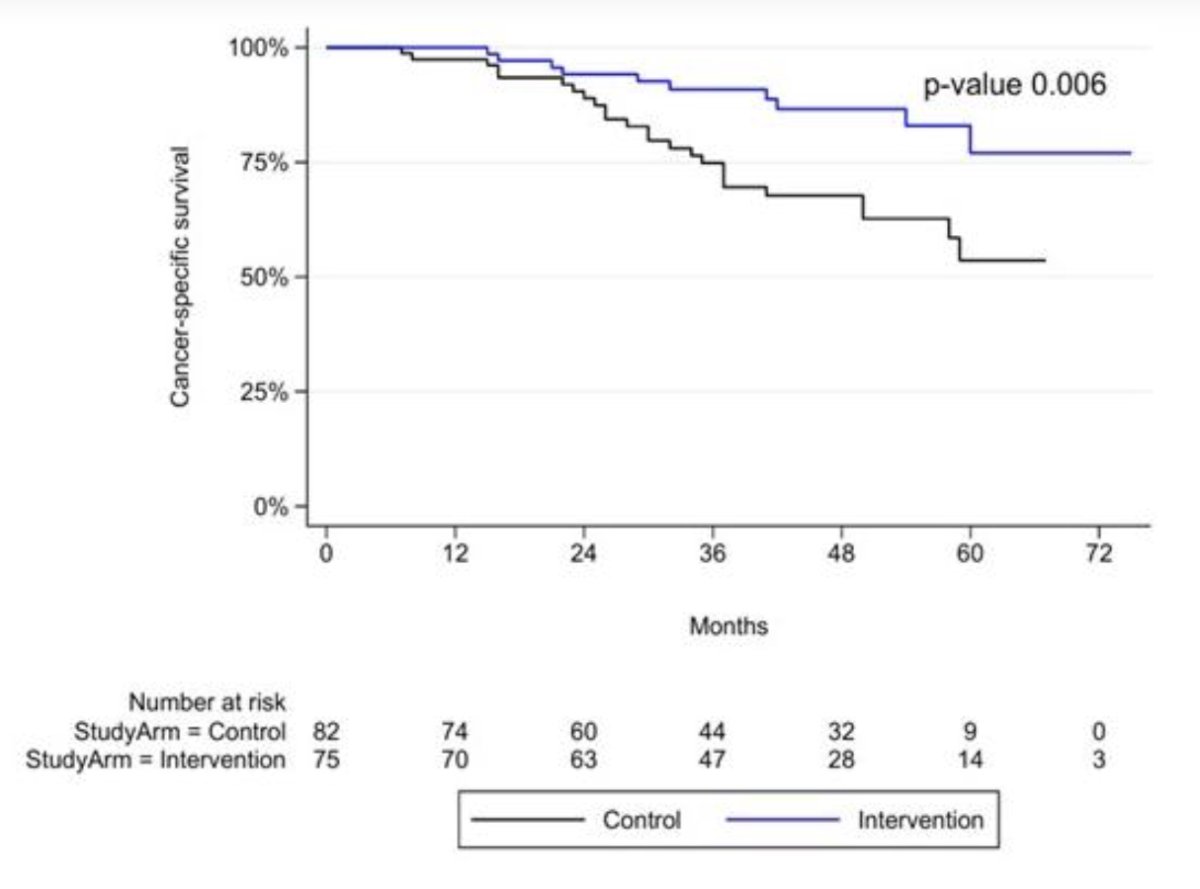
After adjustment for stratification factors (performance status 0 versus 1 and number of lesions 1 versus ≥2), results remained consistent for biochemical progression free survival (HR 0.54, p = 0.003), for radiological progression free survival (HR 0.53, p = 0.003), for overall survival (HR 0.6, p = 0.04), and for prostate cancer specific survival (HR 0.43, p = 0.02). No major safety concerns emerged, with 56 versus 67 adverse events of any grade and 8 versus 13 grade ≥ 2 events in the experimental and control arms, respectively.
Dr. Francolini concluded this presentation discussing long-term overall survival from the randomized phase II ARTO trial with the following take-home points:
- Significant overall survival and prostate cancer specific survival benefit were detected in oligometastatic CRPC patients undergoing concomitant stereotactic body radiotherapy + abiraterone
- These results warrant further confirmation in phase III trials
Presented by: Giulio Francolini, MD, Azienda Ospedaliero Universitaria Careggi, Firenze, Italy
Written by: Zachary Klaassen, MD, MSc – Urologic Oncologist, Associate Professor of Urology, Georgia Cancer Center, Wellstar MCG Health, @zklaassen_md on Twitter during the 2026 European Association of Urology (EAU) Annual Meeting, London, United Kingdom, Fri, Mar 13 – Mon, Mar 16, 2026.
References: