

(UroToday.com) The 2026 European Association of Urology (EAU) annual meeting featured an innovations in muscle invasive bladder cancer management session and a presentation by Dr. Peng Zhang discussing the final results of Hope-3, a multi-center phase Ib/II study of disitamab vedotin combined with tislelizumab as neoadjuvant treatment in patients with HER2-positive locally advanced muscle invasive bladder cancer.
Muscle-invasive bladder cancer remains a major clinical challenge, as standard neoadjuvant chemotherapy offers limited survival benefit and is unsuitable for many cisplatin-ineligible patients, underscoring the need for more effective and less toxic strategies. The phase III RC48-C016 trial demonstrated the promising efficacy of disitamab vedotin combined with immunotherapy in advanced disease,1 supporting further exploration of this platinum-free strategy in earlier settings. As such, this study evaluated the safety and efficacy of disitamab vedotin, a humanized anti-HER2 antibody–drug conjugate, in combination with the PD-1 inhibitor tislelizumab as a novel neoadjuvant regimen for HER2-positive locally advanced muscle-invasive bladder cancer. Preliminary data were reported at ASCO GU 2025, and this report at EAU 2026 represents the final results.
This open-label, single-arm, phase Ib/II multicenter study (ChiECRCT20210564) enrolled patients with HER2-positive (IHC ≥1) locally advanced muscle invasive bladder cancer (cT2–4bN0–3M0–1a). Disitamab vedotin (up to 120 mg) was administered intravenously every 2 weeks and tislelizumab (200 mg) every 3 weeks. Patients without progression proceeded to radical cystectomy or radiotherapy-based bladder-sparing therapy according to clinical assessment and preference:
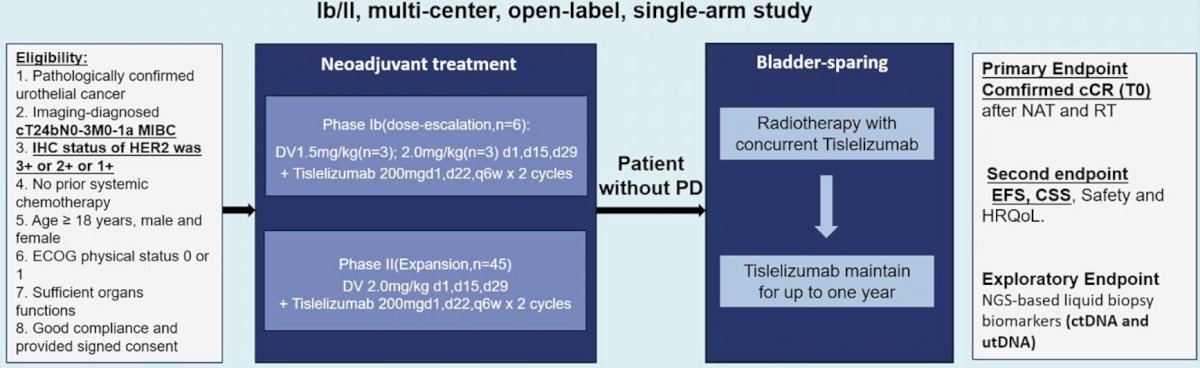
The primary endpoints were clinical complete response, pathological complete response, and safety. Clinical complete response was defined as a negative imaging scan (CT/MRI) and no residual tumor on repeat TURBT (ypT0).
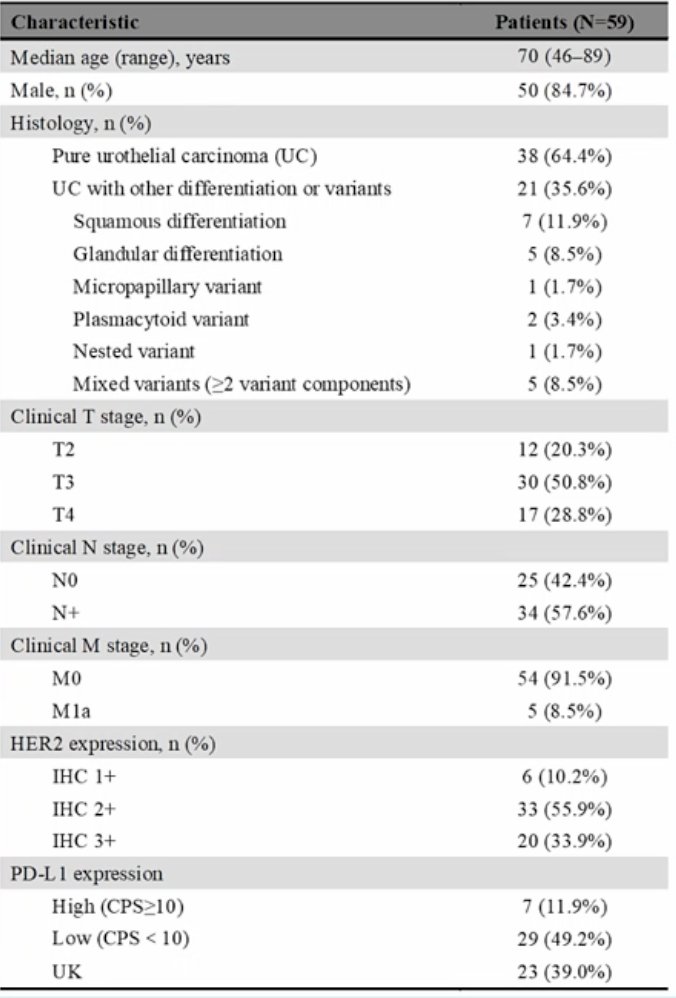
Overall, 59 patients were enrolled, with HER2 expression of 1+ in 10.2%, 2+ in 55.9%, and 3+ in 33.9%:
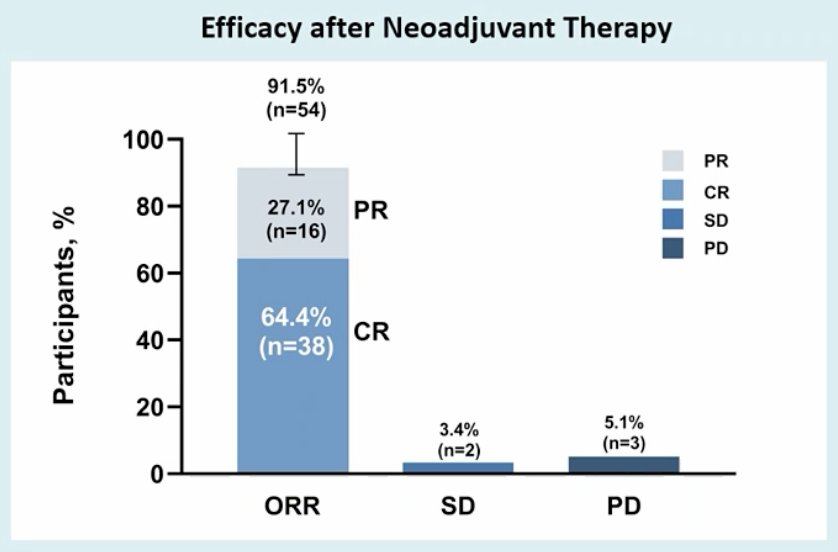
Overall, 38 (64.4%) patients achieved clinical complete response, 16 (27.1%) had partial response, and 2 (3.4%) had stable disease, resulting in an overall response rate of 91.5% and a disease control rate of 94.9% (3 patients experienced progression):
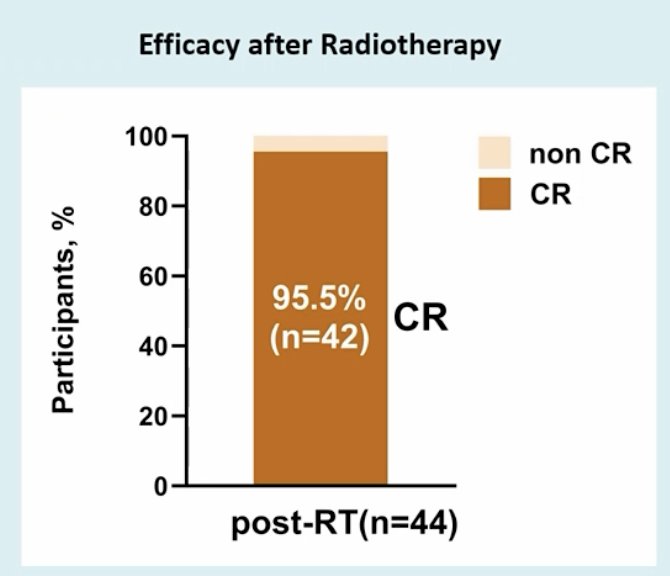
There were 44 patients who received radiotherapy-based bladder-sparing therapy. On evaluation by re-TURBT, 42 (95.5%) achieved clinical complete response, and two developed distant metastases without local tumor:
After the median follow-up of 24.3 months (95% CI 21.8-28.6), 9 post-radiotherapy events were recorded: 4 deaths (2 unrelated to cancer, 2 cancer-related deaths), one high-grade Ta recurrence, and four new distant metastases:
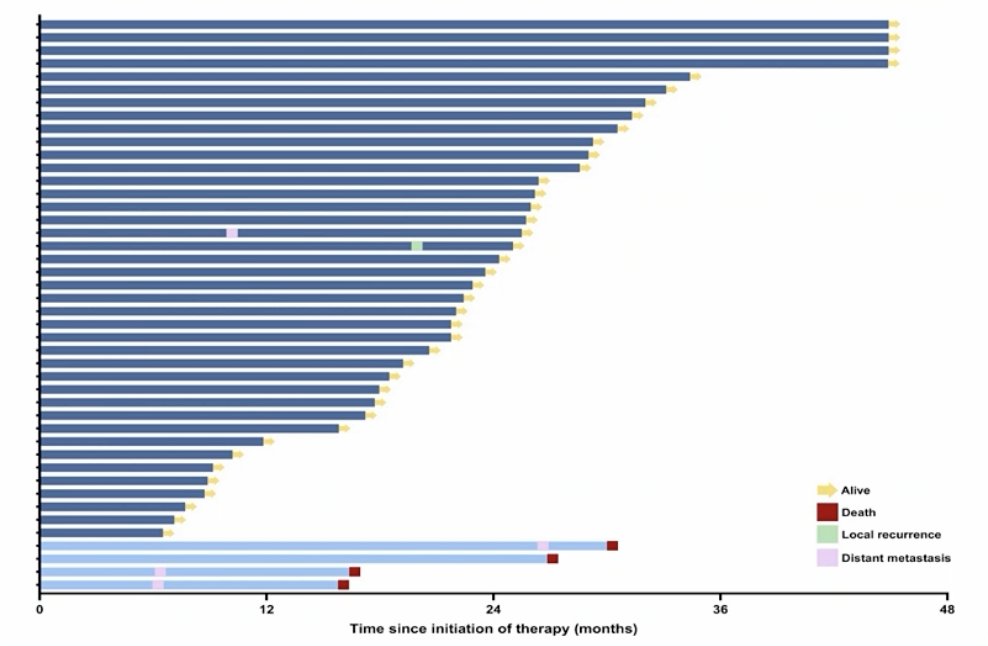
The median event-free survival and cancer-specific survival were not reached, and the 12- and 18-month event-free survival rates were 92.8% and 89.4%, and the corresponding cancer-specific survival rates were 100.0% and 94.3%:
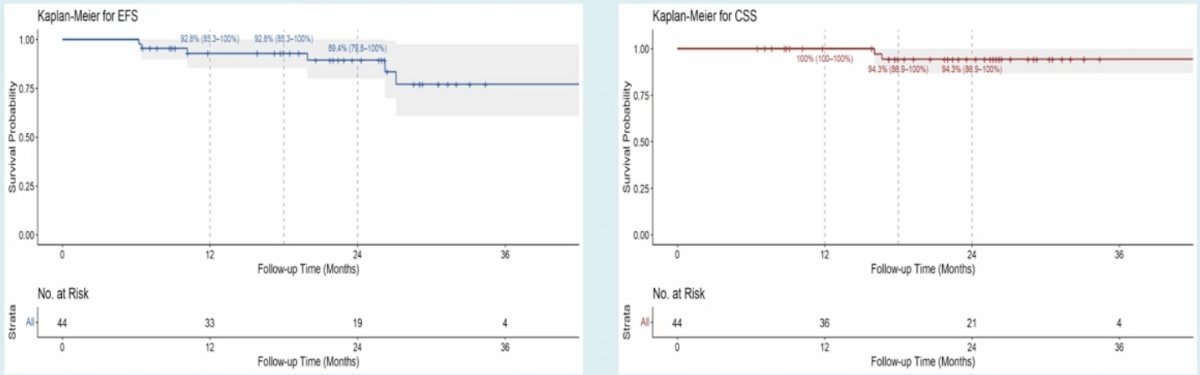
All remaining patients maintained their bladder, resulting in a bladder preservation rate of 100% at last follow-up. Overall, 12.1% had grade 3-4 toxicity, there were no treatment-related deaths, and radiotherapy-related adverse events were observed in 51.1% of patients (all grade 1). The main adverse reactions were rash, numbness in hands and feet, thyroid function changes, and urinary frequency and urgency.
Dr. Zhang concluded his presentation discussing the final results of Hope-3 with the following take-home points:
- Neoadjuvant disitamab vedotin + tislelizumab demonstrated promising efficacy and acceptable toxicity in HER2-expressing muscle-invasive bladder cancer
- There was significant tumor downstaging, providing an option for cisplatin-ineligible patients
- This combined modality approach, integrating neoadjuvant therapy and radiotherapy, represents a novel strategy for muscle-invasive bladder cancer
- This study achieved a durable disease control rate with successful organ preservation and a manageable toxicity profile
- This potentially expands the eligibility for a bladder-sparing paradigm
Presented by: Peng Zhang, West China Hospital of Sichuan University, Chengdu, China
Written by: Zachary Klaassen, MD, MSc – Urologic Oncologist, Associate Professor of Urology, Georgia Cancer Center, Wellstar MCG Health, @zklaassen_md on Twitter during the 2026 European Association of Urology (EAU) Annual Meeting, London, United Kingdom, Fri, Mar 13 – Mon, Mar 16, 2026.
Reference:
- Sheng X, Zeng G, Zhang C, et al. Disitamab Vedotin plus Toripalimab in HER2-Expressing Advanced Urothelial Cancer. N Engl J Med. 2025 Dec 11;393(23):2324-2337.