

(UroToday.com) The 2026 European Association of Urology (EAU) annual meeting featured a cutting-edge strategies in bladder cancer session and a presentation by Dr. Tom Malik discussing a multicenter study examining the real-world potential impact of implementing BladderPath.
Muscle-invasive bladder cancer is potentially lethal, and a delay in definitive muscle invasive bladder cancer is associated with increased risk of death. Results from the BladderPath trial have recently demonstrated a 45-day reduction in time to correct treatment for patients with suspected muscle-invasive bladder cancer undergoing MRI in their diagnostic pathway (p = 0.02) [1]. Importantly, the EAU guidelines suggest a time from diagnosis to radical cystectomy of <3 months. As such, Dr. Malik and colleagues investigated the potential impact of adopting MRI for staging new suspected muscle-invasive bladder cancers in a multicenter observational study of all new suspected bladder cancer referrals in the South West of England.
The investigators conducted a retrospective study of prospectively collected data for all patients referred with suspected bladder cancer on a faster diagnostic pathway at four UK hospitals between January 1, 2025, and April 30, 2025. All of the centers routinely offer straight-to-test MRI prostate for patients with suspected prostate cancer, performing >2,000 MRI prostate scans per year. Data were collected to assess the appearance at flexible cystoscopy in addition to the time from referral to critical time points in the bladder cancer pathway.
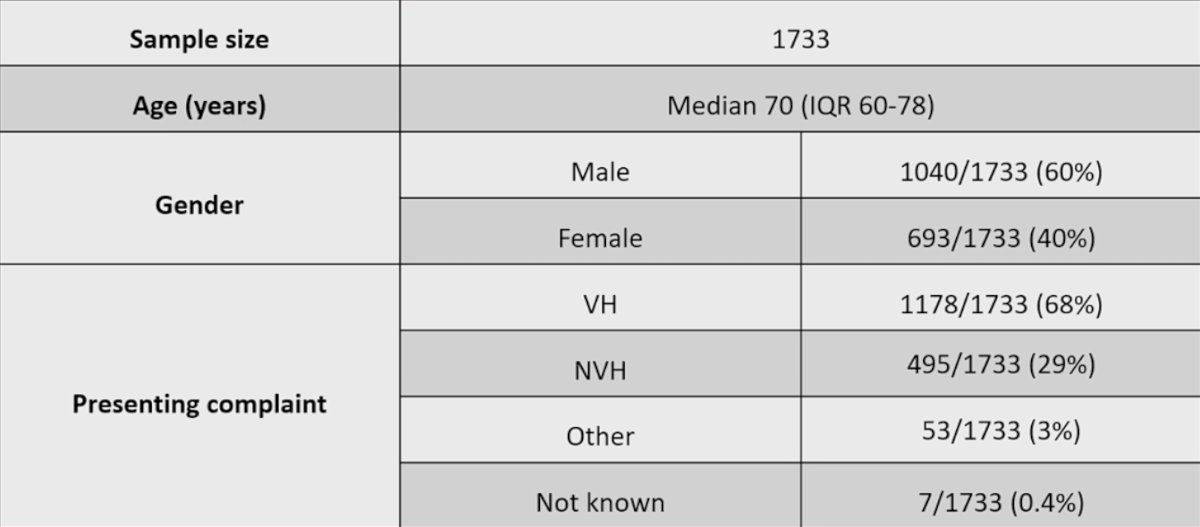
In total, 1,733 patients were referred during the study period. The median age was 70 (IQR 60-78) years, 1,040/1,733 (60%) were male, and visible hematuria was the presenting complaint in 1178/1733 (68%) patients:
At flexible cystoscopy, abnormalities were identified in 525/1,733 (30%) of patients, including solid lesions suspicious for muscle-invasive bladder cancer in 39 patients (7%), of whom 34 proceeded to TURBT: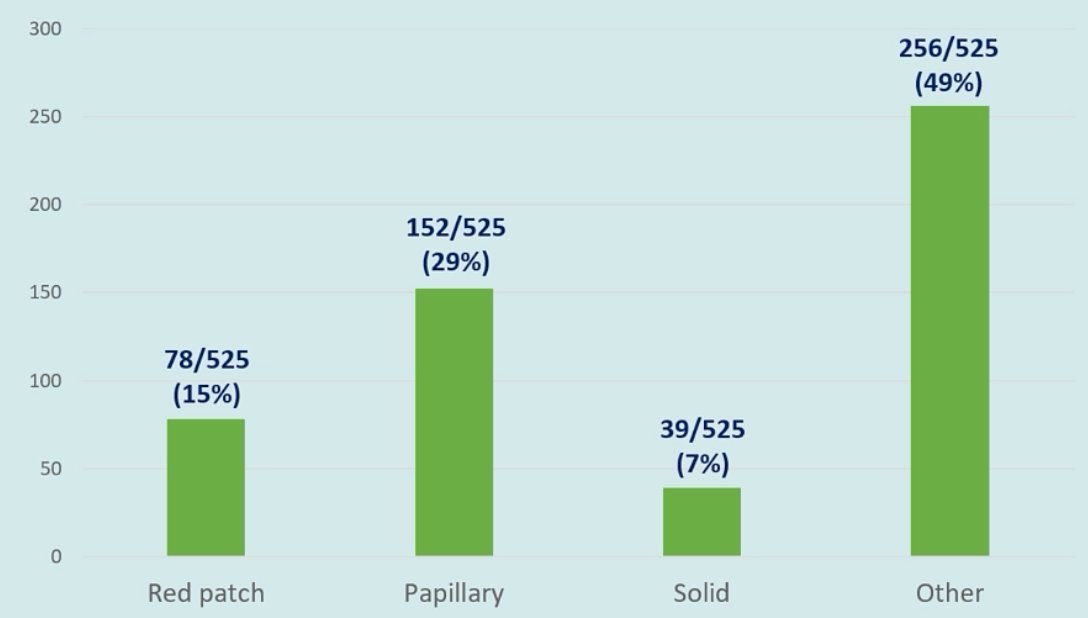
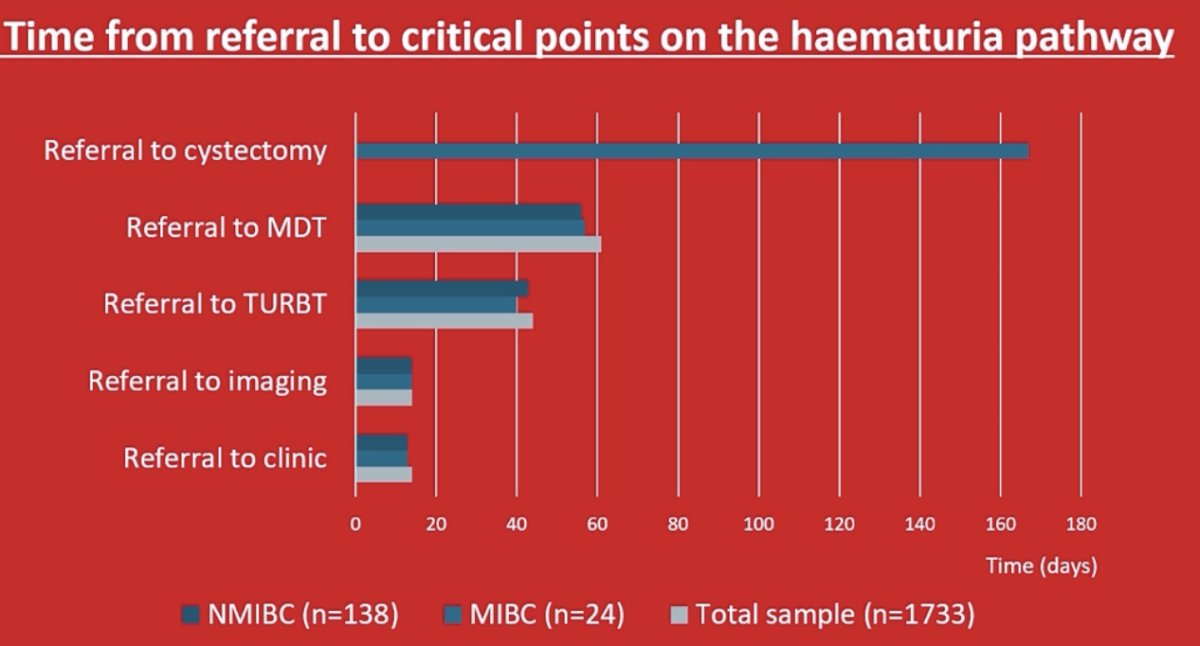
Muscle-invasive bladder cancer was diagnosed in 16/34 (47%) patients. In the remainder of the cohort with non-suspected muscle-invasive bladder cancer at flexible cystoscopy, 8/677 (1%) had muscle-invasive bladder cancer. Overall in the cohort, non-muscle invasive bladder cancer was diagnosed in 138/1733 (8%), muscle invasive bladder cancer in 24/1733 (1%), and upper tract urothelial cancer in 15/1733 (1%). Radical cystectomy was performed in 6/24 (25%), and radical radiotherapy was given to 4/24 (17%) patients with muscle-invasive bladder cancer. The mean time from referral to flexible cystoscopy was 17 days, and from referral to TURBT was 43 days. The mean time to cystectomy was 176 days for patients having neoadjuvant chemotherapy and 143 days among those not receiving neoadjuvant treatment:
Dr. Malik concluded his presentation discussing a multicenter study examining the real-world potential impact of implementing BladderPath with the following take-home points:
- Participating centers in the study did not meet the EAU-recommended target for radical cystectomy
- If a 45-day improvement was realized for patients in this real-world cohort, outcomes could be potentially improved
- If the BladderPath protocol had been implemented, 39 mpMRI scans would have been performed across participating centers
- There are >5,000 mpMRI prostate scans performed each year across participating centers
- The burden of mpMRI for suspected muscle-invasive bladder cancer would represent a small percentage of this workload
Presented by: Tom Malik, Bristol Urological Institute, Bristol, United Kingdom
Written by: Zachary Klaassen, MD, MSc – Urologic Oncologist, Associate Professor of Urology, Georgia Cancer Center, Wellstar MCG Health, @zklaassen_md on Twitter during the 2026 European Association of Urology (EAU) Annual Meeting, London, United Kingdom, Fri, Mar 13 – Mon, Mar 16, 2026.
Reference: