

(UroToday.com) The 2026 European Association of Urology (EAU) annual meeting featured a metastatic urothelial carcinoma session and a presentation by Dr. Noritaka Ishii discussing real-world efficacy of avelumab maintenance therapy in advanced urothelial carcinoma and the survival impact of early transition after 2–3 cycles of chemotherapy.
The JAVELIN Bladder 100 trial showed a survival benefit of avelumab maintenance over best supportive care in patients completing ≥4 cycles of platinum-based chemotherapy.1 However, in real-world practice, many patients discontinue earlier due to toxicity or comorbidities. This multicenter study compared real-world outcomes between avelumab maintenance and conventional chemotherapy and evaluated the efficacy of early switching after 2–3 cycles.
The investigators retrospectively analyzed 387 patients with advanced or metastatic urothelial carcinoma treated with first-line platinum chemotherapy at three institutions (2004–2024). Among them, 85 received avelumab maintenance, and 302 continued conventional chemotherapy. The primary endpoint was overall survival from the initiation of first-line chemotherapy. Overall survival was compared between the avelumab and chemotherapy groups and between the ≥4- and 2–3-cycle subgroups.
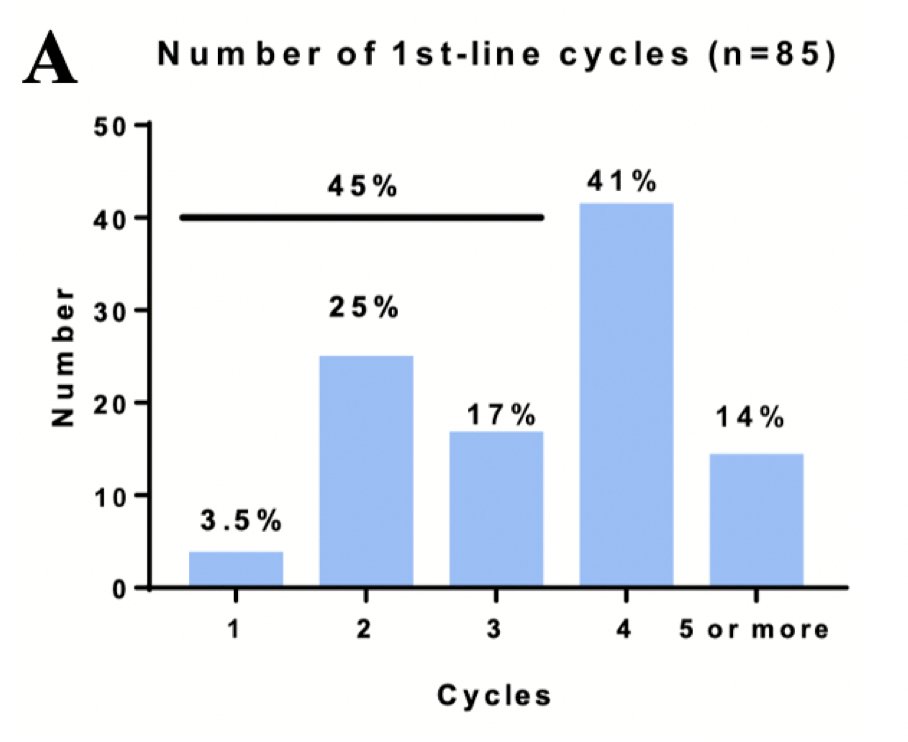
The avelumab group was subdivided into early-switch (2–3 cycles, n = 35) and standard-switch (≥4 cycles, n = 47) subgroups:
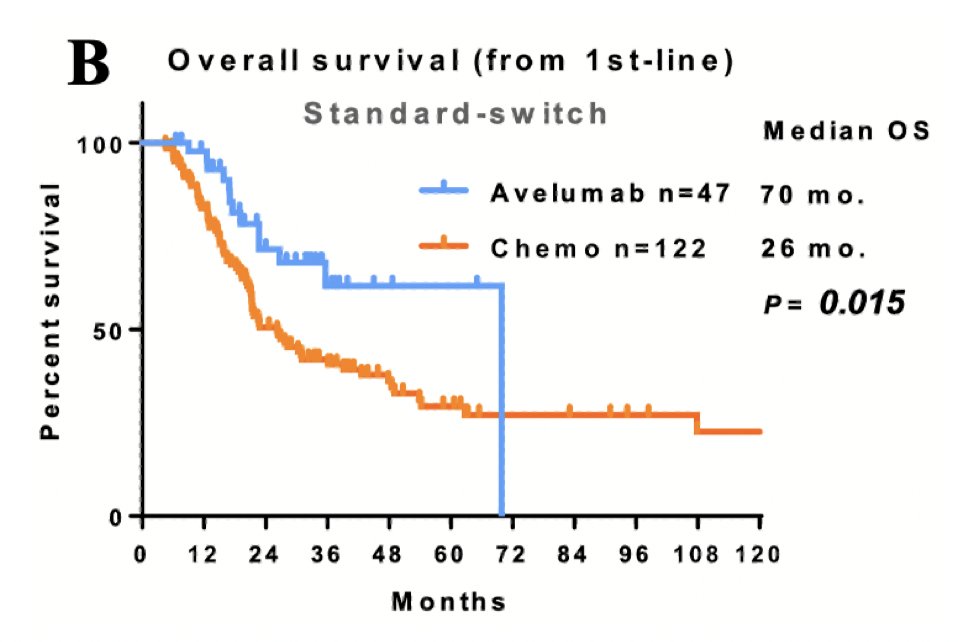
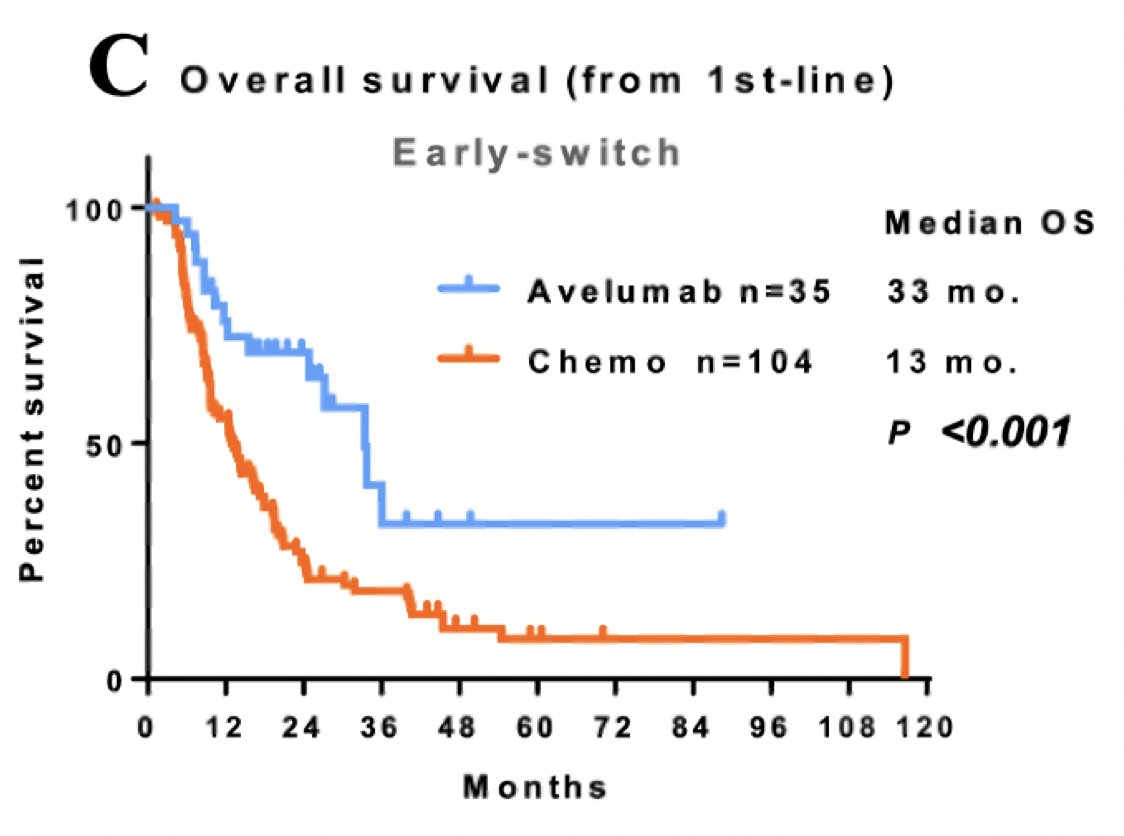
Both avelumab subgroups showed significantly longer overall survival than the chemotherapy group:
≥4-cycle, 70 versus 13 months (p < 0.001):
2–3-cycle, 33 versus 13 months (p < 0.001):
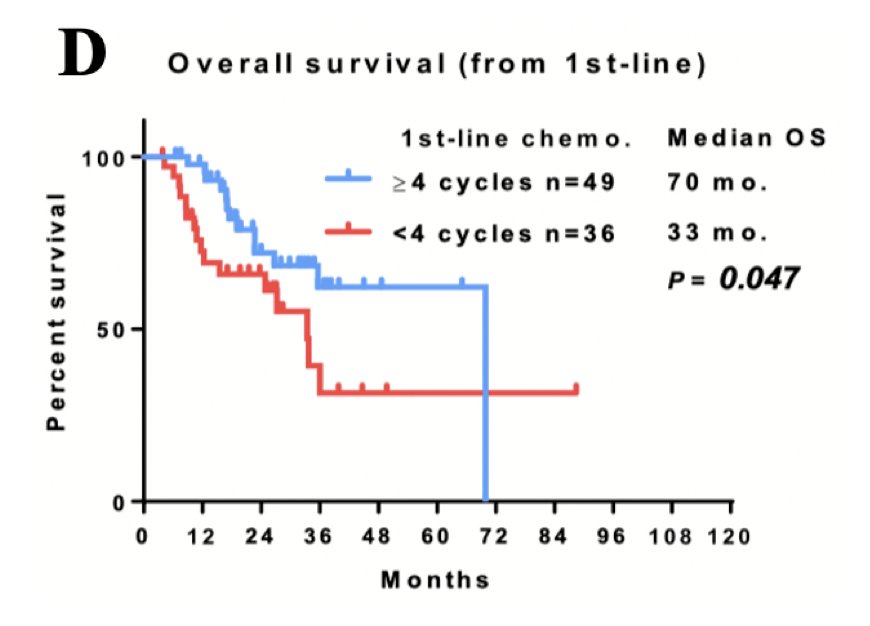
Within the avelumab group, the median overall survival was 70 months in the ≥4-cycle group and 33 months in the 2–3-cycle group (p = 0.047):
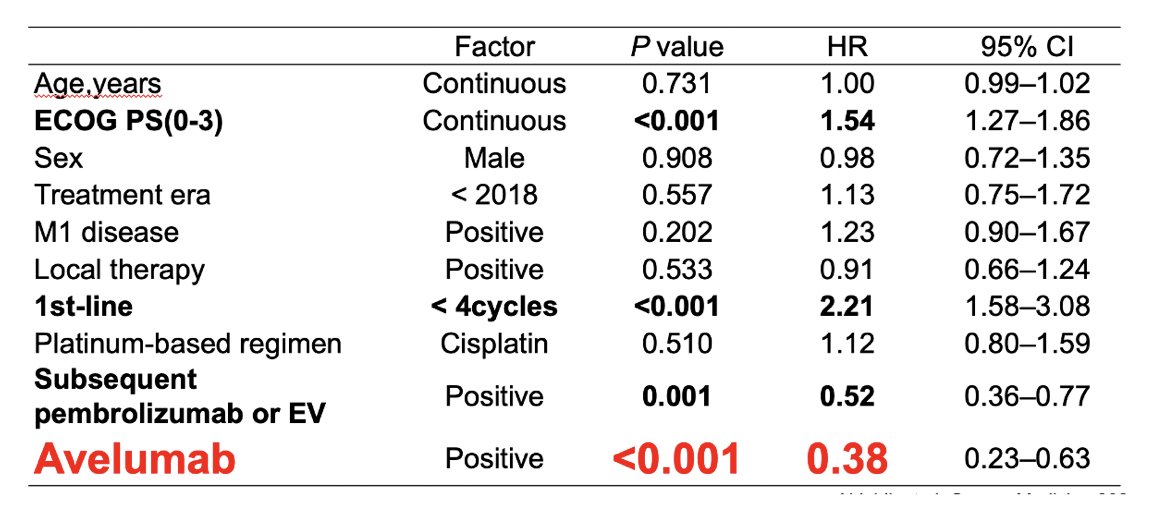
Multivariable analysis identified receiving <4 cycles as an independent predictor of shorter overall survival (HR 2.21, 95% CI 1.58-3.08; p < 0.001), while avelumab maintenance was associated with improved overall survival (HR 0.38, 95% CI 0.23-0.63; p < 0.001):
Dr. Ishii concluded this presentation discussing real-world efficacy of avelumab maintenance therapy in advanced urothelial carcinoma and the survival impact of early transition after 2–3 cycles of chemotherapy with the following take-home points:
- This real-world analysis demonstrated a clear survival benefit of avelumab maintenance therapy in advanced urothelial carcinoma
- Although early transition after 2–3 cycles resulted in shorter survival than ≥4 cycles, the advantage over conventional chemotherapy was retained
- These findings support the clinical value of avelumab maintenance even for patients unable to complete multiple chemotherapy cycles
Presented by: Noritaka Ishii, Hirosaki University, Aomori, Japan
Written by: Zachary Klaassen, MD, MSc – Urologic Oncologist, Associate Professor of Urology, Georgia Cancer Center, Wellstar MCG Health, @zklaassen_md on Twitter during the 2026 European Association of Urology (EAU) Annual Meeting, London, United Kingdom, Fri, Mar 13 – Mon, Mar 16, 2026.
Reference:
- Powles T, Park SH, Voog E, et al. Avelumab Maintenance Therapy for Advanced or Metastatic Urothelial Carcinoma. N Engl J Med 2020 Sept 24;383(13):1218-1230.