

(UroToday.com) The 2026 European Association of Urology (EAU) annual meeting featured a metastatic urothelial carcinoma session and a presentation by Dr. Antonio Cigliola discussing real-world survival improvements in metastatic urothelial carcinoma across three key therapeutic eras.
Over the past 3 decades, treatment of metastatic urothelial carcinoma has been transformed by 3 landmark backbone therapies: platinum-based chemotherapy, immune checkpoint inhibitors, and antibody drug conjugates, either alone or in combination therapies. Temporal trends of overall survival improvement in patients with metastatic urothelial carcinoma are instrumental in identifying research gaps and unmet needs.
Dr. Cigliola and colleagues used the TriNetX research database to conduct a retrospective, large-scale outcome analysis of patients with metastatic urothelial carcinoma who received ≥1 line of treatment across worldwide healthcare institutions. Patients were stratified into 3 therapeutic temporal periods:
- Platinum-based chemotherapy era (1999–2015)
- Immune checkpoint inhibitors era (2016–2018)
- Antibody drug conjugate era (2019–2025)
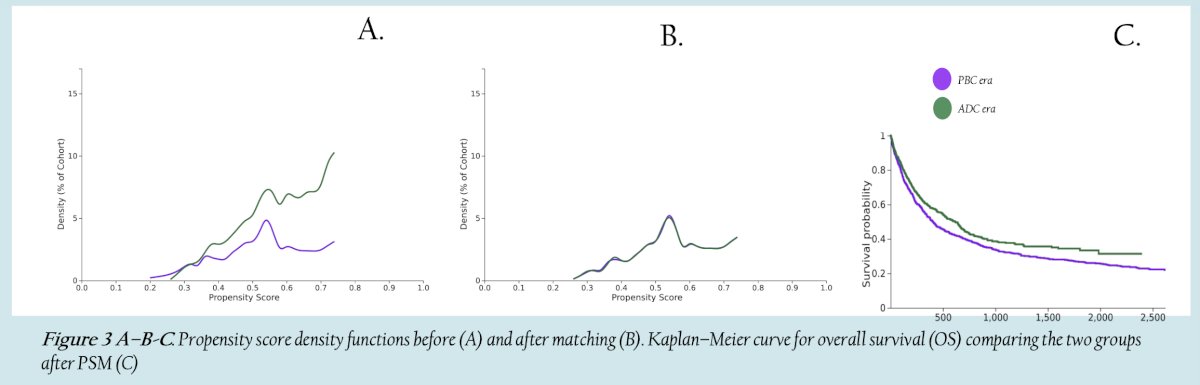
Baseline clinical and demographic characteristics were compared using standard statistics. Kaplan–Meier analysis estimated overall survival, and propensity score matching adjusted for sex, age, and stage at diagnosis, lines of treatment, and comorbidities.
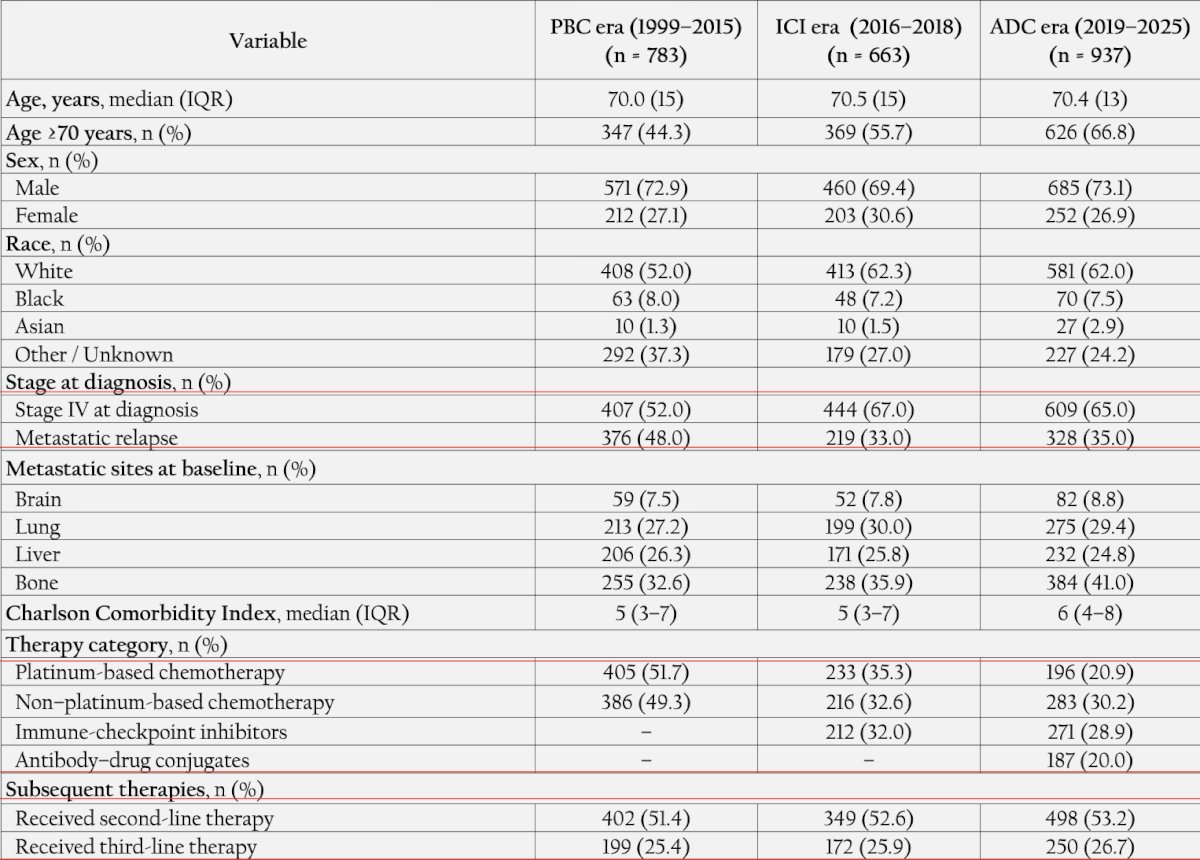
Among 4,720 patients with metastatic urothelial carcinoma, 2,383 received first-line therapy between 1999 and 2025 and were included in the analysis. Overall, 783, 663, and 937 patients were treated in the platinum-based chemotherapy, immune checkpoint inhibitor, and antibody drug conjugate eras, respectively. Median age was 70 years across platinum-based chemotherapy, immune checkpoint inhibitor, and antibody drug conjugate eras, respectively, and the proportion of male patients was 72.9%, 69.4%, and 73.1%. Across treatment eras, 51.7% of patients in platinum based chemotherapy era received platinum based chemotherapy (49.3% non-platinum based chemotherapy), 32% in the immune checkpoint inhibitor era received immune checkpoint inhibitors (35.3% only platinum based chemotherapy, 32.6% non-platinum based chemotherapy), and 20% in the antibody drug conjugate era received antibody drug conjugates (20.9% only platinum based chemotherapy, 30.2% only non-platinum based chemotherapy, 28.9% immune checkpoint inhibitors). Regarding subsequent therapies, in the platinum-based chemotherapy, immune checkpoint inhibitor, and antibody drug conjugate eras, 51.4%, 52.6%, and 53.2% of patients received second-line therapy, and 25.4%, 25.9%, and 26.7% received third-line therapy, respectively. The three cohorts yielded no significant differences in sex, race, comorbidities, lines of treatment, or stage at diagnosis (all p > 0.05):
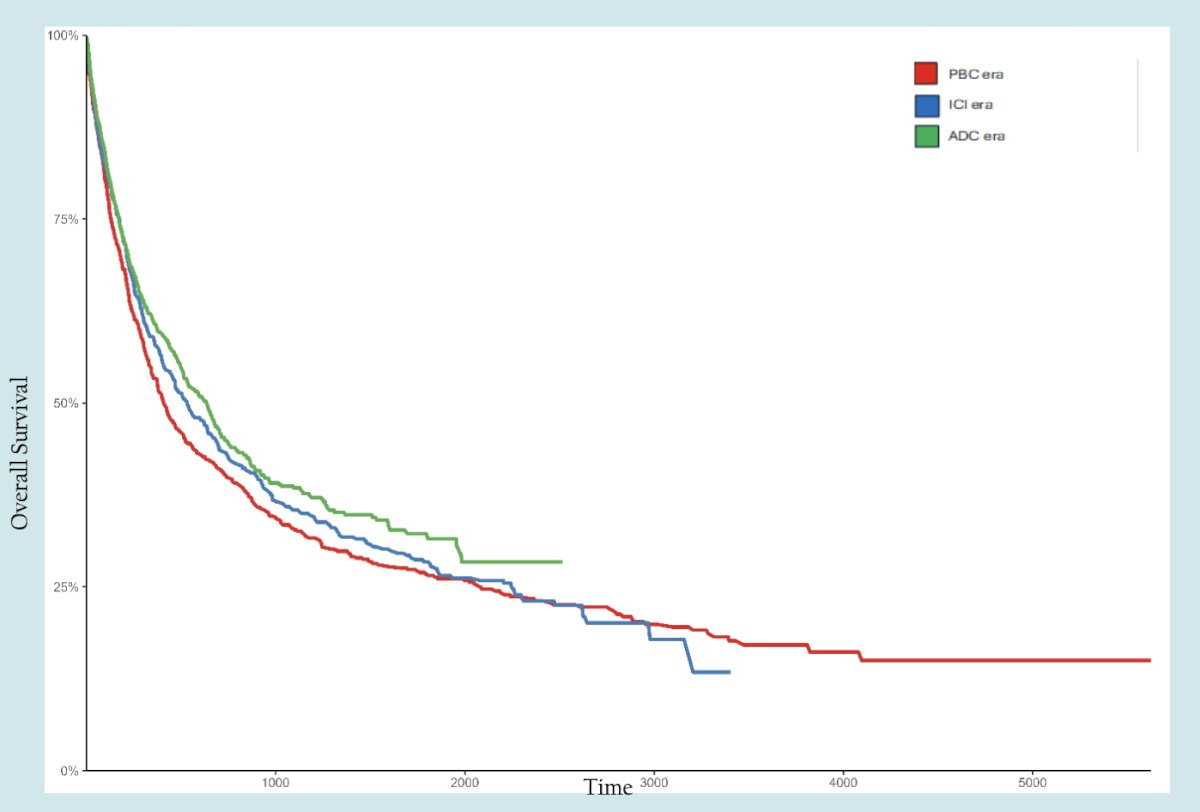
The median overall survival was 13.5 months in the platinum-based chemotherapy era, 17.5 months in the immune checkpoint inhibitors era, and 21.1 months in the antibody drug conjugate era, with a significant difference between the antibody drug conjugate versus platinum-based chemotherapy eras (p = 0.0017):
After propensity score matching, the median overall survival was 13.4, 17.3, and 22.3 months in the platinum-based chemotherapy, immune checkpoint inhibitor, and antibody drug conjugate eras, respectively, with the difference between the platinum-based chemotherapy versus antibody drug conjugate eras remaining significant (p = 0.005):
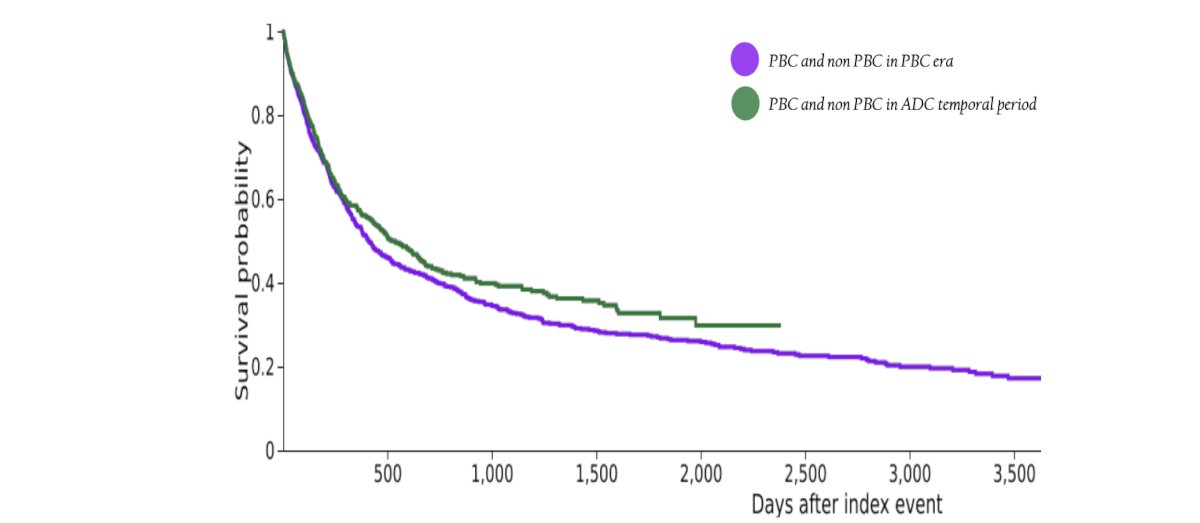
Notably, a subgroup analysis of patients who received only chemotherapy (platinum based chemotherapy or non-platinum based chemotherapy) in their respective temporal period showed median overall survival 13.5, 14.6, and 17.1 months in the platinum based chemotherapy, immune checkpoint inhibitor, and antibody drug conjugate eras, respectively, with a trend toward significance for the platinum based chemotherapy versus antibody drug conjugate eras comparison (p = 0.006):
Dr. Cigliola concluded this presentation discussing real-world survival improvements in metastatic urothelial carcinoma across three key therapeutic eras with the following take-home points:
- Overall survival in metastatic urothelial carcinoma has significantly improved over the past 3 decades, with the greatest gains observed in the antibody drug conjugate era, during which an over 7.5-month improvement in median overall survival was observed (versus the platinum-based chemotherapy era)
- Notably, improvements were seen even among many patients not receiving era-specific systemic therapies, suggesting that advances in diagnostics, staging, supportive care, and healthcare delivery should be considered when interpreting real-world survival gains
Presented by: Antonio Cigliola, MD, IRCCS San Raffaele Hospital, Milan, Italy
Written by: Zachary Klaassen, MD, MSc – Urologic Oncologist, Associate Professor of Urology, Georgia Cancer Center, Wellstar MCG Health, @zklaassen_md on Twitter during the 2026 European Association of Urology (EAU) Annual Meeting, London, United Kingdom, Fri, Mar 13 – Mon, Mar 16, 2026.