

(UroToday.com) The European Association of Urology (EAU) 2026 Annual Congress was host to a non-muscle invasive bladder cancer (NMIBC) poster session. Dr. Evanguelos Xylinas presented an update from the Orion-BC study, a phase III, single-arm study evaluating the efficacy and safety of intravesical paclitaxel-hyaluronic acid conjugate in patients with BCG-unresponsive CIS of the bladder.
CIS of the bladder is recognized as a precursor lesion to muscle-invasive disease. Intravesical Bacillus Calmette–Guérin (BCG) remains the standard first-line therapy; however, more than half of patients ultimately experience disease recurrence. For patients with BCG-unresponsive CIS, radical cystectomy (RC) remains the guideline-recommended treatment option. Nevertheless, some patients are medically unfit for surgery or decline this approach, creating a significant therapeutic challenge. In Europe, treatment options for BCG-unresponsive CIS remain limited, highlighting an important unmet clinical need.
Fidia Farmaceutici is developing a novel water-soluble conjugate of hyaluronic acid (HA) and paclitaxel (Oncofid-P-B) designed for intravesical administration. The HA component selectively binds to CD44, which is frequently overexpressed on bladder cancer cells, enabling enhanced intracellular uptake of paclitaxel. Preclinical studies have demonstrated that this HA-mediated targeting can increase paclitaxel uptake by as much as 800-fold compared with the free drug.1
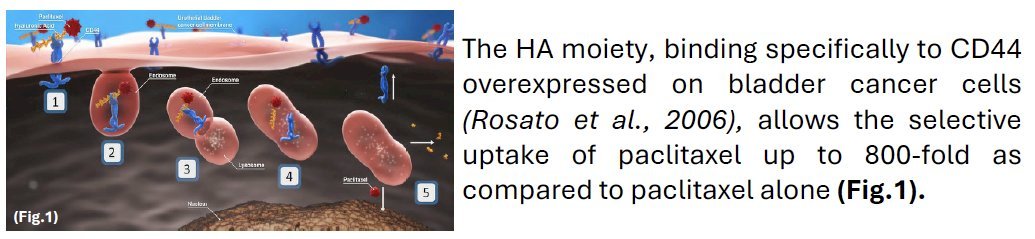
Importantly, early-phase clinical evaluation showed no evidence of systemic drug absorption.2 In an exploratory clinical study, complete response (CR) rates of up to 75% at the end of induction (12 weeks) and approximately 40% at the end of maintenance therapy (15 months) were observed.3 The treatment also demonstrated a favorable safety profile, with no grade 3–5 adverse events (AEs), only one investigational medicinal product (IMP)-related serious adverse event (SAE), and no treatment discontinuations due to toxicity.3
Based on these findings, a phase III single-arm multicenter study (NCT05024773) is currently ongoing to evaluate the antitumor activity and safety of Oncofid-P-B in patients with BCG-unresponsive CIS +/- concomitant Ta/T1 disease who are unwilling or unfit to undergo RC.
In this ongoing phase III study, enrolled patients receive 12 weekly intravesical instillations of Oncofid-P-B at a dose of 600 mg during the induction phase. Patients with persistent CIS following induction may undergo re-induction therapy, whereas responders transition to maintenance therapy consisting of 12 monthly instillations.
Complete response is assessed using cystoscopy and urine cytology at the end of induction or re-induction and then every three months for the first 24 months, followed by evaluations every six months for an additional two years. Bladder biopsies are performed at the end of induction or re-induction, in cases of suspicious cystoscopic or cytologic findings, and as scheduled random biopsies at 9, 15, and 21 months in patients who remain in complete response.
The primary efficacy endpoint is centrally assessed complete response rate at any time during the study. Safety is monitored continuously throughout the trial. The study is conducted according to the approved protocol and under oversight of institutional ethics committees.
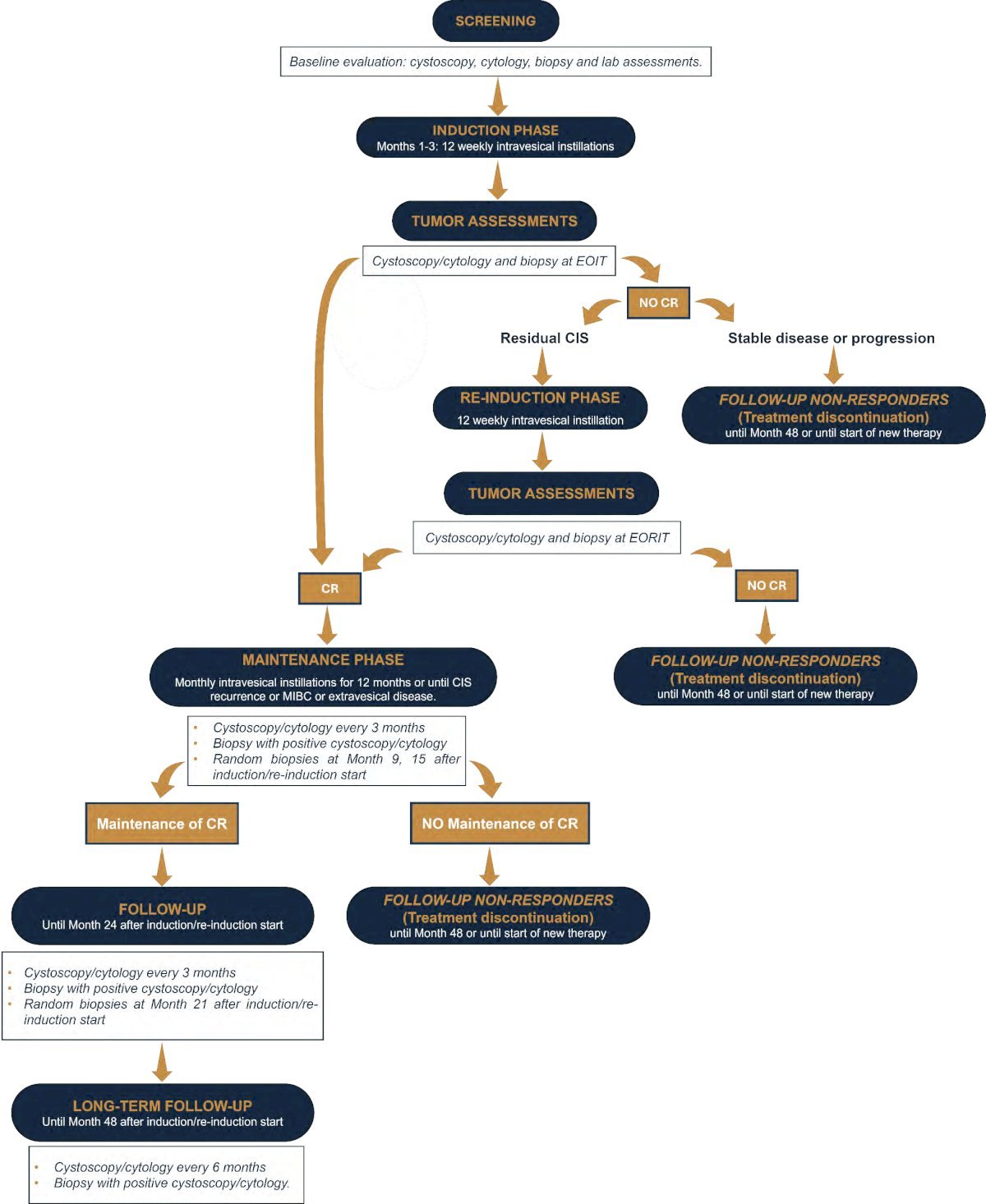
The trial is currently ongoing across 45 study sites located in Europe, the United Kingdom, and the United States. At the time of abstract submission, 93 patients had been enrolled.
Across the study population, a total of 307 adverse events were reported. Of these, 77 events were considered related to the investigational product, with the majority being grade 1 in severity. Importantly, no grade 3–5 adverse events related to Oncofid-P-B were observed. A total of nine serious adverse events occurred during the study, but none were considered related to the investigational therapy.
Overall, the safety profile observed thus far appears favorable, particularly when compared with other recently approved therapies for BCG-unresponsive NMIBC in the United States.
In this ongoing phase III study, intravesical Oncofid-P-B has demonstrated an excellent safety profile in patients with BCG-unresponsive CIS. No grade 3–5 adverse events or serious adverse events related to the investigational therapy have been reported to date. These findings are consistent with the drug’s targeted design, which aims to enhance tumor-specific uptake while minimizing systemic exposure. Continued enrollment and follow-up will further clarify the antitumor efficacy of this novel intravesical therapy.
Presented by: Evanguelos Xylinas, MD, PhD, FEBU, Professor of Urology, Head of Urologic Oncology Unit, Paris University, APHP Nord Bichat-Claude Bernard Hospital, Paris, France
Written by: Rashid K. Sayyid, MD, MSc, Assistant Professor, Urologic Oncologist, Department of Urology at The University of Arizona and Banner University Medical Center, Tucson, AZ – @rksayyid on X during the 2026 European Association of Urology (EAU) Annual Meeting, London, United Kingdom, Fri, Mar 13 – Mon, Mar 16, 2026.
References:
- Rosato A, Banzato A, De Luca G, et al. Hyaluronic acid–paclitaxel conjugates enhance selective drug delivery to CD44-expressing tumor cells. Cancer Res. 2006;66:7455-7462.
- Bassi P, De Marco V, De Lisa A, et al. Phase I clinical evaluation of intravesical hyaluronic acid–paclitaxel conjugate for bladder cancer. Eur Urol. 2011;59:651-657.
- Hurle R, Lazzeri M, Colombo P, et al. Intravesical Oncofid-P-B for BCG-unresponsive carcinoma in situ of the bladder: results from an exploratory clinical study. Urol Oncol. 2021;39:79.e1-79.e7.