

(UroToday.com) The European Association of Urology (EAU) 2026 Annual Congress was host to a session on hormone-sensitive prostate cancer. Dr. Bernard Jansen presented a study evaluating the outcomes from patients treated with prostate-specific membrane antigen (PSMA) PET/CT-guided salvage whole pelvis radiotherapy (sWPRT) in combination with androgen deprivation therapy (ADT) for pelvic nodal recurrence after surgery.
Among patients who develop biochemical recurrence (BCR) after radical prostatectomy (RP), PSMA PET/CT has emerged as an important imaging modality capable of detecting early pelvic lymph node metastases. Despite improved detection of nodal recurrence, the optimal management strategy for patients with pelvic nodal relapse after RP remains uncertain. This study examined oncologic outcomes among patients with BCR following RP and confirmed or suspected pelvic lymph node metastases who underwent PSMA PET/CT-guided salvage whole pelvis radiotherapy combined with ADT.
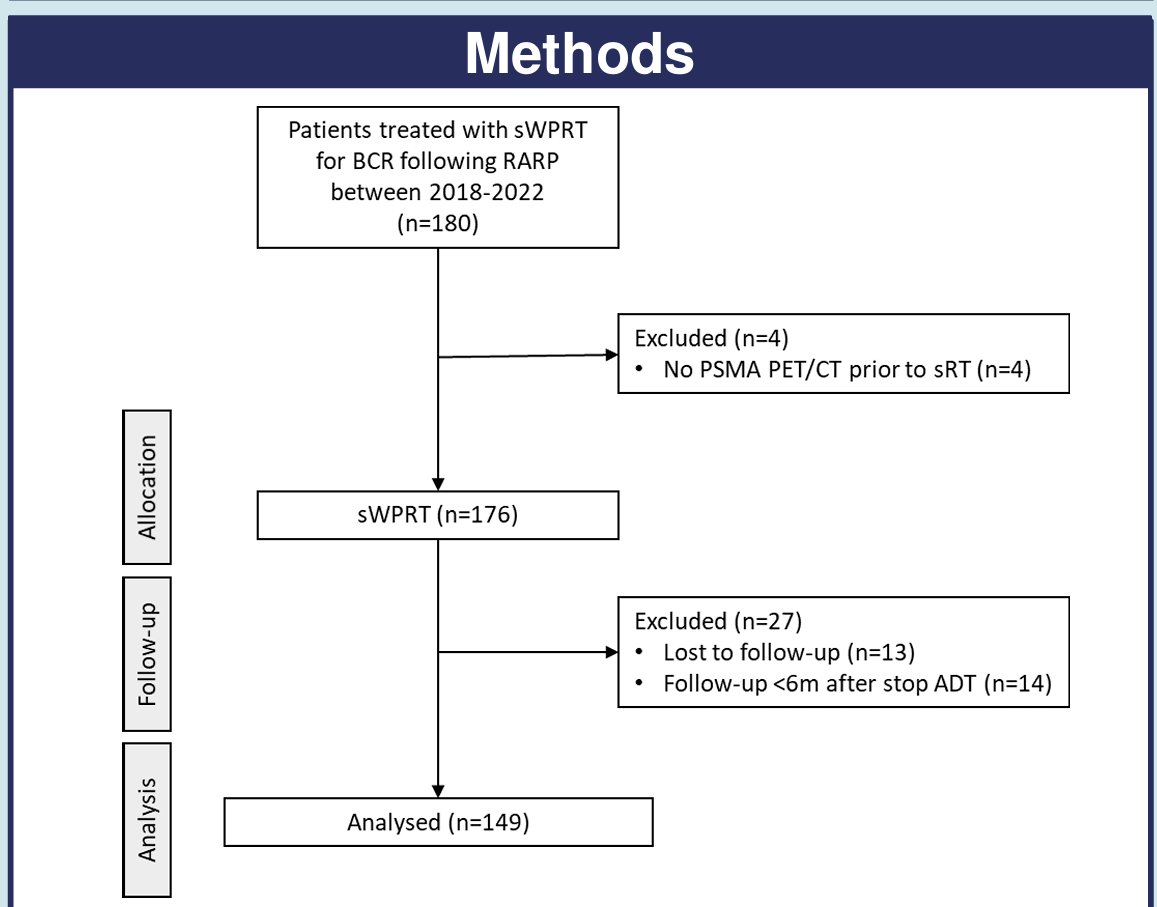
This single-center retrospective study included 149 patients treated with sWPRT plus 2–3 years of ADT after undergoing PSMA PET/CT for biochemical recurrence following RP with or without extended pelvic lymph node dissection (ePLND) between 2018 and 2022. sWPRT was offered to two patient groups:
- BCR and up to six pelvic lymph nodes detected on PSMA PET/CT (PSMA-positive)
- BCR and a negative PSMA PET/CT, but with a prior history of pathological lymph node involvement (pN1) identified at the time of RP with ePLND.
The investigators evaluated multiple oncologic endpoints, including biochemical progression-free survival, metastasis-free survival, treatment-free survival, overall survival, and cancer-specific survival. Additionally, recurrence patterns identified on follow-up PSMA PET/CT imaging were documented, and nodal recurrence locations were compared with the previously delivered radiotherapy fields.
At a median follow-up of 54 months, the study demonstrated favorable long-term outcomes. The estimated 5-year oncologic outcomes were:
- Biochemical progression-free survival: 69.3% (95% CI 60.6–79.2)
- Metastasis-free survival: 79% (95% CI 70.6–87.5)
- Treatment-free survival: 78.5% (95% CI 70.2–87.9)
- Overall survival: 91.7% (95% CI 86.8–96.8)
- Cancer-specific survival: 97.5% (95% CI 94.7–100)
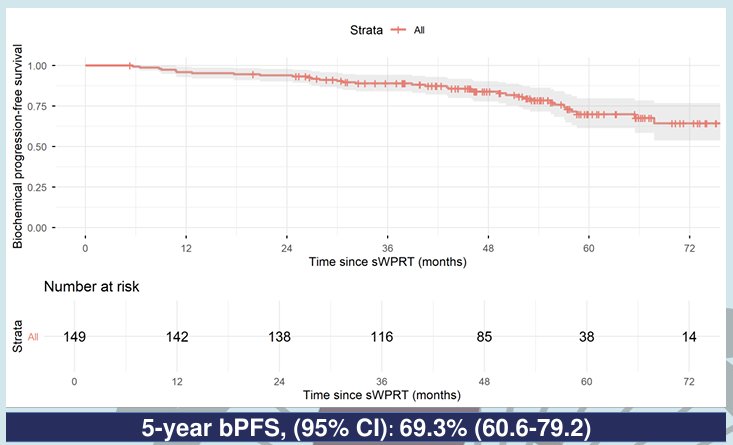
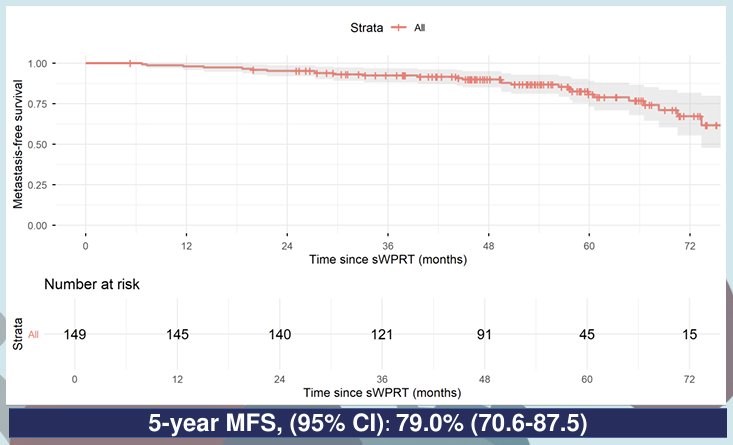
Importantly, outcomes were similar between patients with PSMA-positive and PSMA-negative imaging findings, suggesting that patients with a prior history of nodal disease may still benefit from salvage whole pelvis radiotherapy even when PSMA PET/CT does not identify active nodal lesions.
Overall, 37 patients (25%) experienced biochemical progression following salvage treatment. Analysis of recurrence patterns demonstrated excellent control within the treated radiation field. Only one patient (3%) developed an in-field nodal recurrence. In contrast, most nodal failures occurred outside the irradiated field, with 29 patients (78%) developing out-of-field nodal recurrences. Among these cases, seven patients (19%) developed nodal recurrences located within 5 cm of the treated whole pelvis radiotherapy field, suggesting possible marginal failures.
Multivariable analysis identified two factors independently associated with biochemical progression following salvage radiotherapy:
- Higher PSA levels prior to initiation of sWPRT were associated with an increased risk of biochemical progression (HR 3.88, 95% CI 1.23–12.29, p=0.021)
- Conversely, longer duration of ADT was associated with improved biochemical control (HR 0.92, 95% CI 0.87–0.96, p<0.001).
Overall, these findings suggest that PSMA PET/CT-guided sWPRT + ADT provides strong in-field disease control and favorable long-term oncologic outcomes for patients experiencing biochemical recurrence following RP. Pre-treatment PSA levels and duration of ADT appear to be important determinants of biochemical outcomes in this population.
Presented by: Bernard Jansen, MD, PhD, Department of Urology, Amsterdam University Medical Centers, VU University, Amsterdam, The Netherlands.