

(UroToday.com) The 2026 European Association of Urology (EAU) annual meeting featured a high-risk non-muscle invasive bladder cancer session and a presentation by Dr. Dickon Hayne discussing effects on urinary symptoms and other aspects of health-related quality of life in the ANZUP 1301 trial assessing BCG + mitomycin versus BCG-alone as adjuvant intravesical therapy for high-risk non-muscle invasive bladder cancer.
In the ANZUP 1301 trial, adjuvant intravesical therapy with BCG + mitomycin resulted in similar disease-free survival, with fewer treatment discontinuations, and 39% fewer doses of BCG than with BCG alone:1
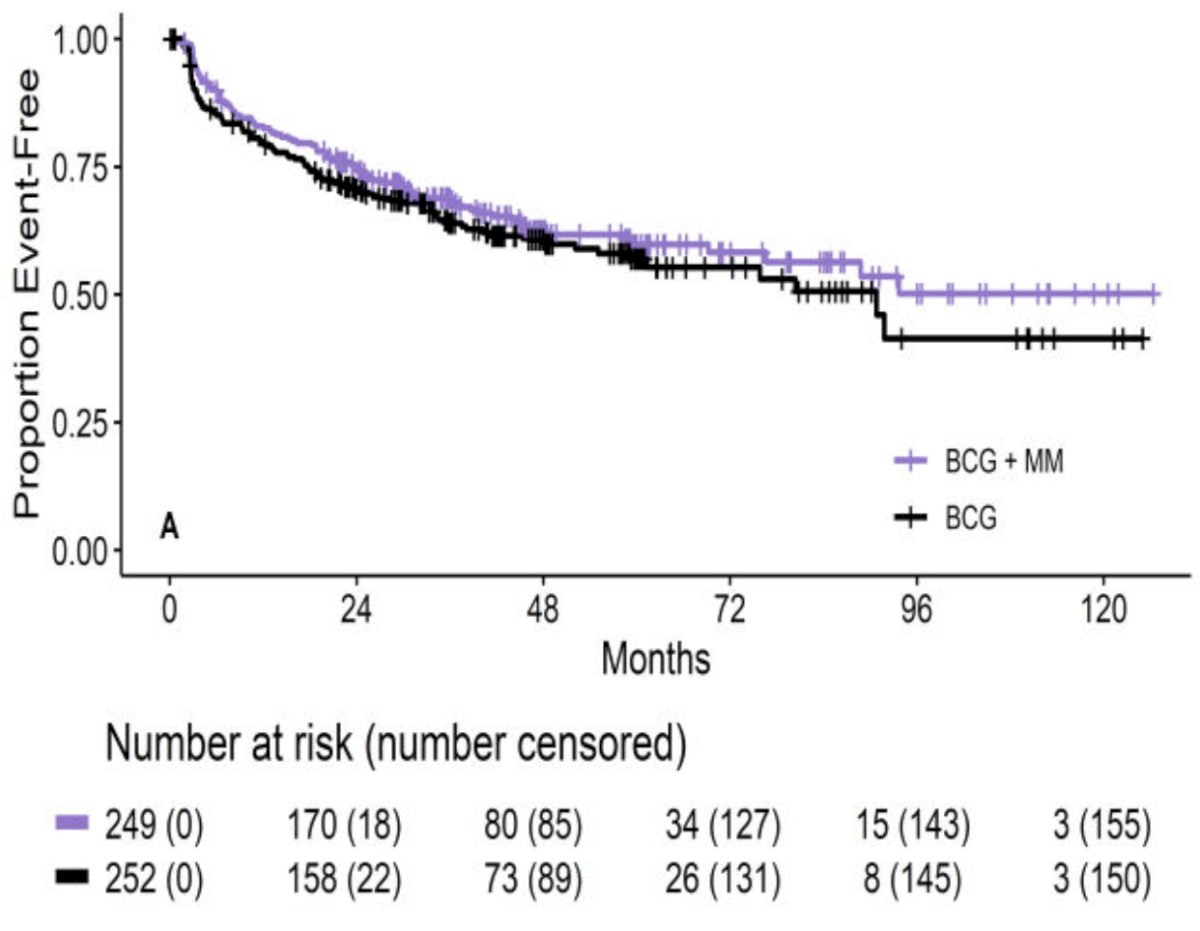
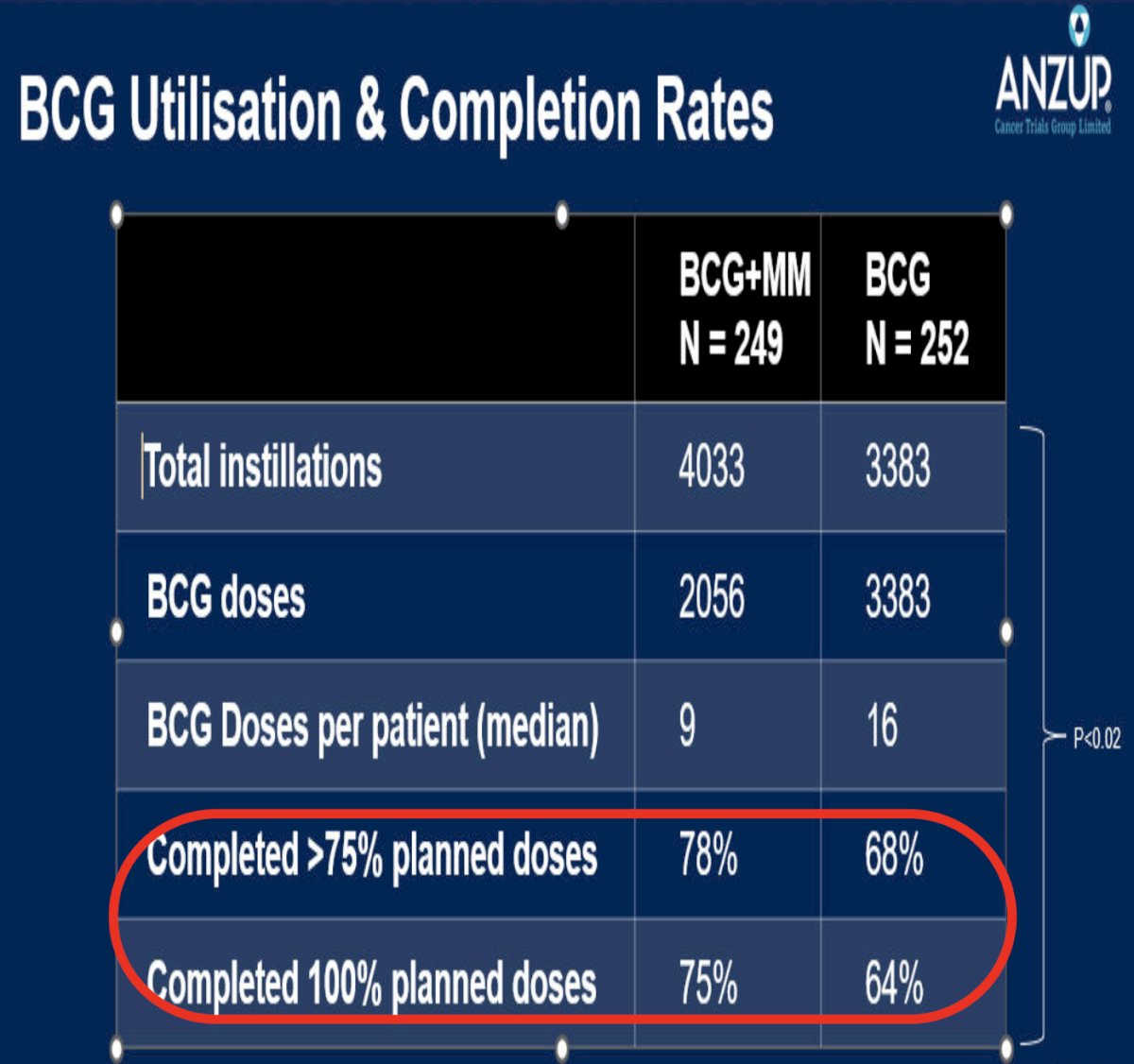
On a post-hoc Bayesian sensitivity analysis, the probability that BCG + mitomycin is not appreciably worse than BCG alone (HR < 1.10) is 94%. Additionally, the probability that BCG + mitomycin improves disease-free survival (HR < 1.0) is 83%. Generally, adverse events were well balanced between the two groups, with the most common adverse event being fatigue:
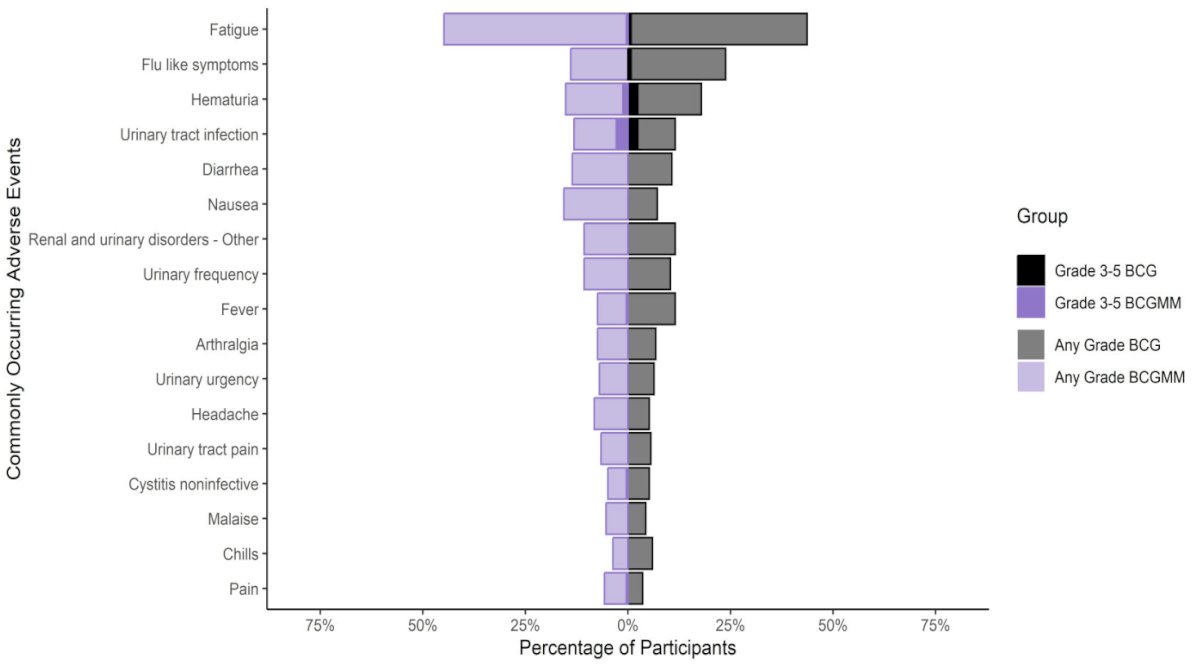
Moreover, serious adverse events were comparable between the two groups, with 3 deaths on treatment, including a myocardial infarction (BCG only group), sepsis (BCG only group), and a BCG-related mycotic aortic aneurysm (BCG + mitomycin). There was also one further mycotic aortic aneurysm (BCG only group) and one myasthenia gravis (BCG + mitomycin). At EAU 2026, Dr. Hayne and colleagues reported effects on aspects of health-related quality of life from the ANZUP 1301 trial.
Participants were BCG-naïve with resected, high-grade, papillary urothelial cancer (stages pTa/pT1 ± concurrent CIS) and randomly assigned treatment (1:1) with BCG + mitomycin versus BCG alone. BCG + mitomycin included induction with BCG weeks 1, 2, 4, 5, 7, 8 and mitomycin weeks 3, 6, and 9, then maintenance with mitomycin weeks 13, 17, 25, 29, 37, 41 and BCG weeks 21, 33, 45. BCG-alone included weekly induction x 6, then 4-weekly maintenance x10:
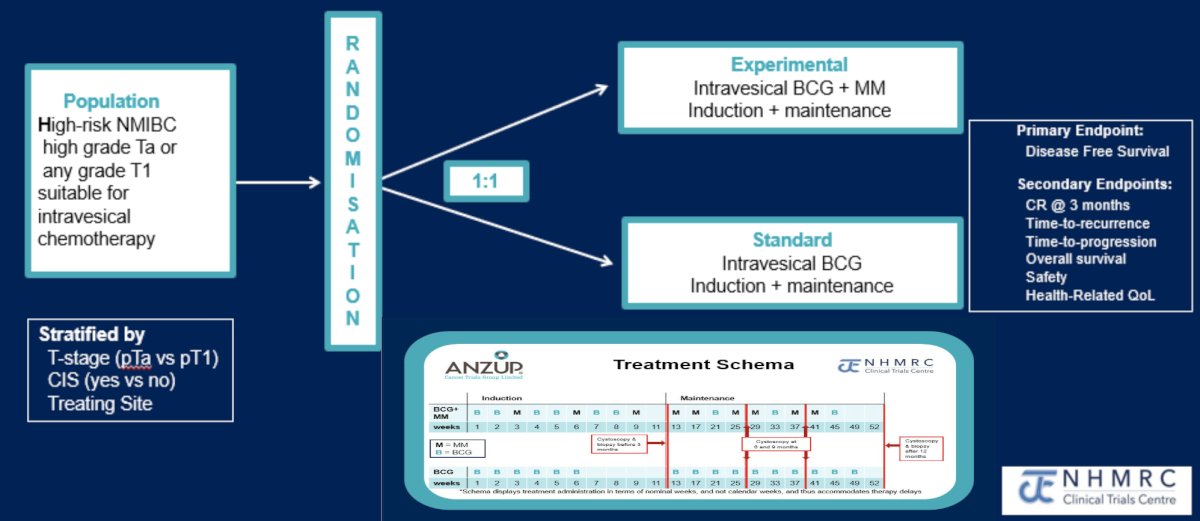
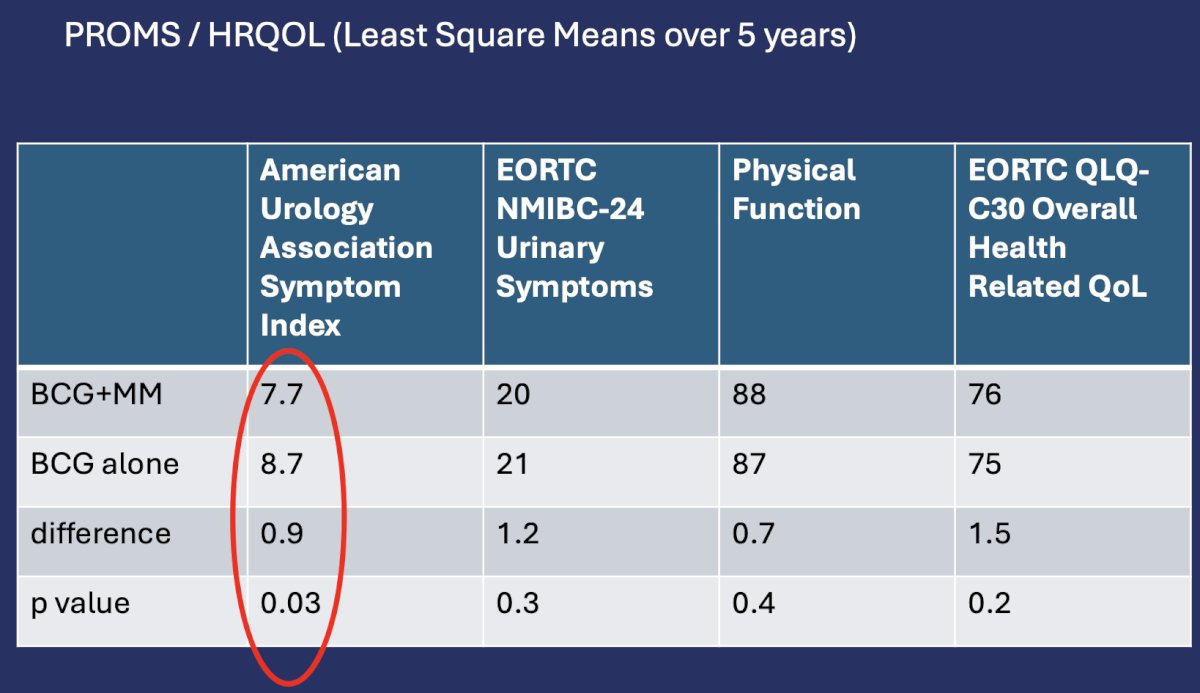
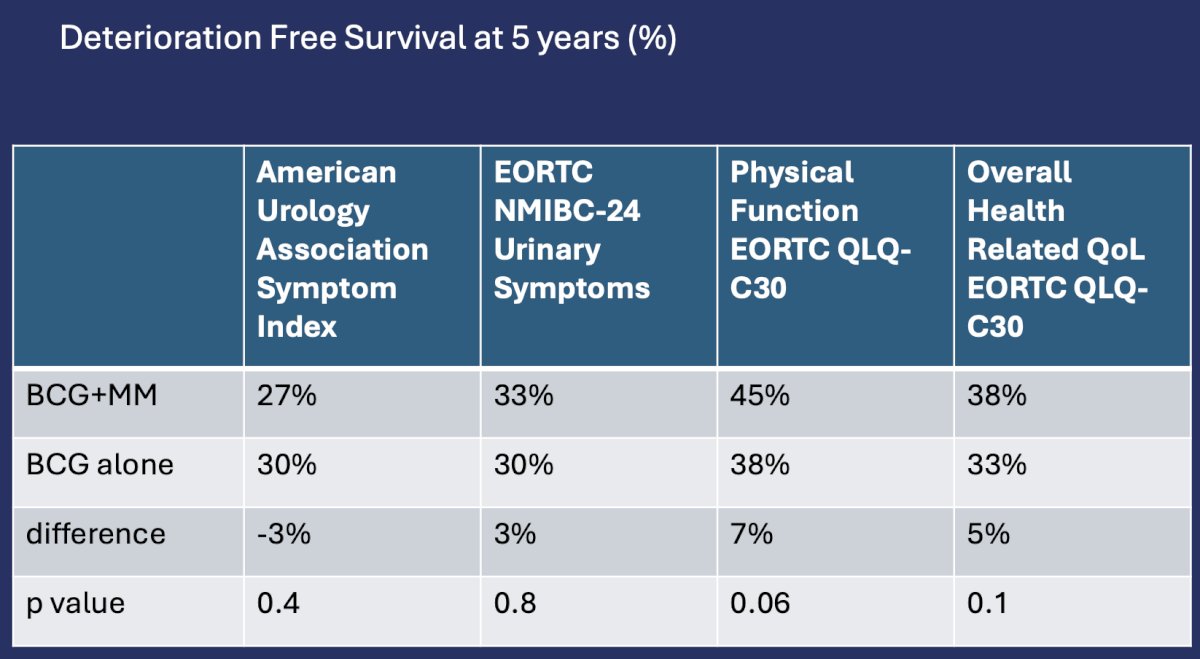
Patient reported outcome measures were to be completed at weeks 0, 3, 6, 9, 13, 25, 37, 49, and months 15, 18, 21, 24, 30, 36, 42, 48, 54, 60, and included the American Urological Association Symptom Index (AUASI), EORTC NMIBC-24 scale for urinary symptoms, and EORTC QLQ-C30 scales for physical function and for overall health and quality of life. Minimum clinically important differences, defined a priori, were 4 for the AUASI (range 0-35), and 10 for the EORTC scales (range 0-100). Health-related quality of life scores over time, adjusted for baseline, were analyzed with a mixed model for repeated measures to calculate least squares means over 5 years for each group, differences, 95% CI, and p-values. Deterioration-free survival was the earliest of death, clinical progression, or a worsening from baseline ≥ minimum clinically important differences, and was compared between groups with the log-rank test.
Baseline patient-reported outcome measures were available for 451/501 participants randomized. The proportions of patient-reported outcome measures completed compared to expected were 95%, 91%, 91%, 89%, 88% at weeks 3, 6, 13, 25, and 37, respectively, and ranged from 51%-73% at years 1-5. Least squares means for the AUASI favored BCG + mitomycin, and least squares means for urinary symptoms, physical function, and overall health and quality of life, and deterioration-free survival rates for AUASI, urinary symptoms, physical function, and overall health and quality of life were similar for BCG + mitomycin and BCG alone:
Dr. Hayne concluded his presentation discussing effects on urinary symptoms and other aspects of health-related quality of life in ANZUP 1301 with the following take-home points:
- BCG + mitomycin showed similar efficacy to BCG alone
- All endpoints were directionally in favor of BCG + mitomycin
- There is a 94% probability that BCG + mitomycin is non-inferior to BCG alone
- There was no difference in safety – BCG toxicity drives serious adverse events
- BCG + mitomycin was better tolerated
- Better treatment completion rates
- Similar quality of life (AUASI favors BCG + mitomycin, p = 0.03)
- BCG + mitomycin may be superior – there is an 83% probability that BCG + mitomycin improves disease-free survival on post-hoc Bayesian analysis
- BCG + mitomycin requires 39% less BCG
Presented by: Dickon Hayne, MD, FRCS, UWA Medical School, University of Western Australia, Perth, Australia
Written by: Zachary Klaassen, MD, MSc – Urologic Oncologist, Associate Professor of Urology, Georgia Cancer Center, Wellstar MCG Health, @zklaassen_md on Twitter during the 2026 European Association of Urology (EAU) Annual Meeting, London, United Kingdom, Fri, Mar 13 – Mon, Mar 16, 2026.
Reference:
- Hayne D, Zhang AY, Thomas H, et al. Bacillus Calmette-Guerin Plus Mitomycin Versus Bacillus Calmette-Guerin for Bacillus Calmette-Guerin-naïve Non-muscle-invasive Bladder