

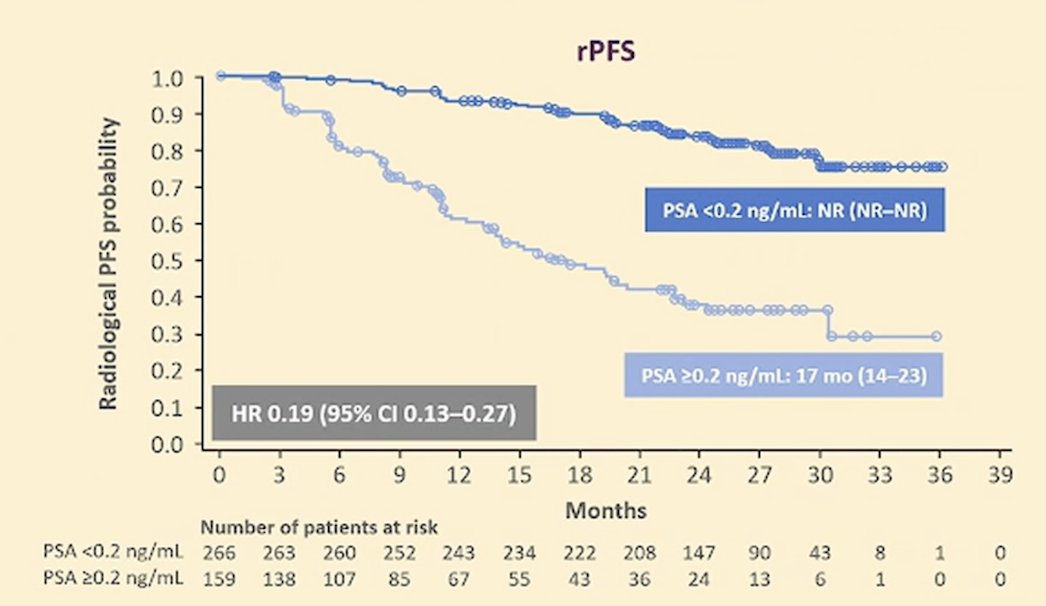
(UroToday.com) The 2025 EAU annual meeting featured a game changer session and a discussant presentation by Dr. Elena Castro discussing “PSA response with darolutamide plus ADT in patients with mHSPC in ARANOTE” presented by Dr. Fred Saad. In ARANOTE, patients on darolutamide who achieved an undetectable PSA had a lower risk of radiological progression or death compared to patients on darolutamide who did not achieve an undetectable PSA (HR 0.19, 95% CI 0.13-0.27):
Dr. Castro notes that an undetectable PSA (<= 2 ng/mL) is a strong prognostic factor in mHSPC, which has been shown across several trials, including SOWG 9346, CHAARTED,1 TITAN,2 and ARASENS (presented at ESMO 2023 by Dr. Saad). Additionally, in ARANOTE, about half of patients who achieved an undetectable PSA did so after >3 months:
Is achieving an undetectable PSA sooner better? Dr. Castro notes that work from TITAN2 suggests that whether an undetectable PSA is achieved at 3, 6, or 9 months does significantly affect radiographic progression free survival or overall survival, but rather the importance is that the PSA becomes undetectable at some point during this timeframe.
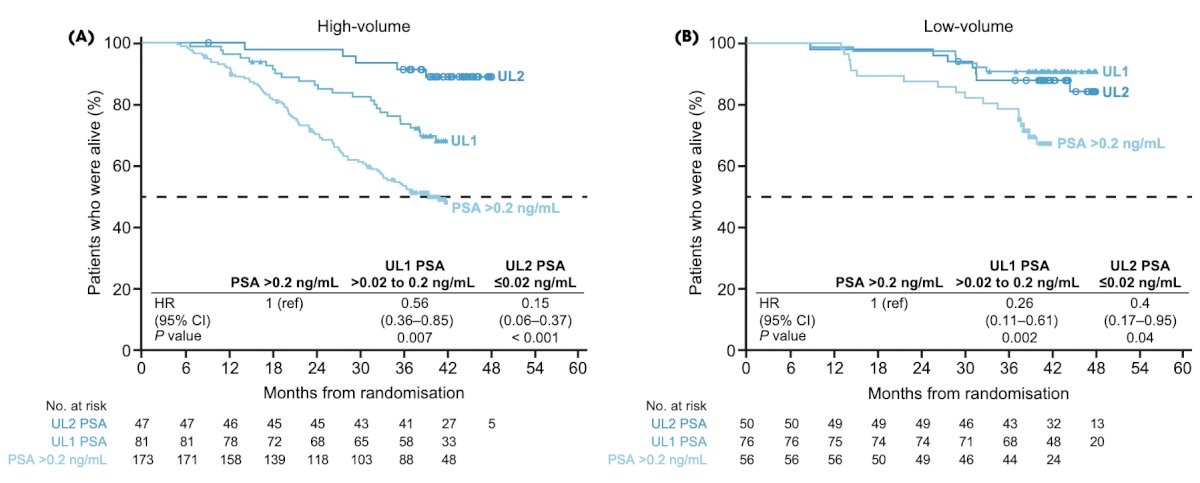
Is the lower the PSA the better? Again, work from the TITAN trial3 suggest that in both high and low volume patients, the deeper the PSA response (PSA <= 0.02 ng/mL versus 0.2->0.02 ng/mL versus >0.2 ng/mL) the better the overall survival outcomes:
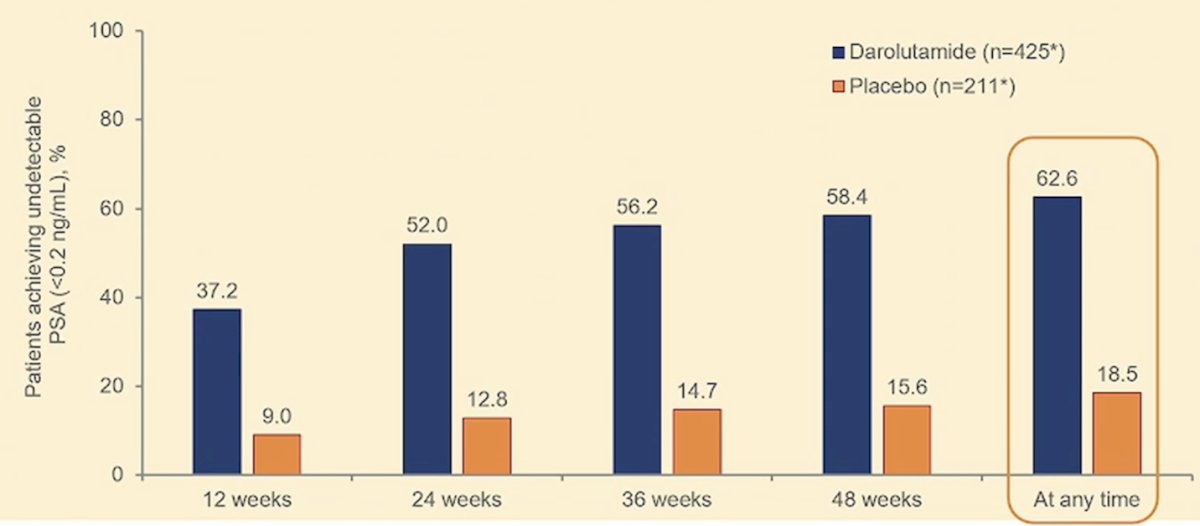
Would treatment intensification increase the proportion of patients with an undetectable PSA (<0.2 ng/mL)? Additional analyses from the ARASENS trial4 suggests that the addition of darolutamide to docetaxel significantly increases the proportion of patients with undetectable PSA (<0.2 ng/mL) compared to docetaxel:
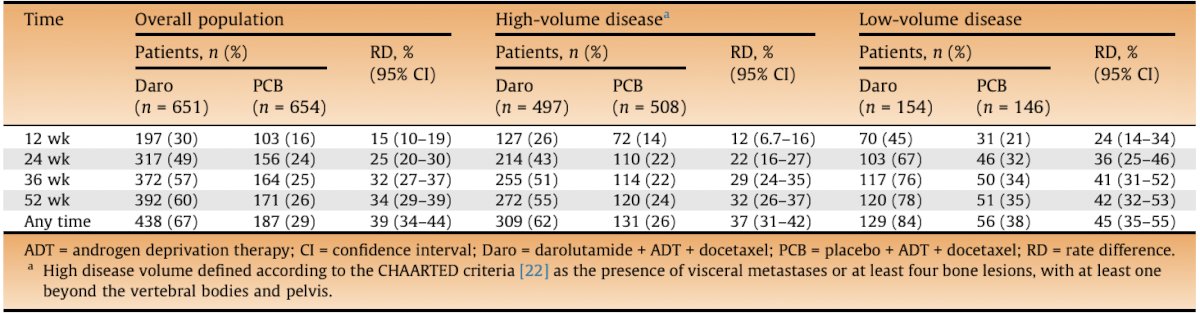
Would the addition of docetaxel to darolutamide increase the proportion of patients with undetectable PSA (<0.2 ng/mL) compared to darolutamide? Although it is difficult to make cross trial comparisons, Dr. Castro notes that it is unclear at the present time if there is an advantage to adding docetaxel to the overall population:
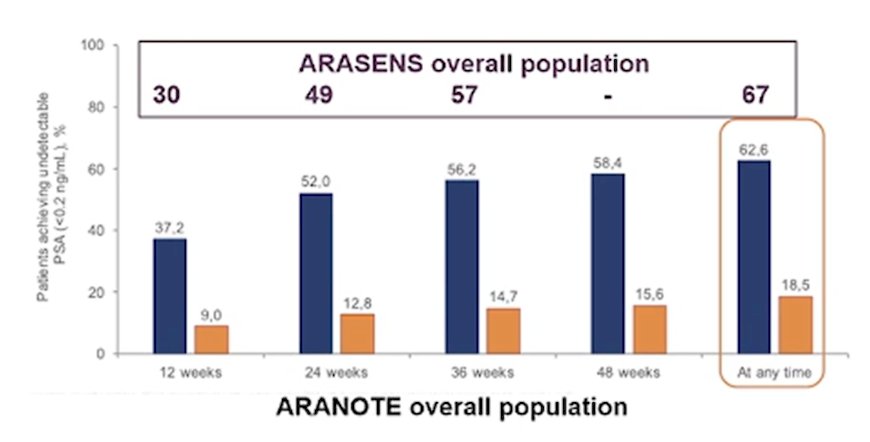
However, she notes that perhaps in the high volume patients there may be a benefit to the addition of docetaxel, but there is no clear benefit in the low volume patients:
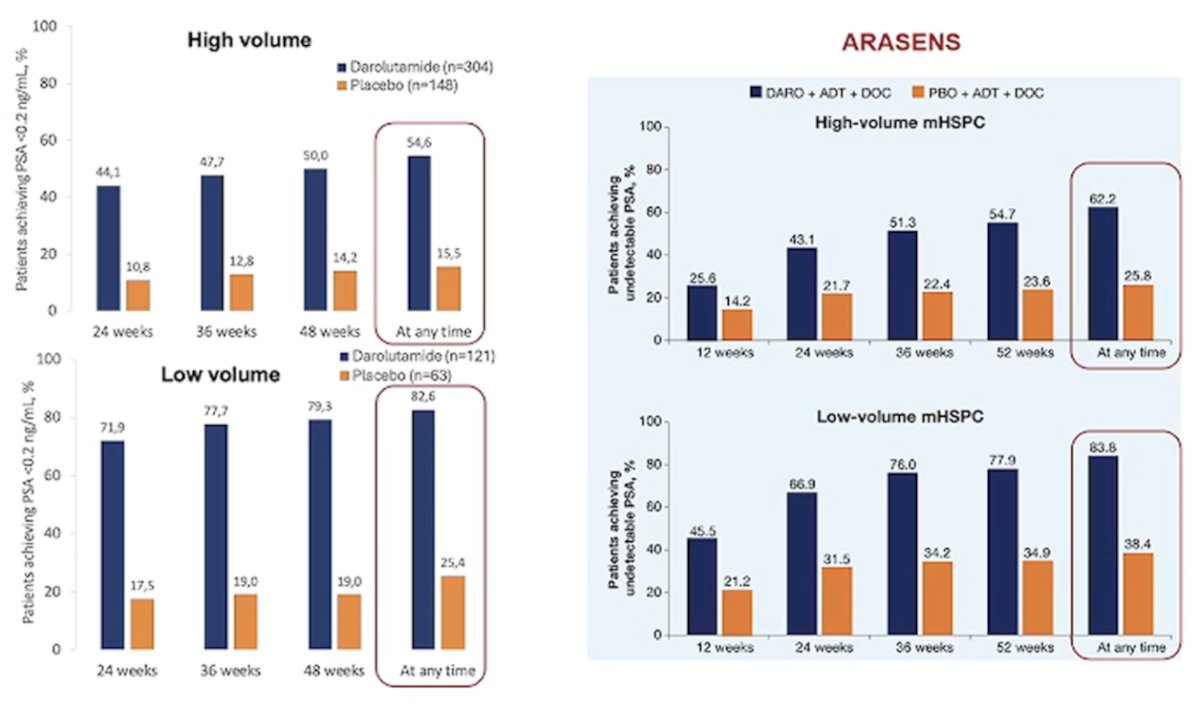
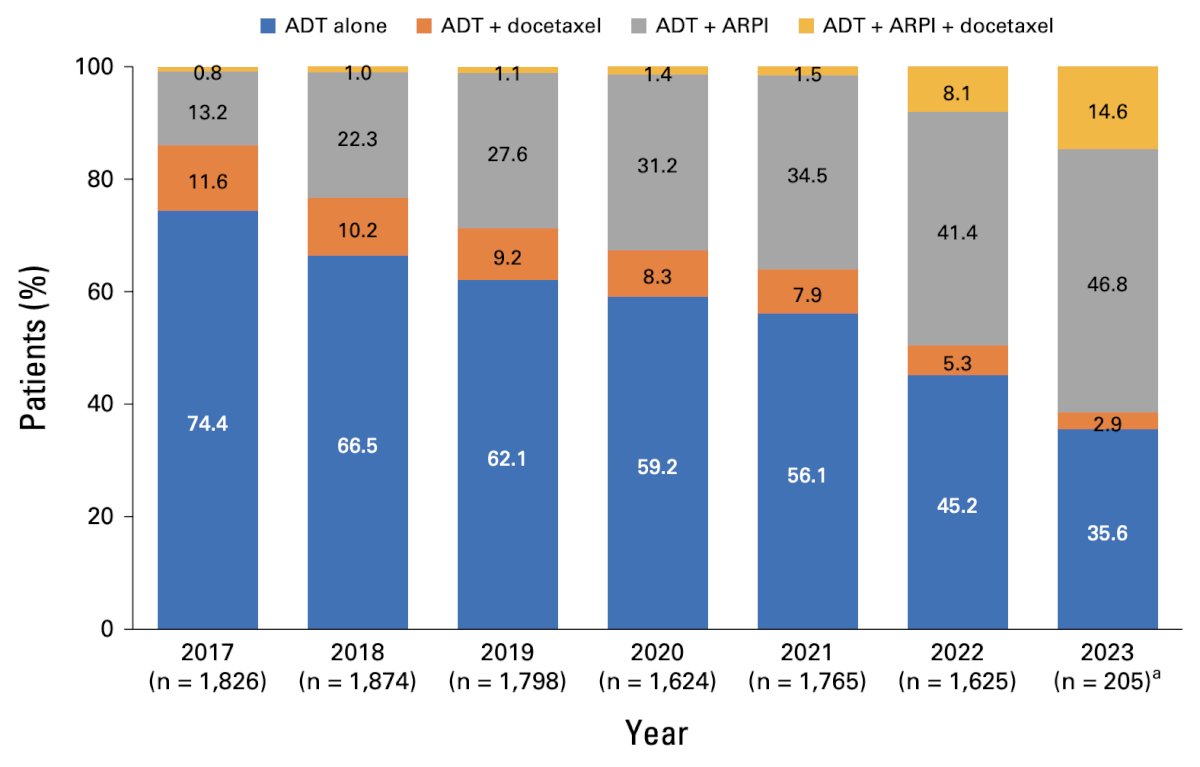
Dr. Castro concluded her discussant presentation by emphasizing that there has been some controversy as to the ethical consideration of using ADT as control group in ARANOTE (albeit as a non-United States enrolled trial), given that there were many available options for treatment intensification during the trial enrollment time period of 2021-2022. Although treatment intensification appears to be improving, in the United States during 2021-2022, approximately half of patients were still receiving ADT alone for mHSPC:5
Written by: Zachary Klaassen, MD, MSc – Urologic Oncologist, Associate Professor of Urology, Georgia Cancer Center, Wellstar MCG Health, @zklaassen_md on Twitter during the 2025 European Association of Urology (EAU) Annual Meeting held in Madrid, Spain between March 21st and 24th 2025
References:
- Harshman LC, Chen YH, Liu G, et al. Seven-Month Prostate-specific antigen is Prognostic in Metastatic Hormone-Sensitive Prostate Cancer Treated with Androgen Deprivation with or without Docetaxel. J Clin Oncol. 2018 Feb 1;36(4):376-382.
- Chowdhury S, Bjartell A, Agarwal N, et al. Deep, rapid, and durable prostate-specific antigen decline with apalutamide plus androgen deprivation therapy is associated with longer survival and improved clinical outcomes in TITAN patients with metastatic castration-sensitive prostate cancer. Ann Oncol. 2023 May;34(5):477-485.
- Merseburger AS, Agarwal N, Bjartell A, et al. Targeted investigation treatment analysis of novel anti-androgen (TITAN) study: Ultralow prostate-specific antigen decline with apalutamide plus androgen-deprivation therapy. BJU Int. 2024 Dec;134(6):982-991.
- Saad F, Hussain MHA, Tombal B, et al. Deep and Durable Prostate-specific Antigen Response to Darolutamide with Androgen Deprivation Therapy and Docetaxel, and Association with Clinical Outcomes for Patients with High- or Low-volume Metastatic Hormone-sensitive Prostate Cancer: Analyses of the Randomized Phase 3 ARASENS study. Eur Urol. 2024 Oct;86(4):329-339.
- Raval AD, Lunacsek O, Korn MJ, et al. Real-world evidence of combination therapy use in metastatic hormone-sensitive prostate cancer in the United States from 2017 to 2023. JCO Oncol Pract. 2025 Feb 7 [Epub ahead of print].